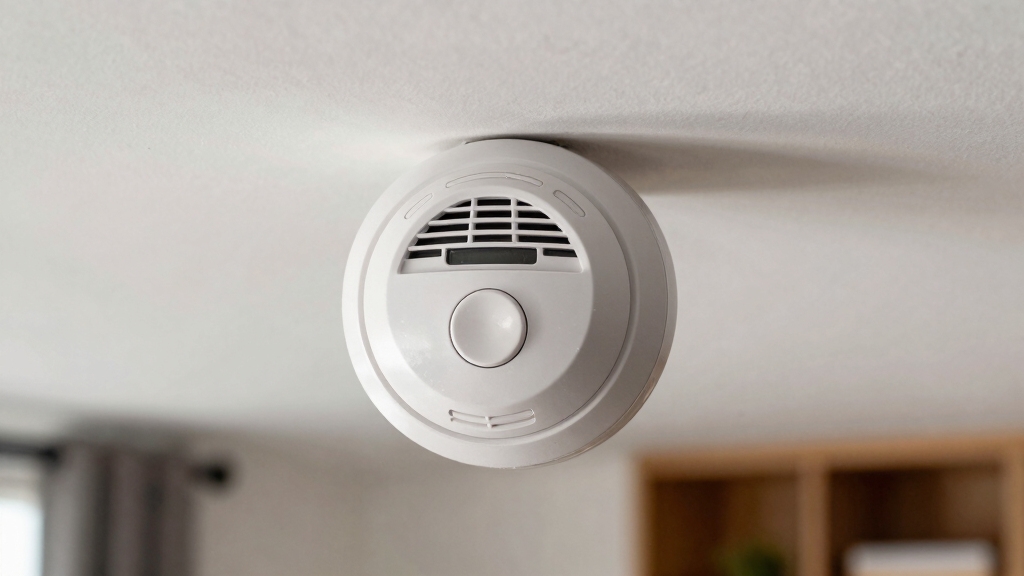

You’ll find Kidde smoke and carbon monoxide alarms deliver fast, reliable detection using advanced photoelectric sensors that spot smoldering fires quickly and reduce false alerts.
Their sealed 10-year batteries mean less maintenance and consistent power, supported by clear, dual-language voice alerts that specify the hazard.
Whether hardwired or wireless, Kidde’s alarms meet UL and CSA safety standards, offering peace of mind through certified quality and user-friendly features.
Explore further to understand what makes Kidde a trusted choice.
Key Takeaways
- Kidde alarms use advanced photoelectric sensors for faster, more accurate smoke detection and reduced false alarms.
- Integrated 10-year sealed batteries offer maintenance-free, long-lasting power with end-of-life chirp reminders.
- Models support hardwired or wireless installation, with interconnectivity and smart hub compatibility for enhanced safety.
- Loud sirens combined with clear English and French voice alerts specify fire or carbon monoxide threats.
- Kidde products meet UL and CSA safety certifications, ensuring reliable performance and consumer confidence.
Kidde Alarms’ Faster Hazard Detection
Although many smoke alarms claim quick responses, Kidde alarms detect smoke more than 25 percent faster than the average. When you rely on Kidde, you benefit from sensors that are three times more precise than standard alarms, reducing false alerts while improving early hazard identification.
The technology excels at sensing smoldering fires, which are common in household scenarios, ensuring you’re alerted promptly before flames escalate. Testing with canned smoke confirms these alarms respond reliably to ambient smoke levels.
You’ll appreciate that alerts clear quickly once danger passes. This means you won’t be bothered unnecessarily after a minor incident.
Overall, Kidde’s detection speed and accuracy provide a dependable early warning system, helping you act swiftly to protect your home and family. For optimal safety, it is important to replace Kidde smoke alarms every 10 years to maintain sensor sensitivity and reliable detection.
Why Kidde’s Photoelectric Sensors Improve Smoke Detection Accuracy?
Because Kidde uses advanced photoelectric sensor technology, their alarms detect smoke from smoldering fires with greater precision than traditional ionization sensors.
Kidde’s advanced photoelectric sensors detect smoldering fires more precisely than traditional ionization alarms.
This technology excels in identifying slow, smoldering fires that release larger smoke particles, which ionization sensors often miss or detect late.
You benefit from faster and more accurate alerts thanks to:
- Detection speed over 25% faster than average alarms, ensuring quicker warnings.
- Precision three times greater than standard alarms, reducing false alarms.
- Responsive detection to ambient smoke, verified through testing with canned smoke.
Additionally, these sensors clear alerts promptly once the hazard dissipates, avoiding unnecessary alarm persistence.
This accuracy enhancement helps you respond swiftly to real threats, improving household safety without compromising reliability.
The Tyndall Effect principle behind photoelectric detection ensures sensitive and reliable activation by detecting light scattered from smoke particles.
Kidde Alarms’ Battery Life and Power Features
Kidde alarms consistently deliver reliable power through their integrated 10-year, non-removable batteries, eliminating the hassle of periodic replacements.
This design guarantees the battery lifespan matches the detector’s functional lifetime, so you won’t need to swap batteries during the unit’s service period.
Battery-powered Kidde alarms come pre-installed with these long-life batteries, while hardwired models include integrated battery backups requiring no maintenance.
After ten years, the unit emits a chirp to remind you it’s time for a replacement, assuring continuous safety without guesswork.
This approach reduces maintenance efforts and enhances reliability by preventing power interruptions.
Whether you choose battery-operated or hardwired models, Kidde’s power features focus on long-term dependability with minimal user intervention, supporting consistent performance in smoke and carbon monoxide detection.
For models without sealed batteries, it is important to replace batteries routinely to ensure ongoing protection and proper alarm function.
Kidde Alarms’ Warranty and Lifespan
Maintaining consistent power over a decade supports the overall lifespan of Kidde alarms, which are designed to last ten years without battery replacement. This longevity means you won’t need to worry about frequent maintenance or battery swaps, making these alarms reliable for long-term safety.
Kidde backs this with a limited 10-year warranty covering the product’s lifetime, giving you peace of mind.
Here are key points about Kidde alarms’ warranty and lifespan:
- The 10-year integrated battery aligns with the detector’s expected lifespan, eliminating battery replacement.
- A sticker on the unit allows you to note the installation date for easy lifespan tracking.
- After 10 years, the unit emits a chirp to alert you it’s time for replacement.
This approach guarantees dependable operation throughout the alarm’s functional life. Additionally, the use of sealed 10-year lithium batteries provides maintenance-free backup power, reducing the need for frequent replacements.
Installing Kidde Alarms: Hardwired and Wireless Options
When setting up your home safety system, you’ll find that Kidde alarms offer both hardwired and wireless installation options to suit different needs.
Hardwired models are designed for easy installation, connecting directly to your home’s electrical system with integrated batteries that require no maintenance. These units support interconnectivity, so when one alarm detects smoke or carbon monoxide, all linked alarms sound simultaneously.
Wireless Kidde alarms, on the other hand, provide flexibility by connecting multiple units without the need for wiring, ideal for retrofit situations. They can also sync with compatible smart hubs like Wink for remote monitoring.
Both options guarantee full home coverage and reliable alerts, allowing you to choose the setup that best fits your home’s wiring and personal convenience requirements. Remember to turn off power at the circuit breaker before installing or servicing hardwired alarms to ensure safety.
Alert Systems: Sirens, Voice Warnings, and Languages in Kidde Alarms
You’ll notice that Kidde alarms use a really loud siren as their main way to get your attention right away. It’s designed to be impossible to ignore!
And when it comes to the voice alerts, they do a great job of specifying whether there’s a fire or carbon monoxide detected. This clarity really helps you understand what kind of hazard you’re facing.
Oh, and here’s a cool feature: you can choose between English and French for the voice warnings. How convenient is that?
It’s all about making sure everyone can stay safe and informed!
Additionally, ensuring your alarm is properly powered and reset by following the power restoration steps is crucial for reliable safety performance.
Siren Loudness and Impact
Although the primary warning signal in Kidde alarms comes from an extremely loud siren designed to grab your attention immediately, the voice alerts provide specific information about the detected hazard, such as fire or carbon monoxide.
The siren’s intensity guarantees you won’t miss an alert, even while sleeping. Here’s what you need to know about the siren’s loudness and impact:
- The siren’s decibel level exceeds typical smoke alarms, delivering a powerful, urgent sound.
- Its sharp tone penetrates walls and closed doors, enhancing early hazard awareness.
- While the siren dominates audibility, voice warnings supplement by clarifying the threat type in two languages.
This design balances volume and clarity to maximize your safety and prompt immediate response. Regular maintenance and testing ensure the alarm’s sensor accuracy and reliability remain effective over time.
Voice Alert Specificity
Clarity in emergency communication plays a crucial role in ensuring your safety. Kidde alarms deliver this through highly specific voice alerts.
When a hazard is detected, the alarm clearly announces the exact threat, whether it’s smoke or carbon monoxide. This helps you respond promptly and appropriately.
This specificity reduces confusion during emergencies by distinguishing fire from CO risks. The voice alert system also includes low battery warnings, ensuring you stay informed about maintenance needs.
While the siren remains the primary loud warning, these spoken alerts provide essential details without overwhelming noise. Kidde’s voice alerts are designed to be straightforward and unambiguous, enhancing your ability to act quickly.
This focus on precise voice communication supports safer outcomes in critical situations.
Combination units integrate both smoke and CO sensors in one device, providing comprehensive protection with unique warning signals for each hazard.
Dual-Language Voice Feature
Kidde enhances emergency communication by offering a dual-language voice feature in their alarms. This feature allows you to receive clear voice alerts in both English and French, improving accessibility and comprehension during emergencies.
Here’s what you should know about this capability:
- The voice alerts specify the exact hazard detected, such as “Fire!” or “Carbon Monoxide.” This helps you respond appropriately.
- Low battery warnings are also communicated verbally, ensuring you don’t miss maintenance alerts.
- The dual-language option supports wider user needs, especially in bilingual households or regions with English and French speakers.
Additionally, it is crucial to maintain firm, continuous pressure on the alarm’s button during reset procedures to ensure proper device functionality.
Safety Certifications That Prove Kidde’s Reliability
You know, when it comes to safety, Kidde really stands out. Their alarms meet both Underwriters Laboratories (UL) and Canadian Standards Association (CSA) standards. That’s not something you see with every major brand, right?
These certifications mean that the devices have gone through some serious testing to ensure safety and performance. So, if you’re shopping around, just look for the UL or CSA labels on the packaging.
That way, you can be sure you’re getting a product that meets those tough industry requirements. Many Kidde models also feature backup batteries to ensure continuous operation during power outages, enhancing their reliability.
UL And CSA Standards
Because safety certifications play a vital role in ensuring product reliability, Kidde’s adherence to both Underwriters Laboratories (UL) and Canadian Standards Association (CSA) standards sets its alarms apart.
When you choose Kidde, you’re selecting devices that meet rigorous safety benchmarks recognized across North America. These certifications confirm the alarms’ dependable performance in real-world conditions.
Here’s what you should know about Kidde’s UL and CSA compliance:
- Kidde alarms are among the few to be both UL Listed and CSA Listed, guaranteeing they meet strict U.S. and Canadian safety requirements.
- Product packaging clearly displays these certifications, providing visible proof of rigorous testing and verified accuracy.
- These standards help the alarms maintain consistent detection speed, accuracy, and reliability throughout their lifespan, giving you peace of mind.
Certification Labels Importance
Although safety certifications may seem like mere labels, they play an essential role in verifying the reliability of smoke alarms.
When you choose a Kidde alarm, you’ll notice UL Listed or CSA Listed labels prominently displayed on the packaging.
These certifications confirm that the product meets rigorous standards for performance and safety set by Underwriters Laboratories and the Canadian Standards Association.
Kidde stands out as the only major manufacturer meeting both UL and CSA requirements, ensuring cross-border compliance and reliability.
These labels guarantee that the alarm has undergone precise testing for detection accuracy and durability.
Manufacturer Compliance Benefits
Certification labels serve as a clear indicator that a smoke alarm meets high performance and safety standards. The benefits of manufacturer compliance extend further.
When you choose Kidde alarms, you get assurance backed by rigorous testing and dual certification from Underwriters Laboratories (UL) and the Canadian Standards Association (CSA). This compliance means:
- Enhanced Reliability: Kidde alarms deliver faster and more precise smoke detection, proven through standardized testing.
- Verified Safety: UL and CSA certifications guarantee the product meets strict safety regulations, reducing false alarms and failures.
- Consumer Confidence: Clear certification labels on packaging and product provide transparent proof of Kidde’s adherence to industry benchmarks.
Comparing Kidde’s Smoke and CO Alarms: Features, Price, and Performance
When choosing between Kidde’s smoke and carbon monoxide (CO) alarms, you’ll find both offer reliable detection and user-friendly features but differ in their sensing technologies and alert specifics.
Smoke alarms use photoelectric sensors for faster, more accurate fire detection, especially smoldering fires. CO alarms detect carbon monoxide gas with distinct voice alerts. Both types come with 10-year integrated batteries and interconnect options.
| Feature | Smoke Alarm | CO Alarm |
|---|---|---|
| Detection Method | Photoelectric sensor | Electrochemical sensor |
| Alert Type | Loud siren, “Fire!” voice alert | Siren, voice specifying CO hazard |
| Price Range | Around $74.97 | Similar range |
You’ll appreciate Kidde’s accuracy, durability, and clear notifications in either option.
Key Factors to Consider Before Buying a Kidde Smoke and Carbon Monoxide Alarm
Before purchasing a Kidde smoke and carbon monoxide alarm, you should carefully evaluate factors like detection speed, battery life, installation options, and alert systems to ensure the model fits your home’s specific safety needs.
Evaluate detection speed, battery life, installation, and alerts to choose the right Kidde alarm for your home.
Kidde alarms offer faster detection with photoelectric sensors and reliable 10-year battery life, but installation varies by model. Consider these key points:
- Detection and Alerts: Choose alarms with quick, accurate sensing and clear voice alerts specifying fire or CO danger.
- Power and Maintenance: Opt for units with integrated batteries to avoid replacements. Note hardwired options allow interconnectivity.
- Installation and Connectivity: Assess if you need wireless interconnection or compatibility with smart hubs for remote monitoring.
These factors guarantee you select an alarm that balances safety, convenience, and longevity.
Frequently Asked Questions
Can Kidde Alarms Be Tested Using a Smartphone App?
You can’t test Kidde alarms directly using a smartphone app.
While some Kidde models connect with a Wink hub for remote monitoring, the alarms themselves don’t offer app-based testing features.
To check functionality, you’ll need to use the manual test button on the unit.
This guarantees the sensor and alert systems work properly.
For remote alerts, you can rely on the Wink app if your alarms are connected through that hub.
Are Kidde Alarms Compatible With Other Smart Home Devices?
Like pieces of a puzzle fitting together, Kidde alarms connect with other devices through the Wink hub. This lets you monitor your home’s safety remotely via an app.
While they don’t offer broad smart home integration, you can link multiple wireless units so they all sound simultaneously when one detects a hazard.
However, if you’re seeking full smart home compatibility, Kidde alarms might feel somewhat limited compared to more advanced systems.
What Is the Typical Response Time to Carbon Monoxide?
You can expect a Kidde carbon monoxide alarm to respond quickly, typically detecting dangerous levels faster than standard alarms due to its advanced sensors.
While exact response times vary with CO concentration, Kidde’s technology guarantees alerts sound promptly to protect you.
The alarm’s precision and quick alert clearing help you react without delay. This rapid detection is essential for your safety, giving you critical time to evacuate or ventilate affected areas.
How Loud Is the Alarm in Decibels?
The alarm reaches an extremely loud volume, typically around 85 decibels. This is comparable to heavy traffic noise and guarantees you’ll wake up or be alerted promptly.
This loud siren acts as the primary warning signal, cutting through ambient sounds effectively. Plus, voice alerts specify if the danger is fire or carbon monoxide, adding clarity.
The combination of loud siren and clear voice warnings enhances your safety by guaranteeing you hear and understand the alert immediately.
Can the Alarm Be Temporarily Silenced During Cooking?
Yes, you can temporarily silence the alarm during cooking.
The Kidde smoke and carbon monoxide alarm features a convenient hush or silence button that lets you pause the alarm when you’re cooking or dealing with non-emergency smoke.
This prevents unnecessary loud alerts while maintaining safety.
The alarm automatically resets after a short period, so you don’t have to worry about turning it back on manually, ensuring continuous protection.
Your Home’s Silent Guardian: The Power of Kidde Alarms
Choosing a Kidde alarm is like planting a sturdy oak in your home’s safety garden. Its advanced sensors act as vigilant guardians, quickly detecting smoke or carbon monoxide before danger takes root.
With reliable power options and clear alerts, Kidde makes certain you’re never left in the dark. Just as an oak stands firm through storms, these alarms offer lasting protection backed by trusted certifications.
This helps you grow a safer, smarter living space for years to come.

[…] alarms feature integrated 10-year sealed batteries that eliminate the need for periodic replacements, enhancing long-term […]