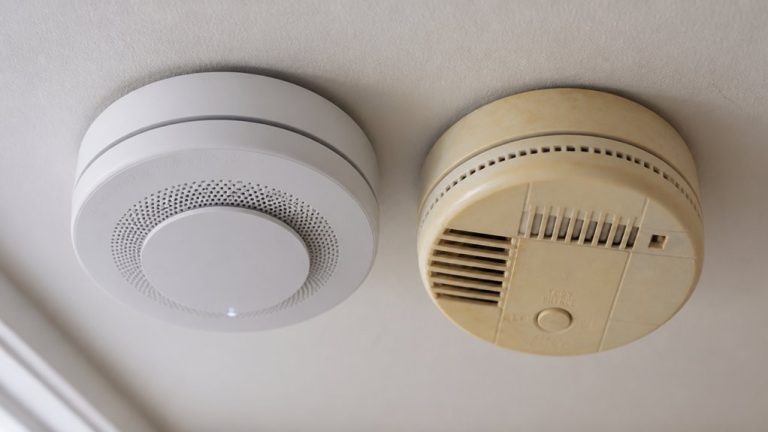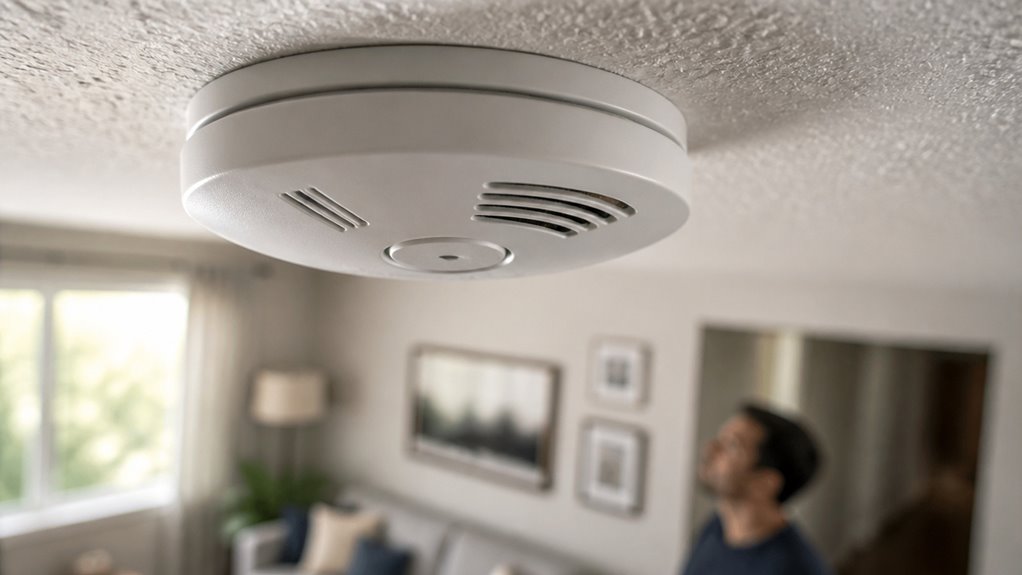

Yes, First Alert smoke alarms detect carbon monoxide using integrated electrochemical sensors that continuously monitor dangerous CO levels.
These dual-sensor units also utilize photoelectric technology to identify smoke from smoldering fires, providing all-encompassing hazard detection.
You’ll benefit from clear voice alerts that specify whether smoke or CO is present, helping you respond quickly.
With models offering battery or hardwired power options and smart connectivity, you can trust these alarms to keep you informed and protected.
Explore how their advanced features enhance safety throughout your home.
Key Takeaways
- Many First Alert smoke alarms feature dual-sensor technology detecting both smoke and carbon monoxide.
- Dual-sensor models combine photoelectric smoke detection with electrochemical CO sensing for comprehensive hazard alerts.
- Electrochemical CO sensors in First Alert alarms accurately monitor and alert only dangerous carbon monoxide levels.
- Voice alerts in dual-sensor models distinguish between smoke and carbon monoxide threats for clear hazard identification.
- First Alert offers multiple combo models, including battery-powered and hardwired units, that detect smoke and CO simultaneously.
Why Choose First Alert Combination Smoke and CO Alarms?
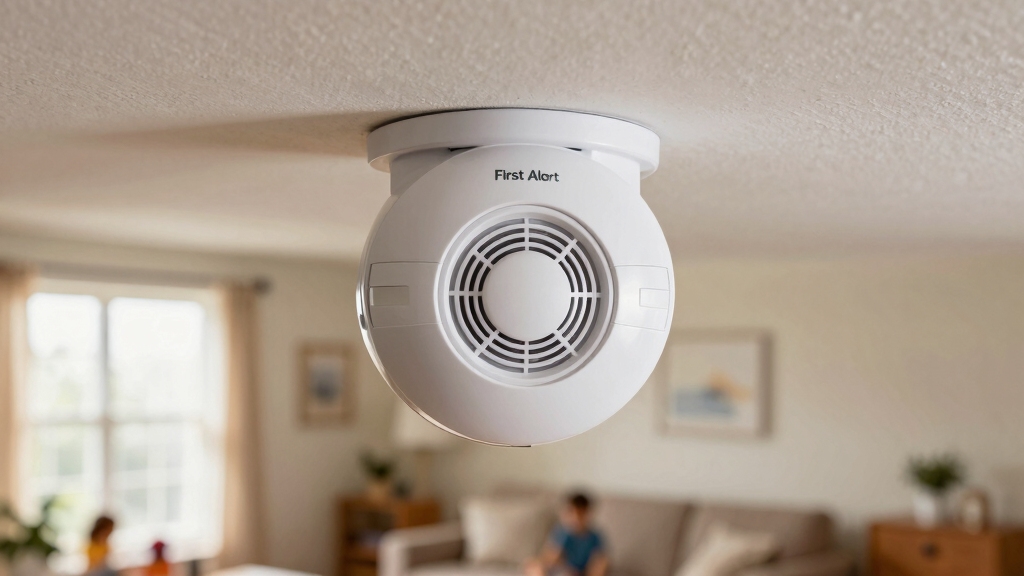
Choosing First Alert combination smoke and carbon monoxide alarms guarantees you get reliable dual-sensor technology that detects both fire and CO hazards in one compact device.
You’ll benefit from photoelectric smoke sensors that identify larger smoke particles typical of smoldering fires, combined with electrochemical CO sensors that accurately monitor dangerous carbon monoxide levels.
This integration reduces the need for separate alarms, saving space and simplifying installation. The dual-sensor design enhances safety by providing thorough hazard detection, covering both smoke and toxic gas threats.
Additionally, First Alert’s combination units minimize false alarms by using precise detection algorithms tailored to each hazard type. This ensures you receive timely and accurate alerts.
Choosing these alarms means you’re equipping your home with advanced, efficient protection against multiple risks simultaneously.
It is important to respond immediately to any alarm beeping to ensure safety and avoid potential hazards.
First Alert Models With Dual Smoke and Carbon Monoxide Sensors
First Alert offers several models equipped with dual smoke and carbon monoxide sensors to provide all-encompassing hazard detection.
These combination alarms use photoelectric smoke sensors for smoldering fires and electrochemical CO sensors for accurate carbon monoxide detection.
Whether you prefer battery-operated or hardwired units, First Alert has you covered with options like the PRC710V talking alarm and the SC5 smart alarm with Wi-Fi connectivity.
| Model | Power Source | Key Feature |
|---|---|---|
| PRC710V | 10-year battery | Voice alarm |
| PRC700 | Battery | Basic combo detection |
| SC5 | Wi-Fi hardwired | Smart alerts and connectivity |
| Hardwired | Hardwired + battery backup | Quick-connect installation |
| Battery | Battery | Easy installation |
These models guarantee reliable dual hazard monitoring tailored to your home’s needs. First Alert alarms often include integrated 10-year batteries, providing long-lasting, maintenance-free power for enhanced safety.
Voice and Location Alerts for Clearer Smoke and CO Warnings
Voice and location alerts consistently enhance your home’s safety by providing precise information about detected hazards. When your First Alert combination alarm senses smoke or carbon monoxide, it doesn’t just sound a generic siren; it clearly announces the specific danger and its location.
Voice and location alerts deliver clear, specific warnings for faster, safer emergency responses.
This targeted approach lets you respond faster and more effectively during emergencies.
Key features include:
- Voice alerts that distinguish between smoke and CO threats, reducing confusion.
- Eleven pre-programmed location identifiers that specify the hazard’s exact area in your home.
- An 85-decibel siren designed to wake even deep sleepers for immediate awareness.
For optimal effectiveness, ensure alarms are installed near fuel-burning appliances and inside each bedroom to maximize coverage throughout your home.
False Alarm Prevention Technology in First Alert Alarms
You’ll really appreciate that First Alert alarms come equipped with photoelectric sensors. They’re designed to minimize those annoying false alerts that can happen from everyday cooking smoke and steam.
Plus, their electrochemical CO sensors are pretty impressive! They accurately detect harmful carbon monoxide levels while ignoring those low concentrations that often lead to nuisance alarms.
This combination of precision technology helps ensure you have reliable protection without the hassle of frequent false warnings. It’s all about keeping you safe without the interruptions!
However, unlike some other models, First Alert alarms do not include ZigBee 3.0 smart home integration, which offers enhanced remote monitoring and automation features.
Reducing Cooking Smoke Alerts
Frequently, smoke alarms can trigger false alerts due to everyday activities like cooking or shower steam.
First Alert’s photoelectric sensors are engineered to minimize these nuisances. You’ll benefit from technology that detects larger smoke particles typical of real fires while ignoring smaller, less dangerous particles from normal cooking.
This precision reduces unnecessary disruptions and maintains your alarm’s reliability.
Key features include:
- Photoelectric sensor design that selectively responds to smoke types linked to smoldering fires
- Sensitivity calibration that prevents activation from brief steam or light cooking smoke exposure
- Advanced algorithms distinguishing hazardous smoke patterns from common household aerosols
This approach is similar to BRK’s use of dual-sensor technology which helps reduce false alarms by differentiating between real fires and common household smoke sources.
Minimizing Nuisance Carbon Monoxide
Just as First Alert’s photoelectric sensors are calibrated to reduce false alerts from cooking smoke, their electrochemical carbon monoxide sensors are engineered to prevent nuisance alarms from non-hazardous CO levels.
These sensors typically don’t trigger alarms for CO concentrations below 30 parts per million (ppm), effectively filtering out transient, low-level exposures that pose no immediate risk.
By employing advanced detection algorithms, First Alert balances sensitivity with specificity, ensuring alarms activate only when dangerous CO thresholds are reached.
This precision detection technology helps you avoid false alarms caused by harmless environmental factors, such as brief CO presence from vehicles or appliances starting up.
As a result, you get reliable notifications without unnecessary disruptions, maintaining safety and peace of mind in your home.
Regular maintenance, including monthly testing, ensures that these sensors continue to operate accurately throughout their lifespan.
Installation Options for First Alert Smoke & CO Alarms
When installing First Alert smoke and carbon monoxide alarms, you can choose between hardwired and battery-operated models to suit your home’s wiring and coverage needs.
Hardwired alarms come with quick-connect plugs, streamlining installation and providing consistent power with battery backup for outages.
Battery-operated units offer flexible placement without wiring constraints, ideal for additional rooms or retrofit projects.
Both options support wireless interconnectivity, enabling simultaneous alarms throughout your home for thorough protection.
Hardwired models guarantee continuous power and reduced maintenance.
Battery-operated alarms simplify installation and relocation.
Wireless interconnectivity links multiple alarms for full-home alert coverage.
Selecting the right installation type depends on your home’s electrical setup and your preference for maintenance and coverage flexibility.
It is important to remember that you should test your alarms monthly to ensure they are working properly and provide reliable protection.
How First Alert Smart Alarms Send Carbon Monoxide Alerts to Your Phone?
You’ll get real-time mobile notifications from First Alert smart alarms as soon as carbon monoxide is detected. This way, you’ll always be in the loop!
Plus, these alarms work smoothly with smart home systems like Google Nest Protect, which means you can keep an eye on everything from one central place.
And the best part? With remote hazard awareness, you can act quickly to potential dangers, even when you’re not at home.
First Alert alarms focus solely on fire and carbon monoxide detection and do not include built-in cameras to ensure privacy and security.
Real-Time Mobile Notifications
First Alert smart alarms connect seamlessly to your mobile device, sending real-time notifications the moment they detect carbon monoxide.
This immediate alert system guarantees you’re informed instantly, whether you’re at home or away, enabling prompt action during emergencies.
The smart alarms leverage Wi-Fi connectivity and advanced sensors to monitor CO levels continuously, triggering mobile alerts only when dangerous concentrations arise.
Key features include:
- Instant push notifications sent directly to your phone upon CO detection.
- Clear, actionable alerts specifying the type and location of the hazard.
- 24/7 remote monitoring capability, allowing you to check your home’s safety status anytime.
These real-time notifications empower you with timely information, enhancing your home safety by bridging the gap between detection and response.
For continuous protection, it is essential to ensure your alarms are properly powered and in standby mode, indicated by a green LED blink every 60 seconds.
Smart Home Compatibility
Although smart home integration may seem complex, First Alert smart alarms simplify how you receive carbon monoxide alerts by seamlessly connecting with popular home automation platforms.
These alarms utilize Wi-Fi connectivity to instantly send CO detection notifications directly to your smartphone, ensuring you’re informed no matter where you are.
Compatible with systems like Google Nest and Ring, First Alert smart alarms integrate smoothly into your existing smart home ecosystem, centralizing hazard monitoring.
Once linked, the alarms communicate real-time status updates and alert you immediately if dangerous CO levels are detected.
This interoperability enhances your home’s safety infrastructure by merging precise electrochemical CO sensing with reliable mobile alerting.
You receive prompt, actionable information through your preferred smart device without manual intervention or additional hardware.
For added safety, it’s important to remember that unlike some smart alarms, a Nest Protect reset must be done physically at the unit itself and cannot be performed remotely through the app.
Remote Hazard Awareness
When your First Alert smart alarm detects carbon monoxide, it immediately sends a notification to your phone via Wi-Fi. This ensures you stay informed regardless of your location.
This remote hazard awareness capability lets you act quickly, whether you’re at work or traveling. The alarm’s integration with your mobile device provides real-time updates, enhancing safety beyond your home.
Key features include:
- Instant push notifications alert you to dangerous CO levels detected by electrochemical sensors.
- Continuous monitoring with 24/7 connectivity prevents delays in hazard awareness.
- Compatibility with smart home systems like Google Nest and Ring enables centralized control and alerts.
With these technologies, First Alert guarantees you maintain thorough oversight of carbon monoxide risks. This empowers prompt and informed responses no matter where you are.
Frequently Asked Questions
How Often Should I Replace My First Alert Smoke and CO Alarm?
You should replace your First Alert smoke and CO alarm every 10 years. This guarantees sensors function correctly and maintain safety standards.
Some models come with sealed 10-year batteries, designed to last the alarm’s lifetime. Regularly test your alarm monthly and clean it to prevent dust buildup, which can affect sensitivity.
If your alarm shows malfunction or frequent false alarms before 10 years, replace it immediately for reliable protection.
Can First Alert Alarms Detect Other Gases Besides CO?
You won’t find First Alert alarms acting like a gas-sniffing bloodhound beyond carbon monoxide detection. They’re engineered specifically to detect smoke and carbon monoxide, using photoelectric and electrochemical sensors.
These devices don’t monitor other gases like natural gas or propane. If you need broader gas detection, you’ll want specialized detectors designed for those specific gases. First Alert’s focus remains on fire and CO hazards for precise, reliable alerts.
Are First Alert Combination Alarms Suitable for Outdoor Use?
First Alert combination alarms aren’t designed for outdoor use.
They’re engineered for indoor environments where temperature and humidity levels stay within specific ranges to guarantee accurate detection.
Outdoor conditions like rain, wind, and temperature fluctuations can cause false alarms or damage the sensors.
You should install these alarms inside your home, preferably in living areas and near sleeping spaces, to maintain reliable smoke and carbon monoxide detection.
What Maintenance Is Required for First Alert Smoke and CO Alarms?
Oh sure, just ignore your First Alert alarms until they scream in protest!
Instead, you’ll want to test them monthly by pressing the test button to make certain sensors and batteries work.
Replace batteries annually, unless you’ve got a sealed 10-year battery model.
Then replace the entire unit after a decade.
Keep sensors free from dust with a gentle vacuum or soft cloth.
Regular maintenance guarantees these life-saving devices won’t let you down when it counts.
Do First Alert Alarms Comply With Local Safety Regulations?
Yes, First Alert alarms comply with local safety regulations. They meet UL (Underwriters Laboratories) standards for smoke and carbon monoxide detection, ensuring reliable performance.
You’ll find models certified under UL 217 for smoke and UL 2034 for CO detection, which aligns with most state and municipal codes.
When installing, follow your local building codes and manufacturer instructions to maintain compliance and maximize safety in your home.
Stay Safer With a Combination Smoke and CO Alarm
You’ll appreciate that First Alert combination smoke and carbon monoxide alarms detect CO with high accuracy, protecting your home effectively.
In fact, CO poisoning causes over 400 deaths annually in the U.S., highlighting the importance of reliable detection.
First Alert’s dual sensors, voice alerts, and smart notifications make sure you’re promptly warned, reducing risk.
Installing these alarms means you’re leveraging advanced technology designed to keep you and your family safe from invisible, deadly gases.