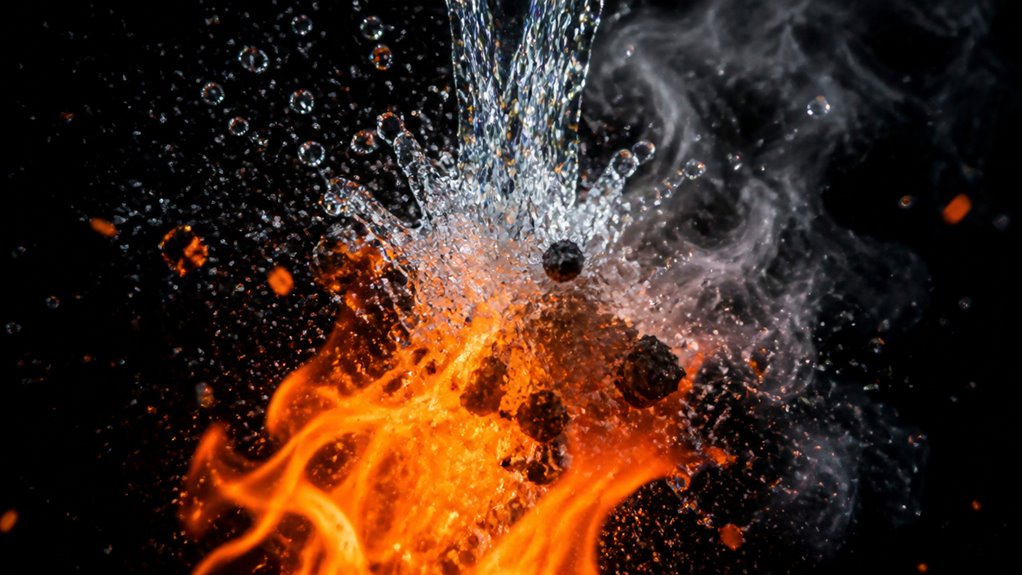

You extinguish fire with water mainly by cooling fuel below ignition through its high heat capacity and by absorbing energy as it vaporizes.
The steam produced displaces oxygen, smothering flames and breaking the fire triangle’s heat and oxygen elements.
Water also forms a barrier, preventing oxygen from reaching fuel.
However, water isn’t suitable for all fires, like grease or chemical fires.
Keep exploring to understand water’s role and its limits in firefighting.
Key Takeaways
- Water absorbs heat from fuel, cooling it below ignition temperature and preventing vaporization of combustible gases.
- Evaporation of water consumes large latent heat, diverting fire energy to phase change and reducing flame intensity.
- Steam produced displaces oxygen around the fire, smothering flames and interrupting combustion.
- Water forms a physical barrier separating fuel from oxygen, further suppressing the fire.
- Avoid using water on grease, chemical, or wildfire fires as it can worsen these fire types or be ineffective.
How Water Absorbs Heat to Cool Fires?
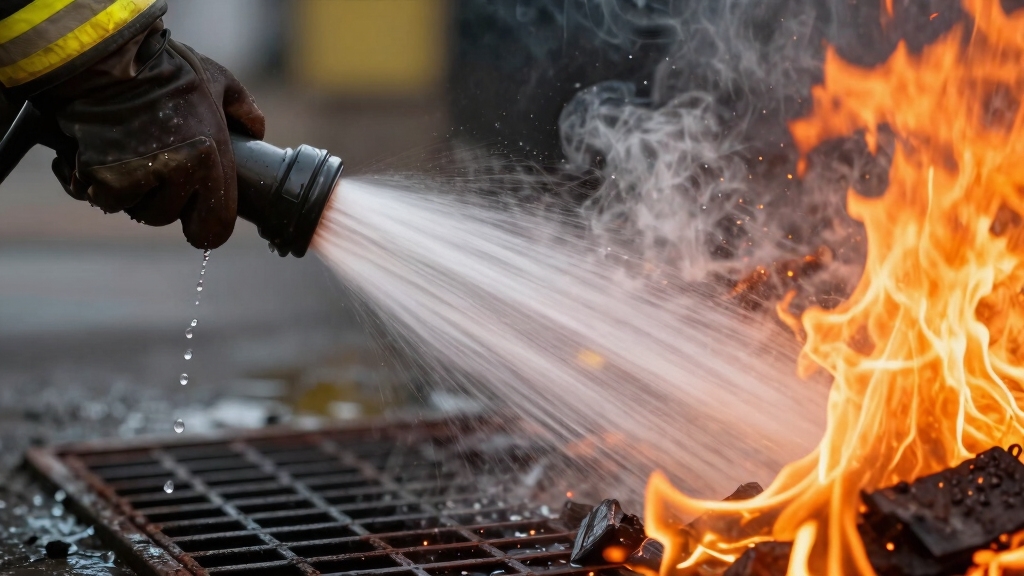
Absorbing heat is water’s primary way of cooling fires effectively. When you apply water to a fire, it draws significant thermal energy from the fuel and surrounding gases due to its high heat capacity.
Water cools fires by absorbing heat from fuel and gases, thanks to its high heat capacity.
This rapid heat absorption lowers the fuel’s temperature below its ignition point, preventing it from vaporizing into combustible gas. You’ll notice that liquid water on fuel keeps temperatures from rising above 100°C, well under wood’s ignition threshold.
As the temperature drops, the fire’s intensity diminishes because it loses the heat element essential for combustion. By removing this heat, water interrupts the fire triangle, weakening the flame and slowing the chemical reactions that sustain combustion.
You rely on this cooling effect whenever you use water to combat flames. Additionally, the evaporation of water consumes significant latent heat, further reducing the fuel surface temperature and enhancing fire suppression.
How Water’s Vaporization Absorbs Fire’s Heat?
You know, water really does have a fascinating role when it comes to putting out fires. Its ability to vaporize is key in absorbing a lot of heat energy. When water turns into steam, it takes in what’s called latent heat of vaporization. This process is pretty interesting because it diverts the fire’s energy towards converting the water, rather than keeping the flames alive. Water is best for ordinary combustibles like wood and paper because it cools the fire below the ignition temperature by removing heat.
Latent Heat Importance
When water vaporizes, it pulls an immense amount of heat from the fire, making this phase change essential to extinguishing flames. This process demands a large amount of energy known as latent heat of vaporization.
As water absorbs this heat to shift from liquid to steam, it markedly cools the fuel and surrounding gases, dropping their temperature below ignition points. You’ll find that the fire’s energy is redirected into vaporizing water rather than sustaining combustion.
This heat absorption weakens the fire’s intensity by robbing it of the thermal energy needed to keep burning. Understanding latent heat’s role helps you see why water can be so effective at putting out fires, especially by cooling fuel and preventing it from further fueling the flames. However, to avoid steam burns and scattering hot materials, water should be applied gently and slowly, following proper water extinguishing methods.
Energy Absorption Process
The latent heat of vaporization sets the stage for water’s powerful role in fire suppression by demanding massive energy to change liquid water into steam. When you apply water to a fire, it absorbs tremendous heat to vaporize, stealing energy from the flames and heated fuel.
This energy diversion cools the fire environment, weakening the combustion process. The fire must first expend heat to convert water to steam before it can continue burning, effectively slowing or stopping the fire.
| What You See | What’s Happening Inside |
|---|---|
| Water on flames | Absorbing massive heat energy |
| Liquid turning to steam | Energy drains from fire |
| Flames shrinking | Fuel temperature drops |
| Steam rising | Fire’s heat gets stolen |
| Fire dying down | Combustion loses strength |
For effective fire suppression, it is also critical to position yourself near a clear exit to ensure safety while using water or other extinguishing agents.
Vaporization’s Cooling Effect
Harnessing water’s vaporization power plays a crucial role in extinguishing fires by rapidly absorbing vast amounts of heat. When water turns to steam, it consumes a tremendous amount of thermal energy, lowering the fuel temperature below its ignition point. This process interrupts the fire’s heat supply, making combustion impossible.
You can break down vaporization’s cooling effect into three key points:
- Water’s high latent heat of vaporization pulls significant heat from the fire, diverting energy from burning fuel to converting water into steam.
- The resulting steam expands dramatically, displacing oxygen and suffocating the fire.
- By cooling the fuel and surrounding gases, water prevents further ignition, effectively halting the fire’s chain reaction.
This powerful mechanism makes vaporization an indispensable tool in fire suppression. However, it is important to note that water-based extinguishers should never be used on electrical fires due to the risk of electric shock.
How Water Creates a Barrier Between Fuel and Oxygen?
Although water might seem simply like a cooling agent, it actively forms a barrier that separates fuel from oxygen, effectively smothering the fire.
When you douse burning material with water, you prevent oxygen from reaching the fuel’s surface, halting its ability to sustain combustion.
Water itself is fully oxidized; it can’t burn. So it acts as a shield, blocking oxygen and stopping the chemical reaction.
This barrier keeps the fuel temperature below ignition, preventing it from releasing flammable gases.
As a result, the fire can’t continue because it loses access to one of the essential fire triangle components.
How Steam Displaces Oxygen to Smother Flames?
When water turns into steam, it expands dramatically. About 1 liter of liquid becomes roughly 1700 liters of vapor, pushing oxygen away from the fire. This rapid expansion displaces the oxygen the fire needs to sustain combustion, effectively suffocating the flames.
As you apply water, the accumulating steam blankets the fire, reducing oxygen availability and interrupting the chemical reaction that keeps the fire alive.
Here’s how steam smothers flames:
- Steam fills the fire area, physically pushing oxygen out.
- The reduction in oxygen concentration interrupts the combustion process.
- The steam creates a cooling effect, reinforcing oxygen displacement.
Similar to how bypassing a zone on an ADT alarm system temporarily disables monitoring for that area, steam creates a temporary barrier by displacing oxygen, demonstrating the importance of managing critical vulnerabilities to prevent damage or intrusion.
How Water Disrupts the Fire Triangle Elements?
Because fire depends on heat, fuel, and oxygen, the three elements of the fire triangle, you can extinguish it by removing any one of these components.
Water disrupts the fire triangle by tackling heat, oxygen, and fuel simultaneously. It absorbs massive amounts of heat, lowering the temperature below the ignition point and preventing fuel from vaporizing.
As water vaporizes, it expands dramatically, displacing oxygen around the fire and suffocating the flames.
Additionally, water forms a physical barrier on the fuel’s surface, blocking oxygen access and further cooling the material.
Saltwater extinguishes fires by cooling materials and producing steam that smothers flames, similar to freshwater mechanisms.
When Water Can’t Extinguish Fires and Safety Tips?
You shouldn’t use water on every fire, as it can sometimes make things worse or fail to extinguish the flames.
For example, water on grease fires causes burning oil to splatter, spreading the fire further.
Similarly, some chemical fires react dangerously with water, intensifying hazards.
Wildfires often require specialized methods since water alone may not cool fuels below ignition points.
Keep these safety tips in mind:
- Avoid water on grease or oil fires; use a fire extinguisher suitable for Class B.
- Never apply water to chemical fires without knowing the specific hazard.
- Call emergency services for large or uncontrollable fires rather than fighting them yourself.
Understanding when not to use water protects you and increases fire safety effectiveness.
For grease fires, it is crucial to act fast and use alternatives like baking soda or a Class K fire extinguisher to smother flames safely.
Frequently Asked Questions
Can Saltwater Be Used to Extinguish Fires Effectively?
Yes, you can use saltwater to extinguish certain fires, but it’s not always the best choice.
Saltwater absorbs heat like regular water, helping cool the fire, but salt can corrode equipment and create harmful residues.
Also, saltwater isn’t suitable for electrical or chemical fires.
How Does Water Temperature Affect Its Firefighting Ability?
Water temperature directly impacts its firefighting ability by influencing how quickly it absorbs heat.
Cooler water absorbs more heat before vaporizing, efficiently lowering fuel temperature below ignition points.
If water’s too warm, it vaporizes faster but absorbs less heat overall, reducing cooling effectiveness.
To put out fires effectively, you want water cool enough to maximize heat absorption and steam production.
This ensures it cools the fire and displaces oxygen for suffocation.
What Are Alternative Fire Extinguishing Agents Besides Water?
You’ve got more fire-fighting options than clouds in the sky!
Besides water, you can use foam to smother flames by cutting off oxygen.
Dry chemical powders interrupt chemical reactions, while carbon dioxide displaces oxygen.
Halon agents stop combustion at a molecular level.
Each agent suits different fires, like oil, electrical, or chemical, so you have to pick the right one to fight fire safely and effectively.
How Does Water Pressure Influence Firefighting Success?
Water pressure directly impacts your firefighting success by controlling reach and penetration.
Higher pressure lets you project water farther, hitting flames deep within burning materials and cooling them effectively.
It also helps break up water into fine droplets, increasing surface area for better heat absorption.
But too much pressure can scatter water, reducing efficiency.
You need balanced pressure to maximize cooling, steam generation, and oxygen displacement.
This ensures the fire extinguishes quickly and safely.
What Environmental Impacts Result From Large-Scale Water Firefighting?
Ever wondered how spraying tons of water affects the environment?
Large-scale water firefighting can lead to soil erosion, water contamination, and habitat disruption.
You’ll see runoff carrying chemicals and debris into waterways, harming aquatic life.
Plus, excessive water use can deplete local water supplies.
Know When Water Works and When It Doesn’t
When you douse a fire with water, you’re not just pouring liquid; you’re unleashing a powerful force that cools, smothers, and starves the flames.
Water steals heat like a stealthy thief, creates barriers like invisible walls, and replaces oxygen with steam’s quiet breath.
But remember, water isn’t a universal hero; know when it fails and stay safe.
Harness water wisely, and you’ll turn fiery chaos into calm with precision and control.