
If you want a lock that’s easier and quicker to install with lower upfront costs, a cylindrical lock suits standard residential or light commercial doors.
However, if you need higher security, durability, and rebuildability, especially for heavy-use or commercial settings, a mortise lock is the stronger choice due to its embedded steel case and robust internal mechanism.
Each lock type offers distinct advantages in design, installation, and performance, depending on your door and security demands.
Exploring their differences further can guide your best fit.
Key Takeaways
- Mortise locks require a rectangular pocket cut into the door edge, while cylindrical locks fit through two round holes drilled in the door.
- Mortise locks offer superior security, durability, and tamper resistance with embedded steel cases and through-bolting compared to cylindrical locks.
- Cylindrical locks are faster and simpler to install, making them more affordable and suitable for retrofit or standard residential use.
- Mortise locks are rebuildable and ideal for heavy-traffic or high-security environments, while cylindrical locks have limited rebuildability and durability.
- Choosing between them depends on security needs, door construction, budget, and long-term performance requirements.
Cylindrical Lock vs Mortise Comparison: Security, Cost, and Installation
| Comparison Point | Cylindrical Lock | Mortise Lock | Best Choice |
|---|---|---|---|
| Installation Method | Fits through two round holes in the door | Requires a rectangular pocket cut into the door edge | Cylindrical for faster installation |
| Door Preparation | Needs simple drilling and less labor | Needs precise cutting, chiseling, and alignment | Cylindrical for retrofit projects |
| Security Level | Offers moderate security for standard doors | Provides higher security with a steel lock case | Mortise for stronger protection |
| Durability | Good for residential and light-use areas | Built for heavy-use and high-traffic doors | Mortise for long-term durability |
| Tamper Resistance | More exposed and easier to replace | Embedded design gives better forced-entry resistance | Mortise for high-risk doors |
| Cost | Usually has a lower upfront cost | Costs more due to materials and installation labor | Cylindrical for budget control |
| Maintenance | Easier to replace but less rebuildable | Often rebuildable with replaceable internal parts | Mortise for long-term service |
| Best Use Case | Interior doors, homes, offices, and rental units | Commercial doors, exterior doors, and premium entries | Depends on security needs |
| Overall Value | Best for simple, affordable door locking | Best for security, strength, and longevity | Match to your door purpose |
Mortise vs Cylindrical Locks: Key Differences Explained
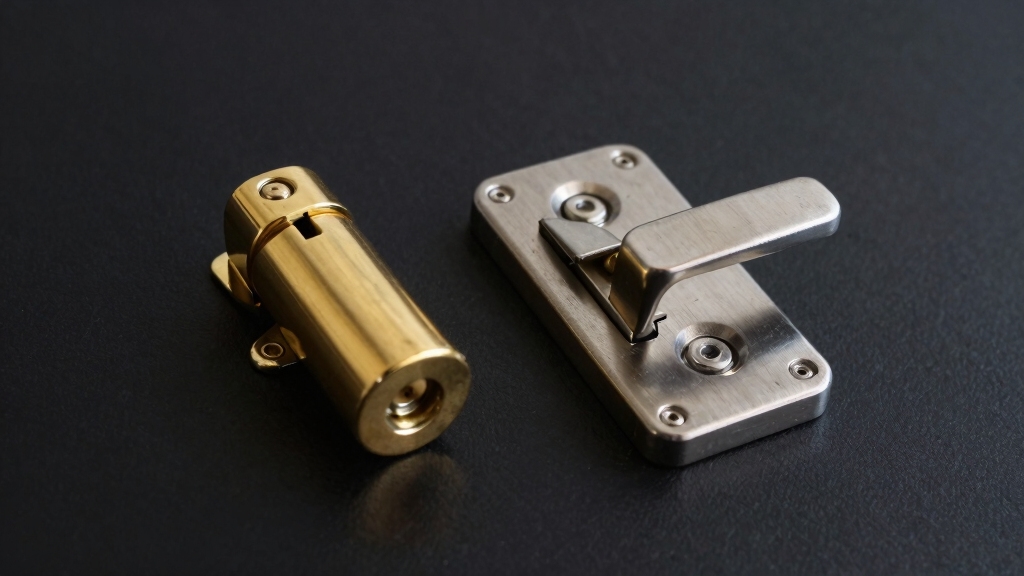
When you compare mortise and cylindrical locks, the key differences come down to their installation methods, security features, and structural designs.
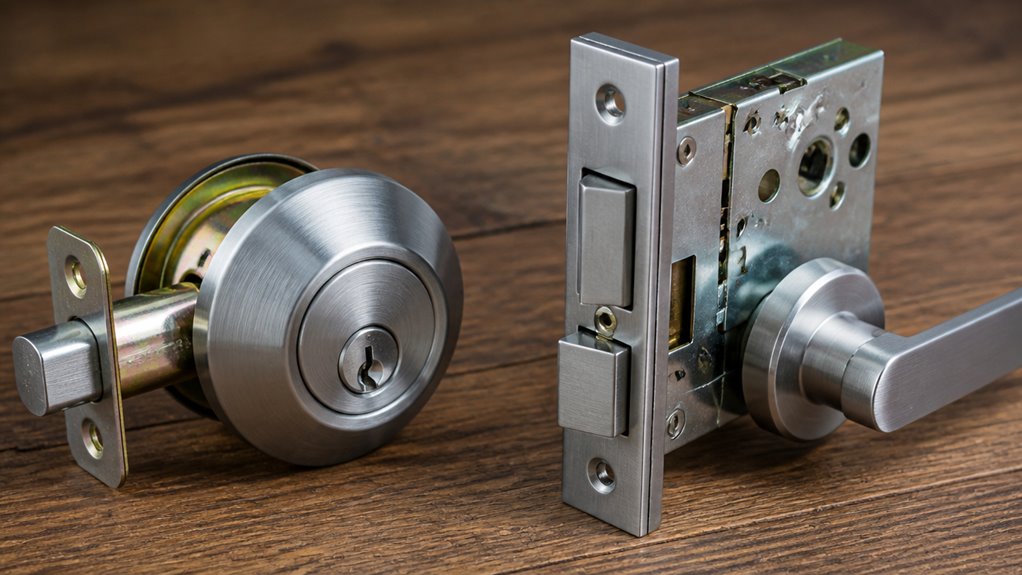
Mortise locks require a rectangular pocket cut into the door edge to house a heavy steel lock case containing a latch, deadbolt, and lever mechanisms. This embedded design enhances tamper resistance and durability.
Cylindrical locks, however, fit through two round holes drilled in the door face and edge, enclosing a compact cylindrical chassis with latch and retracting components.
Mortise locks provide superior security and long-term performance due to robust construction and rebuildability.
Cylindrical locks offer quicker installation and adequate security for standard applications.
Understanding these distinctions helps you select the appropriate lock type based on your door construction, security needs, and operational demands.
Mortise locks often integrate with multi-point locking systems that distribute locking force across the door height, enhancing resistance to forced entry.
Installing Mortise vs Cylindrical Locks: What’s Different?
When it comes to installing locks, there are some pretty significant differences between mortise and cylindrical locks. With mortise locks, you’ll need to create a precise rectangular pocket in the edge of the door. This means some careful chiseling and, honestly, a bit more prep time. It’s not just a quick job; you really have to pay attention to the details.
On the other hand, cylindrical locks make things a lot easier. They fit through two round holes—one in the door face and one in the edge. So, installation is much quicker and way less labor-intensive. If you’re looking for a straightforward option, cylindrical locks might just be the way to go.
Understanding these differences in door preparation is crucial. It can help you choose the right lock for your project and ensure it fits perfectly. So, think about what you need before diving into your installation! Additionally, certified locksmiths often recommend considering lock compatibility with your door type to ensure optimal security and functionality.
Installation Process Comparison
Installing mortise and cylindrical locks involves distinctly different procedures that impact both time and skill requirements.
When installing a mortise lock, you must cut a precise rectangular pocket into the door edge to house the lock body. This demands careful chiseling and accurate measurements.
This labor-intensive process takes longer and requires advanced carpentry skills.
In contrast, cylindrical lock installation only needs you to drill two round holes through the door face and edge.
This allows for faster, simpler fitting. Cylindrical locks suit both new and retrofit applications, while mortise locks are better for new builds or replacing existing mortise units.
Understanding these procedural differences helps you plan labor time and tool needs effectively when choosing between the two lock types.
It is important to note that unlike fire safety systems where devices like sprinklers activate based on specific triggers such as heat-sensitive elements, lock installations primarily depend on mechanical precision rather than automatic activation mechanisms.
Door Preparation Requirements
Prepare your door carefully to accommodate either a mortise or cylindrical lock, as each requires distinct modifications. Mortise locks need a rectangular pocket cut into the door edge, demanding precise chiseling. Cylindrical locks require two round holes drilled through the door face and edge, enabling quicker installation.
| Lock Type | Door Cut Required | Installation Complexity |
|---|---|---|
| Mortise Lock | Rectangular mortise pocket | High (chiseling needed) |
| Cylindrical Lock | Two round holes | Low (simple drilling) |
| Suitability | New builds, retrofit replacements | New construction, retrofit |
Ensuring the correct door preparation improves lock function and prevents costly installation errors.
Comparing Security and Durability of Mortise and Cylindrical Locks
When it comes to lock security, mortise locks really stand out. They’re built with robust steel cases and a through-bolting design, which gives them incredible strength and tamper resistance. So, if you’re looking for something that can stand up to serious attempts at forced entry, mortise locks are definitely the way to go.
On the other hand, cylindrical locks are decent but don’t quite measure up. They offer adequate security, but without that embedded structure, they can be more vulnerable. If you’re concerned about durability, especially in high-traffic areas, mortise locks are a much better choice.
Plus, mortise locks can handle a higher number of cycles and are often rebuildable. This means they’re not just a short-term solution; they’re built for the long haul. So if you need something that’ll last and keep your space secure over time, consider going with a mortise lock.
Additionally, mortise locks provide multi-point locking, which enhances their resistance to forced entry compared to cylindrical locks.
Lock Strength Comparison
While both mortise and cylindrical locks provide security, mortise locks deliver superior strength and durability due to their embedded steel case and through-bolted construction.
You’ll find mortise locks resist forced entry better and maintain alignment longer, ideal for heavy-use scenarios.
Cylindrical locks, while easier to install, don’t offer the same structural robustness, making them better suited for moderate security needs.
| Feature | Mortise Lock | Cylindrical Lock |
|---|---|---|
| Lock Body | Embedded in door edge | Mounted through door face |
| Construction | Heavy steel case, through-bolted | Compact cylindrical chassis |
| Durability | High cycle life, rebuildable | Moderate, less durable |
| Security Strength | Superior forced entry resistance | Adequate for residential use |
Choose based on your demand for strength and door traffic. For enhanced security, consider adding bump-resistant locks and placing hardware near a peephole to verify visitors safely.
Tamper Resistance Features
Because tamper resistance directly impacts a lock’s security efficacy, understanding the differences between mortise and cylindrical locks is essential.
Mortise locks excel due to their embedded steel case, making forced entry markedly harder. Cylindrical locks, while sufficient for moderate security, offer less protection against sophisticated tampering.
When evaluating tamper resistance, consider these key points:
- Mortise locks feature through-bolting, enhancing structural integrity against prying or impact.
- Cylindrical locks rely on latch-based mechanisms vulnerable to manipulation via shim tools.
- Mortise lock cases are concealed within the door, reducing exposed attack points.
- Cylindrical locks’ simpler installation creates accessible gaps attackers might exploit.
You’ll find mortise locks better equipped to resist tampering, especially in high-security environments demanding durable, concealed locking systems. For enhanced security and reduced lockout risk, many recommend upgrading to high-security deadbolts after a lockout.
Longevity and Rebuildability
Although both mortise and cylindrical locks serve their purpose in securing doors, mortise locks outperform cylindrical models with respect to longevity and rebuildability.
Mortise locks feature a robust steel case designed for high cycle counts, making them ideal for heavy-traffic environments. Their internal components are modular, allowing you to rebuild or replace individual parts without changing the entire lock. This extends service life and reduces long-term costs.
In contrast, cylindrical locks have simpler mechanisms housed in compact chassis, limiting their rebuildability and durability under frequent use. While Grade 1 cylindrical locks provide reasonable strength, they generally lack the structural resilience and upgrade paths that mortise locks offer.
If you prioritize long-term security and durability, mortise locks represent a superior investment, especially for commercial or high-use applications. Additionally, locksmiths use precision tools to manipulate and maintain these locks, ensuring minimal damage and extended functionality over time.
Mortise vs Cylindrical Locks: Cost and Budget Considerations
When budgeting for locks, you’ll find that mortise locks come with a higher upfront cost due to their complex materials, intricate design, and labor-intensive installation process.
You should weigh these factors carefully against your project needs. Mortise locks demand precise chiseling and longer installation time, increasing labor expenses.
In contrast, cylindrical locks are more affordable and faster to install, reducing initial outlay.
Consider these points:
- Mortise locks have higher material and installation costs.
- Cylindrical locks offer cost-efficiency for standard applications.
- Mortise locks deliver long-term durability that offsets initial expenses.
- Cylindrical locks minimize labor costs with simpler installation.
Ultimately, your budget must balance immediate costs against long-term value and security requirements. Mortise locks often provide superior durability and security, making them a preferred choice for high-use commercial settings despite their higher cost.
Best Use Cases for Mortise and Cylindrical Locks
Selecting the right lock depends largely on the specific application and environment where it will be installed.
You’ll choose mortise locks for commercial buildings, exterior doors, or high-traffic facilities requiring enhanced security and durability. Their robust steel case and deadbolt make them ideal for long-term architectural projects or new constructions where high protection is critical.
Conversely, cylindrical locks serve best in residential interiors, offices, or rental properties where cost-efficiency and ease of installation matter. You can quickly retrofit cylindrical locks on existing doors without complex modifications.
For moderate security needs and standard door thicknesses, cylindrical locks provide adequate performance with faster installation. Ultimately, your choice hinges on balancing security demands, traffic volume, installation complexity, and budget constraints. Combining lock selection with multi-point locks and sensor integration can significantly enhance overall door security.
Mortise vs Cylindrical Lock Design and Customization Options
Because mortise locks feature a larger, embedded lock case, they offer a broader range of trim designs, rose styles, and escutcheon options than cylindrical locks.
You’ll find mortise locks come with diverse lever, handleset, and pull configurations, enabling precise aesthetic and functional customization. In contrast, cylindrical locks provide standard lock trim choices suited for typical residential and commercial needs but lack extensive variety.
Consider these key customization differences:
- Mortise locks support multiple security functions: passage, deadlock, privacy, entrance.
- Trim designs on mortise locks accommodate historic and modern architectural styles.
- Cylindrical locks focus on streamlined, cost-effective options.
- Mortise locks allow cleaner upgrade paths for restricted keys and electrified features.
Choosing mortise locks means you gain flexible design and advanced customization tailored to demanding applications.
How Mortise and Cylindrical Lock Mechanisms Work?
Although both mortise and cylindrical locks serve the same fundamental purpose, their internal mechanisms differ markedly in structure and installation.
Mortise locks consist of a heavy rectangular lock case installed inside a mortise pocket cut into the door edge. This case houses the latch, deadbolt, cylinder, levers, cams, and springs, creating a robust, integrated locking system.
When you operate the handle or key, it actuates internal levers and cams to retract or extend the latch and deadbolt.
In contrast, cylindrical locks use a compact cylindrical body inserted through two round holes drilled in the door face and edge.
The latch mechanism and retractor connect directly to the knob or lever, providing a simpler, modular design. This difference in structure affects both installation methods and mechanical durability.
Choosing Between Mortise and Cylindrical Locks: What Fits Your Needs?
Understanding the structural differences between mortise and cylindrical locks helps clarify which type better suits your specific requirements.
Recognizing how mortise and cylindrical locks differ guides you in choosing the ideal lock for your needs.
When choosing, consider these key factors:
- Security Needs: Opt for mortise locks if you require superior protection with embedded, heavy-duty components. Cylindrical locks suffice for moderate security.
- Installation Constraints: Cylindrical locks install quickly with minimal door modification. Mortise locks demand precise, labor-intensive door milling.
- Budget: Cylindrical locks offer a lower upfront cost and faster installation. Mortise locks involve higher initial investment but greater longevity.
- Application Environment: Use mortise locks in commercial or high-traffic settings. Cylindrical locks fit residential or interior doors where ease and cost-effectiveness matter.
Evaluating these aspects ensures you select a lock that aligns with your functional demands and project scope.
Frequently Asked Questions
Can Mortise Locks Be Rekeyed Easily Compared to Cylindrical Locks?
You can rekey mortise locks, but it’s generally more complex than rekeying cylindrical locks. Mortise locks have a larger, more intricate cylinder mechanism that often requires specialized tools and expertise.
Cylindrical locks use simpler pin tumbler cylinders, making rekeying quicker and more straightforward. If you want easier maintenance and faster rekeying, cylindrical locks are preferable.
However, mortise locks offer rebuildability that supports long-term upgrades despite the added complexity.
What Maintenance Is Required for Mortise Versus Cylindrical Locks?
You’ll need a maintenance routine fit for a fortress with mortise locks. They demand periodic lubrication of their complex internal parts and occasional tightening of through-bolts to keep everything aligned.
Cylindrical locks require less fuss: just lubricate the latch mechanism and check for wear. Both benefit from regular cleaning, but mortise locks need your attention more often due to their intricate, heavy-duty construction and rebuildable components.
Are Mortise Locks Compatible With Smart Lock Technology?
Yes, mortise locks are compatible with smart lock technology, but integration can be more complex due to their larger, rectangular lock body.
You’ll often need specialized smart lock kits designed for mortise systems or professional retrofitting to ensure the electronics fit within the mortise pocket and operate the deadbolt and latch properly.
While smart cylindrical locks are more common, investing in a mortise-compatible smart lock enhances security without sacrificing traditional durability.
How Do Mortise and Cylindrical Locks Perform in Extreme Weather Conditions?
You’ll find mortise locks excel in extreme weather due to their robust steel casing and embedded installation, resisting moisture and temperature fluctuations better.
Studies show mortise locks handle over 100,000 cycles, indicating durable performance under stress.
Cylindrical locks, with lighter construction, can suffer misalignment or corrosion faster in harsh conditions.
What Is the Average Lifespan of Mortise Versus Cylindrical Locks?
You can expect mortise locks to last 25 to 30 years or more with proper maintenance. This longevity is due to their robust steel components and rebuildable design.
Cylindrical locks typically have a lifespan around 10 to 15 years. Their simpler mechanisms and lighter materials wear out faster under heavy use.
If durability and longevity matter most, mortise locks offer a stronger, long-term solution. Cylindrical locks suit moderate, budget-conscious needs.
Secure Your Door With the Right Lock Type
When choosing between mortise and cylindrical locks, you’ll want to weigh factors like security, installation complexity, and budget carefully.
Mortise locks offer robust durability and customization but require more skilled installation.
Cylindrical locks provide easier setup and cost efficiency.
At the end of the day, picking the right lock is key to securing your space without breaking the bank.
Make sure you don’t put all your eggs in one basket; consider your specific needs before deciding.