
To stop your fire alarm from going off when cooking, place smoke detectors at least 10 feet from stoves.
Avoid mounting them near vents or drafts. Use heat detectors or nuisance-resistant alarms designed for kitchens to reduce false alerts.
Improve ventilation by running range hoods and opening windows to clear smoke early.
Manage cooking by heating oil slowly and cleaning burners regularly.
If alarms persist, learn how to properly silence, reset, and troubleshoot them for reliable operation.
Key Takeaways
- Place smoke detectors at least 10 feet away from cooking appliances to reduce false alarms.
- Use heat detectors or UL 217-rated nuisance-resistant alarms in kitchens instead of standard smoke alarms.
- Improve kitchen ventilation by using range hoods, fans, or open windows to disperse cooking smoke and steam.
- Preheat oil slowly, avoid overheating pans, and clean cooking surfaces regularly to minimize smoke production.
- Press the silence button on alarms during nuisance triggers and reset panels after air clears to restore normal function.
Position Smoke Detectors Properly to Prevent False Alarms
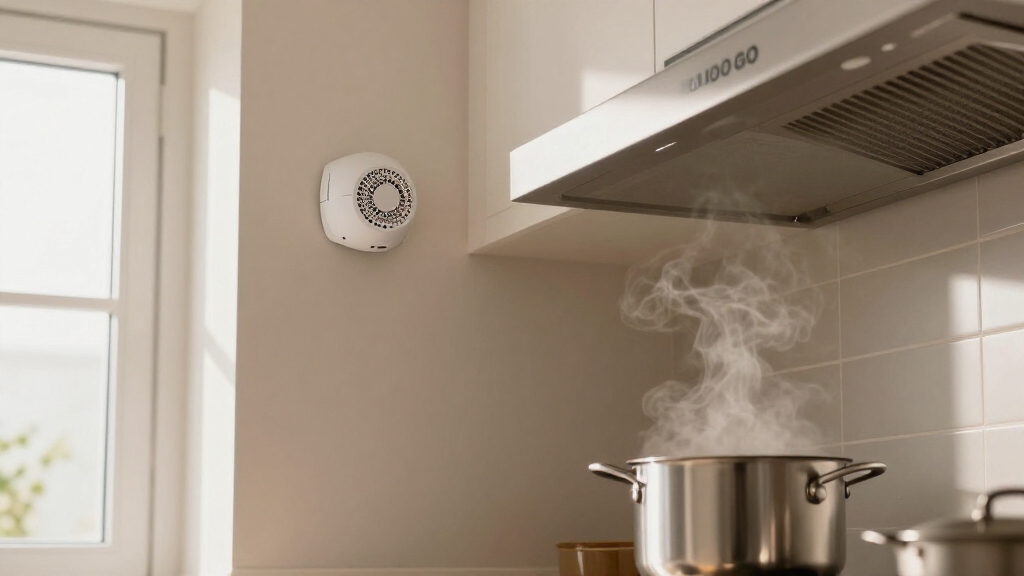
Although smoke detectors are essential for safety, placing them too close to your stove or oven can cause frequent false alarms while cooking.
Smoke detectors near stoves often trigger false alarms during cooking, despite their critical safety role.
To prevent this, position your smoke detector at least 10 feet away from fixed cooking appliances, following NFPA 72 guidelines.
If relocation isn’t feasible, consider installing a heat detector instead, as it reacts to temperature changes rather than smoke particles.
Always keep your stovetop and oven clean to minimize smoke from residue.
Replace aging detectors regularly, changing batteries twice a year and swapping units every ten years to guarantee reliable operation.
Proper placement and maintenance reduce nuisance alarms, so you can cook confidently without compromising safety.
For optimal function, install detectors on ceilings away from vents and drafts, as recommended in Mounting Details & Specific Placement Rules.
Choose Heat or Nuisance-Resistant Alarms for Kitchens
Choosing the right alarm for your kitchen can markedly reduce false alerts caused by everyday cooking activities. Standard smoke detectors often react to normal cooking smoke or steam, triggering nuisance alarms. Instead, opt for heat or nuisance-resistant alarms designed to minimize false triggers without compromising safety.
Consider these points when selecting your kitchen alarm:
- Choose a heat detector that responds to temperature increases, not smoke.
- Select UL 217-rated nuisance-resistant smoke alarms to reduce sensitivity to cooking particles.
- Verify local codes allow heat detectors or specialized alarms in your kitchen.
- Replace older alarms regularly to maintain proper function and responsiveness.
Photoelectric alarms are especially effective for kitchens because their design reduces false alarms from cooking smoke and steam while providing reliable smoke detection.
Improve Kitchen Ventilation to Reduce False Alarms
Selecting the right alarm for your kitchen cuts down on false alerts, but proper ventilation plays a key role in keeping nuisance alarms at bay.
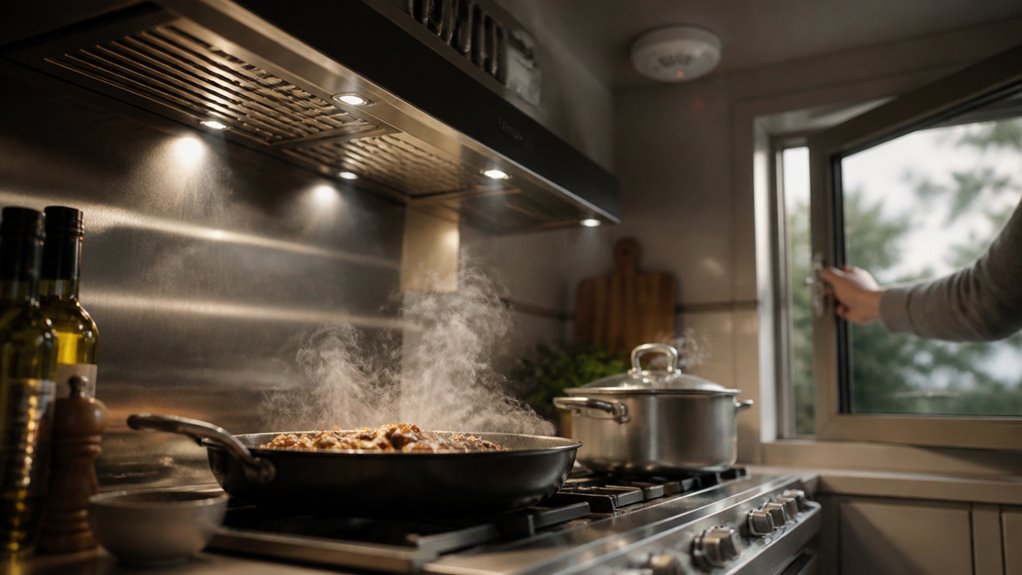
Before cooking, turn on your range hood or kitchen extractor to capture smoke and steam early.
Activate your range hood before cooking to effectively capture smoke and steam from the start.
Opening windows enhances airflow, pushing smoke away from detectors.
Use a fan to direct air toward vents, preventing smoke buildup near alarms.
Increase ventilation especially during high-smoke cooking methods like frying or broiling.
After cooking, keep ventilation running until smoke and steam clear completely.
These actions reduce airborne particles that trigger alarms unnecessarily.
By proactively managing airflow, you maintain a safer kitchen environment and avoid frequent false alarms.
This ensures your fire alarm signals real emergencies without interruption.
Improving ventilation is especially important in small kitchens where smoke particle concentration rises rapidly.
Manage Cooking Practices to Minimize Smoke and Steam
When cooking, controlling smoke and steam at the source helps prevent false fire alarms and keeps your kitchen safer.
You can minimize alarm triggers by managing how you cook and maintain your equipment.
- Preheat oil gradually and avoid overheating pans to reduce smoke.
- Never leave food unattended; small burns can quickly produce smoke.
- Use cookware at appropriate temperatures, especially for frying or broiling.
- Clean trays, oven floors, and burners regularly to eliminate burnt residue that could smoke.
Additionally, keeping a Class K extinguisher accessible in the kitchen ensures safety in case of grease fires.
How to Silence, Reset, and Troubleshoot Smoke Alarms?
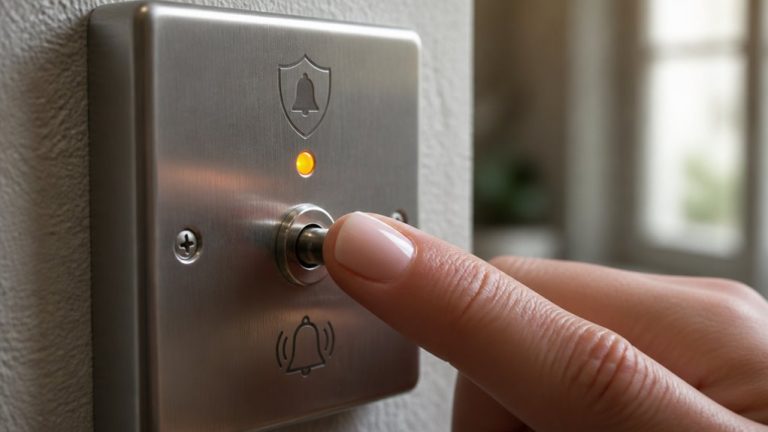
Managing smoke and steam effectively helps reduce false alarms, but occasional nuisance triggers can still happen. When this occurs, press the hush or silence button to temporarily stop the alarm.
Effectively managing smoke and steam reduces false alarms, but occasional nuisance triggers may require using the hush button.
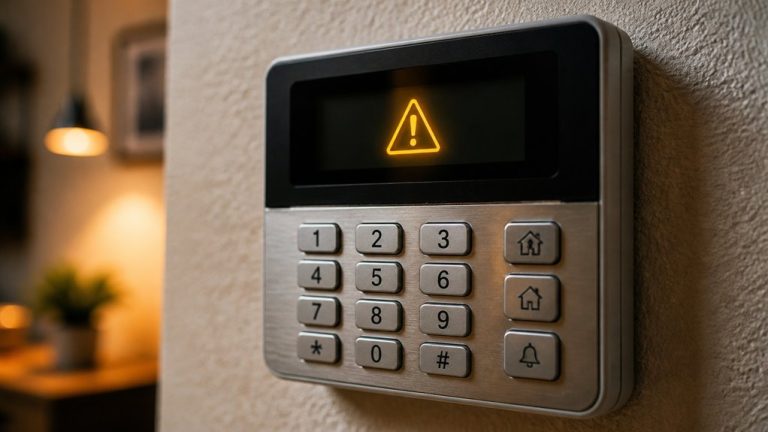
Remember, most alarms will reactivate automatically after 10 to 15 minutes. If your system includes a control panel, reset it once the air clears to make certain full functionality. Always verify the alarm has stopped flashing or showing error indicators after silencing.
If false alarms persist, check the detector’s location, type, and cleanliness. Dust or residue buildup can cause erratic behavior. Replace weak batteries promptly and confirm proper power supply.
Consistent false alarms may require relocating the detector or installing a nuisance-resistant model. Never disable or cover alarms permanently, as this compromises safety.
For hardwired or interconnected alarms, press the Test/Silence button on the initiating unit to mute the entire network of alarms during nuisance events.
Frequently Asked Questions
Can Certain Cooking Oils Cause More Smoke and Alarm Triggers?
Yes, certain cooking oils can produce more smoke and trigger your fire alarm. Oils with low smoke points, like unrefined olive oil or butter, start smoking at lower temperatures, releasing particles that set off alarms.
To prevent this, use oils with higher smoke points, such as avocado or refined canola oil, and heat them gradually. Monitoring temperature closely helps you avoid excessive smoke and nuisance alarms during cooking.
How Often Should I Clean My Smoke Detector to Prevent False Alarms?
You should clean your smoke detector at least twice a year to prevent false alarms.
Dust, dirt, and cooking residue can build up inside and trigger the sensor.
Use a vacuum or soft brush to gently remove debris from the unit’s vents and sensors.
Regular maintenance keeps your detector reliable and responsive, reducing nuisance alarms while ensuring it’ll activate properly in a real emergency.
Don’t forget to replace batteries and test it monthly.
Are There Specific Alarm Brands Recommended for Kitchens?
Think of kitchen alarms like a smoke filter on your camera. Some brands just handle smoke better.
Kidde and First Alert offer UL 217-rated nuisance-resistant smoke alarms, designed to reduce false alarms from cooking smoke.
Nest Protect is another popular option with smart features and hush modes. Choosing these brands helps you avoid constant beeping during dinner prep, keeping your kitchen safe without the frustration of frequent false alarms.
Can Humidity Levels Affect Smoke Alarm Sensitivity While Cooking?
Yes, humidity levels can affect your smoke alarm’s sensitivity while cooking.
High humidity, like steam from boiling water or simmering, can trigger false alarms. This is because moisture particles resemble smoke to the sensor.
To reduce this, you should improve ventilation by using range hoods or opening windows.
Also, consider installing a heat detector or a nuisance-resistant smoke alarm designed to better handle humidity and steam in kitchen environments.
Is It Safe to Use Smart Home Devices to Control Smoke Alarms?
Yes, it’s safe to use smart home devices to control smoke alarms, provided you follow manufacturer guidelines and local safety codes.
Smart controls can offer convenience by allowing you to silence alarms remotely or receive alerts when you’re away.
However, don’t disable alarms permanently or rely solely on smart features. Always maintain your smoke alarms properly to ensure they function correctly in emergencies.
Use smart tech as a supplement, not a replacement, for safety.
Use the Right Alarm Type for Kitchen Safety
By positioning smoke detectors wisely and choosing heat-resistant alarms, you’ll keep false alerts at bay.
Improving ventilation and managing cooking habits act like a shield, protecting your peace of mind.
Remember, knowing how to silence and reset alarms guarantees you stay in control when the unexpected happens.
With these steps, you’ll cook confidently without the fire alarm’s unwelcome chorus stealing the show.