
Yes, a certified locksmith can open your safe efficiently using specialized non-destructive tools and techniques tailored to your safe’s lock type.
They skillfully manipulate combination dials, decode electronic locks with authorized devices, or carefully drill only when necessary to avoid damage.
Locksmiths verify ownership, maintain privacy, and can reset combinations afterward to guarantee security.
Their expertise minimizes risks you’d face attempting DIY solutions. Explore how they handle various locks and safeguard your valuables with precision and care.
Key Takeaways
- Locksmiths use non-destructive techniques like dial manipulation and electronic overrides to open most safes without damage.
- They can handle various safes, including fire-resistant, gun, wall, and electronic models with mechanical or digital locks.
- Specialized tools such as dial indicators, borescopes, and Black Box devices enable efficient and precise safe opening.
- When necessary, locksmiths perform careful drilling to access jammed or irreparably damaged locking mechanisms.
- Certified locksmiths verify ownership, ensuring secure, discreet service with post-opening lock repair or code resetting.
How Do Locksmiths Open Safes Without Damaging Them?
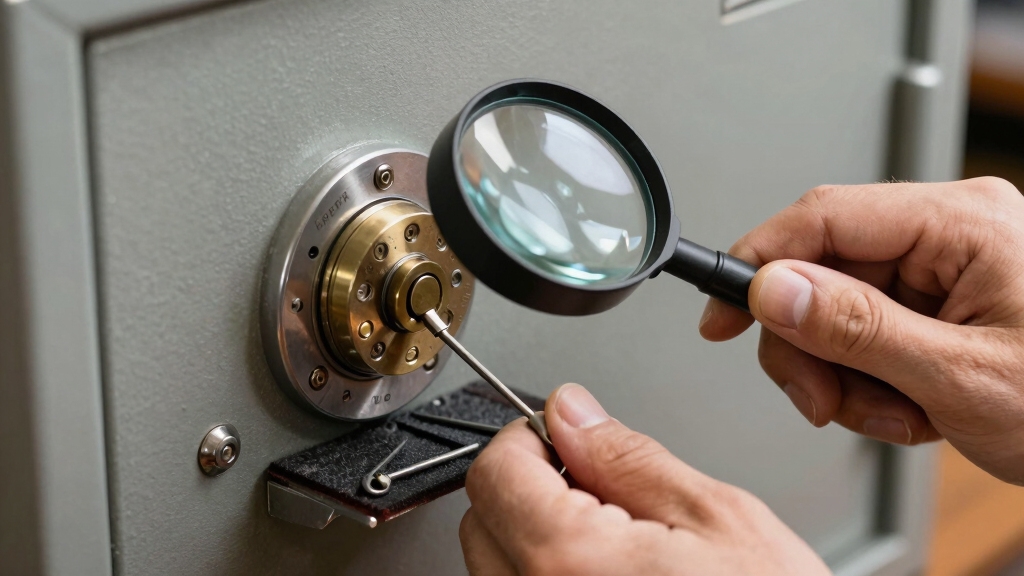
When locksmiths set out to open safes without causing damage, they rely on advanced techniques that prioritize preserving the safe’s integrity.
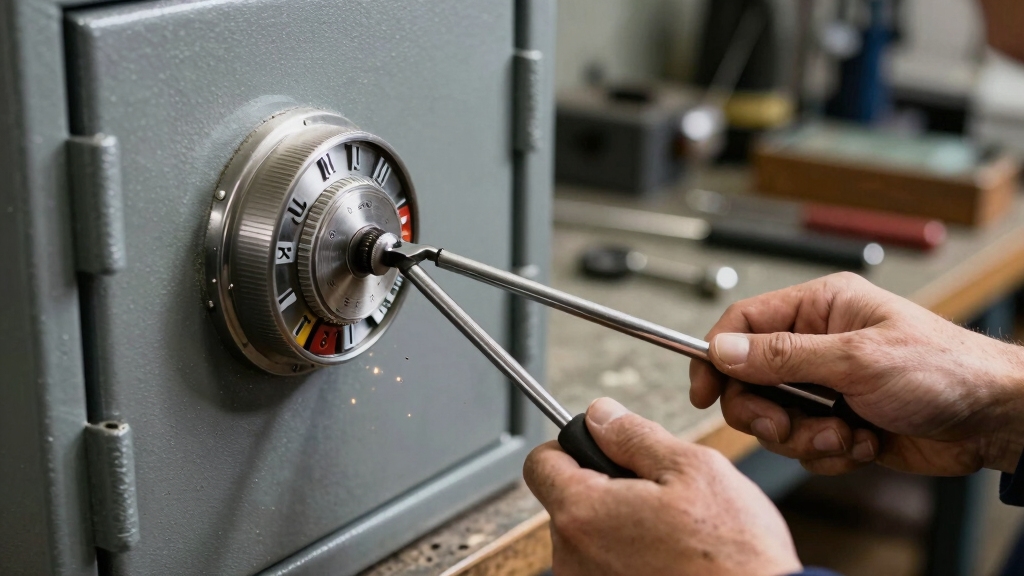
You’ll find they use non-destructive methods like dial manipulation, carefully measuring resistance to decode combinations without force.
For older locks, tension and jiggle tools gently engage locking mechanisms, avoiding any damage.
They also utilize precision instruments such as borescopes, which let them visually inspect internal components, and dial indicators to accurately interpret combination sequences.
When electronic locks are involved, authorized locksmiths deploy specialized devices like the Black Box to override codes without drilling.
These professionals combine skill, factory training, and certified tools to make certain efficient access while maintaining the safe’s structural and security features intact.
This approach prevents repair costs and maintains your privacy.
Emergency or after-hours calls for locksmith services often add 25%–100% to base costs, so planning ahead can save you money.
What Types of Safes Can Locksmiths Open?
Locksmiths handle a wide range of safe types, each requiring specific expertise and tools to access securely and efficiently.
You can rely on them to open fire-resistant safes, burglary safes, standalone home safes, and specialized units like gun safes.
They also handle wall, floor, jewelry, office, and drop safes, adapting techniques to each model’s design and locking mechanism.
Whether the safe uses combination locks, keyed locks, or electronic locking systems, locksmiths possess the necessary certifications and factory training to manage them.
Their authorized access to all safe makes guarantees they can open, repair, or reprogram safes without causing damage. By using precise tools such as borescopes, dial indicators, and electronic Black Boxes, they maintain security integrity while providing efficient entry.
Additionally, locksmiths are trained to work with electronic and RFID locks, integrating knowledge of biometric and encryption protections to ensure safe access without compromising security.
How Do Locksmiths Open Combination Locks?
When you find yourself needing to open a combination lock, locksmiths have some clever tricks up their sleeves. They use what’s called dial manipulation techniques, which basically means they measure the resistance of the dial to figure out the right sequence.
To do this, they rely on precise tools like dial indicators and borescopes. These tools help them decode the lock without causing any damage, which is pretty impressive!
This method not only ensures quick access but also keeps the lock intact, so you don’t have to worry about replacing it afterward. It’s a neat balance of skill and technology that locksmiths use to get the job done efficiently.
In a similar way to how a convex lens bends light to magnify objects, locksmiths use specialized optical tools to enhance their ability to see inside complex lock mechanisms.
Combination Dial Manipulation
Decoding a combination dial requires a keen understanding of the safe’s internal mechanics and precise manipulation techniques.
When you manipulate the dial, you’re feeling for subtle feedback from the lock’s internal wheels and gates. This tactile sensitivity lets you identify the exact combination without causing damage.
The process involves:
- Rotating the dial slowly to detect changes in resistance.
- Noting subtle clicks or binding points indicating wheel alignment.
- Using these tactile cues to determine each number in the combination.
- Verifying the sequence by repeating the manipulation to confirm accuracy.
Locksmiths rely on their understanding of mechanical feedback to interpret these subtle signals correctly.
Precision Tools Utilization
To zero in on a safe’s combination, experts rely on precision tools that reveal the internal lock mechanics without causing harm.
You’ll see locksmiths use a dial indicator to measure subtle movements and resistance changes on the combination dial.
This tool helps you detect the exact points where the lock’s internal wheels align.
Additionally, a borescope provides a visual of the lock’s tumblers, allowing you to verify their position without drilling.
When combined, these instruments enable you to decode the combination efficiently and non-destructively.
For electronic safes, specialized devices like the Black Box overwrite or reset codes, granting access without damage.
Locksmiths often complement these tools with specialized electronic devices designed to interact directly with digital locking mechanisms for faster access.
How Do Locksmiths Open Electronic and Digital Safes?
When you find yourself locked out of an electronic or digital safe, it can be quite the headache, right?
Luckily, locksmiths have some advanced techniques up their sleeves that are specifically designed for these kinds of situations.
They often use digital lock override tools, like the Black Box. This nifty device helps them bypass or reset codes without causing any damage to the safe itself.
Pretty impressive, huh?
These methods not only ensure that you gain access efficiently, but they also help maintain the integrity of the locking mechanism.
Electronic Safe Access Techniques
In gaining access to electronic and digital safes, locksmiths rely on advanced tools like the Black Box. This tool can overwrite codes without damaging the lock mechanism.
You’ll find that these methods preserve the safe’s integrity while ensuring quick access. Locksmiths employ precise techniques tailored to the safe’s electronic system, including:
- Code bypassing through authorized electronic overrides.
- Firmware resetting to restore default factory settings.
- Signal interception for electronic keypad input analysis.
- Diagnostic scanning to identify lock status and error codes.
It is crucial to prioritize safety measures during these procedures to prevent damage and ensure compliance with legal regulations.
Digital Lock Override Tools
Locksmiths rely on specialized digital lock override tools to quickly and securely access electronic and digital safes without causing damage.
You’ll find these tools essential when bypassing complex electronic locking mechanisms, as they interface directly with the safe’s control board or keypad.
Devices like the Black Box allow technicians to overwrite existing codes or reset lock parameters without drilling or force.
Using manufacturer-specific software and hardware, locksmiths can decode encrypted signals, enabling safe access while preserving the lock’s integrity.
These tools also support safe diagnostics and post-access repair, ensuring full operational restoration.
When you encounter an electronic safe lockout, relying on digital override tools offers a precise, efficient solution that avoids destructive entry and maintains the highest security standards.
Some advanced override tools incorporate low-noise amplification technologies to accurately interpret electrical signals without interference, ensuring reliable access.
When Do Locksmiths Need to Drill Safes?
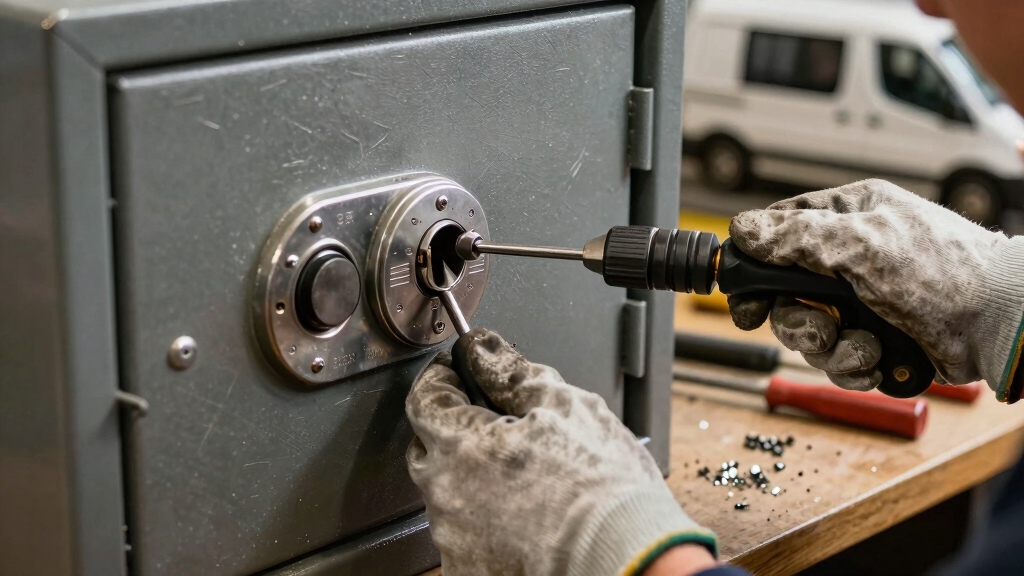
Although locksmiths use a variety of non-destructive techniques to open safes, drilling becomes necessary when all other methods fail or the lock mechanism is severely damaged.
You’ll find drilling essential in situations where:
- The safe’s locking components are corroded or jammed beyond manipulation.
- The combination lock or electronic system is irreparably malfunctioning.
- Emergency access is required, and time-sensitive entry is critical.
- Previous forced entry attempts have compromised lock integrity.
Drilling provides direct internal access, allowing locksmiths to bypass complex or damaged locking mechanisms efficiently.
Certified professionals use precise drilling methods with graduated bit sizes to minimize damage, preserving the safe’s structural integrity.
This approach guarantees you regain access swiftly while enabling subsequent repair or reinstallation of the locking system.
Locksmiths often recommend routine maintenance checks to assess lock condition and potentially avoid the need for drilling.
What Specialized Tools Do Locksmiths Use to Open Safes?
When you need to access a safe without causing damage, professionals rely on specialized tools designed for precision and efficiency. These instruments allow locksmiths to manipulate locks, decode combinations, and visualize internal components accurately.
| Tool Name | Purpose | Application |
|---|---|---|
| Borescope | Internal tumbler visualization | Inspect lock mechanisms |
| Dial Indicator | Precise combination decoding | Measure dial resistance |
| Black Box | Electronic code overwriting | Bypass electronic safes |
Locksmiths use lock-picking sets for mechanical locks and tension wrenches for dial manipulation. The Black Box targets electronic safes, efficiently overriding codes.
These tools enable non-destructive entry, preserving the integrity of your safe while ensuring rapid, secure access. Proper use of specialized detection tools can enhance the accuracy and safety of accessing locked mechanisms.
How Do Locksmiths Keep Your Safe Secure and Private?
Because your safe holds valuable and sensitive items, maintaining strict security and privacy during service is paramount.
When locksmiths work on your safe, they adhere to rigorous protocols to protect your contents and information.
- They verify your identity and safe ownership before proceeding.
- Certified technicians use non-destructive tools to prevent damage and exposure.
- They operate discreetly, ensuring no unnecessary personnel access your safe or data.
- After service, they secure and test the safe thoroughly to maintain its integrity.
These measures guarantee your safe remains secure and private throughout the process. Additionally, locksmiths often ensure that the safe’s reinforced core materials and locking mechanisms are intact to maintain optimal protection.
Can Locksmiths Change Safe Combinations After Opening?
If you’ve just had your safe opened by a locksmith, you can expect them to efficiently change the combination to restore your security.
Certified and factory-trained locksmiths use specialized tools and protocols to reset or reprogram your safe’s lock system immediately after opening.
Certified locksmiths employ specialized tools and protocols to promptly reset or reprogram your safe’s lock system after opening.
Whether your safe features a mechanical dial, electronic keypad, or hybrid mechanism, the locksmith adjusts the combination per manufacturer specifications, ensuring full operational integrity.
They verify the new code’s functionality to prevent lockout scenarios.
This service is vital for maintaining your safe’s security, especially after forced opening or lost combination incidents.
Trust licensed experts authorized for all safe models to handle combination changes precisely, safeguarding your contents without compromising the lock’s durability or security features.
How Quickly Can a Locksmith Open Your Safe?
When you call a certified locksmith to open your safe, you can typically expect them to get the job done within 30 to 90 minutes.
Pretty reasonable, right? But, of course, this time can vary quite a bit based on a few factors.
For instance, the type of lock and the model of the safe play a huge role in how quickly it can be opened.
If the lock is particularly complex or if the safe is built with heavy-duty materials, it might take a bit longer.
And let’s not forget about those non-destructive methods—if those are possible, they can really speed things up!
So, understanding these variables is key.
It helps you set realistic expectations about how fast the locksmith can work their magic and get you back into your safe.
Average Opening Time
Locksmiths typically break down the average opening time based on the safe’s type, lock complexity, and condition. You can expect varied durations depending on these factors.
Generally, here’s what influences the timeline:
- Simple Keyed Locks – Often opened within 10 to 20 minutes using standard lock-picking tools.
- Combination Dial Locks – Require 30 to 60 minutes for manipulation and decoding via dial indicators.
- Electronic Locks – May take 20 to 45 minutes employing specialized devices like the Black Box.
- High-Security or Fire-Resistant Safes – Can require 1 to 3 hours due to advanced locking mechanisms and reinforced materials.
These estimates assume professional locksmiths use authorized methods and tools. This ensures efficient and damage-free access without compromising your safe’s integrity.
Factors Affecting Speed
While various safes may appear similar, several critical factors directly influence how quickly a locksmith can gain access to your safe.
The safe’s type, whether fire resistant, burglary, or electronic, determines the complexity of the opening method.
Combination locks require precise dial manipulation and decoding, extending the time.
Keyed locks may be quicker with standard tools.
The lock’s condition and security features, such as anti-drill plates or advanced electronic systems, also affect speed.
Additionally, the locksmith’s access to specialized tools like borescopes, Black Box devices for electronic safes, and calibrated drill bits expedites the process.
Finally, professional expertise and familiarity with specific safe models streamline opening while minimizing damage.
This ensures efficient service without compromising your safe’s integrity.
Why Hire a Certified Locksmith Instead of Trying DIY?
Cracking open a safe without professional help may seem tempting but often leads to unintended damage or prolonged lockout.
Attempting to crack a safe yourself often results in damage or getting locked out longer.
When you hire a certified locksmith, you leverage specialized training, authorized tools, and proven techniques designed for your safe’s specific model and lock type.
Here’s why you should avoid DIY attempts:
- Certified locksmiths use non-destructive methods like dial manipulation and borescope inspection, preserving your safe’s integrity.
- They possess factory training and authorization for all safe makes, ensuring expert handling.
- They integrate repair services immediately post-opening, saving you time and cost.
- Professionals maintain your security and privacy, preventing exposure of sensitive contents.
Trust certified experts to deliver efficient, damage-free access where DIY risks costly errors.
Frequently Asked Questions
How Much Does It Typically Cost to Have a Safe Opened by a Locksmith?
You can expect to pay between $150 and $500 for a locksmith to open your safe, depending on complexity, lock type, and location.
High-security or electronic safes may increase costs due to specialized tools and expertise required.
Some locksmiths charge a flat fee, while others bill hourly.
Always confirm pricing upfront, ensuring the locksmith is certified and authorized to handle your safe model for efficient, damage-free service.
Are Locksmith Services for Safes Available 24/7 Emergency?
You might worry locksmith emergency services won’t be available when you urgently need them, but many certified locksmiths offer 24/7 safe-opening assistance.
Their licensed, factory-trained teams use specialized tools like borescopes and dial indicators to quickly and securely open safes without damage, regardless of time.
This around-the-clock availability guarantees you gain immediate access while maintaining your safe’s integrity and security, even during unexpected lockouts or emergencies.
Can Locksmiths Open Old or Antique Safes With Unknown Lock Types?
Yes, you can trust locksmiths to open old or antique safes with unknown lock types. They use specialized tools like borescopes for internal visualization and tension wrenches for delicate lock manipulation.
Their expertise includes handling combination, keyed, dial, and mechanical locks without causing damage. With factory training and precise techniques, you’ll gain secure access while preserving your safe’s integrity and historical value.
What Identification Is Required for Locksmiths to Open a Safe?
Before the locksmith’s tools touch the safe’s fortress, you’ll need to present proof of ownership. This is a key that opens trust.
Typically, you must show government-issued ID and documentation verifying your right to access the safe, such as a purchase receipt or property deed.
This safeguards your valuables and guarantees legal compliance. Locksmiths adhere to strict protocols, verifying identity meticulously to maintain security and avoid unauthorized entry.
Do Locksmiths Offer Safe Installation and Maintenance Services?
Yes, locksmiths offer safe installation and maintenance services.
You can rely on certified, factory-trained professionals to install your safe securely, ensuring maximum protection.
They also provide routine maintenance, including combination changes and lock repairs, to keep your safe functioning flawlessly.
Their expertise covers all safe types and models, guaranteeing efficient service without compromising security.
Trust licensed locksmiths to handle installation and upkeep with precision and care.
When Hiring a Professional Locksmith Is the Smartest Choice?
When you need to access your safe, a certified locksmith is your key to peace of mind, unfastening solutions without damage.
They skillfully handle various lock types, mechanical or digital, while maintaining your security and privacy.
Trying to DIY can turn a simple task into a fortress of frustration.
Trust a professional who works swiftly and precisely, ensuring your valuables remain protected and your safe functions flawlessly, like a well-oiled machine.