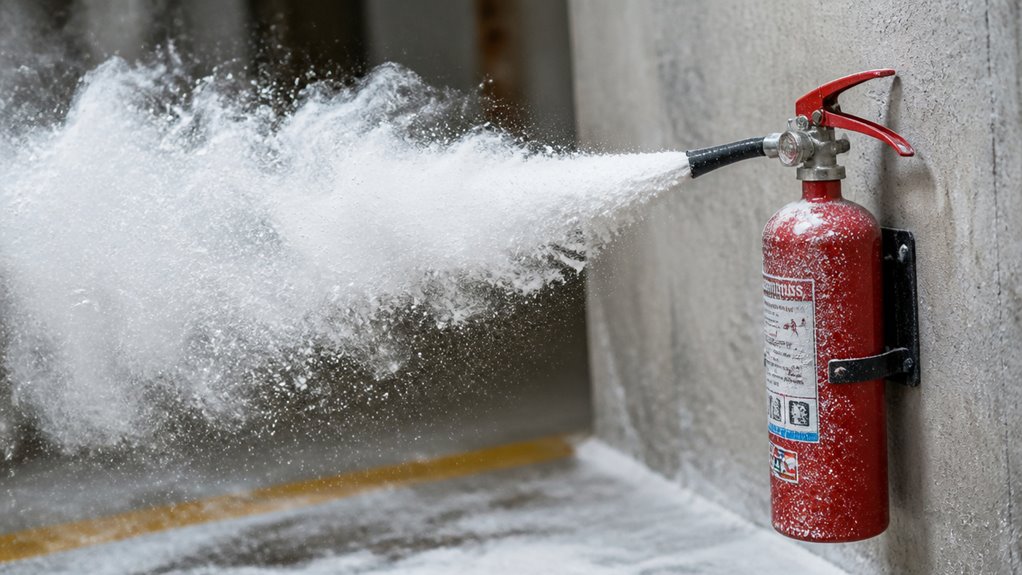

Fire extinguisher discharge time typically ranges from 8 to 30 seconds, depending on the type, size, and agent used.
Dry chemical units usually last 8 to 20 seconds, while CO2 models discharge faster, around 5 to 20 seconds.
Standards like ISO 7165 require discharge to begin within 4–5 seconds of activation, ensuring reliable performance.
Since agent supply depletes quickly, you need quick and decisive action to control fires effectively.
Understanding these factors helps you select and use extinguishers strategically.
Key Takeaways
- Fire extinguisher discharge time typically ranges from 8 to 30 seconds, varying by size, agent type, and design.
- Discharge begins when the valve fully opens and should start within 4–5 seconds after activation per ISO standards.
- Dry chemical extinguishers usually discharge between 8 and 20 seconds, while CO2 units tend to have shorter durations of 5 to 20 seconds.
- Rapid, sweeping aim-low application maximizes effectiveness during the limited agent discharge time.
- Selecting an extinguisher with adequate discharge time is crucial for the specific fire hazard and environment.
Understanding Fire Extinguisher Discharge Time
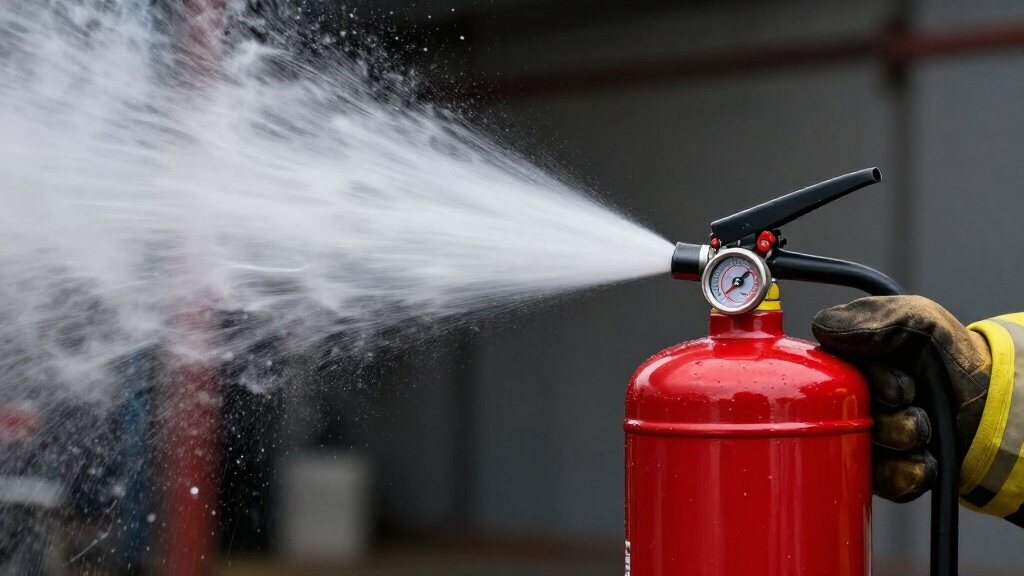
When you pull the pin and squeeze the handle of a fire extinguisher, the discharge time starts ticking immediately.
Discharge time is the interval from agent release at the nozzle until the effective discharge ends. According to ISO, effective discharge begins when the valve fully opens, marking the start of agent expulsion.
This interval is typically measured in seconds, reflecting the extinguisher’s size, agent type, and design. You’ll find most portable extinguishers discharge within a short span, often under 30 seconds, demanding swift, decisive action.
Understanding this interval helps you grasp how quickly the extinguishing agent is delivered. It emphasizes the importance of rapid deployment and accurate targeting to maximize effectiveness before the agent supply depletes.
Activation immediately releases pressurized powder that smothers flames and halts combustion, making quick discharge essential for fire suppression.
Typical Discharge Times for Portable Extinguishers
Portable fire extinguishers typically discharge their agent within a narrow time frame, usually ranging from about 8 to 30 seconds. This limited window demands prompt and effective use. Knowing typical discharge times helps you plan your response during a fire emergency.
Here’s what you should keep in mind:
- Most hand-held extinguishers release their agent in 8 to 25 seconds.
- Smaller home-use units often discharge in about 8 to 10 seconds.
- Larger portable models can extend discharge times up to 30 seconds or slightly longer.
Understanding these ranges lets you anticipate how long the agent will last once you activate the extinguisher. This knowledge supports rapid decision-making and efficient fire suppression when seconds matter most. For safety and reliability, regular inspections and professional servicing are essential to ensure extinguishers function properly during their limited discharge time.
How Extinguisher Type, Size, and Agent Affect Discharge Time?
Although discharge time varies widely, the type, size, and agent of a fire extinguisher play critical roles in determining how long the agent is released.
Discharge time depends largely on the extinguisher’s type, size, and agent used.
For example, smaller dry chemical extinguishers typically discharge between 8 and 20 seconds. Carbon dioxide units often have shorter durations, around 5 to 20 seconds.
Larger extinguishers or wheeled units provide longer discharge times, sometimes up to 60 seconds. The agent’s physical properties also influence discharge rate; dry chemicals expel rapidly due to powder flow, while CO₂ relies on pressurized gas expansion.
Size directly correlates with agent volume, so larger tanks sustain discharge longer, but portability decreases. Understanding these factors helps you select an extinguisher that balances effective discharge time with usability for your specific fire safety needs.
ABC extinguishers use a stored-pressure design that ensures reliable discharge and operation within a broad temperature range, contributing to consistent performance.
What ISO and NFPA Standards Say About Discharge Time?
Since discharge time critically affects extinguisher performance, ISO and NFPA standards set clear requirements to guarantee reliability and effectiveness.
ISO 7165 specifies minimum effective discharge times based on extinguisher ratings: 8 seconds for 1A-rated and 13 seconds for 2A or higher. It mandates that discharge must begin within 5 seconds after valve operation.
NFPA 10 commentary confirms typical discharge times range from 8 to 30 seconds, acknowledging some models exceed this.
Key points to note:
- ISO requires timely commencement of discharge, typically within 4 to 5 seconds after valve opening.
- Minimum effective discharge times vary by extinguisher rating to assure adequate fire suppression.
- NFPA acknowledges practical discharge variations, reinforcing design and testing standards.
These standards secure your reliance on extinguishers that perform predictably under fire conditions. Regular inspection and adherence to NFPA 10 replacement guidelines ensure extinguishers maintain optimal discharge performance throughout their service life.
Why Fast Discharge Time Means Quick Action Is Critical?
You’ve got just seconds to use that agent before it’s all gone, so acting fast is super important.
If you wait too long, you’re not only wasting valuable time but also cutting down on the extinguishing agent you have at your disposal. That can really make it tough to get a handle on the fire.
When you jump into action right away, you’re making the most of that short discharge time.
It’s all about maximizing your chances to suppress the fire effectively. So, remember: quick, decisive action is key!
Maintaining proper pressure levels ensures the spray duration remains consistent during use.
Limited Agent Availability
Because portable fire extinguishers typically discharge their agent within seconds, you must act quickly and decisively to maximize effectiveness. Limited agent availability means you have only a brief window to suppress the fire before the extinguisher empties.
This constraint demands precise timing and accurate targeting.
Consider these key points:
- Most handheld extinguishers release their agent in 8 to 30 seconds, limiting the duration of your fire suppression efforts.
- Delaying activation wastes valuable agent, reducing your chance to control the fire effectively.
- Once the agent is depleted, you must evacuate or find alternative suppression means immediately.
Understanding this limited agent supply helps you prepare for rapid, focused action. It emphasizes the importance of readiness and swift decision-making during a fire emergency. Additionally, modern extinguishers feature pressure relief valves that ensure gradual and controlled discharge of their contents.
Immediate Fire Suppression
Although fire extinguishers discharge their agent rapidly, often within seconds, the effectiveness of suppression hinges on your ability to act immediately.
Discharge times commonly range from 8 to 30 seconds depending on extinguisher type and size. Hesitation reduces your agent’s impact.
You must initiate discharge within seconds of identifying a small fire to maximize containment.
Delays deplete the limited agent supply quickly, limiting multiple attempts and increasing fire growth risk.
ISO standards require discharge commencement within 4 to 5 seconds after valve activation, underscoring the need for swift operation.
By directing the agent accurately and promptly, you optimize suppression effectiveness within the brief discharge window.
Quick, decisive use is critical to controlling incipient-stage fires before the extinguisher’s agent is fully expended.
Always position yourself with a clear exit behind you to assure quick escape while operating.
Comparing Dry Chemical and Carbon Dioxide Discharge Times
You’ll notice that dry chemical extinguishers usually discharge between 8 and 20 seconds, giving you a bit more time to suppress the fire.
On the other hand, carbon dioxide units typically release their agent in about 5 to 20 seconds, often leaning toward the shorter side of that range.
So, why does this matter? Well, understanding these timing differences is key when it comes to picking the right extinguisher for your specific fire risk and response needs.
Whether you’re dealing with flammable liquids or electrical fires, knowing what to expect can make all the difference!
Proper maintenance and inspection of dry chemical extinguishers ensure they perform reliably within these discharge time frames.
Dry Chemical Duration
Dry chemical extinguishers typically discharge faster than carbon dioxide units, making their operational duration a critical factor in fire response.
Most hand-portable dry chemical models release their agent within 8 to 20 seconds, demanding swift, confident action.
When using dry chemical extinguishers, consider these key timing points:
- Smaller units often discharge in about 10 to 17 seconds, per FM data.
- Typical 5 lb ABC extinguishers last roughly 13 to 15 seconds.
- Larger or wheeled dry chemical units can extend discharge up to 45 or 60 seconds.
This rapid discharge means you must aim and sweep efficiently, as the agent supply depletes quickly.
Understanding dry chemical duration helps you select the right extinguisher and prepare for effective, timely fire suppression.
Purple K extinguishers, known for their rapid interruption of the chemical chain reaction, typically have discharge durations within this range, ensuring quick flame knockdown on Class B and C fires.
Carbon Dioxide Timing
Comparing discharge times reveals that carbon dioxide extinguishers typically operate within a shorter duration than many dry chemical models.
CO2 units usually discharge effectively between 5 to 20 seconds, whereas dry chemical portable extinguishers commonly range from 8 to 20 seconds for smaller sizes.
This shorter window means you must act decisively when using CO2 extinguishers.
The rapid discharge results from the high-pressure release of carbon dioxide gas, which cools and suffocates the fire but leaves less agent available over time.
While dry chemical agents provide slightly longer discharge times, CO2 units excel in quick suppression of electrical and flammable liquid fires.
Understanding these timing differences helps you select the correct extinguisher and plan your fire attack strategy efficiently, maximizing effectiveness within the limited discharge duration.
However, it is important to consider that dry chemical powders leave corrosive residue that can damage electronic components even after the fire is extinguished.
Fire Safety Planning Based on Discharge Time
When planning fire safety measures, understanding the limited discharge time of portable extinguishers is essential.
Since most extinguishers operate between 8 and 30 seconds, you must optimize response efficiency. Rapid, decisive action is imperative to maximize agent effectiveness before depletion.
To plan effectively, consider these key points:
- Pre-Identify Escape Routes: Ensure clear, accessible exits exist before extinguisher deployment to enable quick evacuation if suppression fails.
- Train for Swift Activation: Practice immediate discharge upon fire detection; hesitation wastes critical seconds of agent release.
- Match Extinguisher Size to Risk: Use units with adequate discharge time for the environment’s fire potential to allow thorough suppression attempts.
Choosing the Right Extinguisher by Discharge Time
Understanding extinguisher discharge time helps you select the right unit for specific fire risks and environments. You need to match discharge duration with the fire size and expected response speed.
For small, incipient fires, shorter discharge times (8–15 seconds) suffice. Larger hazards demand longer discharge (20+ seconds). Consider agent type, as dry chemical extinguishers discharge faster than CO₂ units.
| Extinguisher Type | Typical Discharge Time (seconds) |
|---|---|
| Dry Chemical (small) | 8 – 20 |
| Carbon Dioxide | 5 – 20 |
| Wheeled/Large Units | 45 – 60 |
Select an extinguisher with a discharge time that balances effective agent delivery and practical usability in your environment. Ensure compliance with ISO 7165 minimums.
Tips for Using Extinguishers Effectively Within Short Discharge Times
Act quickly and decisively to maximize the effectiveness of a portable fire extinguisher, since discharge times typically last only 8 to 30 seconds. Your response must be swift to fully utilize the limited agent supply before it depletes.
Follow these key tips:
- Aim low and sweep: Direct the nozzle at the fire base. Use a side-to-side sweeping motion to cover the fuel surface effectively.
- Maintain a safe distance: Stand 6 to 10 feet away to optimize agent reach and avoid heat exposure.
- Plan your escape route: Always position yourself with an accessible exit behind you to guarantee safety if the fire grows or the extinguisher runs out.
Frequently Asked Questions
How Is Discharge Time Measured During Extinguisher Testing?
During extinguisher testing, you measure discharge time from the moment the agent starts releasing at the nozzle until the effective discharge ends.
Standards like ISO 7165 define this as the interval from valve opening to full gas flow cessation.
You’ll use a stopwatch or timing device, ensuring the valve opens fully within 5 seconds.
This precise timing helps verify compliance with minimum discharge durations required for different extinguisher ratings.
Can Discharge Time Vary With Extinguisher Maintenance or Age?
Yes, discharge time can vary with extinguisher maintenance or age.
If you neglect regular inspections, seals, valves, or agent quality may degrade, causing slower or incomplete discharge.
Corrosion or leaks reduce pressure, shortening effective discharge time. Proper maintenance guarantees consistent performance within design specifications.
You should routinely check and service extinguishers to maintain peak discharge duration and reliability during emergencies.
Do Environmental Conditions Affect Extinguisher Discharge Time?
Just as a marathon runner’s pace shifts with weather, your extinguisher’s discharge time can vary with environmental conditions.
Extreme cold may thicken the agent or reduce pressure, shortening effective discharge time. High heat might increase pressure but risk valve malfunction.
Humidity and altitude also influence agent behavior and nozzle performance.
How Does Discharge Time Impact Refill and Recharge Procedures?
Discharge time directly affects your refill and recharge procedures by determining how much agent and propellant you must replace.
Shorter discharge times mean less agent is used, so refilling requires precise measurement to restore full capacity without overfilling.
Recharge protocols must guarantee the extinguisher meets minimum effective discharge durations per standards.
Accurate timing guarantees reliability, so you’ll verify discharge rates and pressures during maintenance to maintain performance and compliance.
Are There Differences in Discharge Time for Extinguishers Used on Electrical Fires?
Coincidentally, the discharge times for extinguishers used on electrical fires often align with those for other hazards.
You’ll find carbon dioxide extinguishers, common for electrical fires, typically discharge in 5 to 20 seconds.
This is slightly faster than many dry chemical units.
This quicker discharge suits the need for rapid suppression without residue.
Know Your Fire Extinguisher Discharge Time Before Use
Understanding discharge time is vital for effective fire response. You need to act fast. For example, in a warehouse fire, choosing a CO2 extinguisher with a short discharge time allowed quick suppression before flames spread.
Remember, discharge time varies by extinguisher type, size, and agent, so select accordingly. Knowing these details guarantees you’re prepared to control fires efficiently, minimizing damage and increasing safety.
Always match your extinguisher choice to your specific fire risk and response needs.