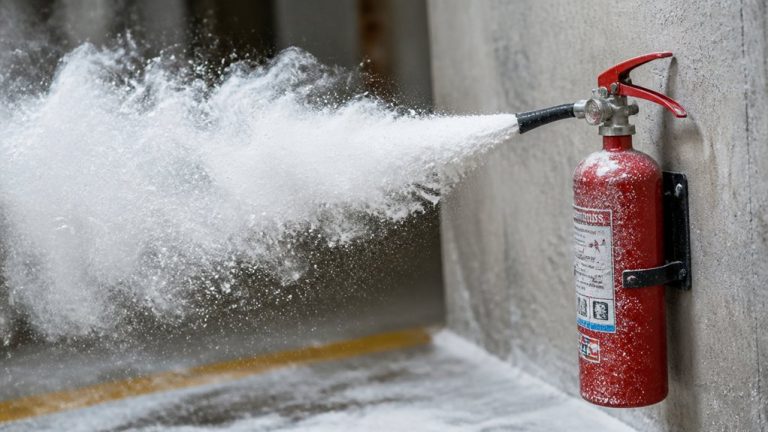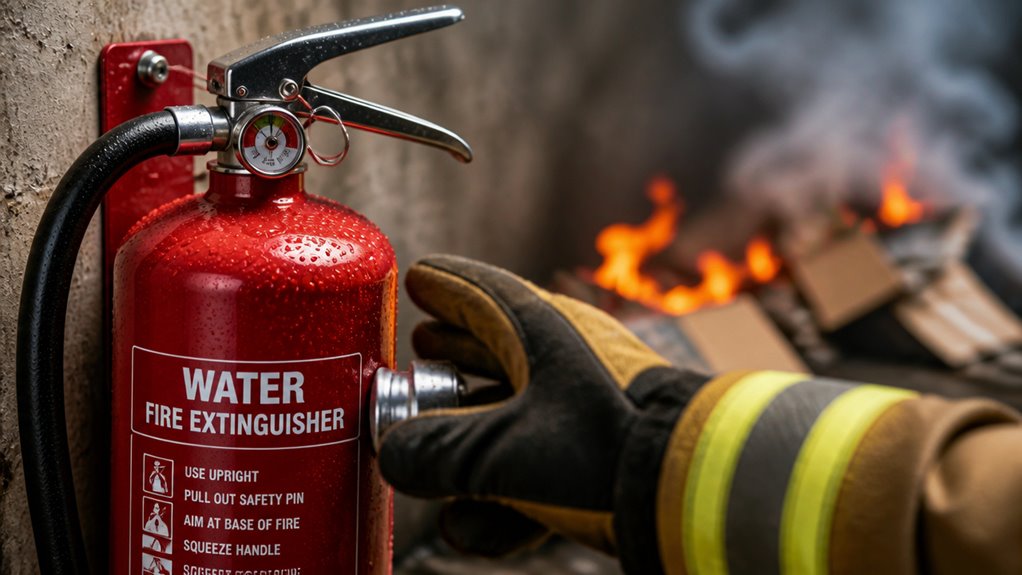

You use water extinguishers to put out Class A fires involving ordinary combustibles like wood, paper, fabric, and certain plastics by cooling the burning material below its ignition temperature.
They work by absorbing heat and reducing the risk of reignition through rapid cooling and steam production.
However, never use them on electrical or flammable liquid fires due to safety hazards.
Understanding proper use and limitations is essential for effective fire safety and prevention.
Key Takeaways
- Water extinguishers are used primarily for Class A fires involving ordinary combustibles like wood, paper, fabric, and certain plastics.
- They work by cooling burning materials below ignition temperature, stopping the combustion process effectively.
- Ideal for use in homes, offices, schools, and storage areas with solid organic materials such as timber and cardboard.
- Water extinguishers are not suitable for electrical, flammable liquid, or metal fires due to safety risks and inefficacy.
- Cleanup after use is simple since water leaves minimal residue and is environmentally friendly and cost-effective.
Which Fires Can Water Extinguishers Handle?
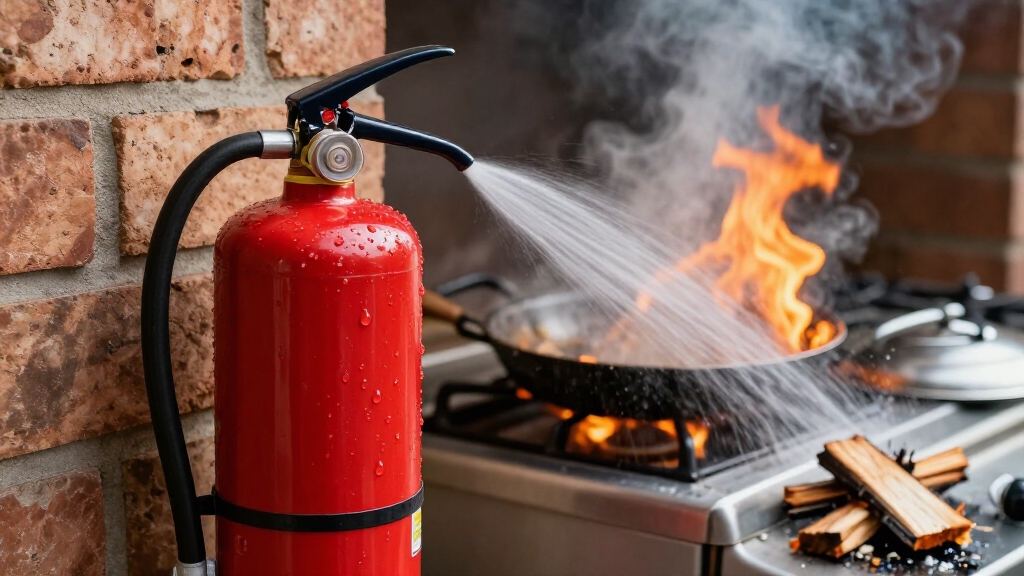
Water extinguishers are designed specifically to tackle Class A fires, which involve ordinary combustible materials such as wood, paper, fabric, and certain plastics.
Water extinguishers effectively combat Class A fires involving common combustibles like wood, paper, fabric, and plastics.
You’ll find these fires commonly occurring in environments like offices, schools, homes, and storage areas where solid combustibles are abundant.
These extinguishers target materials such as wood, paper, straw, coal, and soft furnishings.
They’re not suitable for fires involving flammable liquids, electrical equipment, or reactive metals.
When using a water extinguisher, you focus on solid combustible materials that burn with a visible flame and require cooling.
It’s critical to identify the fire class correctly before deploying a water extinguisher, as improper use can worsen the situation or pose severe safety risks.
Water extinguishers work primarily by absorbing thermal energy from the burning materials, effectively cooling them below their ignition points to safely suppress the fire.
How Water Extinguishers Fight Class A Fires?
Although many extinguishers rely on chemical reactions or oxygen displacement, water extinguishers fight Class A fires primarily by removing heat from the burning material.
When you aim the extinguisher at the base of the fire, the water cools the fuel below combustion temperature, halting the fire’s chemical process.
Additionally, water wets the fuel surface, reducing the chance of reignition. You’ll need to sweep the water across the base until flames vanish completely.
Water’s high heat absorption capacity enables rapid removal of thermal energy, making it the most effective fire suppression method for Class A fires.
| Mechanism | Effect |
|---|---|
| Heat removal | Lowers temperature below ignition |
| Surface wetting | Slows down reignition |
| Target base fire | Attacks fuel, not flames |
| Continuous sweeping | Guarantees complete extinguishment |
Materials and Situations for Using Water Extinguishers
When it comes to using water extinguishers, it’s important to stick to Class A fires. These are the ones involving ordinary combustibles like wood, paper, and fabric.
So, if you see a fire involving those materials, you’re on the right track!
Water extinguishers really shine in places like offices, homes, and storage areas where solid materials can catch fire.
Just think about it—if a stack of papers or some old wooden furniture goes up in flames, that’s exactly what these extinguishers are designed for.
Identifying the right fire scenario is super important. It helps ensure that you’re cooling things down effectively and preventing the fire from spreading.
Water works by absorbing heat from the fuel and producing steam that helps suppress the fire.
Suitable Combustible Materials
When tackling fires involving ordinary combustibles, you’ll find water extinguishers highly effective. These extinguishers are specifically designed for Class A fires, which include solid materials that burn with glowing embers.
You should focus on materials where cooling the fuel disrupts combustion by lowering the temperature below ignition.
Water extinguishers work best on:
- Wood, timber, and paper products, common in offices and homes
- Fabric, upholstery, and soft furnishings, where organic fibers sustain fire
- Cardboard, straw, and other dry organic solids that support smoldering fires
By absorbing heat energy, water extinguishers cool burning materials to stop the fire from spreading.
Ideal Fire Scenarios
Water extinguishers excel in scenarios involving common combustible materials where cooling the fuel effectively halts combustion.
You’ll find them ideal for tackling Class A fires fueled by wood, paper, cloth, rubber, and certain plastics.
These fires often occur in homes, offices, schools, and storage areas with solid combustibles.
When you use a water extinguisher, aim at the fire’s base to cool the material below its ignition temperature, preventing reignition.
They work well on paper waste fires, timber, upholstery, cardboard, straw, and similar organic solids.
However, avoid using them on flammable liquid, electrical, or metal fires, as water can increase hazards.
Always make sure the fire class matches the extinguisher type before use to maintain safety and effectiveness.
Before using any extinguisher, it’s critical to assess fire size and evacuate if the fire is too large or spreading quickly.
Why Avoid Water Extinguishers on Electrical and Oil Fires?
Because electrical and oil fires involve hazards that water can’t safely address, using a water extinguisher on these fires can increase risks greatly.
Water conducts electricity, so applying it to an electrical fire puts you at risk of severe electric shock.
Additionally, water doesn’t extinguish oil fires effectively; it can cause the burning oil to splatter and spread the fire rapidly.
Avoid using water extinguishers on electrical and oil fires because:
Water conducts electricity, creating a shock hazard on electrical fires.
Water causes oil and grease to spread, worsening oil fires.
Water fails to interrupt the combustion process in flammable liquid fires, making them harder to control.
Always select the appropriate extinguisher designed for these specific fire classes to guarantee safety and effectiveness. Water rapidly vaporizes on hot fuel, generating steam and splash hazards that can eject burning droplets and expand the fire.
How to Safely Operate Water Extinguishers?
Follow these steps to safely operate a water extinguisher and effectively control Class A fires.
First, ensure the fire involves ordinary combustibles like wood or paper. Never use water extinguishers on electrical or flammable liquid fires.
Unplug or de-energize nearby electrical equipment before use. Stand at a safe distance and aim the nozzle at the fire’s base, where fuel sustains combustion.
Squeeze the lever steadily to release water, sweeping the stream horizontally across the base until flames extinguish. Maintain control of the extinguisher to avoid splashing burning material.
After the fire appears out, monitor the area closely for reignition. Proper training and selecting the correct extinguisher type are vital to guarantee your safety and effective fire suppression.
Avoid using water extinguishers on live electrical equipment to prevent risk of electrocution.
Key Advantages and Limitations of Water Extinguishers in Fire Safety
Water extinguishers are fantastic when it comes to tackling Class A fires, which involve everyday materials like wood and paper. Their cooling action really does the trick!
But here’s the catch: they’re not suitable for every type of fire. You definitely want to avoid using them on electrical fires, flammable liquids, or metal fires.
On the bright side, water is super affordable and easy to find. Plus, when you’re done using a water extinguisher, it doesn’t leave much residue behind, which makes cleanup a breeze!
However, water extinguishers lack the precise control offered by water mist extinguishers, which can limit their effectiveness in certain scenarios.
Effective For Class A
Water extinguishers effectively combat Class A fires by targeting ordinary combustibles like wood, paper, and fabric with a cooling stream that suppresses combustion.
You’ll find them ideal for extinguishing fires involving solid materials by rapidly lowering the fuel’s temperature below ignition.
When you use a water extinguisher, aim at the fire’s base and apply a sweeping motion until flames are fully out.
Key points to remember include:
They cool the burning material directly, not by chemical means or oxygen displacement.
Suitable for common environments such as offices, homes, and storage areas with organic solids.
Effective on deep-seated fires by penetrating and cooling the fuel thoroughly, reducing reignition risk.
This makes water extinguishers highly efficient for Class A fires but limited to this fire type alone.
Water extinguishers enhance suppression by improving water penetration and retention, which is especially beneficial in wildland and structural fires.
Limited Fire Class Coverage
Although water extinguishers excel at tackling Class A fires, their effectiveness is confined to this fire category alone. You should use them exclusively on ordinary combustibles such as wood, paper, and fabric.
Their mechanism focuses on cooling the fuel below ignition temperature, which works well for solid materials but fails on flammable liquids, electrical fires, or reactive metals. Using water on these other classes can worsen the fire or create hazards like electrical shock.
Consequently, you must correctly identify the fire class before deployment. The limited fire class coverage means water extinguishers aren’t multipurpose tools; they’re specialized for common solid-fuel fires only.
This limitation demands careful extinguisher selection and user training to guarantee safe and effective fire response. Proper fire class identification is essential to avoid increasing hazards or causing ineffective fire suppression.
Easy Cleanup And Cost
Many fire extinguishers require extensive cleanup after use. Water extinguishers stand out for their simplicity and cost-effectiveness.
When you use a water extinguisher, you deal primarily with water residue, which is easy to remove without specialized cleaning agents. This makes post-fire maintenance quicker and less costly.
Additionally, water as an extinguishing agent is inexpensive and widely available, reducing replacement costs.
Key advantages regarding cleanup and cost include:
- Minimal residue and straightforward cleanup using standard cleaning methods.
- Low operational cost due to the affordability of water compared to chemical agents.
- Environmentally friendly disposal without hazardous waste concerns.
However, remember these benefits apply only to Class A fires, as water extinguishers are ineffective and unsafe for other fire types.
Aftercare: What to Do After Using Water Extinguishers
Once you’ve successfully extinguished the fire, carefully assess the affected area for any signs of reignition or smoldering materials.
Continuously monitor the site to ensure the fire doesn’t restart, as water may not fully penetrate dense materials.
Ventilate the space to dissipate steam and smoke, reducing hazards.
After confirming safety, inspect the water extinguisher for damage or depletion. Recharge or replace it promptly to maintain readiness.
Clean up excess water to prevent slip hazards and property damage, especially on sensitive materials.
Document the incident according to your safety protocols, noting extinguisher use and fire details.
Finally, review the event to improve response procedures and confirm that only Class A fires were tackled with the water extinguisher, ensuring safety and compliance.
Frequently Asked Questions
How Often Should Water Extinguishers Be Inspected or Serviced?
You should have water extinguishers inspected monthly to make certain they’re charged, accessible, and undamaged.
A thorough professional service is required annually, checking pressure, seals, and overall condition.
After any use, perform an immediate inspection and servicing before putting it back in place.
Regular maintenance guarantees reliability and safety, preventing malfunction during emergencies.
Always follow local regulations and manufacturer guidelines for inspection frequency and procedures.
Can Water Extinguishers Freeze in Cold Environments?
Yes, water extinguishers can freeze in cold environments, which can render them ineffective when you need them most.
Since they’re filled mostly with water, temperatures below freezing can cause the liquid to solidify, damaging the extinguisher’s internal components.
To prevent this, you should store them in temperature-controlled areas or use antifreeze-enhanced models designed for low temperatures.
This ensures they remain operational and ready for emergencies in cold climates.
What Is the Typical Range or Distance Water Extinguishers Can Spray?
You can expect a water extinguisher to spray water typically between 3 to 8 meters (10 to 26 feet), depending on the model and pressure level.
Most standard pressurized water extinguishers deliver a steady stream within this range, allowing you to target the base of the fire safely and effectively.
Always maintain a safe distance while aiming low, and adjust your position as needed to guarantee thorough coverage and prevent reignition.
Are Water Extinguishers Safe to Use Around Children or Pets?
Yes, you can safely use water extinguishers around children and pets, provided you maintain a safe distance during operation.
Water is non-toxic and won’t harm them directly. However, you must make certain they stay clear of the fire and extinguisher spray to avoid injury or panic.
Always prioritize evacuating children and pets from the area before tackling a fire. Smoke and flames pose greater risks than the extinguisher itself.
How Long Does the Water Supply Last During Extinguisher Use?
When you use a water extinguisher, the water supply typically lasts around 30 to 60 seconds, depending on the extinguisher size and pressure.
Most standard water extinguishers hold about two-thirds water and release it at a steady flow.
You’ll want to aim carefully at the fire base and sweep continuously to maximize this limited discharge time.
When Should You Use a Water Fire Extinguisher?
When you use a water extinguisher, think of it as a targeted flood, quickly cooling and smothering Class A fires like wood or paper.
You’ll want to avoid it on electrical or oil fires to prevent danger. Always operate it carefully, aiming at the fire’s base.
Remember, while water extinguishers are powerful tools against specific fires, understanding their proper use and limitations is key to keeping you and others safe.