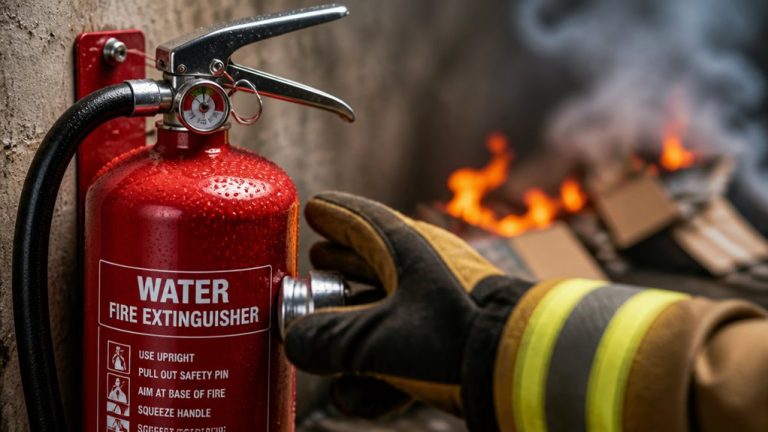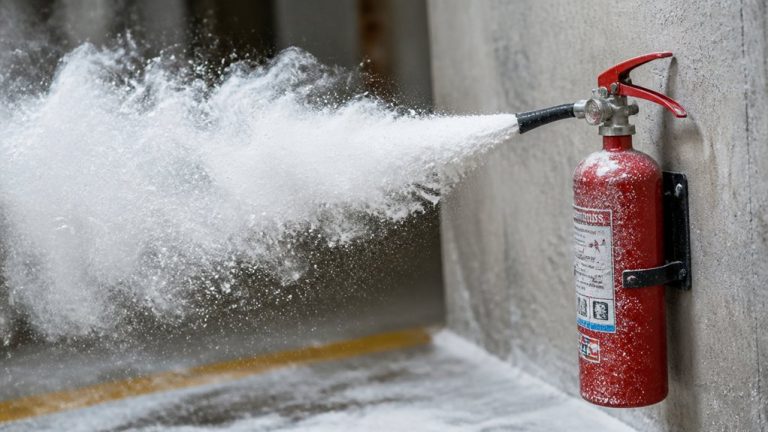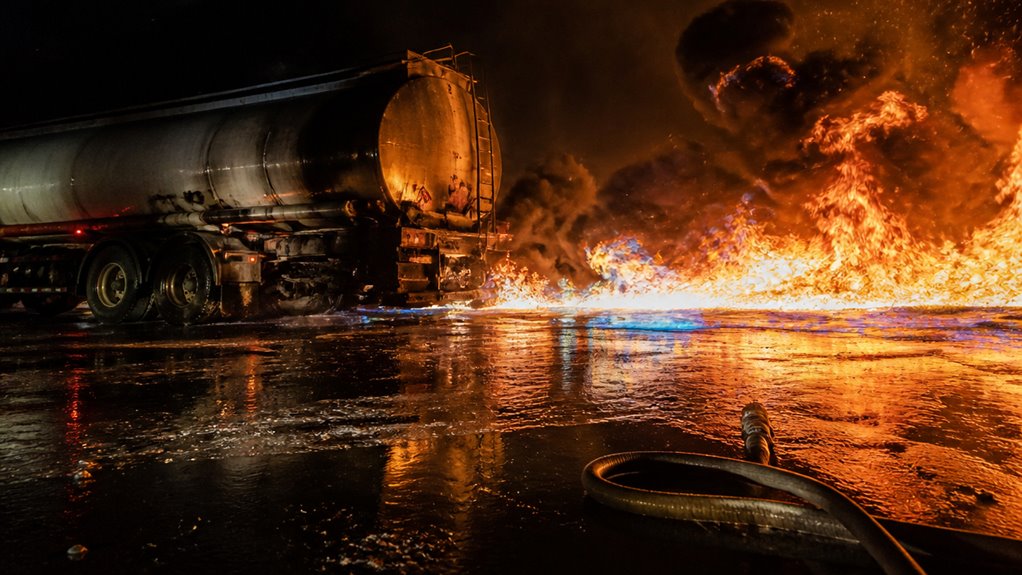

You can’t extinguish most flammable liquid fires with water because flammable liquids float on water’s surface. This prevents it from cooling or diluting the fuel.
Water sinks below the burning liquid, displaces fuel, and spreads flames while generating explosive steam that ejects burning droplets. This interaction increases fire size and burn risks.
Instead, you need agents like foam or dry chemicals that smother vapors and cut oxygen flow. Understanding these dangers reveals why water is ineffective and hazardous here.
Key Takeaways
- Water cannot mix with flammable liquids, causing the fuel to float and continue burning on the surface.
- Applying water displaces burning liquid, spreading flames over a larger area.
- Water rapidly vaporizes on hot fuel, generating steam that ejects burning droplets and increases fire hazards.
- Water fails to cool or penetrate the fuel layer, leaving vapor release and oxygen access uninterrupted.
- Effective suppression requires foam, dry chemicals, or CO₂ to smother vapors and cut off oxygen.
Which Fires Are Flammable Liquid Fires?
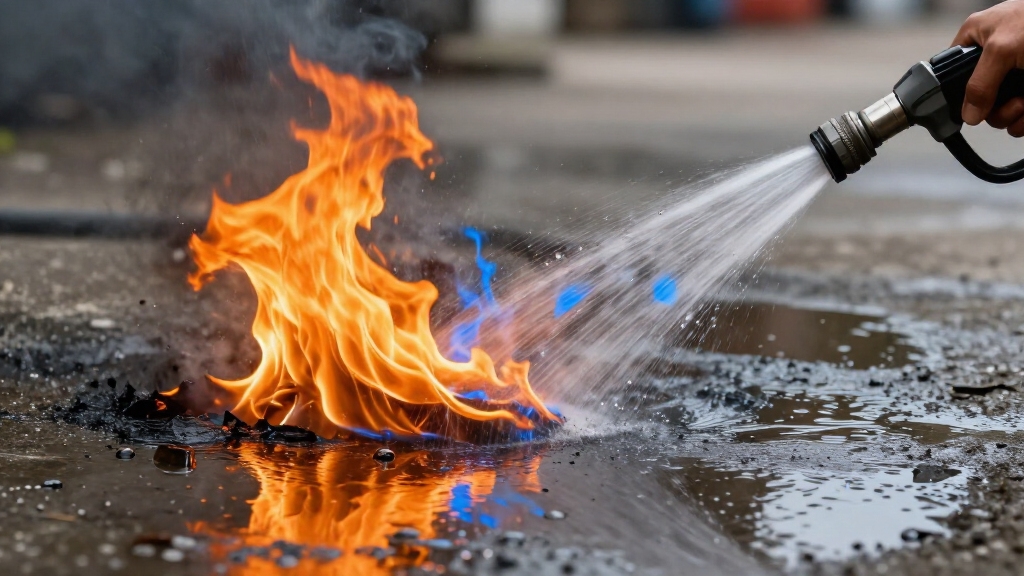
When you come across a fire involving liquids like gasoline, oil, or solvents, you’re dealing with a flammable liquid fire, classified as a Class B fire.
Fires involving gasoline, oil, or solvents are classified as Class B flammable liquid fires.
These fires arise from substances that ignite easily and burn on surfaces or pools of liquid fuel.
Typical fuels include gasoline, diesel, oil-based paints, and various solvents.
All these fuels share the characteristic of floating on water rather than mixing with it.
The fire sustains itself by vaporizing fuel, which reacts with oxygen in the air.
Understanding the specific fuel involved is vital because it dictates the fire’s behavior and the appropriate extinguishing method.
Class B fires differ markedly from solid material fires, requiring specialized suppression tactics that target vapor control and oxygen exclusion rather than simple cooling.
Never use water on these fires, as it can spread flames and cause steam burns.
Reasons Water Fails on Flammable Liquid Fires
Although water is a common firefighting tool, it fails on flammable liquid fires because it can’t mix with or extinguish the burning fuel.
Flammable liquids such as gasoline and oil float on water’s surface, so water doesn’t penetrate or cool the fuel. Instead, it displaces the burning liquid, spreading flames across a wider area.
Additionally, water sinking beneath the fuel can push it outward, increasing fire size. When water contacts hot flammable liquids, rapid vaporization generates steam that ejects burning droplets, intensifying hazards.
These physical and chemical dynamics mean water not only fails to suppress but can exacerbate flammable liquid fires. You must use agents that interrupt vapor release or oxygen access, as water’s incompatibility with these fuels fundamentally undermines effective extinguishment.
Furthermore, water’s inability to soak or reduce oxygen access in porous fuels makes it ineffective for these types of fires.
How Flammable Liquids React on Water Surfaces?
You know, most flammable liquids actually float on water. This is a big deal because it means they can’t be diluted, which keeps the fire going strong. When you throw water on it, you might think you’re helping, but it can spread that burning fuel over a larger area. And guess what? That just makes the fire reach even further.
Plus, there’s the issue of steam generation. When the water heats up quickly, it causes splashing and can even eject burning droplets into the air. This really amps up the danger. So, using water isn’t always the best idea in these situations! For flammable liquid fires, smothering with foam is preferred to effectively cut off oxygen and stop the fire.
Flammable Liquids Float
Flammable liquids such as gasoline, oil, and solvents consistently float on water surfaces due to their lower density and immiscibility with water.
When you pour water onto these liquids, they remain on top rather than mixing, creating a separate layer that continues to burn.
This separation means the water can’t penetrate or dilute the flammable liquid, allowing the fire to persist.
You should understand that the floating behavior results from differences in molecular structure and polarity, preventing dissolution.
This characteristic makes water ineffective as an extinguishing agent because it neither cools the fuel sufficiently nor interrupts vapor release.
Instead, the burning liquid’s position atop water maintains access to oxygen and fuel vapor, sustaining combustion and complicating suppression efforts.
Recognizing this physical property is critical for safe and effective fire response.
Using water on oil fires can cause the fire to intensify and spread due to the rapid vaporization and splattering of the burning oil, which is why never use water on cooking oil fires.
Water Spreads Burning Fuel
When water is poured onto burning flammable liquids, it can push the fuel outward across a wider area, effectively spreading the fire.
Because these liquids float on water, the added volume displaces them, causing the burning fuel to expand beyond its initial boundaries.
As water sinks below the lighter fuel, it physically forces the flammable liquid to move laterally, increasing the fire’s surface area and intensity.
This displacement not only enlarges the burning zone but also endangers nearby materials and structures.
You need to recognize that water’s inability to mix with these liquids means it won’t dilute or extinguish the fire; instead, it mobilizes the fuel.
Consequently, using water inadvertently promotes fire propagation rather than containment on flammable liquid surfaces.
Additionally, water should not be used on grease fires because burning oil can splatter and spread the fire, highlighting the importance of limitations and unsuitable uses when fighting certain fires.
Steam and Splash Hazards
Although water may seem like a natural extinguisher, it can trigger dangerous steam and splash reactions when applied to burning flammable liquids.
When water contacts hot fuel, it rapidly vaporizes, generating steam that expands violently. This sudden expansion ejects burning liquid droplets, creating a splash hazard that spreads fire beyond the original area.
Because flammable liquids are often less dense, they float on water, so water sinks beneath the fuel, intensifying this effect. You risk enlarging the fire and exposing yourself to severe burns from flying fuel fragments.
Understanding this reaction is critical. Water’s inability to mix with flammable liquids means it can’t cool or smother the fire effectively. Instead, it increases hazard potential through steam-driven fire spread and violent splatter, making water use highly inadvisable on Class B fires.
For electrical fires, never use water due to the increased risk of electrocution and fire spread.
Why Using Water on Flammable Liquid Fires Is Dangerous?
You really shouldn’t use water on flammable liquid fires. Why? Well, it can actually spread the burning fuel over a larger area, making the fire even bigger. That’s definitely not what you want!
When water hits hot flammable liquids, things can get really dangerous. You might see splattering fuel droplets or even experience rapid steam expansion. These reactions can make the fire much harder to control, and they also significantly increase the risk of injury and damage. So, it’s best to steer clear of using water in those situations!
Instead, using foam blankets is recommended to prevent oxygen contact and safely extinguish flammable liquid fires.
Water Spreads Burning Fuel
Pouring water onto flammable liquid fires often backfires by spreading burning fuel across a wider area.
Because flammable liquids float on water, the water displaces the burning liquid, pushing it outward and enlarging the fire’s footprint.
This displacement complicates containment and increases hazards. You risk escalating the fire instead of extinguishing it when water spreads fuel rather than suppressing flames.
| Factor | Effect |
|---|---|
| Fuel floats on water | Burning liquid remains on surface |
| Water displaces fuel | Fire spreads across larger area |
| Increased surface area | Fire grows, harder to control |
| Fuel mobility | Flames carry into adjacent zones |
| Water-fuel immiscibility | No fuel dilution, fire sustains |
For grease fires specifically, water can cause explosive spreading due to instant vaporization of water upon contact with hot oil, making it critical to use appropriate extinguishing methods.
Violent Reactions With Water
When water contacts burning flammable liquids, it can trigger violent physical reactions that escalate hazards rather than control them.
Water’s higher density causes it to sink below the lighter, burning liquid, rapidly vaporizing upon contact with the hot fuel.
This sudden phase change generates intense steam expansion, violently ejecting burning droplets into surrounding areas.
You risk spreading the fire through this splattering effect, which increases the fire’s surface area and intensity.
Additionally, water doesn’t mix with most flammable liquids, so it fails to dilute or extinguish the fuel.
Instead, it displaces the burning liquid, pushing flames outward.
Using water on these fires can thereby exacerbate the situation, making the fire larger and less manageable.
Avoid water; opt for agents designed to interrupt vaporization or oxygen access.
For example, foam, CO2, or ABC dry powder extinguishers are recommended for Class B fires involving flammable liquids.
Best Alternatives to Water for Flammable Liquid Fires
Although water is a common firefighting agent, it proves ineffective and hazardous against flammable liquid fires due to fuel displacement and fire spread.
To combat these fires effectively, you need extinguishing agents designed for Class B fires that interrupt vapor release or oxygen access without spreading the fuel.
Consider these alternatives:
Foam extinguishers: Create a blanket that smothers fuel vapors and cools the fire surface.
Dry chemical powders: Interrupt the chemical reaction in the combustion process.
Carbon dioxide (CO₂) extinguishers: Displace oxygen around the fire, suffocating flames without residue.
Fire blankets or sand: Physically isolate small fires from oxygen to halt combustion.
Using these agents minimizes fire spread and maximizes suppression efficacy.
This ensures safer and more controlled fire management.
For homeowners, integrating motion detection systems can enhance early fire hazard alerts and overall safety.
How Foam, Dry Chemical, and CO₂ Extinguishers Fight Flammable Liquid Fires?
Understanding how foam, dry chemical, and CO₂ extinguishers operate is essential for effectively combating flammable liquid fires.
Foam suppresses these fires by creating a blanket over the fuel surface, cutting off oxygen and preventing vapor release.
Dry chemical extinguishers interrupt the chemical reaction at the flame’s base by dispersing a powder that inhibits combustion processes.
CO₂ extinguishers displace oxygen around the fire and cool the fuel surface, rapidly suffocating flames without leaving residue.
Each agent targets a critical element: oxygen, fuel vapor, or chemical reaction, ensuring efficient suppression.
Using these extinguishers correctly reduces fire spread and intensification.
Unlike water, which can exacerbate the hazard by dispersing burning liquid, recognizing their distinct mechanisms enables you to select the appropriate extinguishing method for Class B fires.
Essential Safety Tips When Fighting Flammable Liquid Fires
Because flammable liquid fires behave unpredictably and spread rapidly, you must prioritize safety by evaluating the situation carefully before taking action.
Avoid using water, as it can exacerbate the fire by spreading burning liquid. Instead, identify the fuel type and select the appropriate extinguisher: foam, dry chemical, or CO₂.
Maintain a safe distance and approach from upwind to minimize exposure to toxic fumes and flames. Always have an escape route planned in case conditions worsen.
Use the correct Class B extinguisher; never water.
Approach fire from upwind and maintain a safe distance.
Assess fuel type and fire size before acting.
Make certain clear evacuation routes and backup assistance.
Following these steps guarantees effective, controlled suppression while minimizing risk.
Frequently Asked Questions
Can Water Be Safely Used on Small Flammable Liquid Spills?
You shouldn’t use water on small flammable liquid spills because it can spread the fire and worsen the situation.
Instead, you should smother the spill with a fire blanket, sand, or dirt to cut off oxygen.
If a fire starts, use foam, dry chemical, or CO₂ extinguishers designed for flammable liquids.
Always identify the fuel type first and apply the appropriate suppression method to guarantee safety and effective control.
How Do Fire Blankets Work on Flammable Liquid Fires?
Fire blankets work by smothering flammable liquid fires, cutting off their oxygen supply.
When you cover the fire with a fire blanket, you eliminate the air that fuels combustion, effectively suffocating the flames.
You must carefully place the blanket to avoid spreading the burning liquid.
Fire blankets are best for small, contained fires because they prevent vapor release and heat transfer.
This helps you control the fire safely without causing splashing or spread.
Are There Any Flammable Liquids That Water Can Extinguish?
You won’t find flammable liquids that water effectively extinguishes because most are immiscible with water and float, causing spread rather than suppression.
Exceptions are rare and typically involve water-miscible fuels like certain alcohols in low concentrations.
However, even these can reignite if water isn’t applied carefully.
What Personal Protective Equipment Is Recommended for Class B Fires?
You should wear flame-resistant clothing, including a fire-retardant suit, gloves, and boots, to protect against heat and splatter.
Use a full-face respirator or self-contained breathing apparatus (SCBA) to avoid inhaling toxic vapors and smoke.
Eye protection is critical, so wear chemical splash goggles or a shielded helmet.
Your PPE must meet NFPA standards for Class B fire response, ensuring maximum protection against flammable liquid hazards and thermal exposure.
How Should Flammable Liquid Fires Be Reported to Emergency Responders?
You must report flammable liquid fires with absolute clarity. Every detail matters.
Tell responders the exact fuel type, location, size, and spread risk. Emphasize if it’s a Class B fire involving gasoline, oil, or solvents.
Specify hazardous vapors or potential explosions. Provide conditions like wind or nearby structures.
Your precise, timely report enables tailored response strategies. This ensures they bring the right extinguishing agents and protective gear to control this volatile hazard effectively.
Avoid Water on Flammable Liquid Fires
You should never use water on flammable liquid fires, as it can spread the flames instead of extinguishing them.
Studies show that over 60% of flammable liquid fire accidents worsen due to improper firefighting methods like water application.
Instead, rely on foam, dry chemical, or CO₂ extinguishers, which effectively interrupt the combustion process.
Understanding these distinctions is vital for safety and fire control. Always choose the right extinguisher to prevent escalation and guarantee rapid suppression.