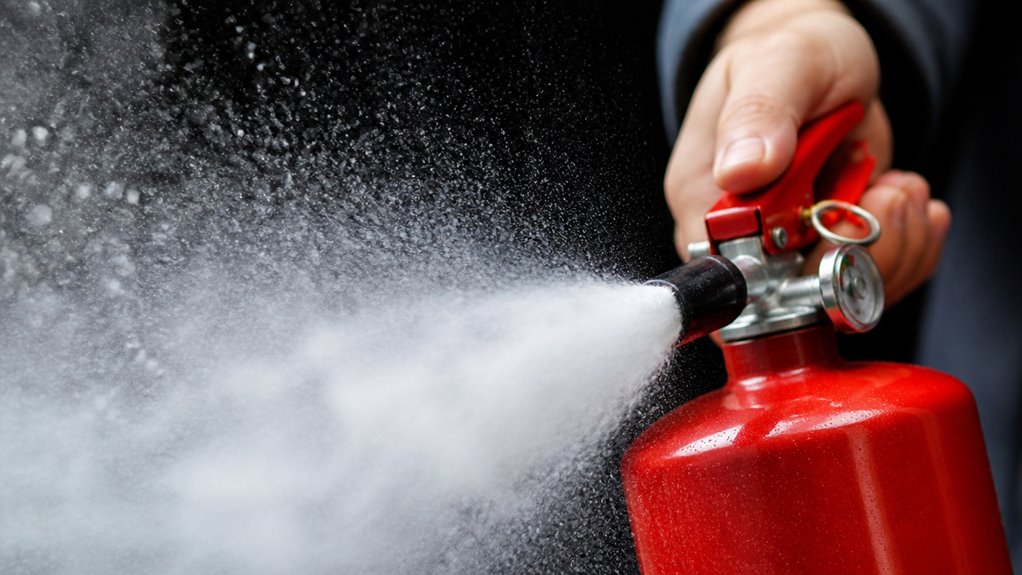

A fire extinguisher sprays specialized agents like water, foam, dry chemicals, carbon dioxide, or clean gases designed to control fires safely and effectively.
You’ll use water or foam to cool and suppress flames on ordinary combustibles and flammable liquids.
Dry chemicals quickly disrupt the fire’s chemical reaction.
For electrical fires, CO2 and clean agents avoid damage and residue.
Kitchen and metal fires require unique sprays for safe suppression.
Keep exploring to understand which spray suits each fire type best.
Key Takeaways
- Fire extinguisher sprays cool burning materials to lower temperatures below ignition points and stop fire spread.
- Some sprays release chemicals that interrupt combustion reactions and rapidly knock down flames.
- Foam sprays create a barrier that cools fire and blocks oxygen to suppress flammable liquid vapors.
- Carbon dioxide sprays displace oxygen to suffocate flames without leaving residue or damaging equipment.
- Wet chemical sprays cool and chemically neutralize cooking oil fires by forming a sealing layer to prevent reignition.
How Fire Extinguisher Sprays Fight Different Fires?
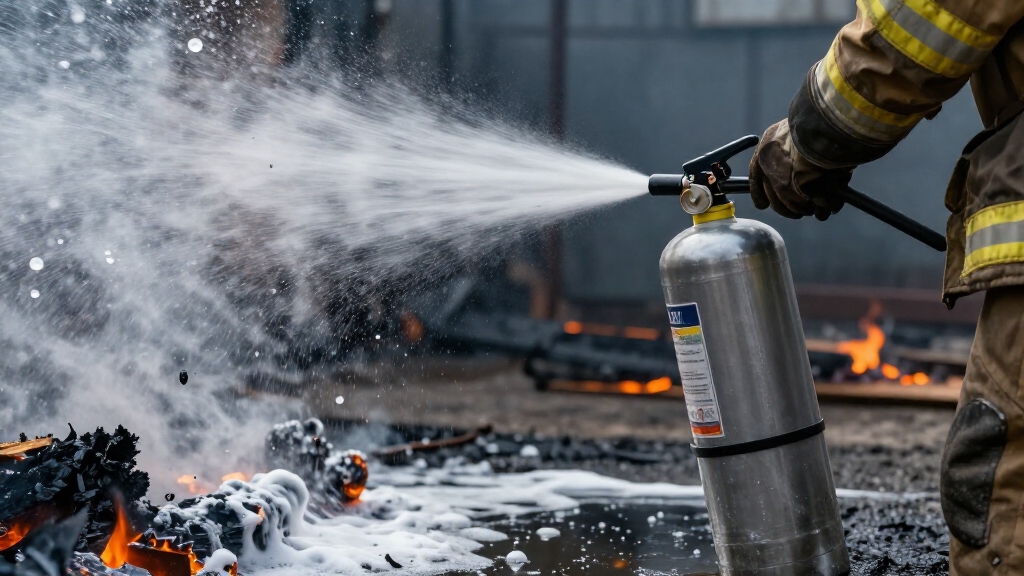
Although all fire extinguishers aim to suppress flames quickly, each spray type fights different fires by targeting specific combustion elements.
You’ll find that extinguishers don’t just spray foam or powder; they release a pressurized agent designed for particular fire classes.
For example, water-based sprays cool burning materials and reduce heat below ignition points, ideal for Class A fires like wood or paper.
Dry chemical powders interrupt the combustion reaction, making them versatile for Class A, B, and C fires.
Carbon dioxide displaces oxygen, suffocating flames without residue, perfect for electrical fires and flammable liquids.
Wet chemical sprays cool and seal grease fires in kitchens.
Using the right spray guarantees effective suppression and minimizes hazards, so you must match the extinguisher type to the fire you face.
Dry chemical extinguishers work by releasing a pressurized powder that smothers flames and interrupts fire chemistry for rapid knockdown.
Using Water and Foam Sprays on Class A and B Fires
When you face Class A or B fires, choosing between water and foam sprays depends on the fuel involved and the fire’s behavior.
Selecting water or foam for Class A or B fires hinges on fuel type and fire dynamics.
For Class A fires, like wood or paper, water extinguishers cool the burning material and lower its temperature below ignition. They soak the fuel to prevent reignition.
However, don’t use water on grease or electrical fires; it’s unsafe.
Foam sprays combine water with a foaming agent, creating a blanket that cools and blocks oxygen. This makes them ideal for both Class A and B fires, such as gasoline or solvents.
Foam’s vapor suppression helps control flammable liquid fires where cooling alone isn’t enough.
Always match the extinguisher type to the fire’s class to ensure effective and safe suppression.
Water’s high heat absorption and steam formation also help remove heat rapidly and displace oxygen locally, enhancing effectiveness for Class A fires through water cooling.
How Dry Chemical Sprays Put Out Fires Fast?
Because dry chemical sprays interrupt the chemical reactions that sustain flames, they extinguish fires rapidly and effectively.
When you use a dry chemical extinguisher, it releases a fine powder, commonly sodium bicarbonate, potassium bicarbonate, or monoammonium phosphate, that coats the burning fuel. This coating blocks the chain reaction of combustion, stopping the fire almost instantly.
Dry chemical agents also smother the flames by creating a barrier between the fuel and oxygen. Their versatility allows you to tackle Class A, B, and C fires, including ordinary combustibles, flammable liquids, and energized electrical equipment.
While dry chemical sprays leave a residue, their quick suppression capability makes them essential for fast response. You rely on these extinguishers to halt fires before they spread and cause greater damage.
Proper maintenance and inspection ensure these extinguishers remain reliable and ready for emergency use.
Why CO2 and Clean Agents Work Best on Electrical Fires?
Dry chemical extinguishers quickly stop fires by interrupting combustion. However, they can leave a residue that may harm sensitive electrical equipment.
That’s why CO2 and clean-agent extinguishers are your best bet for electrical fires. CO2 sprays carbon dioxide gas, which displaces oxygen around the fire without leaving any residue. This protects your devices from damage.
Clean agents work similarly by using non-conductive, residue-free gases designed specifically for sensitive electronics. Using these agents reduces the risk of electrical shock and avoids costly cleanup or equipment replacement.
Remember, water-based or foam extinguishers can cause short circuits or damage when used on energized equipment. Clean agent systems are also safe for occupied spaces, making them ideal for environments with sensitive equipment.
Specialized Sprays for Kitchen (Class K) and Metal (Class D) Fires
Although kitchen and metal fires require unique approaches, specialized extinguishing sprays tackle these hazards effectively.
For kitchen (Class K) fires, which involve cooking oils and fats, wet chemical extinguishers spray a potassium-based solution.
This spray cools the burning grease and forms a sealing layer that suppresses vapors, preventing re-ignition. You shouldn’t use water or standard powders on these fires, as they can cause violent reactions.
When dealing with metal (Class D) fires, such as burning sodium or magnesium, you use specialty dry powders designed specifically for combustible metals.
These powders smother the fire and interrupt combustion without reacting dangerously with the fuel.
Using the correct extinguisher spray is critical. Applying the wrong agent can worsen the fire or cause hazardous reactions. Always match the extinguisher to the fire class for safe, effective suppression.
Class K extinguishers are preferred in kitchens because their wet chemical agents rapidly suppress and saponify grease fires, reducing the risk of reignition.
Frequently Asked Questions
How Often Should Fire Extinguishers Be Inspected and Maintained?
You should give your fire extinguishers a friendly check-up every month to make sure they’re ready when needed.
Beyond that, a thorough professional inspection and maintenance should happen at least once a year to keep them in top shape.
Don’t forget, after any use or if you spot damage, schedule immediate servicing.
Proper upkeep guarantees your extinguisher performs reliably, protecting you effectively in emergencies.
Can Expired Fire Extinguishers Still Be Effective in Emergencies?
Expired fire extinguishers mightn’t work effectively in emergencies.
Over time, pressure can drop, agents can degrade, or parts may corrode, reducing performance.
You shouldn’t rely on an expired extinguisher because it may fail when you need it most.
It’s vital to regularly inspect, maintain, and replace extinguishers according to manufacturer guidelines and expiration dates to guarantee they function properly and keep you safe during a fire.
What Should I Do if a Fire Extinguisher Runs Out During Use?
Imagine your fire extinguisher runs out like a flashlight dying in the dark. You need a backup plan fast.
If this happens during a fire, get to safety immediately and call emergency services. Don’t try to fight the fire without proper tools.
Always have an escape route and alert others. Regularly check your extinguisher’s pressure and expiry to avoid surprises. Stay prepared for emergencies.
Are There Eco-Friendly Fire Extinguisher Agents Available?
Yes, you can find eco-friendly fire extinguisher agents. These typically use clean-agent gases or specialized powders that minimize environmental impact and leave no harmful residue.
Some water-based and foam extinguishers also use biodegradable agents. When choosing, look for certifications indicating low toxicity and minimal ozone depletion.
Opting for these helps protect your surroundings while effectively combating fires. Always verify the agent suits your fire class for safety and efficiency.
How Do I Safely Dispose of a Used or Damaged Fire Extinguisher?
When you find a used or damaged fire extinguisher, don’t just toss it in the trash and risk harm.
Instead, contact your local fire department or hazardous waste disposal center. They often handle these safely.
Many communities offer special collection events or recycling programs.
Make sure the extinguisher is fully depressurized before transport.
Handling it properly protects you, others, and the environment.
This prevents accidental discharge or chemical exposure.
Final Answer: What Does a Fire Extinguisher Spray?
Now that you know what fire extinguisher sprays do, you can act quickly and confidently in an emergency.
Did you know that using the wrong extinguisher can increase fire damage by up to 50%?
That’s why understanding which spray works best, whether it’s water, foam, dry chemical, CO2, or specialized agents, is essential.
Armed with this knowledge, you’ll be ready to tackle fires safely and effectively, protecting yourself and others.