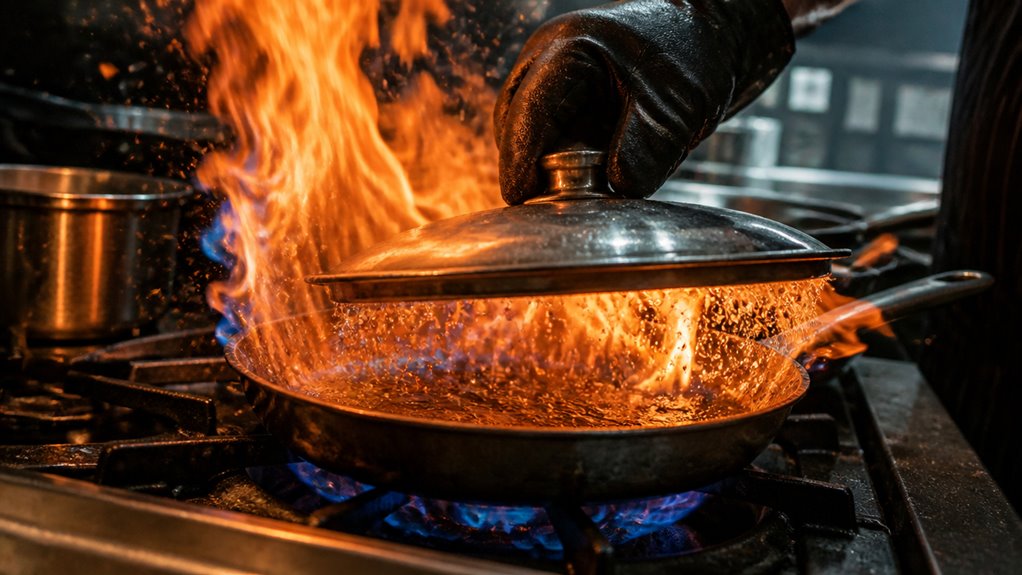

If you have an oil fire, turn off the heat immediately and never use water. It will spread the flames.
Don’t move the pan; instead, smother the fire by sliding a metal lid or tray over it to cut off oxygen.
For tiny flames, baking soda can help, but larger fires need a Class F or Class K extinguisher.
Stay calm, protect yourself, and if it’s uncontrollable, evacuate and call 911.
Learn what else you should avoid and which tools work best.
Key Takeaways
- Turn off the heat source immediately and avoid moving the pan to prevent spreading the fire.
- Smother flames by sliding a metal lid or tray over the pan; keep it in place until cooled.
- Never use water or blow on the fire, as this spreads burning oil and worsens flames.
- Use a Class F (wet chemical) extinguisher following the P.A.S.S. procedure if smothering fails.
- Evacuate and call 911 immediately if the fire grows uncontrollable or extinguishing efforts fail.
Stop a Cooking Oil Fire Safely
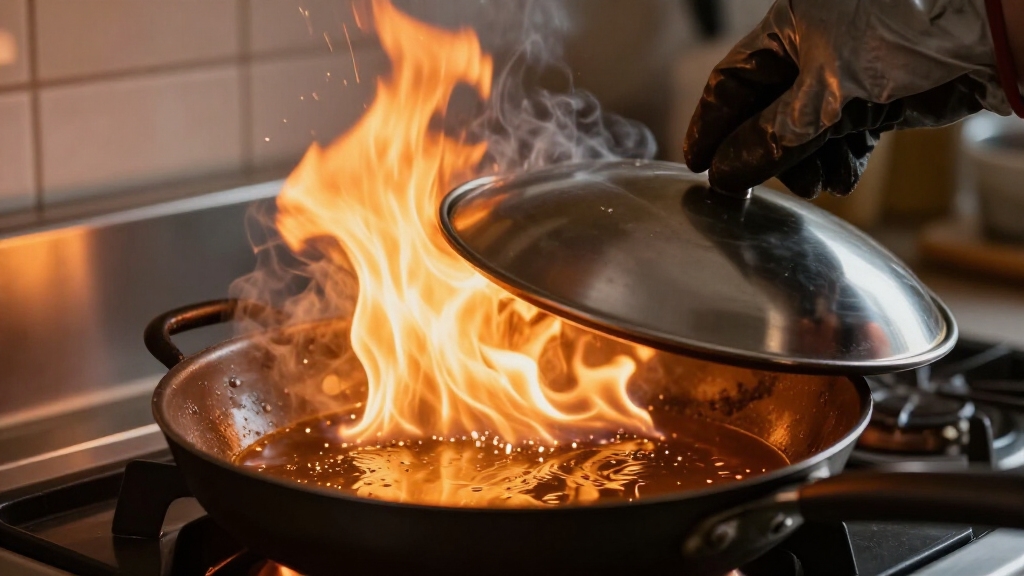
If you spot a cooking oil fire, your first priority is to turn off the heat source immediately to stop feeding the flames.
Next, don’t move the pan; shifting it risks splashing hot oil and spreading the fire. Instead, smother the fire by carefully sliding a metal lid or tray over the pan to cut off oxygen.
Avoid glass lids; they can shatter under heat. Keep the lid firmly in place until the pan cools completely to prevent re-ignition.
If the fire grows quickly or you can’t control it, evacuate and call 911 right away. Always protect your hands and arms from heat when approaching the fire.
These steps help you stop an oil fire safely and minimize damage before emergency help arrives.
Avoid These Mistakes During an Oil Fire
Hey there! If you ever find yourself facing an oil fire, remember this: never, ever use water to put it out. Seriously, it’ll just make the flames worse and spread the fire.
Also, don’t try to move the pan. I know it might seem like a good idea, but moving it can cause hot oil to splash everywhere and ignite other areas. Just stay calm, keep the pan where it is, and focus on cutting off the oxygen safely.
You’ve got this! Remember, the best way to smother the fire is by covering it with a metal lid or baking sheet to cut off the oxygen and keep the flames from spreading.
Water Never Use
You should always avoid using water on an oil fire because it can cause the flames to spread rapidly and become uncontrollable.
Water sinks below the oil, instantly vaporizes, and violently splatters burning oil everywhere, escalating the fire hazard.
Instead, use proper methods like smothering with a metal lid or a Class K extinguisher.
| What You Might Think | What Actually Happens |
|---|---|
| Water cools the fire | Water vaporizes quickly |
| Fire will drown out | Oil splashes and spreads |
| Safe to pour | Fire intensifies |
| Easy to grab | Increases danger |
| Best for any fire | Never for oil fires |
Always choose safe, tested methods to stop an oil fire—never water. Keep baking soda nearby to help smother small grease fires effectively.
Avoid Moving Pan
When an oil fire breaks out, resist the urge to move the pan.
Moving a burning pan can cause hot oil to splash, spreading flames and increasing the fire’s size and danger.
Instead, turn off the heat source immediately if it’s safe to do so and focus on smothering the fire with a metal lid or tray to cut off oxygen.
Never attempt to carry or tilt the pan, as this risks severe burns and fire escalation.
Keep the lid in place until the pan cools completely to prevent re-ignition.
If the fire grows beyond control, evacuate and call 911 without delay.
Staying calm and keeping the pan stationary are essential steps to safely managing an oil fire.
Smother small grease fires with baking soda or salt to cut off oxygen safely if a lid is not available.
Best Tools to Smother Cooking Oil Fires (Including Baking Soda)
When you’re faced with a small cooking oil fire, your best bet is to smother it. A metal lid or even a cookie sheet works wonders for cutting off that oxygen quickly and safely.
It’s a simple and effective way to handle the situation!
Now, baking soda can be helpful too, but here’s the catch—it only works if the fire is tiny. You’d need quite a bit of it, and it won’t do much for larger flames.
So, keep that in mind!
Always make sure you know the right tools to use in these situations. Choosing the wrong one can actually make the fire worse, and that’s the last thing you want.
For kitchen fires involving cooking oils, a Class K extinguisher is the preferred tool for effective and safe suppression.
Stay safe out there!
Effective Smothering Tools
Mastering the use of effective smothering tools can quickly extinguish small cooking oil fires by cutting off their oxygen supply.
The best immediate option is a metal lid or cookie sheet, which you slide gently over the pan to contain flames without splashing hot oil.
Keep the lid in place until the pan cools completely to prevent re-ignition.
Baking soda can help with very small fires, but you’ll need a generous amount to be effective.
Fire blankets or thick, non-flammable materials work for tiny fires, but apply them carefully to avoid spreading flames.
Avoid glass lids, as they may shatter.
Always turn off the heat source first if it’s safe, and keep a suitable fire extinguisher nearby for larger fires.
Use a multipurpose extinguisher rated for wood fires, aiming at the base of the flames while maintaining distance, and follow the PASS technique to safely control the fire.
Baking Soda Limitations
Although baking soda can extinguish very small grease fires, you’ll need a large amount for it to be effective. This makes it impractical for anything beyond minor flames.
Relying solely on baking soda in larger kitchen fires risks spreading the blaze or failing to suppress it fully. You should never delay more reliable methods, like smothering with a metal lid or using a Class F extinguisher, while searching for or applying baking soda.
Also, keep in mind that baking soda only works if you apply it directly onto the flames. It won’t work if the fire is already widespread.
Always have proper fire suppression tools within reach and prioritize turning off the heat source and smothering the fire safely. Baking soda is a last-resort, small-scale option, not a primary solution for oil fires. Class K extinguishers use a specialized wet chemical agent to safely and effectively suppress cooking oil fires.
How to Pick and Use the Right Fire Extinguisher for Oil Fires?
Choose the right fire extinguisher carefully to make sure you can quickly and safely tackle an oil fire.
For kitchen oil fires, a Class F or wet chemical extinguisher is your best bet, designed specifically to cool and smother burning fats and oils.
If you don’t have one, a Class B or ABC extinguisher can work, but only if it’s rated for flammable liquids.
Avoid water-based extinguishers; they make oil fires worse.
When using an extinguisher, remember the P.A.S.S. method: Pull the pin, Aim at the fire’s base, Squeeze the handle, and Sweep side to side until the flames are out.
Start from a safe distance and move closer carefully.
Using the right extinguisher and technique helps you control the fire efficiently and keep yourself safe.
ABC extinguishers are effective because their monoammonium phosphate powder smothers flames and interrupts the fire’s chemical reaction.
Protect Yourself and Your Kitchen During an Oil Fire
When an oil fire breaks out, protecting yourself and your kitchen becomes your top priority. First, turn off the heat if it’s safe to do so to stop fueling the fire.
Never move the pan; hot oil can splash and spread flames. Use a metal lid or tray to smother the fire, cutting off oxygen. Leave the lid in place until the pan is completely cool to prevent reignition.
Keep your hands and arms protected from heat and splatter when approaching the fire. Avoid using water or blowing on the flames, as this worsens the fire.
Have a suitable fire extinguisher within reach and use it confidently following the P.A.S.S. method. Stay calm and act swiftly to minimize damage and keep yourself safe.
Always use a Class B extinguisher designed for flammable liquids like oil fires to effectively suppress flames.
When to Evacuate and Call for Emergency Help?
If the fire grows quickly or you can’t control it immediately, you need to evacuate and call 911 without delay.
Don’t waste time trying to fight a fast-spreading oil fire; your safety comes first. Leave the area calmly but swiftly, alerting others as you go.
Never risk safety on a fast-spreading oil fire; evacuate quickly and warn others immediately.
Once outside, stay clear of the building and wait for emergency responders. Only attempt to extinguish small, contained fires using appropriate methods like a metal lid or a Class F extinguisher.
If your efforts don’t work immediately, don’t hesitate to evacuate. Remember, oil fires can escalate rapidly, and inhaling smoke or fumes poses serious health risks.
Calling for professional help guarantees the fire is handled safely and prevents further damage. Always prioritize evacuation over stubbornly fighting an uncontrollable blaze.
In interconnected smoke alarm systems, the unit closest to the fire usually activates first, which can help identify the fire’s location quickly and safely by observing the originating alarm.
Frequently Asked Questions
Can I Reuse Cooking Oil After an Oil Fire?
You shouldn’t reuse cooking oil after an oil fire. The intense heat changes the oil’s chemical makeup, making it unsafe and unhealthy.
It can develop harmful compounds and off-flavors that affect taste and safety. Even if it looks normal, its quality is compromised.
To stay safe and maintain your food’s quality, discard the oil properly and use fresh oil for cooking next time.
How to Clean up Residue After Extinguishing an Oil Fire?
About 60% of kitchen fires leave behind greasy residue that’s tough to clean. To tackle it, first make sure the area is cool and well-ventilated.
Use hot, soapy water with a degreasing dish soap to scrub surfaces gently. For stubborn spots, apply baking soda paste or vinegar.
Avoid harsh chemicals that can damage surfaces. Finally, rinse thoroughly and dry to prevent slips or mold growth.
Wear gloves to protect your skin throughout.
What Causes Cooking Oil to Ignite so Quickly?
Cooking oil ignites quickly because it reaches its flash point, the temperature where it releases flammable vapors.
When these vapors mix with oxygen and meet a spark or flame, they ignite instantly.
Since oil heats unevenly, it can surprise you by catching fire without warning.
That’s why you must never leave hot oil unattended and always control the heat carefully to prevent it from reaching dangerous temperatures.
Are Certain Oils More Prone to Catching Fire?
Wondering if some oils catch fire easier than others? Yes, they do.
Oils with lower smoke points, like unrefined olive or flaxseed oil, ignite more readily. They start to break down and release flammable vapors at lower temperatures.
In contrast, oils with higher smoke points, such as avocado or refined peanut oil, tolerate more heat before igniting.
Knowing this helps you choose safer oils for high-heat cooking and reduces fire risks.
How to Prevent Oil Fires During Deep Frying?
To prevent oil fires during deep frying, you should never leave hot oil unattended and always monitor the temperature with a thermometer.
Keep the oil below its smoke point to avoid ignition.
Use a deep, sturdy pan and avoid overcrowding food, which can cause oil to spill.
Keep flammable items away, and have a metal lid or Class F extinguisher handy.
Turn off heat immediately if oil starts to smoke or smells burnt.
Never Use Water on an Oil Fire
If you don’t act fast and smart, that tiny oil fire can turn your kitchen into a blazing inferno worthy of a Hollywood disaster movie.
Don’t let it get that far. Use baking soda, a proper extinguisher, or smother it safely.
Never use water! Protect yourself first, and know exactly when to call for help.
With these steps, you’ll turn a potential catastrophe into a quick, controlled kitchen save. Stay sharp and stay safe!