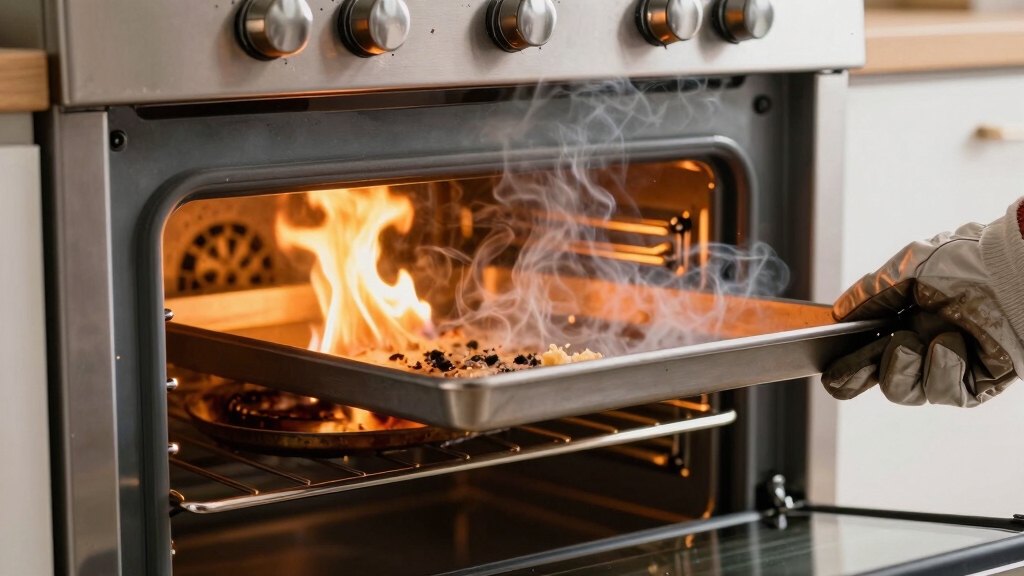

If you face an oven fire, keep the door closed to cut oxygen and turn off the heat source immediately. Switch off power for electric or gas supply for gas ovens.
Never open the door or use water, as this can spread flames or cause shock. For small grease fires, smother flames with baking soda, salt, or a fire blanket.
If the fire grows, evacuate and call emergency services. Learning proper steps helps you stay safe and handle these fires effectively.
Key Takeaways
- Keep the oven door closed to limit oxygen and allow the fire to burn out safely inside the oven.
- Turn off the heat source: switch off power for electric ovens or gas supply for gas ovens immediately.
- Smother small grease fires with baking soda or salt; never use water or flour on grease fires.
- Use a fire blanket or appropriate extinguisher (Class K for grease, Class C or ABC for electrical) if available.
- Evacuate and call emergency services if the fire spreads, is uncontrollable, or if you smell gas.
Respond Immediately to an Oven Fire
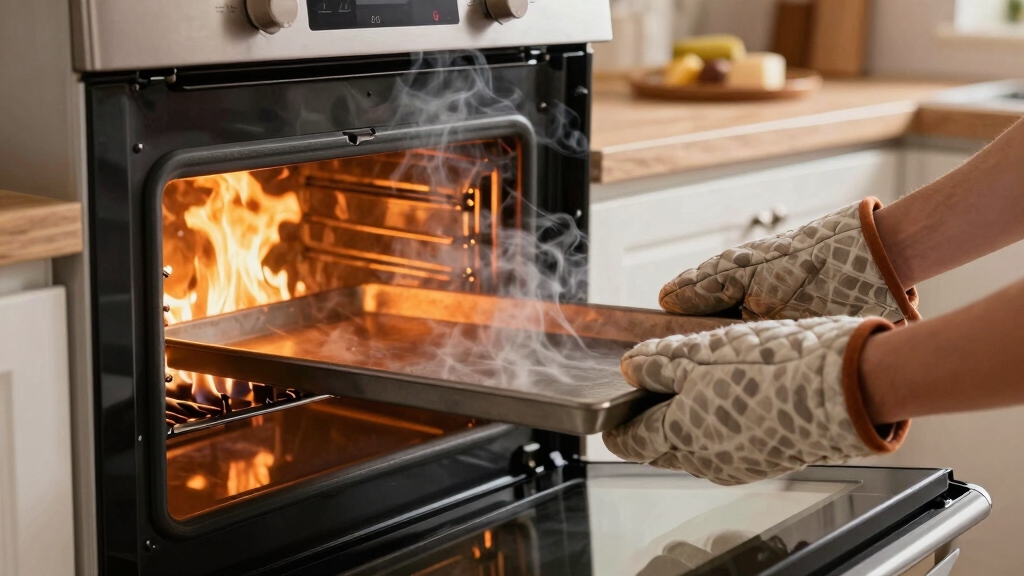
Act quickly when you notice an oven fire. Your first step is to keep the oven door closed.
Act fast during an oven fire and keep the oven door securely closed.
Opening it lets in oxygen, which fuels the flames and makes the fire worse. Immediately turn off the heat source to stop feeding the fire.
If it’s an electric oven, switch off the power at the circuit breaker if you can. For gas ovens, turn off the flame and gas supply.
Do not open the door or use water, as this can cause explosions or electrical shock. Instead, allow the fire to burn out on its own within the closed oven.
Stay calm and avoid panic. Quick, deliberate action helps contain the fire safely until it extinguishes or help arrives.
Using a Class K extinguisher is recommended if the fire does not subside quickly or spreads beyond the oven.
Extinguish Grease Fires Safely
You really need to spot a grease fire fast. Just look for those thick, smoky flames! And whatever you do, don’t open the oven door—doing that can let in oxygen and make things worse.
If you have a small fire, you can use baking soda, salt, or a proper extinguisher to smother it safely. Just remember: never, ever use water; it’ll just make things hotter!
To keep grease fires from happening in the first place, it’s a good idea to keep your oven clean and watch out for spills. Using the right cookware can also help you reduce the risk. Stay safe out there!
Keeping a Class K fire extinguisher nearby is a smart way to be prepared for bigger fires.
Identifying Grease Fires
Grease fires ignite quickly and can become dangerous in seconds, so recognizing them early is essential. Knowing the signs helps you act fast and avoid worsening the situation.
You’ll notice these key indicators:
- Intense flames rising from cooking oil or grease
- Thick, dark smoke with a distinct burning smell
- Sudden flare-ups while cooking fatty or oily foods
- A hot, smoky oven interior when grease ignites
- Difficulty extinguishing fire with water or damp cloths
If you spot these signs, don’t open the oven door or try water; this fuels the fire. Instead, keep the door closed and turn off the heat source immediately. Early identification sets the stage for safe and effective fire control. Cooling by turning off heat sources helps reduce the fire’s temperature and prevents it from spreading.
Safe Extinguishing Methods
When a fire breaks out inside your oven, keeping the door closed and turning off the heat source are your first and most crucial steps. This prevents oxygen from fueling the flames and helps the fire self-extinguish.
For small grease fires, pour baking soda or salt directly onto the flames to smother them safely. Avoid using water, as it can cause explosions or electrical shock.
If you have a Class B or ABC dry chemical extinguisher, use it for contained fires. For small cooking oil fires, a fire blanket can be effective.
In electric ovens, switch off the power at the circuit breaker if possible before applying extinguishing agents. Always prioritize your safety and call emergency services if the fire spreads or doesn’t subside quickly.
Be sure to position yourself with a clear exit behind you to ensure a quick escape in case the fire escalates, following the safety assessment principles.
Prevention Tips for Grease
Regularly maintaining a clean oven and cookware markedly reduces the risk of grease fires.
Grease buildup can ignite quickly, so taking proactive steps is essential to keep your cooking environment safe.
You should always keep your oven free of spills and residue and manage food preparation carefully to prevent flare-ups.
Clean spills immediately and deep-clean the oven regularly.
Use drip pans or cover dishes to catch grease drips.
Avoid overcrowding cooking trays to guarantee even heat distribution.
Never leave cooking unattended, especially when using grease.
Store and handle cooking oils away from heat sources.
In case of fire, avoid using water and instead smother flames with a fire extinguisher or cover to cut off oxygen.
Use Baking Soda and Salt for Small Fires
Sprinkle baking soda or salt directly onto small oven fires to quickly smother the flames and cut off their oxygen supply.
Both substances work effectively to extinguish grease fires, especially in electric ovens, without spreading flames or causing sparks.
Avoid using flour or baking powder, as these can ignite and worsen the fire.
Always turn off the oven’s heat source before applying baking soda or salt to stop fuel feeding the flames.
Use enough to fully cover the fire, ensuring it’s completely smothered.
Never use water, which can cause dangerous flare-ups or electrical shock.
If the fire grows beyond your control despite your efforts, close the oven door, evacuate the area, and call emergency services immediately.
These substances work by interrupting the fire triangle’s oxygen component, effectively suffocating the fire.
Use Fire Blankets and Extinguishers for Oven Fires
When you’re facing an oven fire, it’s super important to grab the right extinguisher. Class B or ABC types are your go-tos for grease and electrical fires. They really do the trick!
Now, if the flames are small, a fire blanket can be a lifesaver. It works by cutting off the oxygen, which helps smother those pesky flames. Just remember to handle it carefully to avoid any burns.
Knowing how to use these tools properly can make all the difference. With the right approach, you can stop a fire in its tracks before it has a chance to spread. Stay safe out there!
Choosing The Right Extinguisher
Although oven fires can escalate quickly, choosing the right extinguisher or fire blanket can contain the blaze effectively and prevent damage. You need to select an extinguisher that matches the fire type to avoid worsening the situation.
For grease or cooking oil fires, a Class K extinguisher or a fire blanket works best. For electrical oven fires, use a Class C or ABC extinguisher, never water. Make sure your extinguisher is easily accessible and in good working order.
- Use Class K for grease and oil fires.
- Use ABC or Class C for electrical fires.
- Avoid water on grease or electrical fires.
- Keep extinguishers within reach in the kitchen.
- Regularly check extinguisher pressure and expiration.
Choosing wisely keeps you safe and your kitchen secure. Always remember to follow the P.A.S.S. technique for effective and safe extinguisher use in case of fire emergencies.
Proper Fire Blanket Use
To put out an oven fire quickly and safely, wrap a fire blanket firmly around the flames to smother them and cut off oxygen.
Keep the oven door closed and turn off the heat source. Place the fire blanket carefully over the fire.
Don’t open the door, as this can feed oxygen to the flames. Fire blankets work best on small grease or oil fires in ovens.
| Step | Action |
|---|---|
| 1. Identify Fire | Confirm fire type (grease/oil) |
| 2. Turn Off Oven | Cut heat source immediately |
| 3. Cover Fire | Wrap fire blanket over flames |
| 4. Keep Door Closed | Avoid oxygen inflow |
| 5. Call Help | If fire persists, call emergency |
Use fire blankets with confidence to extinguish oven fires safely.
Handle Electric Oven Fires Safely
Act quickly by turning off your electric oven to cut the heat source and prevent the fire from spreading. If accessible, switch off the power at the circuit breaker to eliminate electrical current.
Immediately turn off your electric oven and power at the circuit breaker to stop the fire from spreading.
Keep the oven door closed to restrict oxygen and allow the fire to self-extinguish. Avoid using water, which risks electrical shock and spreading flames.
For small grease fires, carefully pour baking soda or salt to smother the flames. Use a fire blanket or a Class B or ABC dry chemical extinguisher if needed.
- Turn off oven and power supply immediately
- Keep oven door closed to limit oxygen
- Don’t open the oven during active fire
- Smother small grease fires with salt or baking soda
- Use fire blankets or appropriate extinguishers for larger fires
Regularly cleaning grease and controlling oil use can help prevent fat combustion that leads to oven fires.
Handle Gas Oven Fires Safely
Handling a gas oven fire requires a different approach than with electric ovens. First, turn off the oven flame and gas supply immediately to cut the fuel source.
Keep the oven door closed to limit oxygen and let the fire extinguish itself safely. Avoid opening the door or using water, as this could worsen the fire. Only ventilate the area after the fire is out.
Always remember to eliminate ignition sources and evacuate promptly if the fire is uncontrollable or gas odor is present.
| Step | Action | Reason |
|---|---|---|
| 1 | Turn off flame and gas supply | Stops fuel feeding the fire |
| 2 | Keep oven door closed | Limits oxygen, smothers fire |
| 3 | Let fire burn out | Fire self-extinguishes safely |
| 4 | Ventilate only after fire ends | Prevents oxygen influx fueling flames |
Stay Safe During an Oven Fire
Although oven fires can escalate quickly, staying calm and following safety protocols will protect you and those around you. Your first step is to avoid opening the oven door, which supplies oxygen and can worsen the fire.
Turn off the oven or gas supply immediately to stop fueling the flames. Never use water on grease or electrical fires; it can cause explosions or shocks. If the fire grows or spreads, evacuate and call emergency services.
Keep the oven door closed until the fire is out. Turn off all heat and gas sources promptly. Avoid water or sprays on grease or electrical fires.
Use a fire extinguisher or baking soda if safe to do so. Alert others and evacuate if the fire becomes uncontrollable.
Remember that steam from cooking can sometimes trigger false alarms in smoke detectors, so proper ventilation and placement of detectors are essential to avoid unnecessary panic.
Prevent Oven Fires Before They Start
Regularly maintaining your oven and practicing safe cooking habits markedly reduce the risk of fires.
Keep your oven clean by removing grease buildup and food residue, which are common fire starters.
Use drip pans and cover dishes to prevent spills from igniting.
Avoid overcrowding or overfilling dishes, as this can cause overflow and grease fires.
Always supervise cooking to catch potential problems early.
Know your fire extinguisher types; Class B or ABC are suitable alternatives if a Class K isn’t available.
Wear fitted clothing to avoid accidental contact with flames.
By following these preventive steps, you minimize fire hazards and ensure safer cooking.
Taking these measures seriously helps you avoid dangerous oven fires before they even start.
Frequently Asked Questions
Can Oven Fires Damage the Appliance Beyond Repair?
Yes, oven fires can damage your appliance beyond repair, especially if flames reach electrical components or cause warping.
Intense heat may ruin wiring, heating elements, and insulation.
Even if the fire seems contained, smoke and soot can impair functionality.
After a fire, you should inspect your oven thoroughly or have a professional assess it.
Don’t risk using a damaged oven, as it can be hazardous or cause further damage.
How Long Should I Wait Before Reopening the Oven After a Fire?
Don’t rush to open the oven right after a fire. It’s tempting but risky. Wait at least 30 minutes to an hour before cautiously opening the door.
This pause lets residual heat and smoke dissipate, reducing flare-up chances. Keep the door closed to starve the fire of oxygen initially.
Ventilate the area only once it’s safe. Always prioritize your safety and call emergency services if the fire persists or spreads.
Are There Specific Oven Brands More Prone to Fires?
No specific oven brands are inherently more prone to fires if you use and maintain them properly.
Fire risk usually stems from poor cleaning, grease buildup, or misuse rather than brand defects.
You should focus on regular maintenance, cleaning spills immediately, and following safety guidelines regardless of brand.
However, always check product recalls or reviews for safety issues before buying.
Proper use and care matter more than brand when preventing oven fires.
What Should I Do if My Oven Fire Triggers the Smoke Alarm?
What’s your first move when the smoke alarm blares? Stay calm and quickly check the oven fire status without opening the door.
If the fire’s contained, turn off heat and keep the door closed to starve flames of oxygen.
Ventilate the area only after the fire’s fully out to clear smoke safely.
If the fire spreads or the alarm persists, call emergency services immediately. Don’t ignore alarms; they’re your first warning.
Can Oven Fires Cause Harmful Fumes or Health Risks?
Yes, oven fires can release harmful fumes like carbon monoxide, smoke, and toxic gases, which pose serious health risks if inhaled.
You should avoid breathing in the smoke by ventilating the area only after the fire is out.
If you feel dizzy, nauseous, or have trouble breathing, leave immediately and call emergency services.
Always prioritize your safety and avoid exposure to these dangerous fumes during and after a fire.
Fire Safety Tips Every Home Cook Should Know
Oven fires happen more often than you might think. Kitchen fires cause nearly 50% of home fires in the U.S. Taking quick, safe action can make all the difference.
Remember to respond immediately and use baking soda for small grease fires. Keep a fire blanket or extinguisher nearby. Handling electric and gas oven fires properly keeps you safe.
Stay alert, follow prevention tips, and you’ll reduce your risk of a dangerous oven fire.