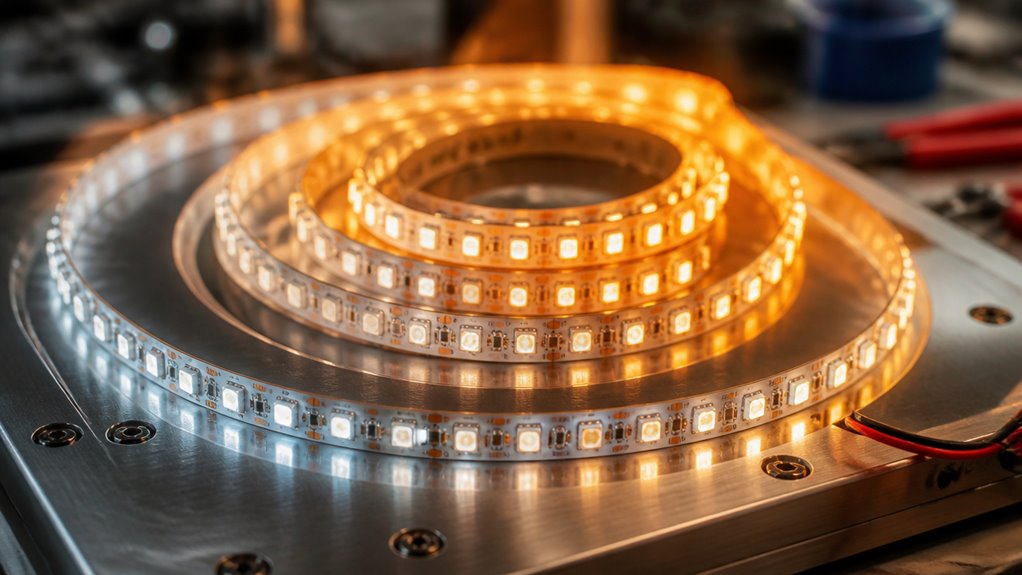

Yes, LED strip lights do get hot, typically reaching surface temperatures between 60°F and 115°F, depending on power load and brightness levels.
Heat arises from electrical energy converting to thermal energy within LEDs and resistors.
Poor ventilation, high ambient temperatures, or excessive brightness can elevate heat, risking damage or reduced lifespan.
Touch remains safe under proper conditions, but hot spots signal issues.
Explore how installation and maintenance affect heat management to optimize performance and safety.
Key Takeaways
- LED strip lights generate some heat due to electrical energy converting to thermal energy in components and resistors during operation.
- Typical surface temperatures of LED strips range from 60°F to 115°F, generally safe to touch under normal conditions.
- Higher brightness and power settings increase heat output, potentially causing hotspots and reducing strip lifespan.
- Proper ventilation, heat sinks, and mounting on conductive surfaces help dissipate heat and prevent overheating.
- Excessive heat or discoloration signals overheating, requiring reduced power load or improved cooling measures.
How Hot Do LED Strip Lights Get?
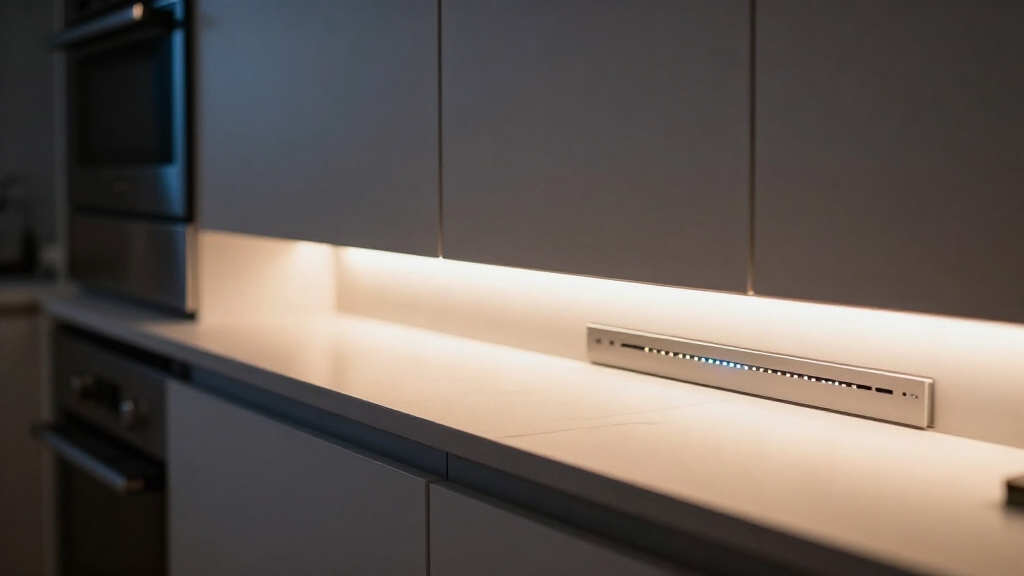
Although LED strip lights produce heat during operation, they typically remain within safe temperature ranges. Surface temperatures are often measured between 60°F and 115°F, depending on the product and conditions.
You’ll notice that these temperature values vary based on factors such as strip quality, power load, ambient temperature, and installation specifics. High-quality LED strips incorporate materials and designs that efficiently dissipate heat, preventing hazardous surface temperatures.
Operating ranges differ by model, commonly spanning from about -22°F to 158°F. When you install them properly, with adequate ventilation and on suitable surfaces, the temperature stays manageable and won’t pose a burn risk.
Measuring the strip’s surface temperature after extended use allows you to verify safe operating conditions and ensure longevity without overheating.
Using certified products with built-in protections further reduces the risk of overheating and fire hazards.
Why LED Strip Lights Produce Heat?
You might’ve noticed that LED strip lights can get a bit warm. This happens mainly because the electrical energy they use gets converted into thermal energy in the LED chips and other components.
So, when you crank up the brightness, you’re also increasing power consumption, which means more heat is produced.
On top of that, if there isn’t enough ventilation around the strips, heat can get trapped. This buildup can raise their operating temperature and impact how well they perform.
It’s all a bit of a balancing act, really! Proper heat management including aluminum heat sinks and ventilation is essential to prevent overheating and ensure safe, efficient operation.
Heat Generation Mechanisms
LED strip lights generate heat primarily because the electrical energy powering the LEDs isn’t converted entirely into light; a portion dissipates as thermal energy.
When current flows through the semiconductor junctions in the LED chips, some energy is lost as heat due to internal resistance and non-radiative recombination processes.
Additionally, resistors and other electrical components on the strip convert electrical energy into heat as they regulate current flow.
You’ll find that this heat accumulates along the strip, especially in areas with dense component placement or inadequate thermal pathways.
The strip’s substrate material also affects heat dissipation efficiency.
Understanding these mechanisms helps you optimize installation and choose strips with effective thermal management, preventing excessive temperatures that could degrade performance or lifespan.
For long, continuous setups, proper cable routing and thermal management can help maintain consistent performance and avoid overheating issues.
Impact of Brightness Levels
Because increasing brightness requires more electrical power, the heat generated by the strip rises correspondingly. When you boost brightness, the LED chips draw higher current, elevating power dissipation primarily as thermal energy.
This effect intensifies heat production within the semiconductor junctions and associated resistors. You’ll notice that running strips at maximum brightness consistently raises surface temperatures compared to lower settings, since more electrical energy converts into heat.
Additionally, prolonged operation at high brightness accelerates heat accumulation, potentially pushing components closer to their thermal limits. Consequently, understanding the correlation between brightness and heat output is critical for maintaining safe operating conditions.
Heat buildup increases with higher wattage, concentrated current, and closely spaced LEDs, causing hotspots and reduced lifespan.
Role of Ventilation
Managing brightness affects how much heat the strip generates, but ventilation plays an equally important role in controlling temperature.
When you install LED strip lights in confined spaces with limited airflow, heat accumulates around the components, raising surface temperatures. You must guarantee proper ventilation to dissipate this heat efficiently, preventing thermal buildup that can degrade strip performance or reduce lifespan.
Poor ventilation traps heat generated by the LED chips and resistors, increasing the risk of hot spots and potential damage. Conversely, mounting strips on heat-conductive surfaces or using heat sinks enhances heat transfer away from the strip. Incorporating built-in ventilation is a recommended mitigation to manage heat and maintain device longevity.
Factors Influencing LED Strip Light Temperature
You know, the ambient temperature really affects how hot your LED strip lights get when they’re on. It’s fascinating how just the surrounding temperature can play such a big role!
Plus, the power settings you choose and how you install those strips can also make a difference in their surface temperature and how well they release heat.
Ambient Temperature Effects
When ambient temperature rises, it directly elevates the operating temperature of LED strip lights by reducing the efficiency of heat dissipation.
As the surrounding air warms, the temperature gradient between the LED strip and environment narrows, slowing heat transfer.
This diminished cooling effect causes the strip’s components, LED chips and resistors, to retain more heat, potentially pushing surface temperatures closer to or beyond specified operating limits.
You should note that in environments exceeding recommended ambient ranges, thermal buildup accelerates, risking shortened lifespan and performance degradation.
To maintain peak function, monitor ambient conditions carefully, as elevated room temperatures inherently stress the strip’s thermal management capabilities without changes to power or installation.
Understanding this relationship helps you anticipate temperature fluctuations and mitigate risks tied specifically to environmental heat exposure.
Proper thermal management is essential to prevent overheating and ensure LED longevity.
Power And Installation
Power consumption and installation conditions critically influence the operating temperature of LED strip lights. When you run strips at higher power or extend their length beyond recommendations, heat buildup intensifies.
Installation in confined spaces restricts airflow, raising surface temperature. Conversely, mounting strips on heat-conductive surfaces or employing heat sinks improves heat dissipation. Ambient temperature further modulates these effects, so you must consider the environment carefully.
| Factor | Impact on Temperature |
|---|---|
| Power Load | Higher power increases heat |
| Installation Space | Limited airflow raises temp |
| Mounting Surface | Conductive surfaces lower temp |
| Use of Heat Sinks | Enhances heat dissipation |
| Ambient Temperature | Elevated temps increase strip heat |
Regular maintenance and cleaning help prevent dust buildup that can insulate surfaces and exacerbate overheating, a principle similarly important in optimizing solar panel efficiency.
Are LED Strip Lights Safe to Touch and Use?
Although LED strip lights generate some heat during operation, they’re generally safe to touch under normal conditions due to their efficient thermal management.
You’ll notice mild warmth, typically below 115°F (46°C), which remains within safe tactile limits.
However, safety depends on proper installation, power load, and ventilation.
You should avoid touching strips that feel excessively hot, as this may indicate overloading or inadequate heat dissipation.
Using compatible power supplies and maintaining ambient temperatures within manufacturer specifications further reduces risk.
While LED strips produce less heat than incandescent bulbs, improper use, such as covering strips with insulating materials, can cause unsafe hot spots.
Additionally, the lower heat output of LEDs compared to incandescent bulbs reduces thermal stress and improves overall safety.
Managing Heat When Installing LED Strip Lights
Managing heat effectively during LED strip light installation is essential to maintaining peak performance and longevity.
You should guarantee proper ventilation around the strips to facilitate heat dissipation. Avoid enclosing them in tight, insulated spaces that trap warmth.
Mounting the strips on heat-conductive surfaces or integrating heat sinks helps draw heat away from critical components. This reduces operating temperatures.
Always adhere to the manufacturer’s specified operating temperature ranges and power limits to prevent thermal stress. Avoid placing strips near external heat sources like ovens or heaters, which can elevate ambient temperatures beyond safe thresholds.
After installation, test the strips over several hours to detect abnormal heat buildup early. This analytical approach safeguards your setup against premature failure and maintains peak light output.
Regular maintenance and cleaning, similar to smoke detector care, help prevent dust accumulation that can insulate heat and impair performance, highlighting the importance of routine cleaning.
Signs Your LED Strip Lights Are Overheating
You’ll often notice subtle indicators when your LED strip lights are overheating. These can help you address the issue before it causes damage. Monitoring these signs is vital for safe operation and prolonging strip lifespan. Here are four key indicators:
Subtle signs of LED strip overheating help prevent damage and extend the lifespan of your lighting setup.
- Excessive surface heat: If the strip feels uncomfortably hot to the touch, it likely exceeds safe operating temperatures.
- Discoloration: Yellowing or browning of the strip’s adhesive or LED lenses signals thermal stress.
- Dim or flickering LEDs: Overheating can impair electrical components, causing inconsistent lighting performance.
- Adhesive failure: Heat-induced weakening of the strip’s adhesive may cause it to peel or detach from surfaces.
Recognizing these signs early allows you to inspect installation, improve ventilation, or reduce power load to prevent damage. Managing power consumption effectively can also help minimize heat generation and prolong LED strip life.
Frequently Asked Questions
Can LED Strip Lights Be Used Outdoors in Extreme Cold?
Yes, you can use LED strip lights outdoors in extreme cold, but you must choose strips rated for low temperatures, often as low as -30°C (-22°F).
Make certain the product’s operating range matches your climate to maintain performance and longevity.
Use weatherproof, sealed strips designed for outdoor use, and consider proper mounting with heat sinks or thermal management.
Avoid placing strips near moisture without adequate protection to prevent damage and ensure safe operation.
How Does Humidity Affect LED Strip Light Performance?
Humidity acts like a silent shadow on your LED strip lights, subtly influencing their performance.
Excess moisture can corrode circuitry and degrade adhesives, leading to flickering or failure.
You’ll want to choose strips with proper IP ratings for damp environments to prevent water ingress.
High humidity also affects heat dissipation, potentially raising operating temperatures.
Controlling moisture exposure guarantees your LEDs shine consistently and maintain longevity in humid conditions.
Are There Specific Power Supplies Recommended for LED Strip Lights?
Yes, you should use power supplies specifically designed for LED strip lights. Choose a constant voltage driver matching your strip’s voltage (typically 12V or 24V) and make certain it provides at least 20% more wattage than your strip’s total load to prevent overheating and voltage drop.
Avoid generic power adapters, as they may cause flickering or damage. Also, pick power supplies with built-in protections like short-circuit and thermal shutdown for safety and longevity.
Can LED Strip Lights Cause Interference With Electronic Devices?
You know what they say: “A chain is only as strong as its weakest link.”
LED strip lights can cause interference with electronic devices if their power supplies or drivers aren’t properly designed or shielded.
Poor-quality components might emit electromagnetic noise, disrupting radios, Wi-Fi, or audio equipment.
To avoid this, use high-quality, certified power supplies. Ensure proper grounding and installation to minimize electromagnetic interference and maintain device performance.
What Is the Typical Lifespan of LED Strip Lights Under Normal Use?
You can expect LED strip lights to last around 25,000 to 50,000 hours under normal use.
This lifespan depends on factors like operating temperature, power load, and quality of components.
Running strips within manufacturer specifications and ensuring proper heat dissipation extends their life.
Avoiding excessive heat and voltage spikes helps maintain performance and prevents premature failure.
Monitor installation conditions carefully to maximize your LED strips’ longevity.
Keep Your LED Strip Lights Cool and Safe
You might expect LED strip lights to stay cool given their energy efficiency. Yet they do produce noticeable heat—just enough to remind you they’re working hard.
While generally safe to touch, ignoring proper heat management can lead to overheating and shorten their lifespan.
So, if you thought LEDs meant zero heat, think again. Managing temperature isn’t optional; it’s essential for peak performance and safety.
This proves even “cool” tech demands careful handling.