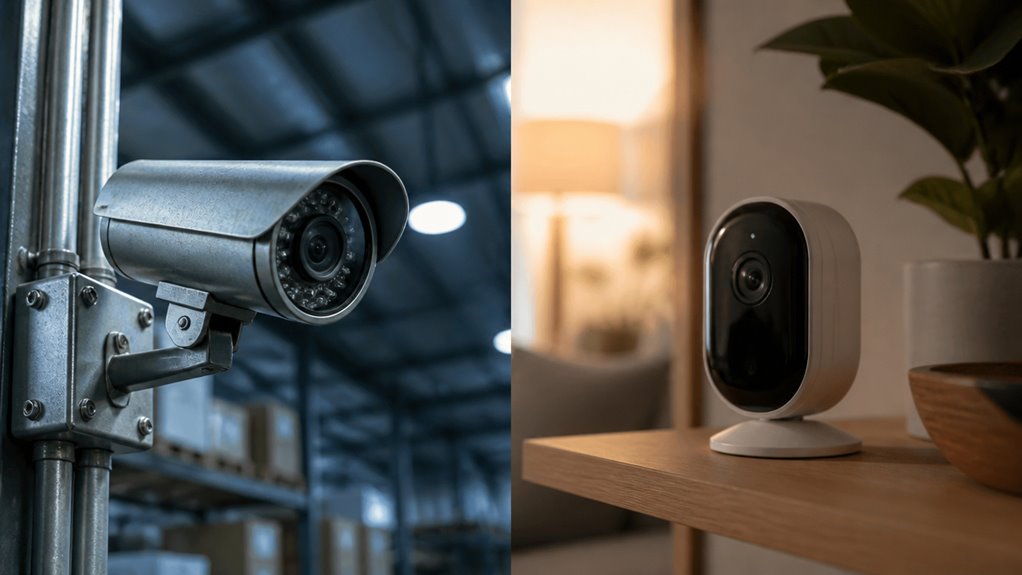

If you want stable, high-quality video with consistent power, PoE cameras connect via Ethernet cables. This reduces interference and downtime.
WiFi cameras offer more flexible placement and simpler installation but can suffer from signal drops and variable video quality.
PoE suits professional or large-scale setups needing reliable feeds, while WiFi works well for smaller, temporary areas.
Weighing power delivery, performance, and cost helps you decide which fits your surveillance needs better. Exploring further reveals key deployment and security differences.

- 4 MP HD Resolution & Power over Ethernet (PoE) – 4 Megapixels, providing the level of detail needed…
- Dual H.265/H/264 Compression – With H.265 compression, you can store more information using fewer…
- Easy Plug and Play with Mutilple Brands of NVRS & Works with Thrid software, ISpy, BlueIris…
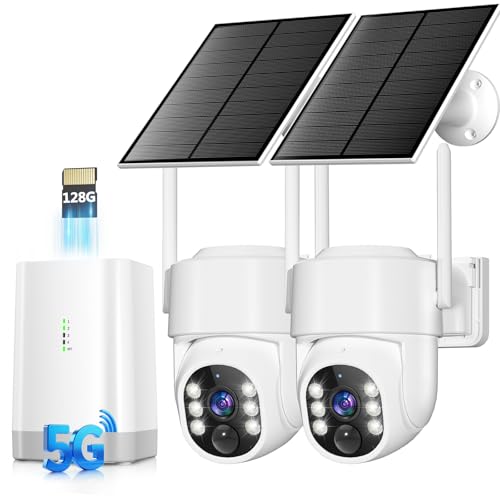
- No Monthly Fees & With 128GB Secure Local Storage: All recordings are encrypted and stored securely…
- 360° Auto-Tracking + Cross-Camera Follow: The camera spins 360° to follow motion by itself. With…
- 100% Wire-Free & Solar-Powered: True Wireless Freedom with Continuous Solar Power.This home security…
Key Takeaways
- PoE cameras deliver power and data via Ethernet cable, offering stable, high-quality video with low latency and minimal interference.
- WiFi cameras transmit data wirelessly, allowing flexible placement but are prone to signal drops, congestion, and fluctuating video quality.
- PoE installation requires cable runs and higher upfront costs but ensures reliable, scalable setups with centralized power management.
- WiFi cameras are easier and cheaper to install with no wiring but need separate power sources and may incur ongoing maintenance.
- PoE suits high-security, large-scale, and permanent installations; WiFi fits temporary, casual monitoring, or hard-to-wire locations.
PoE Camera vs Wifi Camera: Key Differences in Connectivity, Video Quality, and Security
| Comparison Factors | PoE Camera | WiFi Camera |
|---|---|---|
| Connection Type | Wired Ethernet connection | Wireless WiFi connection |
| Power Supply | Power and data through one Ethernet cable | Separate outlet, battery, or solar power |
| Installation Process | Requires Ethernet cable routing and network equipment | Simpler installation without Ethernet runs |
| Connection Stability | Generally stable and predictable | Depends on wireless signal strength |
| Video Quality | Consistent high-resolution streaming with adequate network capacity | High-resolution streaming possible, but affected by wireless conditions |
| Video Latency | Typically lower and more consistent latency | May experience variable latency |
| Signal Interference | Less susceptible to wireless interference | Can experience WiFi congestion and signal drops |
| Network Range | Standard Ethernet runs typically support up to 100 meters | Depends on router coverage, obstacles, and interference |
| Camera Placement | Limited by Ethernet cable routing | More flexible positioning within wireless coverage |
| Continuous Recording | Well suited to continuous monitoring and NVR recording | Depends on power source, bandwidth, and camera features |
| Network Security | Avoids wireless signal interception, but requires network protection | Requires strong wireless encryption and secure configuration |
| Maintenance Requirements | Cable, connector, switch, and firmware checks | Signal, power source, battery, and firmware checks |
| Scalability | Suitable for larger wired surveillance systems | Convenient for smaller installations with sufficient WiFi capacity |
| Smart Home Integration | Depends on camera software and system compatibility | Often supports smart home apps and connected devices |
| Upfront Setup Requirements | May involve additional cabling and PoE equipment | May require fewer installation components |
| Best Applications | Businesses, permanent installations, and large properties | Homes, rentals, temporary setups, and flexible monitoring |
| Overall Recommendation | Choose for wired reliability and centralized power | Choose for installation flexibility and convenient placement |
PoE vs WiFi Cameras: A Quick Overview
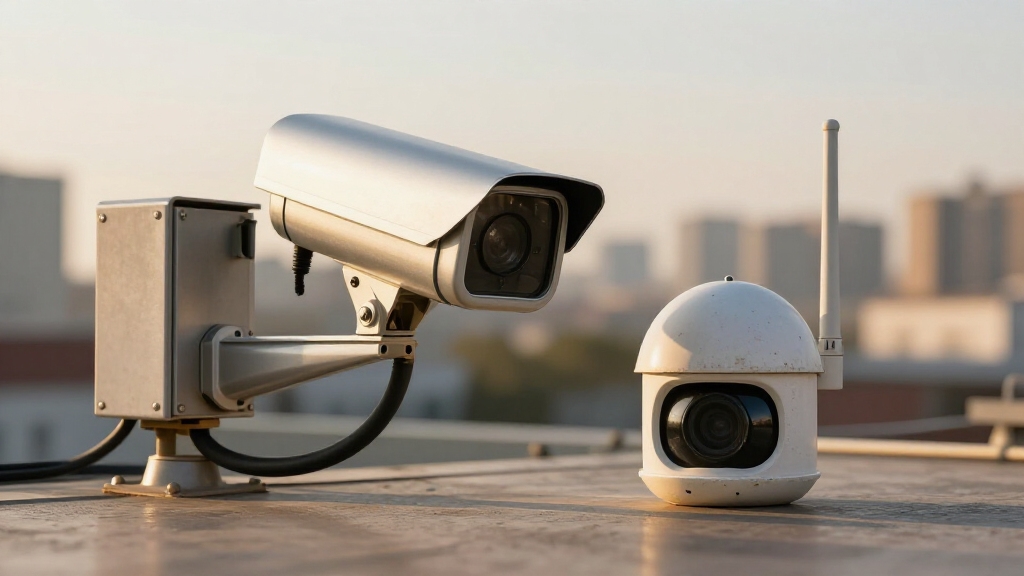
While both PoE and WiFi cameras serve the fundamental purpose of surveillance, they differ markedly in how they handle power, data transmission, and installation.
PoE cameras use a single Ethernet cable to deliver both power and data, reducing the need for separate power sources near each camera. This setup requires careful cable routing back to a switch or network video recorder.
PoE cameras streamline power and data delivery through one Ethernet cable, minimizing the need for nearby power sources.
In contrast, WiFi cameras transmit data wirelessly but still need power from an outlet, battery, or solar source. This wireless design simplifies camera placement by eliminating Ethernet cables but introduces dependency on local power availability.
When you choose between these types, consider that PoE demands more upfront infrastructure planning. WiFi offers easier installation and repositioning without extensive wiring. Each approach presents trade-offs in convenience and complexity.
PoE systems also typically provide surge protection and more stable voltage, which enhances long-term reliability compared to some WiFi setups.
Which Camera Type Offers More Reliable Connections: PoE or WiFi?
When it comes to choosing between PoE and WiFi cameras, you’ll notice that PoE cameras usually provide a more stable connection. Why? Well, they use wired Ethernet, which cuts down on interference and those frustrating signal dropouts.
On the other hand, WiFi cameras have their own set of challenges. They rely heavily on signal strength, so things like congestion, distance, and even physical barriers like walls can really impact their performance.
Additionally, PoE cameras simplify installation by combining power and data through a single Ethernet cable, reducing cable clutter and enhancing reliability.
Connection Stability Comparison
Because connection stability is essential for surveillance effectiveness, understanding the differences between PoE and WiFi cameras can help you choose the right system.
PoE cameras offer more reliable connections by transmitting power and data through a single Ethernet cable, eliminating wireless signal issues. This wired setup minimizes dropouts and interference, ensuring continuous uptime, critical for consistent monitoring.
On the other hand, WiFi cameras depend on signal strength and network traffic, making them vulnerable to congestion, dead zones, and physical obstructions that can disrupt video feeds.
While WiFi provides flexibility in placement and easier installation, its connection stability can fluctuate, affecting recording reliability.
Ultimately, if you prioritize consistent, interference-free connectivity, PoE cameras deliver superior stability compared to WiFi’s convenience-focused but less predictable connection.
Moreover, PoE technology simplifies installation by combining power and data transmission over a single cable, enhancing network infrastructure efficiency.
Impact of Environmental Factors
Environmental factors play a crucial role in determining the reliability of connections for both PoE and WiFi cameras.
When you rely on PoE, your connection remains stable regardless of physical barriers like walls or interference since data and power travel through Ethernet cables.
However, PoE’s effectiveness is limited by cable length, typically up to 100 meters, which you must plan around.
WiFi cameras, on the other hand, offer flexibility but depend heavily on signal strength.
Environmental elements like distance, walls, and network congestion can degrade this signal.
If you face heavy interference or multiple obstructions, WiFi connections may drop or display lag.
Ultimately, PoE provides more predictable, interference-resistant connections.
WiFi’s reliability varies with environmental conditions and network quality, making your choice dependent on your specific site challenges.
Additionally, PoE cables require proper routing and protection to ensure consistent performance and avoid interference.
Video Quality and Latency Differences Between PoE and WiFi Cameras
When comparing video quality and latency between PoE and WiFi cameras, consider how each system handles data transmission.
PoE cameras typically deliver steadier high-resolution video with lower and more consistent latency because they use dedicated Ethernet bandwidth.
WiFi cameras, however, might experience fluctuating quality and lag due to signal strength and network congestion.
| Feature | PoE Cameras | WiFi Cameras |
|---|---|---|
| Video Resolution | Often supports up to 4K | Varies with signal and bandwidth |
| Latency | Low and consistent | Can be higher and inconsistent |
| Data Path | Dedicated Ethernet cable | Shared wireless network |
| Interference | Minimal, wired connection | Prone to congestion and drops |
| Reliability | Stable, ideal for critical use | Variable depending on environment |
This analysis highlights PoE’s advantage in reliability and consistent video delivery. PoE technology also simplifies outdoor wiring and power delivery, which enhances installation efficiency and overall system reliability through power over Ethernet.
Range and Deployment Limits for PoE and WiFi Cameras
Although both PoE and WiFi cameras serve a wide range of surveillance needs, their deployment capabilities differ markedly due to inherent range and infrastructure constraints.
PoE cameras rely on Ethernet cables with a maximum length of about 100 meters (328 feet). This provides a predictable and stable coverage area ideal for fixed indoor or perimeter setups.
This limit requires planning for cable runs but guarantees consistent data transmission. In contrast, WiFi cameras depend on wireless signal strength, which weakens over distance and through walls.
This can cause potential dead zones and fluctuating connectivity. WiFi excels in small, flexible, or temporary deployments where cabling is impractical.
For expansive properties, PoE’s fixed range allows better coverage planning. WiFi’s variable range can complicate reliable long-distance surveillance.
Additionally, PoE systems often feature plug-and-play installation, simplifying setup by combining power and data transmission through a single cable.
Installing PoE vs WiFi Cameras: What to Expect
Installing PoE and WiFi cameras involves distinct challenges and considerations that impact your setup time, complexity, and flexibility.
With PoE cameras, you’ll need to run Ethernet cables from each camera to a switch or NVR.
This requires planning cable routes and possibly drilling through walls.
This adds installation time and complexity but reduces the need for separate power outlets near cameras.
WiFi cameras simplify installation by eliminating Ethernet runs, letting you place cameras more flexibly without worrying about wiring.
However, they still require power sources, like outlets or batteries.
While WiFi setups are quicker and easier, they may demand more troubleshooting for signal strength or interference.
Ultimately, the installation process you choose depends on your environment, technical skills, and how permanent or scalable you want your surveillance system.
It is also important to consider environmental factors like heat and interference that can affect device performance and reliability.
Cost Comparison: PoE and WiFi Camera Systems
When you’re looking at PoE and WiFi camera systems, it’s easy to see that PoE usually comes with a heftier initial price tag. That’s mainly because you have to factor in costs for cabling, switches, and sometimes even professional installation.
On the flip side, WiFi setups might seem more budget-friendly at first glance. They often have lower upfront costs, which is appealing. But here’s the catch: over time, you might find yourself spending more on maintenance. Wireless interference and battery replacements can add up. Additionally, considering maintenance schedules can help manage long-term costs and system reliability.
Upfront Equipment Expenses
Evaluating the upfront equipment expenses between PoE and WiFi camera systems reveals clear differences in cost structure and investment requirements.
With PoE, you’ll likely pay more initially due to the need for Ethernet cables, PoE switches, and compatible cameras that combine power and data transmission.
This integrated cabling reduces the necessity for separate power outlets near each camera but demands higher investment in network infrastructure.
Conversely, WiFi cameras usually cost less upfront since they don’t require Ethernet wiring or PoE switches.
However, you’ll still need power sources like outlets or batteries for each camera, which can add to expenses depending on your setup.
Ultimately, your choice depends on balancing the higher initial cost and infrastructure of PoE against WiFi’s simpler, lower-cost equipment but separate power needs.
Installation labor for PoE systems can range higher due to the complexity of wiring compared to the typically lower labor costs of wireless setups, which may add $25–$35 per camera. installation labor
Installation And Maintenance Costs
Although PoE camera systems demand more upfront planning and labor for running Ethernet cables and configuring network switches, their installation process often results in a more organized and scalable setup.
You’ll spend more initially on cabling and professional installation. However, this tends to reduce long-term maintenance hassles linked to wireless interference or battery replacements.
WiFi cameras, on the other hand, offer easier installation without wiring, which lowers your initial labor costs. However, you might face ongoing expenses for power solutions and occasional troubleshooting due to connectivity drops.
Over time, PoE’s stable, centralized power and data delivery can reduce downtime and maintenance frequency. So, while WiFi systems may feel cheaper to set up, PoE installations often prove more cost-effective and reliable when you factor in maintenance over the system’s lifespan.
Proper cable routing and protection during PoE camera installation can further enhance system longevity and reduce repair needs.
Security Risks in PoE vs WiFi Cameras
Because PoE cameras rely on wired connections, they inherently reduce exposure to many wireless security vulnerabilities that WiFi cameras face, such as signal jamming or interception.
When you use PoE, your data travels through physical cables, making unauthorized access more challenging compared to wireless signals that can be intercepted or disrupted.
However, PoE systems aren’t immune; physical tampering with cables or network breaches still pose risks.
With WiFi cameras, you need to be especially vigilant about securing your wireless network. Use strong encryption, change default passwords, and update firmware regularly to mitigate hacking risks.
Both camera types demand careful network security management, but WiFi’s reliance on radio frequencies introduces additional attack surfaces.
Ultimately, your choice hinges on balancing convenience with the specific security demands of your environment.
Best Use Cases for PoE Cameras in Surveillance
When you need a surveillance system that delivers consistent, high-quality video with minimal downtime, PoE cameras stand out as an ideal choice. Their wired connection guarantees stable power and data transmission, reducing risks of interference and outages.
You’ll find PoE cameras particularly effective in scenarios where reliability and image clarity are critical. Consider these use cases where PoE excels:
- Large-scale commercial or industrial sites requiring continuous monitoring
- Locations with high-security demands, such as banks or government buildings
- Outdoor perimeter surveillance needing predictable cable runs and weatherproof setups
- Environments where 4K resolution and low latency support real-time response
In these contexts, PoE’s stable connection, high bandwidth, and centralized power simplify management and enhance overall system performance.
When WiFi Cameras Are the Better Choice?
Why might you choose WiFi cameras over PoE systems?
If you need quick installation without running cables, WiFi cameras offer clear advantages.
They’re ideal when you want flexibility to reposition devices easily or use them in locations where Ethernet wiring is impractical or costly.
WiFi setups work well for small, temporary, or rental spaces that don’t justify extensive infrastructure.
However, you’ll need local power sources, and video quality may vary with signal strength and network traffic.
While WiFi cameras are generally less reliable and more vulnerable to interference than PoE, their lower upfront cost and simpler deployment make them better suited for casual monitoring or less critical applications.
Frequently Asked Questions
Can Poe Cameras Function Without a Network Connection?
You can use PoE cameras without a network connection, but their functionality will be limited.
They’ll still receive power through the Ethernet cable, allowing basic recording if connected to a local NVR or DVR.
However, without a network, you won’t access live feeds remotely or enable cloud features.
How Do Firmware Updates Differ Between Poe and Wifi Cameras?
Back in the days of telegrams, updates were slow. Today, you’ll find firmware updates differ mainly in delivery.
With PoE cameras, you usually update through a wired network connection, guaranteeing stable, consistent downloads.
WiFi cameras rely on wireless signals, which can cause interruptions or delays during updates.
You’ll want to secure a strong WiFi signal for smooth updates. PoE’s wired link offers a more reliable, often faster process.
Are There Environmental Limitations for Poe Camera Cables?
Yes, you’ll face environmental limits with PoE cables. Ethernet cables typically max out around 100 meters, so you can’t extend beyond without signal boosters.
Exposure to extreme temperatures, moisture, or physical damage can degrade cable performance or cause failure. You’ll need outdoor-rated, UV-resistant cables for harsh conditions and proper sealing to prevent water ingress.
Planning cable routes carefully helps you avoid interference from electrical sources and mechanical stress.
Can Wifi Cameras Integrate With Smart Home Systems Easily?
You’ll find that WiFi cameras tend to play nicely with smart home systems, making integration quite straightforward. They often support popular platforms like Alexa, Google Assistant, and Apple HomeKit, enabling voice control and automation.
This ease comes from their wireless nature and built-in compatibility. However, you should weigh potential network congestion and security considerations, as wireless connections might occasionally introduce minor hiccups or vulnerabilities compared to wired setups.
What Maintenance Is Required for Poe vs. Wifi Cameras?
You’ll need to check PoE cameras’ Ethernet cables and connections for wear or damage. They generally require less frequent power maintenance since power runs through the cable.
For WiFi cameras, you’ll regularly recharge or replace batteries or ensure power outlets function properly. You’ll also monitor wireless signal strength and interference for WiFi models.
PoE cameras demand occasional switch or network hardware checks to maintain stable data and power delivery.
Poe Camera vs Wifi Camera: Final Verdict
When choosing between PoE and WiFi cameras, consider that PoE systems boast a 99.9% connection reliability, making them ideal for critical surveillance.
WiFi cameras offer flexibility but can suffer from interference and latency.
Your decision hinges on your environment and priorities: if consistent performance and security are paramount, PoE is your best bet.
For easy installation and mobility, WiFi works well.
Weigh these factors carefully to match the system to your specific needs.
- 4 MP HD Resolution & Power over Ethernet (PoE) – 4 Megapixels, providing the level of detail needed…
- Dual H.265/H/264 Compression – With H.265 compression, you can store more information using fewer…
- Easy Plug and Play with Mutilple Brands of NVRS & Works with Thrid software, ISpy, BlueIris…
- No Monthly Fees & With 128GB Secure Local Storage: All recordings are encrypted and stored securely…
- 360° Auto-Tracking + Cross-Camera Follow: The camera spins 360° to follow motion by itself. With…
- 100% Wire-Free & Solar-Powered: True Wireless Freedom with Continuous Solar Power.This home security…
Last update on 2026-10-31 / Affiliate links / Images from Amazon Product Advertising API