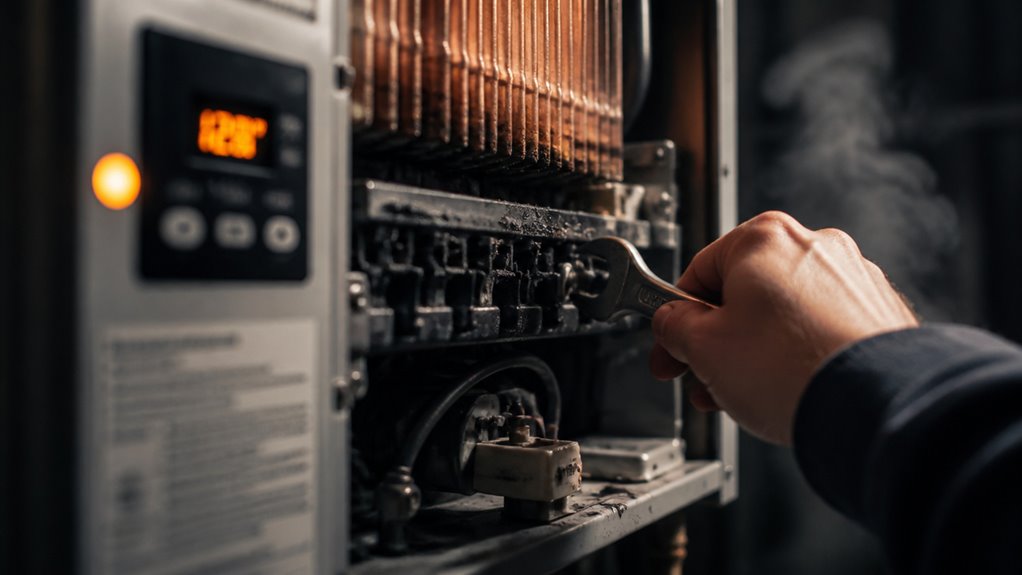

Your furnace keeps turning off and on due to short cycling, often caused by an oversized unit heating the space too fast or restricted airflow reducing heat exchanger cooling.
Thermostat issues like faulty wiring or poor placement can send erratic signals.
Overheating from duct leaks or clogged filters trips safety switches.
Mechanical faults, such as dirty flame sensors or blower problems, also interrupt operation.
Understanding these causes helps you identify why your furnace behaves this way and how to fix it properly.
Key Takeaways
- An oversized furnace heats too quickly, causing the thermostat to shut it off prematurely and resulting in frequent on-off cycling.
- Restricted airflow from clogged filters, blocked vents, or dirty components causes overheating and triggers safety shutdowns.
- Thermostat faults like wiring issues, low batteries, or poor placement cause erratic signals leading to unnecessary cycling.
- Overheating due to poor heat dissipation or duct leaks trips the high-limit switch, causing the furnace to cycle off and on.
- Dirty flame sensors, cracked heat exchangers, or malfunctioning blower motors interrupt operation and cause frequent furnace shutdowns.
How an Oversized Furnace Causes Short Cycling?
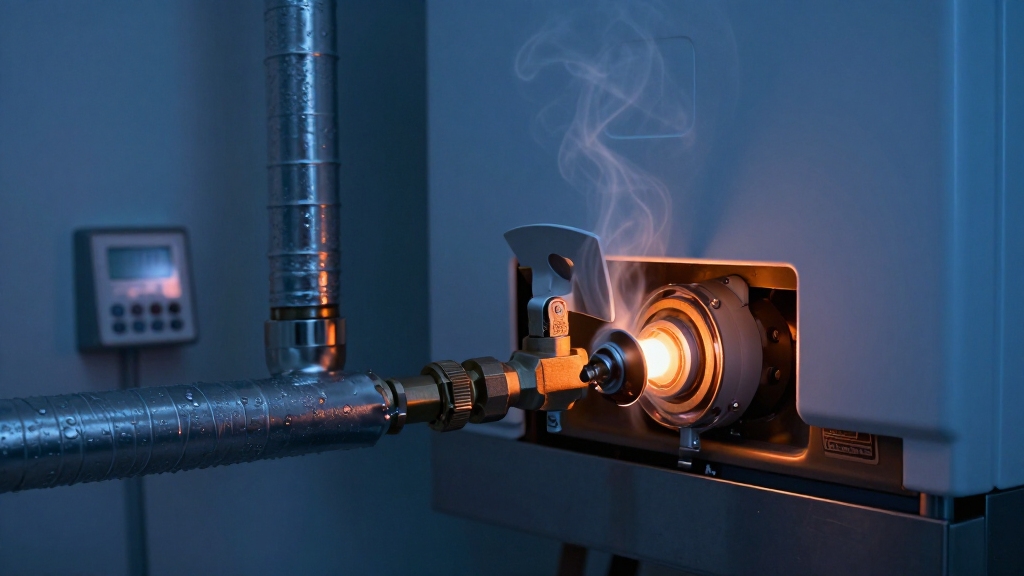
When your furnace is oversized for your home’s heating load, it heats the space too quickly. This causes the thermostat to reach its set temperature prematurely and shut off the system.
This rapid heating prevents the furnace from running long enough to distribute warmth evenly. It leads to frequent on-off cycles known as short cycling.
Oversized furnaces also waste energy, increase wear on components, and reduce system efficiency. Proper equipment sizing depends on accurately calculating your home’s heating load.
Factors beyond square footage, such as insulation, window quality, and climate, must be considered. If your furnace cycles frequently without airflow restrictions or thermostat faults, oversizing is a likely cause.
Addressing this requires professional load assessment and selecting a furnace matched to the actual heating demand. This ensures longer, steadier heating cycles and improved comfort.
Additionally, thermostat errors like short cycling can be caused by frequent premature shutoffs related to system sizing issues.
How Restricted Airflow Causes Furnace Short Cycling?
Oversized furnaces aren’t the only cause of short cycling; restricted airflow can also trigger frequent on-off cycles.
When your furnace’s air filters get clogged with dust and debris, they reduce airflow across the heat exchanger.
Clogged air filters restrict airflow, causing your furnace to overheat and shut down prematurely.
This causes the internal temperature to rise rapidly, activating the high-limit safety switch and shutting the system down prematurely.
Dirty blower wheels and coils further impede air movement, contributing to overheating.
Additionally, blocked intake vents, closed supply registers, or duct restrictions limit circulation, cutting your furnace’s run time short.
Poor duct insulation or leaks allow heated air to escape before reaching the thermostat zone, causing the furnace to restart repeatedly.
Maintaining clear airflow is critical to preventing short cycling and ensuring your system runs efficiently without overheating.
Regularly replacing or cleaning air filters helps maintain proper airflow management and prevents blower strain.
How Thermostat Issues Cause Furnace Short Cycling?
Why does your furnace keep cycling on and off even when it seems like the temperature hasn’t changed?
Thermostat issues often cause this short cycling by sending inaccurate signals to the furnace control board.
Faulty wiring, failing sensors, or low batteries can distort temperature readings.
Additionally, poor thermostat placement near heat sources causes premature system shutdowns, confusing the furnace into thinking the home is warm enough.
| Problem | Effect on Furnace |
|---|---|
| Faulty wiring | Erratic on/off signals |
| Failing temperature sensor | Premature system shutdown |
| Low thermostat batteries | Intermittent loss of control |
| Poor thermostat location | False temperature readings |
Checking and correcting these thermostat issues guarantees smoother furnace operation and prevents unnecessary cycling. Proper maintenance and timely replacement of components, such as ensuring battery compatibility, can help avoid system malfunctions.
How Overheating Causes Furnace Short Cycling?
After addressing thermostat-related causes of short cycling, the next major factor to take into account is overheating.
Overheating commonly occurs because restricted airflow prevents sufficient heat dissipation across the heat exchanger.
Dirty air filters, clogged blower wheels, or blocked vents reduce airflow, causing the furnace’s internal temperature to rise rapidly.
When the high-limit switch detects excessive heat, it triggers a safety shutdown to protect the system.
This forces your furnace to cycle off and then restart once it cools down, creating a repeated on-off pattern known as short cycling.
You should also consider ductwork issues like leaks or poor insulation that allow heat loss, prompting frequent restarts.
Addressing airflow problems is essential to prevent overheating and ensure your furnace operates efficiently and reliably.
High temperatures can also cause control panels and wiring in heating systems to overheat, increasing the risk of component failure.
How Flame Sensor and Mechanical Faults Cause Furnace Short Cycling?
Frequently, flame sensor malfunctions and mechanical faults play a critical role in causing your furnace to short cycle. A dirty or corroded flame sensor fails to detect the burner flame accurately, prompting the control board to shut off the gas valve as a safety precaution.
This shutdown triggers repeated restarts, resulting in short cycling. Additionally, mechanical issues such as cracked heat exchangers or malfunctioning blower motors interrupt normal operation, forcing the system to cycle on and off frequently.
Blocked exhaust vents or faulty pressure switches can also cause safety shutdowns, disrupting combustion and heating cycles. If your furnace keeps cycling despite filter changes and thermostat checks, you should inspect flame sensors and internal mechanical components to identify and resolve these critical faults.
Furthermore, power interruptions and voltage fluctuations can exacerbate short cycling by activating built-in compressor or system protection delays that interrupt normal furnace operation.
Frequently Asked Questions
Can a Dirty Chimney Cause My Furnace to Short Cycle?
Yes, a dirty chimney can cause your furnace to short cycle. Blocked exhaust vents or clogged flues restrict proper venting, triggering safety shutdowns.
This forces your furnace to turn off to prevent dangerous combustion byproducts from accumulating. When the furnace detects abnormal vent pressure or poor draft conditions, it interrupts the heating cycle and restarts repeatedly.
Regular chimney cleaning guarantees safe venting and helps maintain steady furnace operation.
Do Power Surges Affect Furnace Cycling Behavior?
Power surges can definitely disrupt your furnace cycling behavior. Studies show that about 30% of HVAC malfunctions stem from electrical issues like surges.
These sudden voltage spikes can damage sensitive components such as the control board or thermostat wiring, causing erratic on-off cycling.
To protect your furnace, consider installing surge protectors and regularly inspect electrical connections. Addressing power quality helps maintain stable furnace operation and prevents premature system shutdowns.
How Does Humidity Impact Furnace Operation and Cycling?
Humidity affects furnace operation by influencing indoor air temperature and comfort levels.
High humidity makes air feel warmer, causing your thermostat to shut off heating sooner. This can lead to shorter furnace cycles.
Low humidity can make your home feel cooler, prompting longer heating runs.
Excess moisture may also promote clogged filters and corrosion in furnace components, which can cause cycling issues.
Maintaining balanced humidity helps your furnace run efficiently and reduces unnecessary cycling.
Can Pets or Pests Inside Ducts Cause Furnace Issues?
Imagine tiny invaders blocking your furnace’s breath. Pets or pests nesting in ducts can cause real airflow trouble.
When these critters clog or damage ducts, they restrict airflow. This raises internal temperatures and triggers safety shutdowns.
Short cycling stresses your system and reduces efficiency. You’ll want to inspect ducts for signs of infestation or damage.
Remove obstructions promptly to maintain proper furnace operation and prevent costly repairs.
Is Regular Maintenance Necessary to Prevent Furnace Short Cycling?
Yes, regular maintenance is essential to prevent furnace short cycling. By routinely changing air filters, cleaning blower wheels, and inspecting ducts, you maintain proper airflow and avoid overheating.
Regular thermostat checks guarantee accurate temperature readings. Professional inspections detect early mechanical issues like faulty limit switches or flame sensors.
This proactive care helps your furnace run efficiently, prevents safety shutdowns, and extends the system’s lifespan. It also reduces costly repairs and frequent cycling.
Why Does My Furnace Keep Turning Off and On? Final Thoughts
When your furnace keeps turning off and on, it’s like a heartbeat out of sync. Each short cycle signals an underlying issue.
Whether it’s oversized capacity, restricted airflow, thermostat glitches, overheating, or sensor faults, these problems coincide to disrupt smooth operation.
By pinpointing and addressing these causes, you restore balance. This ensures your furnace runs efficiently and steadily, just like a well-tuned engine humming in perfect rhythm throughout the cold season.