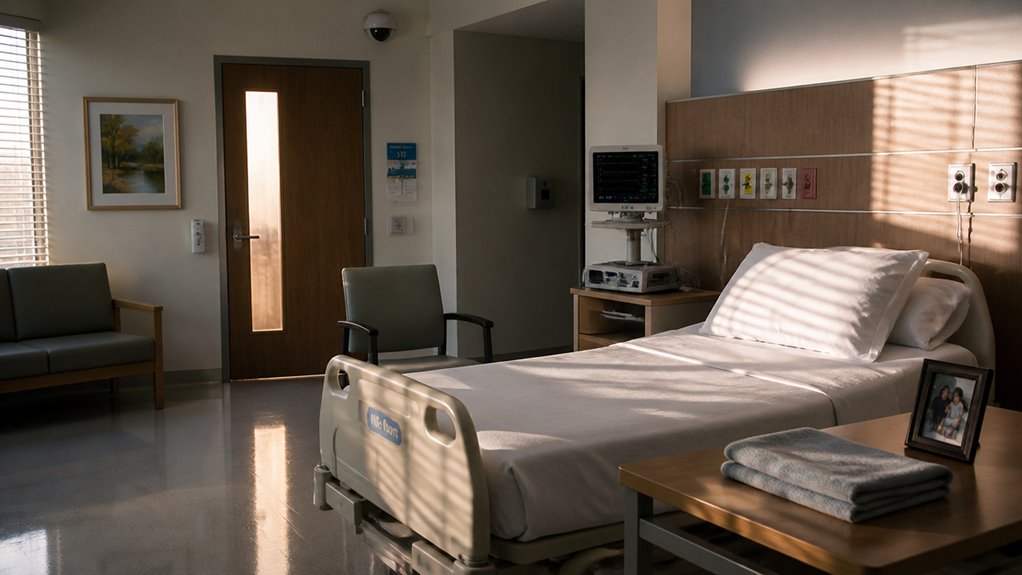

You can install cameras in patient rooms, but you must carefully navigate HIPAA, state privacy laws, and facility policies.
Consent is essential—written and informed—from patients or legal representatives. This is especially important in shared rooms where all roommates must agree.
Cameras can’t be placed in bathrooms or changing areas due to strict privacy protections.
Hospitals and nursing homes have different rules, so knowing local laws and ethical guidelines is vital.
Understanding these factors helps guarantee compliance and protect patient privacy appropriately.
Key Takeaways
- Cameras in patient rooms are legal only with written informed consent and clinical or safety justification, following HIPAA and state privacy laws.
- Surveillance is generally prohibited in bathrooms, changing areas, and highly private spaces due to strict privacy and ethical standards.
- Shared rooms require written consent from all roommates, plus clear notice and facility approval before camera installation.
- Nursing homes often allow resident-requested room cameras under state electronic monitoring laws, unlike stricter hospital policies.
- Recorded footage must be securely stored, access limited, and use restricted to authorized healthcare purposes to comply with HIPAA.
Legal Frameworks for Cameras in Patient Rooms
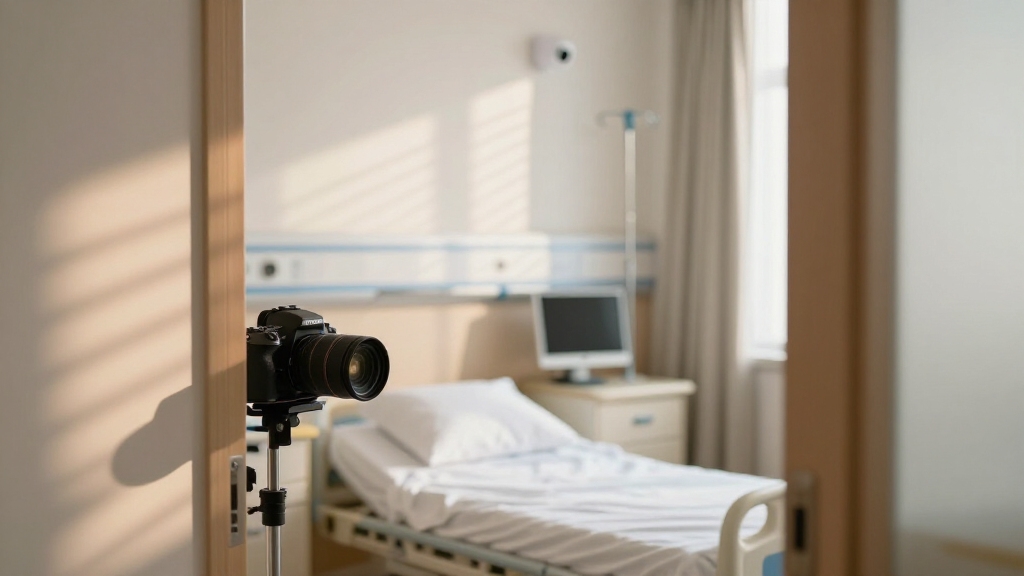
Although cameras in patient rooms aren’t outright illegal, you must navigate a complex legal framework that includes HIPAA, state privacy laws, and facility policies before installing them. Each layer imposes specific requirements. HIPAA governs protected health information, while state laws may restrict surveillance in private spaces like patient rooms or bathrooms.
You’ll need informed consent from patients or their legal representatives, especially in shared rooms where roommates’ permissions are essential. Facility policies often add another compliance layer, limiting camera placement to guarantee privacy.
Because laws vary by state and care setting, you should obtain legal counsel to confirm you meet all obligations. Prioritize transparency, secure data handling, and respect for patient privacy to minimize legal risks and uphold ethical standards when considering room cameras. Additionally, avoid recording in areas with a reasonable expectation of privacy to prevent privacy violations and related legal consequences.
How HIPAA Affects Cameras in Patient Rooms?
When you install cameras in patient rooms, HIPAA immediately comes into play because video recordings that reveal a patient’s identity or clinical information qualify as protected health information (PHI).
This means you must handle recordings with strict safeguards to protect patient privacy.
Specifically, you should:
- Limit camera placement to areas that minimize exposure of PHI. Avoid exam rooms, treatment areas, or restrooms.
- Implement strong administrative and technical controls such as encryption, restricted access, and audit logs to secure stored footage.
- Use recorded video strictly for permitted purposes like treatment, payment, or healthcare operations unless you have broader authorization.
It is important to note that official First Alert smoke detectors do not contain built-in cameras or video recording hardware and thus cannot be used for surveillance purposes.
Patient Consent Requirements for Room Cameras
Before you install cameras in patient rooms, it’s important to get written consent. This isn’t just a formality; it’s a legal and ethical requirement.
If the patient can’t provide consent themselves, you’ll need to get it from their legal representative.
Now, if the patient is in a shared room, it gets a bit trickier. You’ll also need to consider the agreement of the roommate, so make sure to navigate that carefully.
It’s all about respecting everyone’s privacy while ensuring safety.
Additionally, clear communication and documentation help maintain legal compliance and protect all parties involved.
Written Consent Necessity
Because patient rooms are highly private spaces, obtaining written informed consent before installing cameras is essential to comply with legal and ethical standards.
You must make certain patients understand the purpose, scope, and implications of the recording. Written consent protects both patient privacy and your facility’s legal compliance.
When securing consent, consider these key points:
- Clearly explain the camera’s use, location, and data handling practices.
- Obtain explicit, documented consent from the patient or competent individual before installation.
- Respect patient autonomy by allowing refusal without penalty and address shared-room consent complexities.
Additionally, ensure that camera placement and usage comply with privacy and state laws to avoid legal issues related to unauthorized surveillance.
Legal Representative Consent
Securing written consent directly from the patient is the standard approach. However, situations arise where the patient lacks the capacity to provide informed permission. In these cases, you must obtain consent from a legally authorized representative, such as a healthcare proxy or legal guardian.
This guarantees you comply with HIPAA and state privacy laws that protect patient confidentiality and autonomy. Before installing cameras, verify the representative’s authority in writing and document the consent process thoroughly.
Remember, this consent must be informed. Explain the camera’s purpose, scope, and data security measures clearly. Without valid representative consent, recording risks violating privacy regulations and ethical standards.
Always consult facility policies and legal counsel to align with jurisdictional requirements and safeguard patient rights. Additionally, maintaining documented communication regarding consent strengthens legal protection and compliance.
Roommate Consent Challenges
Maneuvering roommate consent challenges requires careful attention when installing cameras in shared patient rooms. You must make certain that all occupants provide informed consent before proceeding, as one patient’s agreement alone isn’t sufficient. Here’s what to weigh:
- Obtain written consent from every roommate, respecting each individual’s privacy rights and capacity to consent.
- Provide clear notice about camera placement and purpose, guaranteeing transparency and minimizing disputes.
- Review facility policies and state laws, which may mandate roommate approval or restrict recording in private spaces.
Failing to secure all-inclusive consent risks violating privacy laws and HIPAA regulations. Always treat shared rooms as highly sensitive environments, balancing patient safety with privacy.
When in doubt, consult legal counsel to align with ethical and regulatory standards before installing cameras. It is also critical to respect privacy boundaries by avoiding recording or sharing footage beyond the agreed purposes to maintain trust and legal compliance.
How to Handle Cameras in Shared Patient Rooms?
When you install cameras in shared patient rooms, you must navigate complex consent and privacy challenges to protect all occupants’ rights. Obtain written consent from every patient or their legal representative before installation.
Clearly post notices about camera presence to maintain transparency. Avoid recording sensitive areas like bathrooms within the shared space.
Limit access to footage strictly to authorized personnel and implement robust data security measures. Always align your approach with facility policies and regulatory requirements.
Regularly perform visual inspections to ensure no unauthorized surveillance devices compromise patient privacy.
| Aspect | Best Practice |
|---|---|
| Consent | Obtain written consent from all patients |
| Notice | Clearly post camera presence |
| Privacy | Exclude bathrooms and sensitive areas |
| Data Security | Restrict access, encrypt, and log footage |
Handle cameras ethically to uphold privacy and comply with legal standards.
Key State Laws Affecting Patient Room Cameras
After addressing the complexities of cameras in shared patient rooms, it’s important to understand how state laws influence what’s allowed in patient room monitoring.
State regulations often go beyond HIPAA, controlling when and how cameras may be used. You need to be aware of these key points:
- Many states prohibit surveillance in areas where patients disrobe, including rooms with bathrooms or bathing facilities.
- Some states require explicit resident requests, roommate consent, and facility notice before cameras are permitted.
- Long-term care settings often have specific “electronic monitoring” laws, allowing resident-operated cameras under strict conditions.
Always check state-specific rules before installing cameras. Compliance with these laws protects patient privacy and reduces legal risks while ensuring ethical monitoring practices. Additionally, understanding privacy laws is essential to avoid capturing private areas or violating consent regulations.
How Do Hospital and Nursing-Home Camera Rules Differ?
Understanding how hospital and nursing-home camera rules differ is essential for compliance and patient privacy protection.
In hospitals, cameras in patient rooms are generally allowed only for clear clinical or safety reasons, with strict consent and privacy safeguards.
Hospitals prioritize protecting sensitive health information under HIPAA and facility policies, often limiting surveillance to public areas.
Nursing homes, however, tend to have more permissive rules due to state laws granting residents stronger rights to electronic monitoring.
You’ll often find that nursing-home residents can request room cameras with proper consent from roommates and facility notice.
Still, both settings prohibit cameras in highly private spaces.
Always review state statutes and facility policies, because what’s lawful in a nursing home room may be unlawful in a hospital room, even if the physical space is similar.
Additionally, ensuring restricted access to recorded footage is critical to protect patient privacy and comply with legal requirements.
Why Are Bathrooms and Changing Areas Off-Limits for Cameras?
You know, placing cameras in bathrooms or changing areas is a big no-no. Why? Well, it’s all about privacy. People have the highest expectations of privacy in those spaces.
There are strict legal restrictions that protect these areas, and they’re in place to prevent any unauthorized recording of those intimate moments. It’s really important to respect that.
Plus, recognizing these zones as off-limits isn’t just about privacy; it’s also about safeguarding patient dignity and making sure we meet all the regulatory standards. So, it’s best to keep cameras out of these areas altogether!
Additionally, local laws vary widely regarding surveillance and audio recording, so always check regulations before installing any cameras in sensitive locations.
Privacy Expectations Heightened
Because bathrooms and changing areas involve the most intimate and vulnerable moments for patients, privacy expectations in these spaces are markedly heightened. You must recognize that cameras in these locations breach fundamental patient dignity and trust. Here’s why these areas remain off-limits:
- Patients are in states of undress, increasing exposure risk and privacy invasion.
- Sensitive personal care occurs, making surveillance ethically inappropriate and intrusive.
- Legal and regulatory frameworks explicitly protect these spaces to prevent unauthorized recording and potential abuse.
When considering cameras in patient rooms, you should always exclude bathrooms and changing areas to uphold strict privacy standards. Respecting these boundaries maintains compliance with ethical and regulatory expectations while safeguarding patient rights and comfort.
Legal Restrictions Strict
Although cameras can serve important roles in healthcare settings, strict legal restrictions prohibit their use in bathrooms and changing areas to protect patient privacy.
These spaces involve intimate activities, making any recording a serious invasion of personal dignity and confidentiality.
Laws often explicitly ban surveillance where patients disrobe or perform private functions, reflecting heightened privacy expectations.
You must comply with HIPAA, state privacy statutes, and facility policies, which uniformly treat these areas as off-limits for cameras.
Consent can’t override these prohibitions, as the legal and ethical standards prioritize safeguarding vulnerable moments.
Installing cameras in such locations risks violating privacy laws and invites severe penalties.
Always ensure monitoring respects patients’ fundamental rights by excluding bathrooms and changing areas from surveillance to maintain compliance and trust.
Best Practices for Using Cameras Legally in Patient Rooms
Implement clear policies that prioritize patient privacy and comply with HIPAA, state laws, and facility rules when installing cameras in patient rooms.
Always obtain informed, written consent from patients or their legal representatives before recording, especially in shared rooms.
Cameras must remain visible and never capture bathrooms or changing areas to respect privacy.
Secure storage and strict access controls are essential to protect recorded data under HIPAA.
Follow these best practices:
- Ensure documented clinical or safety justification for camera use, avoiding routine surveillance.
- Provide clear notice to patients and staff about camera presence and usage.
- Conduct regular legal reviews to verify ongoing compliance with evolving laws and policies.
Frequently Asked Questions
Can Family Members Install Cameras in Patient Rooms Without Facility Approval?
You generally can’t install cameras in patient rooms without the facility’s approval.
Most hospitals and care facilities require written consent and proper notice before any recording devices are used.
Installing cameras without permission risks violating privacy laws and facility policies, especially in shared rooms.
To stay compliant, always get explicit approval, guarantee informed consent from all involved parties, and follow state and federal regulations before placing any cameras.
Are Audio Recordings Allowed Alongside Video in Patient Room Cameras?
You generally shouldn’t record audio alongside video in patient rooms without clear, explicit consent due to heightened privacy risks and stricter legal scrutiny.
Audio captures conversations, which often involve protected health information, increasing HIPAA and state privacy compliance challenges.
Many facilities and laws prohibit or severely restrict audio recording.
Always obtain written consent, review facility policies, and consult legal counsel before enabling audio to make certain you meet all regulatory and ethical standards.
How Long Can Patient Room Camera Footage Be Legally Retained?
You must retain patient room camera footage only as long as necessary for its clinical or safety purpose, complying with HIPAA and state laws.
Retention periods vary by facility policy and jurisdiction, but indefinite storage isn’t allowed.
Secure storage, limited access, and timely deletion or destruction after use are essential.
Always document retention limits clearly and conduct regular reviews to ensure compliance with privacy regulations and protect patient confidentiality.
What Are the Penalties for Unauthorized Recording in Patient Rooms?
If you record in patient rooms without proper consent or authorization, you risk civil and criminal penalties under HIPAA and state privacy laws.
You could face hefty fines, lawsuits, and even jail time depending on the jurisdiction.
Facilities may also impose disciplinary actions, including termination.
Unauthorized recordings violate patient privacy rights and damage trust.
Always get informed consent, follow legal requirements, and consult legal counsel before installing or using cameras.
Can Cameras Be Used for Staff Performance Monitoring in Patient Rooms?
You can use cameras for staff performance monitoring in patient rooms only if you strictly follow HIPAA, state laws, and facility policies.
You’ll need explicit patient consent, clear notice, and a legitimate clinical or safety purpose. Avoid audio recording and sensitive areas like bathrooms.
Secure storage and limited access are essential. Without full compliance and transparency, such monitoring risks legal violations and privacy breaches.
Always get legal approval before proceeding.
Know the Privacy Rules Before Installing Patient Room Cameras
When considering cameras in patient rooms, you must balance safety with privacy. Are you protecting patients or invading their personal space? Understanding HIPAA, obtaining clear patient consent, and following state laws isn’t optional; it’s essential.
Remember, bathrooms and changing areas remain off-limits to respect dignity. By adhering to ethical guidelines and regulatory requirements, you guarantee cameras serve their intended purpose without compromising patient trust or legal compliance. Always prioritize transparency and respect.