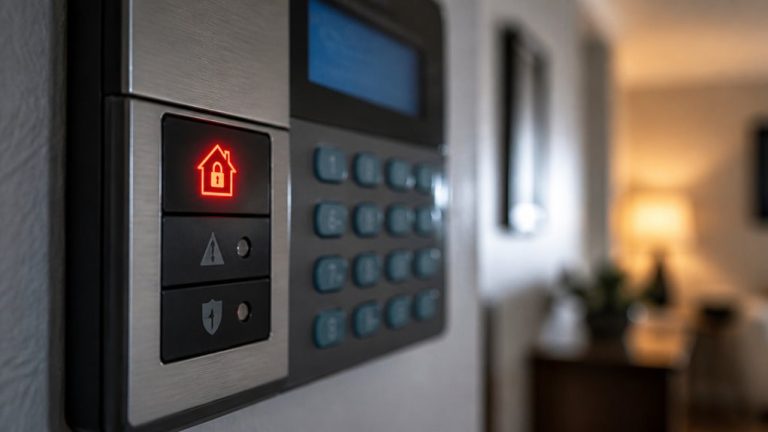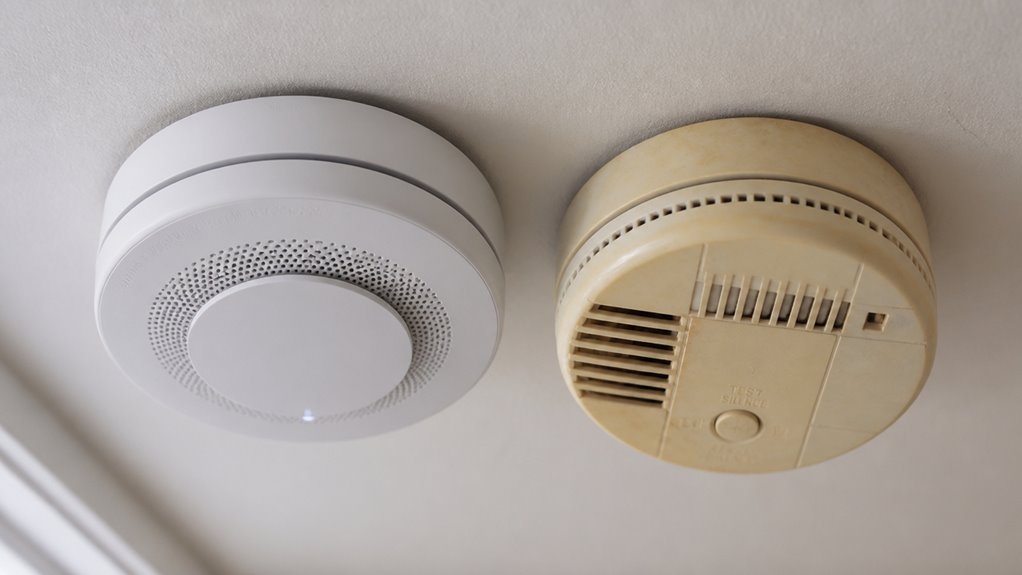

You’ll find ionization smoke alarms respond fast to flaming fires with smaller particles. Photoelectric alarms excel at detecting smoldering fires with larger smoke particles using light scattering.
Dual-sensor alarms combine both technologies, offering broader protection. Battery-powered units are easy to install. Hardwired alarms often include backup batteries and are more reliable.
Proper placement and maintenance are vital for effectiveness. Understanding these differences helps you choose the right system to protect your home thoroughly. More detailed guidance follows.
Key Takeaways
- Ionization alarms detect fast-flaming fires quickly using radioactive ionization chambers.
- Photoelectric alarms detect smoldering fires effectively by sensing larger smoke particles via scattered light.
- Dual-sensor alarms combine ionization and photoelectric technologies for comprehensive fire detection.
- Battery-powered alarms offer easy installation, while hardwired alarms connect to home power with battery backups.
- Interconnected alarms sound simultaneously throughout a home, enhancing early warning and safety coverage.
Which Smoke Alarm Is Right for Your Home?
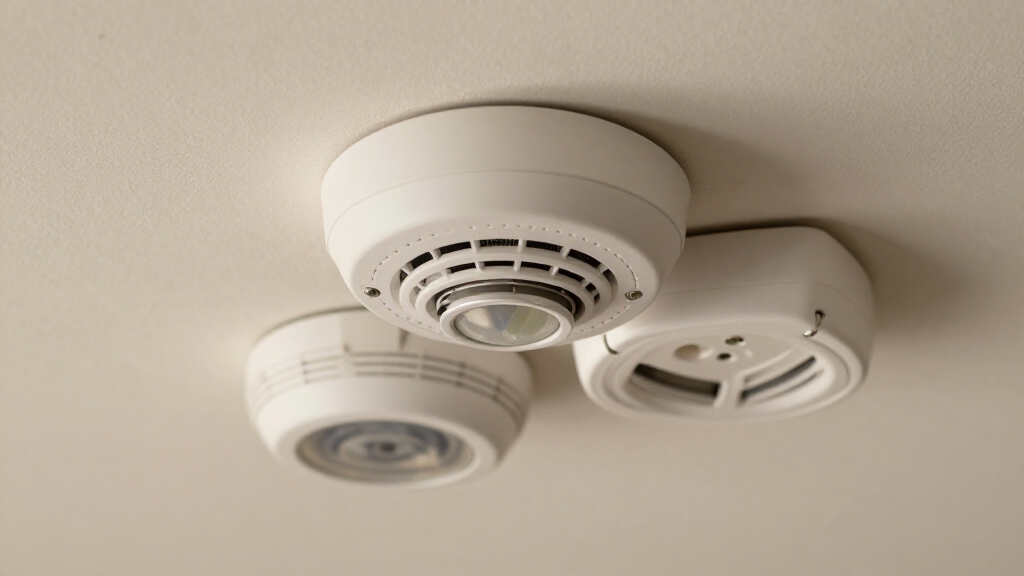
How do you determine the best smoke alarm for your home? Start by evaluating your dwelling’s layout and fire risks. You need alarms on every level, inside bedrooms, and outside sleeping areas.
Begin by assessing your home’s layout and fire hazards to ensure proper smoke alarm placement.
Choose between battery-powered units using either replaceable 9-volt or sealed 10-year lithium batteries and hardwired alarms with backup batteries.
Consider dual-sensor alarms that integrate ionization and photoelectric technologies for thorough detection.
Placement is critical: install ceiling alarms near the center, wall alarms within 4 to 12 inches of the ceiling, and maintain a minimum 10-foot distance from cooking appliances to reduce false alarms.
Your choice should reflect fire-safety recommendations and local code requirements. Opting for interconnected alarms enhances warning coverage in larger homes.
This systematic selection guarantees peak fire detection tailored to your home’s specific needs.
Additionally, maintaining a maximum spacing of 30 feet between detectors ensures effective coverage and timely alerts throughout your home.
Ionization vs Photoelectric Smoke Alarms: How They Work
Selecting the right smoke alarm means understanding the distinct technologies behind their operation.
Ionization alarms use a small amount of radioactive material to ionize air within a sensing chamber. When smoke particles disrupt this ionization, the alarm triggers. These alarms respond rapidly to flaming fires producing smaller combustion particles.
In contrast, photoelectric alarms employ a light beam aimed across a sensing chamber. Smoke entering this chamber scatters the light onto a sensor, activating the alarm. Photoelectric units excel at detecting smoldering fires that emit larger smoke particles.
Each technology targets different fire signatures, so relying on one sensor type alone may limit detection effectiveness. For thorough protection, it’s essential to recognize how ionization and photoelectric alarms function and why combining their strengths enhances early fire detection.
Using dual-sensor detectors that integrate both technologies provides broader coverage and reduces the chances of missed fire types.
Battery vs Hardwired Smoke Alarms: Pros and Cons
Although both battery-powered and hardwired smoke alarms serve the critical function of early fire detection, they differ markedly in installation, maintenance, and reliability.
Battery-powered and hardwired smoke alarms both detect fires early but vary in setup, upkeep, and dependability.
Battery-powered alarms offer easy installation and flexibility, relying solely on batteries—either replaceable 9-volt or long-life 10-year lithium-ion cells. They require periodic testing and battery replacement.
Hardwired alarms connect directly to your home’s electrical system, providing constant power and often include a backup battery that demands annual replacement. They support interconnection, enabling simultaneous alarms across your home, enhancing early warning in larger spaces.
However, installation is more complex and typically requires professional assistance. While battery units excel in portability and straightforward setup, hardwired systems provide superior reliability and integration, vital for all-encompassing home fire safety.
Your choice hinges on balancing convenience against system robustness and maintenance commitment. Many hardwired detectors feature a dual-source design that ensures uninterrupted operation during power outages by automatically switching to a backup battery.
Why Dual-Sensor Smoke Alarms Provide Better Protection?
Choosing between battery-powered and hardwired smoke alarms often raises questions about detection capabilities.
Dual-sensor smoke alarms combine ionization and photoelectric technologies, offering superior fire detection by addressing different fire types. You benefit from all-encompassing protection with one device.
Here’s why dual-sensor alarms provide better protection:
Detect flaming fires quickly via ionization sensors.
Identify smoldering fires rapidly using photoelectric sensors.
Reduce false alarms by balancing sensor responsiveness.
Comply with fire-safety recommendations favoring combined detection.
Eliminate the need to choose between sensor types.
Additionally, photoelectric sensors use the Tyndall Effect to detect smoke particles by measuring scattered light, enhancing early detection of smoldering fires.
How to Install Smoke Alarms for Maximum Safety?
To maximize your home’s fire protection, you must install smoke alarms following specific guidelines for placement and positioning.
Install alarms on every level, including basements, inside bedrooms, and outside sleeping areas.
Mount ceiling alarms near the center and wall alarms 4 to 12 inches below the ceiling.
Keep alarms at least 10 feet from cooking appliances to reduce false alarms.
Use interconnected alarms, especially in larger homes, so all units sound if one detects smoke.
For peak detection, choose dual-sensor alarms or combine ionization and photoelectric types strategically.
Hardwired alarms with battery backups provide reliable power, but make certain backup batteries are accessible.
Regular maintenance and timely replacement of backup batteries are essential to ensure continuous protection during power outages and comply with building codes.
Smoke Alarm Maintenance: Battery Care and Testing Tips
Once your smoke alarms are installed correctly, maintaining their power sources and testing functionality regularly guarantees they operate reliably when needed.
Proper power maintenance and regular testing ensure smoke alarms work effectively when it matters most.
You must prioritize battery care, especially with hardwired alarms that include backup batteries needing annual replacement. Testing alarms monthly ensures sensors detect smoke accurately and alert promptly.
Here are essential maintenance tips:
- Replace standard 9-volt batteries at least once a year or as soon as the low-battery warning sounds.
- Test each alarm monthly using the manufacturer’s test button.
- For hardwired alarms, change backup batteries annually.
- Consider upgrading to 10-year lithium-ion battery alarms for reduced maintenance.
- Clean alarms regularly to prevent dust buildup that can impair sensor function.
- Avoid mixing old and new batteries or different brands to prevent battery leakage and ensure consistent performance.
Following these steps makes certain your smoke alarms provide consistent, reliable fire detection.
Frequently Asked Questions
Are There Legal Requirements for Smoke Alarm Types in New Homes?
Yes, many jurisdictions require specific smoke alarm types in new homes.
You’ll find building codes mandating alarms in sleeping rooms, outside sleeping areas, and on every level.
Some codes specify using dual-sensor or interconnected alarms to enhance safety.
When you build or renovate, check local regulations carefully to guarantee compliance.
Installing the proper alarms not only meets legal standards but also maximizes your home’s fire protection effectiveness.
How Does Interconnecting Alarms Affect Overall Home Safety?
Like a well-coordinated symphony, interconnecting alarms synchronize your home’s safety system.
When one detects smoke, all alarms sound simultaneously, ensuring you hear the warning regardless of your location.
This rapid, unified alert improves response times and reduces risk, especially in larger homes.
Can Smoke Alarms Cause False Alarms Near Kitchens?
Yes, smoke alarms can cause false alarms near kitchens. Cooking generates steam, smoke, and airborne particles that can trigger sensors, especially ionization alarms.
To reduce false alarms, you should install alarms at least 10 feet away from cooking appliances. Photoelectric alarms are less prone to nuisance triggers from cooking.
Proper placement and selecting the right sensor type help maintain alarm reliability without compromising fire safety near kitchen areas.
What Is the Lifespan of Dual-Sensor Smoke Alarms?
Think of your dual-sensor smoke alarm as a vigilant guardian whose watch lasts about 10 years.
After a decade, its sensors, both ionization and photoelectric, gradually lose sensitivity, risking delayed fire detection.
You should replace the entire unit after this period to maintain peak protection.
Regular testing and battery changes keep it reliable during its lifespan.
Don’t let age dull its alertness; timely replacement guarantees your safety remains uncompromised.
How Often Should Backup Batteries in Hardwired Alarms Be Replaced?
You should replace backup batteries in hardwired smoke alarms at least once every year to guarantee reliable operation during power outages.
Even though the primary power comes from your home’s electrical system, these batteries can lose charge over time.
Regularly testing your alarms monthly and promptly replacing backup batteries helps maintain full functionality and compliance with safety standards.
This prevents false alarms or failures when you most need protection.
Which Smoke Alarm Type Is Right for Your Home?
Choosing the right smoke alarm means balancing ionization’s quick response to flaming fires with photoelectric’s sensitivity to smoldering smoke.
While battery alarms offer flexibility, hardwired systems provide reliability.
Dual-sensor alarms combine these strengths, enhancing your home’s safety.
Installing alarms correctly and maintaining batteries make certain they function when needed most.
Don’t let convenience overshadow protection. Understanding these differences empowers you to safeguard your home with precision and confidence.