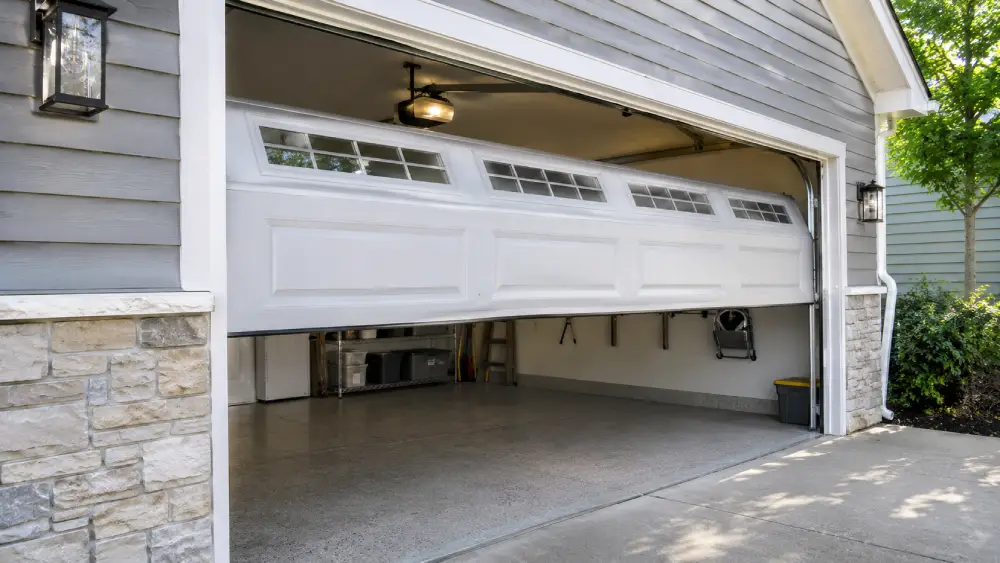

Your garage door keeps going back up because its safety sensors detect an obstruction or signal resistance, prompting automatic reversal to prevent damage or injury.
Misaligned, blocked, or faulty sensors often cause this, as do debris, binding tracks, or improper force and travel limit settings.
Check sensor alignment, wiring, and door path clearance first. If the door still reverses prematurely, complex wiring or mechanical issues may be involved.
Understanding these factors will help you pinpoint the exact cause.
Key Takeaways
- Misaligned or blocked safety sensors often cause the garage door to reverse and go back up during closing.
- Dirt, debris, or physical obstructions in the door path can trigger automatic reversal for safety.
- Incorrect travel limit or force settings may cause premature door reversal despite no actual obstruction.
- Wiring issues or sensor malfunction, indicated by flickering or off sensor lights, can cause repeated reversals.
- Persistent problems despite troubleshooting likely require professional diagnosis for sensor or mechanical faults.
Why Does My Garage Door Keep Reversing?
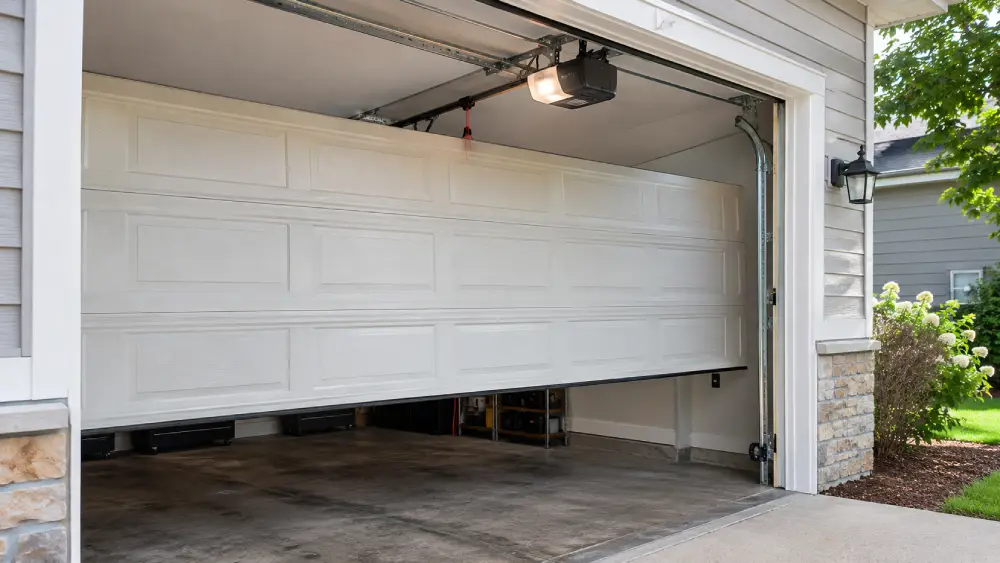
If your garage door keeps reversing, it’s usually because the safety system detects an obstruction or resistance while closing.
The most common cause is blocked or misaligned safety sensors. If one sensor’s light flickers or is off, realign the sensors to restore the infrared beam.
Physical obstructions in the door’s path also trigger reversal. Check the floor, tracks, and door opening for any objects.
Additionally, binding caused by misaligned tracks or worn rollers can create resistance, prompting the door to reverse.
Incorrect travel limit or force settings might cause the door to interpret normal resistance as an obstruction, leading to premature reversal.
Wiring faults, such as damaged sensor cables, can mimic obstructions and cause similar issues.
Addressing these factors guarantees your door operates smoothly and safely.
Power surges and voltage spikes may also cause the door to reverse unexpectedly by corrupting the control board or sensor signals, so consider inspecting power surge effects if issues persist.
Quick Troubleshooting Steps for Garage Door Reversals
First things first, take a look at those safety sensors. Make sure they’re properly aligned, and check if the indicator lights are steady. If they’re flickering or off, that could be part of the problem.
Next, let’s clear out any objects or debris that might be in the door’s path. Sometimes, it’s the little things that can trigger an automatic reversal.
These quick checks can often solve common reversal issues without needing to dive into more complicated adjustments. Give it a shot!
If the problem persists after these steps, it’s important to consider wiring issues as a potential cause and possibly call a professional.
Sensor Alignment Check
Although safety sensors are designed to prevent accidents, misalignment can cause your garage door to reverse unexpectedly.
Begin by inspecting both sensors mounted near the bottom of the door tracks.
Check if the indicator lights are steady; one sensor flashing or off signals misalignment or wiring issues.
Realign the sensors so their infrared beams face each other directly without obstruction.
Use a level or straight edge to guarantee precise alignment.
Avoid tilting sensors, as even slight deviations disrupt the beam, triggering door reversal.
After adjusting, test the door’s operation multiple times to confirm the problem is resolved.
If the sensor lights remain inconsistent, inspect wiring for damage or loose connections before considering sensor replacement.
Correct sensor alignment guarantees reliable safety function and prevents unintended door reversals.
Always disconnect power by unplugging the opener or switching off the breaker before performing sensor adjustments to ensure electrical safety.
Obstruction Removal Steps
After confirming your sensors are properly aligned and free of wiring issues, the next step is to check for any physical obstructions in the door’s path.
Inspect the floor, track, and door opening carefully for objects or debris that could trigger the opener’s safety reversal system.
Remove any items causing resistance. If the door reverses immediately after contacting resistance, verify that the tracks and rollers are clear and properly aligned to prevent binding.
Also, make certain the force and travel limit settings are correctly adjusted, as excessive sensitivity can mimic obstructions.
Test the door’s operation after clearing obstructions. If the door still reverses, recheck sensor alignment and wiring.
Persistent issues may require professional diagnostics to avoid safety hazards or hardware damage.
How Garage Door Safety Sensors Cause Reversal?
When garage door safety sensors detect an obstruction in their infrared beam path, they immediately trigger the opener to reverse the door’s movement to prevent accidents.
You’ll notice the door stopping or reversing if the beam is blocked, misaligned, or if wiring faults disrupt sensor communication.
One sensor glowing while the other flickers or remains off indicates a problem, often caused by misalignment or damaged wiring.
Sunlight interference can also mimic blockage, causing false reversals.
These sensors are calibrated to halt closing if resistance or interruption occurs, protecting people, pets, and objects.
To resolve this, make certain sensors align precisely, wires remain intact, and no environmental factors interfere.
Proper sensor function is critical for safe and reliable garage door operation.
Regularly performing a safety reversal test helps ensure sensors respond correctly and maintain safe operation.
Checking for Obstructions in Your Garage Door Path
Start by thoroughly inspecting the entire door path for any objects or debris that could obstruct the door’s movement.
Check the floor, tracks, and door opening for small items, dirt, or buildup that can cause resistance.
Inspect the floor, tracks, and door opening for debris or buildup that may hinder smooth door movement.
Even minor obstructions can trigger the opener’s safety reversal, causing the door to rise again.
Remove any physical barriers immediately.
Next, evaluate the door’s smooth travel along the tracks to identify binding or friction that may simulate an obstruction.
If the door reverses after partial descent, binding is a likely cause.
Maintaining a clear path guarantees the opener doesn’t detect false resistance.
Regularly clean and clear the door path to prevent unwanted reversals and maintain safe, reliable operation.
If the problem persists after clearing obstructions, further sensor or mechanical diagnostics may be needed.
Also, inspect the safety sensors for misalignment or obstruction, as these can cause the door to reverse unexpectedly.
How to Check Sensor Alignment and Wiring Issues?
A pair of safety sensors positioned near the bottom of your garage door tracks work together to prevent accidents by detecting obstacles.
First, check if both sensor indicator lights are steadily lit; one off or flickering usually signals misalignment, obstruction, or wiring faults.
Make sure the sensors face each other directly without any dirt or debris blocking their lenses. Adjust them gently until both lights glow steadily.
Next, inspect the sensor wiring along the tracks for damage, loose connections, or pinched cables, which can cause intermittent faults.
Replace or repair any damaged wiring. Avoid exposure to direct sunlight on sensors during testing, as this can mimic a blocked beam.
Proper sensor alignment and intact wiring are critical for preventing the door from reversing unexpectedly during closing.
Ensure the sensor wires are connected securely to the opener terminals, avoiding sharp bends and using staples to prevent sagging along the track for optimal sensor functionality.
Adjusting Travel Limits and Force Settings on Garage Doors
First off, you should check the travel limits. It’s super important to make sure the door closes all the way without reversing for no reason. You don’t want it to stop short, right?
Next, let’s talk about the force settings. It’s a good idea to fine-tune these so that the opener doesn’t mistakenly think normal resistance is an obstruction. Nobody likes a door that won’t cooperate!
If you’re having reversal issues, diagnosing whether they’re related to these adjustments can really help. Getting this sorted out will make your door operate smoothly and reliably again.
Also, keep an eye on the blinking red sensor light, as it often signals safety beam problems that could cause the door to reverse unexpectedly.
Hope that helps!
Travel Limit Adjustment
When your garage door reverses before fully closing, incorrect travel limit or force settings often cause the issue. To fix this, locate the travel limit adjustment screws or dials on your garage door opener.
These controls set how far the door travels when opening and closing. If the down limit is set too high, the door will think it hit an obstruction and reverse prematurely.
Turn the down-limit adjustment screw in small increments, testing the door’s closing position after each adjustment. Aim for the door to close fully without resistance or reversal.
Avoid overcorrecting, which can cause the door to slam shut. Proper travel limit settings guarantee the opener correctly detects the door’s position, preventing unwanted reversals and ensuring smooth, complete closing.
Before adjusting, check that the door tracks and rollers are aligned and free from obstruction to avoid false reversal triggers from track and roller misalignment.
Force Setting Sensitivity
Although adjusting travel limits sets the door’s range of motion, fine-tuning the force settings controls how much resistance the opener tolerates before reversing.
You’ll find force adjustment screws or digital controls on the opener’s motor unit. Turn the down-force setting incrementally to increase tolerance for normal resistance from wind or friction.
Avoid setting it too high; excessive force risks damage or injury. If your door reverses prematurely, it likely needs a higher down-force setting.
Conversely, if the door slams shut or doesn’t reverse when obstructed, reduce the force sensitivity. Always test the door’s response after each adjustment by closing it slowly.
Ensure the opener reverses on slight resistance but completes its travel smoothly. Precise force calibration prevents false reversals while maintaining safety compliance.
For optimal performance, maintain proper sensor alignment and check for obstructions regularly to prevent signal issues that may affect opener operation.
Diagnosing Reversal Causes
Since improper travel limits and force settings often cause a garage door to reverse unexpectedly, diagnosing these parameters is essential to restoring smooth operation.
Start by verifying the door’s travel limits: if the down limit is set too high, the door may reverse prematurely.
Next, inspect the force settings; overly sensitive force detection can interpret normal resistance as an obstruction.
To accurately diagnose reversal causes, follow these steps:
- Adjust the down travel limit so the door closes fully without triggering reversal.
- Increase the down force incrementally to overcome minor resistance without compromising safety.
- Test the door multiple times to confirm consistent closing without unexpected reversal.
This precise calibration helps ensure the opener correctly detects true obstructions, preventing unnecessary reversals. For more complex issues, consulting a professional locksmith can provide non-destructive solutions and expert adjustments.
How Track and Roller Problems Affect Garage Door Movement?
A misaligned or damaged track can cause your garage door to bind. This creates resistance that triggers the opener’s safety reversal mechanism.
When rollers wear out or friction increases, the door won’t move smoothly. This often causes the opener to interpret the resistance as an obstruction.
You need to inspect the tracks for dents, bends, or loose brackets. Check rollers for wear or debris.
Lubricate moving parts and realign tracks to guarantee smooth operation. Ignoring these issues leads to repeated reversals and potential motor strain.
| Problem | Effect on Door Movement | Emotional Impact |
|---|---|---|
| Misaligned Track | Door binds, reverses | Frustration, worry |
| Worn Rollers | Rough motion, resistance | Annoyance, impatience |
| Dirt/Debris | Increased friction | Concern, urgency |
| Loose Brackets | Track instability | Anxiety, stress |
Interpreting Opener Signals When the Garage Door Reverses
When your garage door reverses unexpectedly, the opener often communicates the cause through specific signals like beeps or flashing lights.
Understanding these signals helps you diagnose issues quickly and act accordingly.
For example:
- Five beeps combined with flashing lights usually indicate the door hit an obstruction during closing.
- Ten flashes without beeps often point to blocked or misaligned safety sensors.
- A sensor light off or flickering signals wiring faults or sensor failure.
These indicators guide your troubleshooting process.
Start by checking for obstructions or sensor alignment.
If lights persist, inspect wiring or sensor integrity.
Accurately interpreting opener signals lets you target the problem efficiently, ensuring safe and reliable garage door operation without unnecessary service calls.
How Sunlight Interference Affects Garage Door Safety Sensors?
Understanding the signals your garage door opener sends helps pinpoint sensor issues, but sunlight interference can complicate this process.
When direct sunlight strikes the safety sensors, it can mimic an obstruction by overwhelming the sensor’s receiver with infrared light.
Direct sunlight can overwhelm safety sensors, falsely signaling an obstruction and causing the garage door to reverse.
This causes the opener to falsely detect a blocked beam, triggering the door to reverse unexpectedly.
You’ll notice one sensor glowing steadily while the other flickers or turns off, signaling interference rather than a physical obstruction.
To resolve this, adjust the sensors’ angle slightly downward or shield them with a small visor to block direct sunlight.
Ensuring the sensors remain aligned and free from wiring faults is also critical.
This approach prevents sunlight from disrupting sensor communication and restores reliable door closing without false reversals.
When to Call a Professional for Garage Door Reversals?
If your garage door keeps reversing because of ongoing sensor issues or if it keeps binding up no matter how much you tinker with it, it might be time to call in a pro. You see, some problems can be a bit more complicated than they seem.
When it comes to tricky wiring or installation problems, those usually need specialized tools and expertise that only a professional has. It’s really not worth the risk to try fixing those yourself—you could end up causing more damage or creating safety hazards. So, if you find yourself stuck, don’t hesitate to reach out for help!
Persistent Sensor Malfunctions
Because persistent sensor malfunctions can compromise your garage door’s safety features and cause repeated reversals, it’s essential to recognize when the issue goes beyond basic troubleshooting.
If you’ve realigned sensors, cleared obstructions, and inspected wiring but the door still reverses unexpectedly, professional intervention is necessary.
You should call a technician when you observe:
- One sensor light flickers or remains off despite no visible obstruction.
- The door reverses immediately after closing a few inches without resistance.
- Sensor wiring shows signs of damage or improper installation.
These symptoms often indicate internal sensor faults, wiring shorts, or calibration errors that require specialized diagnostic tools and expertise.
Addressing these promptly guarantees your garage door operates safely and reliably without risking injury or damage.
Repeated Door Binding Issues
When your garage door repeatedly binds during closing, it signals a mechanical issue that often requires professional assessment. Binding typically indicates misaligned tracks, worn rollers, or hardware friction causing excess resistance.
This resistance triggers the opener’s safety reversal system, preventing full closure. While you can inspect for visible obstructions or debris, persistent binding suggests internal alignment or component wear beyond simple fixes.
Incorrect down-force or travel limit settings can also cause premature reversals that mimic binding. Attempting adjustments without proper tools or expertise risks further damage.
A professional technician will precisely evaluate track alignment, roller condition, and opener settings to restore smooth movement. Calling a professional guarantees safe, accurate diagnosis and repair, preventing repeated reversals and prolonging your garage door’s operational lifespan.
Complex Wiring Or Installation
Although some wiring or installation issues might seem minor, they often cause complex problems that disrupt your garage door’s normal operation and safety features.
Faulty sensor wiring, incorrect trolley installation, or damaged cables can make the opener reverse unexpectedly or fail to close entirely.
You should consider professional help when:
- Sensor indicators are off or flickering, signaling wiring faults or sensor failure.
- The door reverses immediately after starting or won’t close despite clear paths.
- Your adjustments don’t resolve issues related to wiring or sensor communication.
A professional can accurately diagnose shorts, wiring breaks, or improper component placement, ensuring your door’s safety system functions flawlessly.
Avoid DIY fixes here to prevent safety risks and further damage.
Frequently Asked Questions
Can Weather Conditions Cause My Garage Door to Reverse Unexpectedly?
Yes, weather conditions like extreme cold or heat can cause your garage door to reverse unexpectedly.
Cold can stiffen rollers or tracks, increasing resistance. Heat may cause sensor misalignment or wiring expansion.
Moisture or debris from rain or snow might block sensors or tracks, triggering reversal.
You should inspect and clear obstructions, check sensor alignment, and lubricate moving parts regularly to guarantee smooth operation despite weather changes.
How Often Should I Clean and Maintain Garage Door Sensors?
You should clean and maintain your garage door sensors at least once every three months to ensure peak performance.
Use a soft cloth and mild detergent to gently wipe sensor lenses, removing dirt, spider webs, or debris that could block the beam.
Regularly inspect sensor alignment and wiring for damage or looseness.
Prompt maintenance prevents false reversals and safety faults, keeping your opener’s safety system reliable and responsive.
Do Battery-Powered Remotes Affect Garage Door Reversal Issues?
You’d think a dead battery in your remote could stop a garage door from reversing, but it doesn’t directly cause reversal issues.
Battery-powered remotes only send open/close signals. The door’s safety reversal depends on sensors and force settings.
However, weak remote batteries can cause intermittent signals, confusing the opener. To avoid this, replace batteries regularly and make certain your sensors and settings are properly aligned and calibrated for smooth operation.
Can Pets Trigger My Garage Door to Reverse Frequently?
Yes, pets can trigger your garage door to reverse frequently if they cross the safety sensor beam while the door is closing.
These sensors detect obstructions to prevent injury or damage, so even small animals can cause the door to stop and reverse.
To reduce false triggers, make sure sensors are properly aligned and positioned close to the floor.
Additionally, keep the area clear of pets during door operation.
Are There Specific Garage Door Brands Prone to Repeated Reversal Problems?
You know what they say, “A chain is only as strong as its weakest link.”
No specific garage door brand is universally prone to repeated reversal problems, but issues often stem from installation errors, sensor misalignment, or faulty wiring rather than brand flaws.
To fix persistent reversals, inspect sensor alignment, wiring integrity, and travel limit settings carefully.
Regular maintenance prevents problems regardless of the brand you choose.
Know When Your Garage Door Needs Professional Repair
If your garage door keeps deciding to reverse, it’s usually a gentle reminder that something needs your attention.
By checking sensors, clearing obstructions, and making sure of proper alignment, you can often smooth out these hiccups yourself.
However, if the issue persists, it might be time to invite a professional to fine-tune your system.
Taking these steps makes certain your garage door operates efficiently and safely, keeping your entryway reliable and hassle-free.