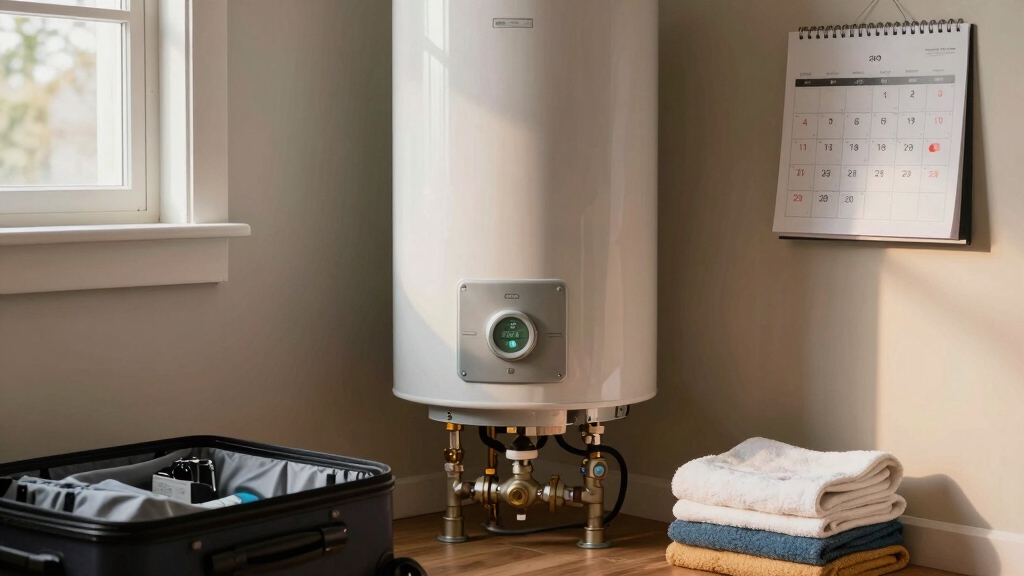

You shouldn’t fully turn off your water heater when on vacation because vacation mode lowers the thermostat to save energy while protecting your pipes and system integrity.
Setting the temperature between 120°F and 130°F reduces heating cycles, prevents bacterial growth, and avoids freezing risks if you’re in a cold climate.
Vacation mode also extends your heater’s lifespan and helps control costs more effectively than a full shutdown.
Explore how this balance works and why it matters.
Key Takeaways
- Vacation mode lowers water heater temperature to save energy and reduce heating costs without shutting off completely.
- Fully turning off water heaters risks pipe freezing in cold climates, causing costly damage.
- Vacation mode maintains minimal heat to prevent bacterial growth and protects plumbing integrity.
- Complete shutdown causes energy spikes and delays hot water availability upon return.
- Draining the tank is necessary if choosing full shutdown to avoid sediment buildup and corrosion.
Why You Should Avoid Turning Off Your Water Heater on Vacation?
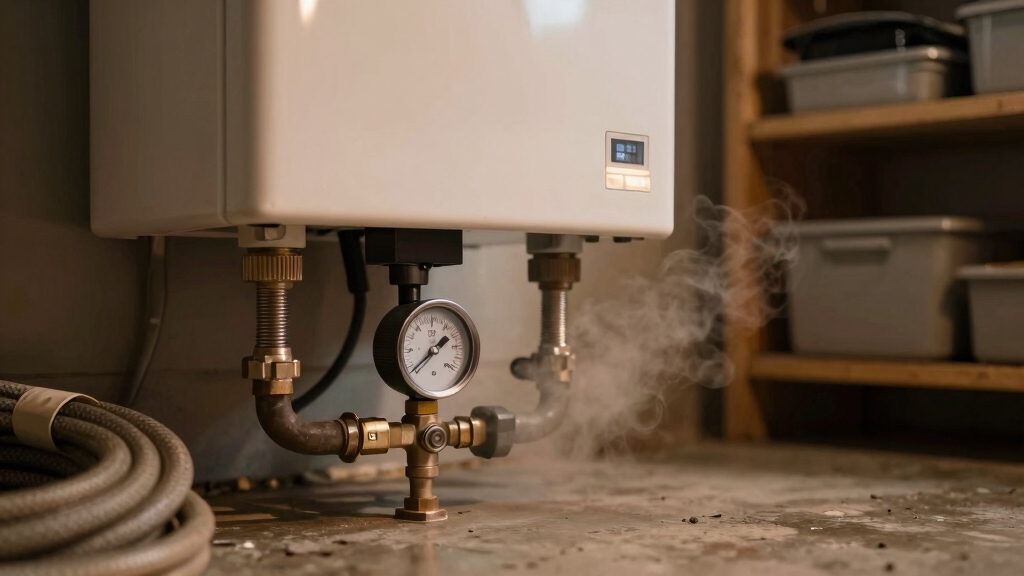
Although you might think turning off your water heater completely saves energy, it’s generally better to avoid doing so during vacation periods.
When the heater is off, water inside the tank cools, forcing the system to consume significant energy to reheat upon your return. This rebound effect undermines any potential savings.
Additionally, shutting off the heater risks pipe freezing in cold climates, which can cause costly damage. Completely powering down also allows bacterial growth due to stagnant water, compromising system hygiene and safety.
Maintaining a low but steady temperature prevents mineral buildup and corrosion, preserving equipment integrity and extending lifespan. Instead of full shutdown, use settings that reduce energy consumption while protecting your plumbing and heater components during extended absences.
Similar to HVAC systems where a delay timer prevents immediate compressor restarts to protect equipment, gradual temperature maintenance in water heaters safeguards against stress and damage.
How Vacation Mode Saves Energy Without Shutting Off Your Water Heater?
When you turn on vacation mode, your water heater actually lowers its thermostat. This helps cut down on energy use without completely shutting it off. Pretty neat, right?
With this setting, the heating cycles are minimized, which means your electricity consumption drops. Plus, it keeps the water temperature above freezing so your pipes stay protected. Understanding the importance of proper load wire connections is crucial for maintaining electrical safety when adjusting any appliance settings.
Energy Reduction Benefits
Frequently, homeowners overlook the significant energy savings that vacation mode offers by adjusting water heater settings instead of shutting the system off completely.
By lowering the thermostat to a minimal level, vacation mode reduces energy consumption markedly without fully powering down your water heater.
This prevents unnecessary heating cycles when hot water demand is minimal, cutting fuel use and electricity costs.
Maintaining a lower, stable temperature also limits heat loss from the tank, enhancing efficiency.
Compared to shutting off the heater, vacation mode avoids energy-intensive reheating, delivering consistent savings.
Implementing this mode can reduce water heating expenses by up to 18% during your absence, preserving energy and resources effectively while keeping your system ready for use when you return.
Regular maintenance and monitoring of your water heater during periods of low use can also prolong its lifespan and ensure optimal performance, similar to how proper care extends the life of a sump pump.
Maintaining System Integrity
Reducing energy consumption through vacation mode doesn’t mean powering down your water heater completely.
Instead, it maintains system integrity while saving energy. Vacation mode lowers the thermostat to prevent unnecessary heating, keeping water at a safe, moderate temperature.
This avoids pipe freezing and damage during cold spells. Here’s how vacation mode supports your system:
- Maintains minimal power to inhibit bacterial growth and water stagnation.
- Prevents freezing and bursting by keeping water temperature above critical thresholds.
- Reduces wear on heating elements by limiting full heating cycles.
- Preserves emergency hot water availability if unexpected use occurs.
For continuous protection and system reliability, just as hardwired smoke detectors need battery backups to maintain operation during power interruptions, maintaining vacation mode ensures your water heater remains functional without full shutdown.
What Temperature Should You Set Your Water Heater When Away?
You should typically set your water heater thermostat to a vacation mode temperature between 120°F and 130°F when you’re away. This range balances energy savings with preventing bacterial growth and pipe damage.
Setting it lower risks insufficient temperature, while higher wastes energy. Here’s a quick reference:
| Temperature (°F) | Energy Use Impact | Safety/Functionality |
|---|---|---|
| Below 120 | High savings | Risk of bacteria and pipe issues |
| 120 – 130 | Moderate savings | Prevents bacteria, safe for pipes |
| Above 130 | Minimal savings | Higher energy use, safer for scalding prevention |
Adjusting to this vacation temperature reduces heating cycles, lowers utility bills, and protects your system during absence without fully shutting off the heater.
Proper placement and maintenance of carbon monoxide detectors near fuel-burning appliances like water heaters are essential for safety during your absence, helping to detect any malfunction or venting issues early through reliable detector coverage.
How Water Heater Size and Usage Affect Vacation Mode Energy Savings?
Although vacation mode generally lowers energy consumption, the size of your water heater and your typical usage patterns markedly influence the actual savings you’ll see.
Larger tanks consume more energy maintaining temperature, so vacation mode can yield greater reductions compared to smaller units. However, if your household uses hot water minimally even when home, savings may be less pronounced.
Consider these factors:
- Tank capacity: Bigger tanks lose more heat, increasing standby losses.
- Usage frequency: Frequent hot water use before/after vacation affects baseline consumption.
- Temperature differential: The gap between standard and vacation mode settings impacts energy reduction.
- Insulation quality: Well-insulated tanks retain heat better, reducing energy needed during vacation mode.
Evaluating these lets you optimize vacation mode benefits tailored to your system. Regular monitoring of household size and water use can help you better estimate when to engage vacation mode for maximum energy savings.
How Vacation Mode Helps Your Water Heater Last Longer?
When you activate vacation mode on your water heater, it actually runs fewer heating cycles. This means there’s less wear and tear on important parts. Pretty neat, right?
Plus, with less activity, there’s also a decrease in corrosion buildup inside the tank and the plumbing. This helps keep everything in good shape.
Reducing water usage while away can also prevent unnecessary strain on your home’s septic system, helping avoid backups and damage.
Reduced Operational Wear
Frequently, activating vacation mode on your water heater markedly reduces the operational intensity by limiting full heating cycles.
This lower demand means your heater’s internal components experience less stress, leading to less wear and tear. Here’s how vacation mode extends your water heater’s life:
- Reduces the frequency of heating element activation, minimizing mechanical fatigue.
- Lowers energy consumption, which decreases thermal stress on the tank and wiring.
- Limits mineral buildup by reducing overheating and scale formation.
- Decreases the need for frequent maintenance and repairs due to gentler operation.
Additionally, minimizing operational stress helps prevent issues such as prolonged sparking caused by overheating or wiring faults, enhancing electrical safety.
Minimized Corrosion Risk
Since vacation mode lowers the water heater’s operating temperature and frequency, it markedly reduces corrosion risk inside the tank and plumbing.
By maintaining a lower, stable temperature, you limit the electrochemical reactions that cause rust and degrade the tank’s interior lining.
Reduced heating cycles also minimize the buildup of mineral deposits, which accelerate corrosion and impair system efficiency.
This controlled environment helps preserve the anode rod, a critical component that protects your tank from rust.
Over time, these factors slow down metal deterioration, extending the lifespan of both the tank and connected piping.
Engaging vacation mode consequently provides a practical way to mitigate corrosion-related damage, reducing the likelihood of leaks and costly repairs when you return from your trip.
For additional protection, it’s important to perform regular pressure testing procedures to detect any potential leaks early and maintain system integrity.
Lower Maintenance Frequency
Although water heaters require routine maintenance to operate efficiently, activating vacation mode can markedly reduce how often you need to perform these tasks.
By lowering the operational intensity, vacation mode helps preserve your water heater’s internal components and plumbing. Here’s how it benefits you:
- Reduces wear and tear on heating elements by limiting full power cycles.
- Minimizes mineral buildup and corrosion inside the tank and pipes.
- Lowers the frequency of professional maintenance and service visits.
- Decreases risk of premature component failure, extending overall equipment lifespan.
Using vacation mode means your water heater operates under less stress, cutting maintenance needs and costs while keeping your system reliable longer.
This practical approach helps you protect your investment with minimal effort. Combining such maintenance actions with recycling air filters can further support broader sustainability goals.
Turning Off Your Water Heater Risks Pipe Freezing in Cold Weather
When you turn off your water heater during cold weather, you risk the water inside pipes dropping to freezing temperatures. This can cause pipe bursts and costly damage.
Without heat, stagnant water cools rapidly, increasing freeze risk especially in exposed or poorly insulated pipes. Pipe bursts result from ice expansion, leading to leaks and structural harm that require expensive repairs.
To prevent this, maintain a minimum water temperature by using vacation mode or low thermostat settings rather than complete shutdown. This approach keeps water above freezing without excessive energy use.
Additionally, make certain adequate pipe insulation and consider draining outdoor lines. Completely powering off the heater in cold climates is a false economy.
The potential damage and repair costs outweigh energy savings and disrupt your home’s plumbing integrity.
Comparing Energy Savings: Off Mode vs. Vacation Mode Settings
When you’re trying to choose between off mode and vacation mode, you’ll see some pretty clear differences in how much energy each one uses. Vacation mode keeps the temperature low enough to stop pipes from freezing, but it also cuts down on how often the heating kicks in.
On the other hand, off mode turns everything off completely, which sounds great for saving energy, but it could lead to some frozen pipes if it gets too cold.
Energy Consumption Comparison
Since water heaters account for a significant portion of household energy use, understanding the difference between turning your heater off completely and setting it to vacation mode is essential.
You’ll find that vacation mode offers a balanced energy-saving approach without fully disabling your system. Here’s how they compare:
- Off Mode: Eliminates all energy use but risks pipe damage in cold climates and delays hot water availability upon return.
- Vacation Mode: Lowers thermostat settings, greatly reducing energy consumption while maintaining minimal heat to protect plumbing.
- Energy Savings: Vacation mode reduces consumption by maintaining a low baseline, often saving more energy than simply turning off and reheating cold water later.
- System Protection: Vacation mode supports operational safety by preventing freezing and bacterial growth, which off mode can’t guarantee.
Choosing vacation mode optimizes energy use and safeguards your system better than completely shutting off.
Temperature Control Impact
Frequently, adjusting your water heater’s temperature settings during vacations offers more practical energy savings than turning the unit off completely.
Vacation mode lowers the thermostat to maintain water at a safe but minimal temperature, reducing heating cycles and energy consumption without shutting down the system.
This precise temperature control prevents excessive fuel use associated with reheating from cold, which occurs when the heater is off.
In contrast, turning the heater off eliminates all energy use but risks pipe damage in cold climates and requires more energy to reheat upon return.
Vacation mode balances energy savings and operational safety, maintaining system readiness while minimizing power use.
Savings Efficiency Evaluation
Several factors influence how much energy you save by turning your water heater off completely versus setting it to vacation mode.
Vacation mode lowers the thermostat, reducing energy use while maintaining minimal heat to prevent issues like pipe freezing. Turning the heater off stops all energy consumption but may require a full reheating cycle on return, which can offset some savings.
Consider these points:
- Vacation mode reduces energy use by maintaining water at a lower temperature, avoiding total reheating.
- Off mode eliminates standby losses but incurs energy spikes upon restarting.
- Vacation mode prevents system wear and corrosion by keeping the tank warm.
- Complete shutdown risks pipe damage in cold climates without proper insulation.
Balancing these factors helps you maximize savings without compromising equipment longevity or safety.
How Smart Water Heaters Automatically Optimize Vacation Energy Use?
Smart water heaters consistently adjust their operation to minimize energy use during your vacation by automatically switching to vacation mode based on learned usage patterns and external conditions.
They lower thermostat settings to reduce energy consumption without fully shutting down, ensuring safety and system integrity.
Advanced sensors and analytics optimize heating cycles, preventing unnecessary energy use while maintaining minimal hot water availability.
| Feature | Benefit |
|---|---|
| Usage pattern learning | Custom vacation mode timing |
| External temp sensor | Adjusts heat for weather |
| Thermostat control | Lowers temp to save energy |
| Continuous low power | Prevents bacteria buildup |
| Remote monitoring | Allows remote adjustments |
This automation saves energy, cuts costs, and extends your heater’s lifespan during extended absences.
Maintenance and Corrosion Risks During Long Water Heater Shutdowns
When you shut down your water heater for an extended period, you risk accelerating corrosion and mineral buildup inside the tank and plumbing system.
Stagnant water promotes rust formation and sediment accumulation, which degrade the tank’s interior and reduce efficiency.
To mitigate these risks, consider the following:
- Drain the tank completely to remove residual water and prevent sediment settling.
- Inspect and replace the anode rod if corroded to protect the tank lining.
- Flush the system before shutdown to eliminate mineral deposits.
- Avoid complete power disconnection; maintain minimal temperature to reduce bacterial growth and corrosion.
Environmental and Cost Benefits of Using Vacation Mode on Water Heaters
Although turning off your water heater completely during vacations might seem like a straightforward way to save energy, using the vacation mode offers significant environmental and cost advantages by reducing energy consumption without shutting the system down entirely.
Vacation mode lowers the thermostat, minimizing heating cycles and cutting electricity use by up to 18%. This directly decreases fossil fuel demand and carbon emissions.
This reduced operation extends your water heater’s lifespan by lessening wear on components and limiting corrosion.
Additionally, maintaining a minimal temperature prevents pipe damage and bacterial growth while ensuring emergency hot water availability.
Frequently Asked Questions
Can Vacation Mode Be Activated Remotely via Smartphone Apps?
Yes, you can activate vacation mode remotely via smartphone apps if your water heater is a smart model with Wi-Fi connectivity.
These apps let you adjust thermostat settings, monitor energy usage, and switch to vacation mode without physical access.
This remote control guarantees you optimize energy savings and maintain system safety during your absence, providing convenience and efficiency aligned with your schedule and household needs.
How Quickly Does Water Heater Temperature Return to Normal After Vacation Mode?
Your water heater typically returns to normal temperature within 30 minutes to an hour after exiting vacation mode, depending on tank size and heater power.
Smart models with rapid recovery features may restore set temperatures faster.
The system gradually increases heating cycles, balancing energy use and demand.
You can speed this up by manually adjusting the thermostat to a higher setting when you return, ensuring hot water availability promptly.
Can Vacation Mode Prevent Mold Growth in Water Heater Tanks?
Yes, vacation mode helps prevent mold growth in water heater tanks by maintaining water at temperatures above the threshold where bacteria and mold thrive.
By lowering, but not cutting off, power to keep water at room-level warmth, it avoids stagnation and bacterial proliferation.
This continuous minimal heating reduces moisture buildup and corrosion inside your tank, supporting system hygiene and longevity during extended absences without sacrificing safety or energy efficiency.
Protect Today, Enjoy Hot Water Tomorrow
Don’t shut off your water heater completely when you’re away. It’s like throwing your engine into a deep freeze, risking corrosion and costly repairs.
Instead, set it to vacation mode, which cleverly keeps things just warm enough to save energy without turning your tank into an ice block.
This smart setting not only cuts costs but extends your heater’s lifespans It makes your vacation truly worry-free and your home ready to deliver hot water on demand the moment you return.