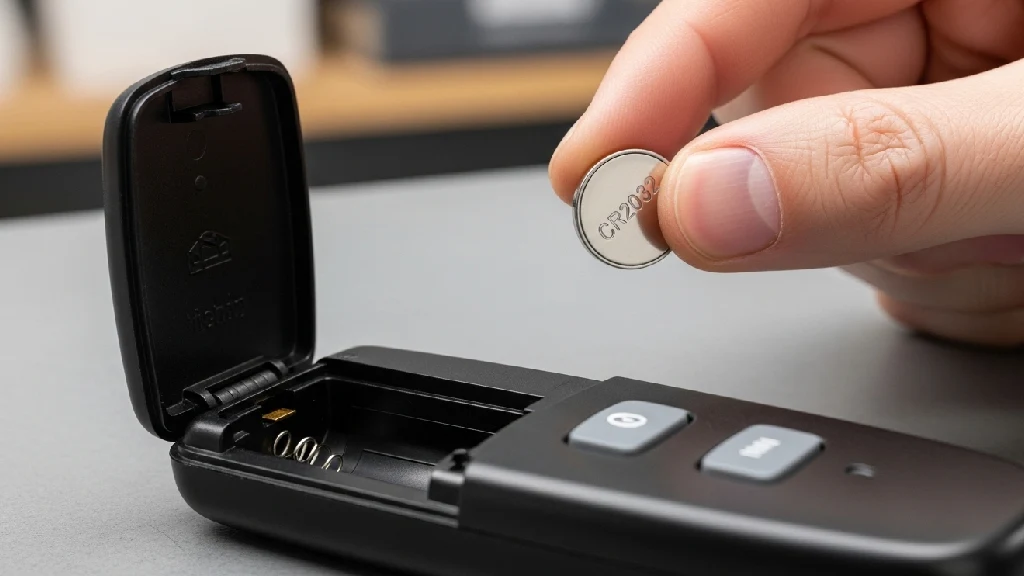

You’ll most likely need a lithium coin cell battery like a CR2032, CR2025, or CR2016, or possibly a 12V A23 depending on your garage door remote model.
Check your remote’s battery compartment or manual to confirm size and voltage. Using the wrong thickness or voltage can disrupt contact and signal strength.
Brands vary: Chamberlain favors CR2032, while LiftMaster may require A23 for larger remotes. Understanding these details guarantees reliable operation and guides you to proper replacements.
Key Takeaways
- Common garage door remote batteries include CR2032, CR2025, CR2016 lithium coin cells, and A23 12 V cylindrical batteries.
- Verify the exact battery size by checking the battery compartment or the remote’s manual before purchasing.
- Chamberlain and LiftMaster remotes typically use CR2032; some models require A23 or CR2025 batteries.
- Correct battery size ensures proper contact, stable voltage, and reliable signal transmission.
- Purchase genuine batteries from trusted retailers or authorized dealers to avoid compatibility issues and premature failure.
How to Identify Your Garage Door Remote Battery Size?
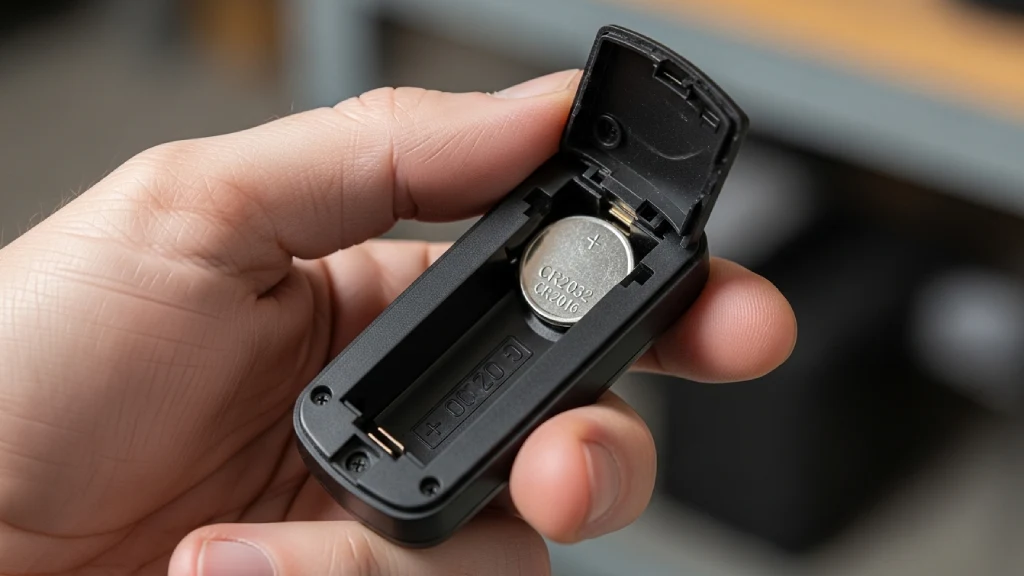
When you need to replace your garage door remote battery, the first step is to accurately identify the battery size to guarantee compatibility.
Start by opening the remote’s battery compartment and locating the battery. Examine the battery’s top surface for a printed alphanumeric code, typically three to four characters like CR2032 or CR2025, indicating size and chemistry.
If the battery’s code is illegible, consult the remote’s back label or the owner’s manual, which often specifies the exact battery model. For brand-specific remotes, note that Chamberlain commonly uses CR2032, while older models might require CR2025 or 9V batteries.
Confirming the precise battery type guarantees peak fit, voltage, and power output, preventing operational issues and maintaining signal integrity. Accurate identification is critical before purchasing replacements.
Using the recommended CR2032 lithium coin cell ensures stable voltage and reliable remote performance.
Quick Ways to Check Your Remote’s Battery Type Without Removing It
Identifying your garage door remote battery size usually involves opening the compartment, but you can verify the type without removal by inspecting external indicators.
First, check the back label or casing for printed battery codes or voltage ratings. Next, refer to your remote’s model number often indicated on the device, then cross-reference manufacturer specs online.
You can also observe the remote’s size and button layout to infer battery type based on known brand standards.
| Method | Location Checked | Information Gleaned |
|---|---|---|
| Back Label | Rear casing | Battery code, voltage |
| Model Number Lookup | Front or back | Manufacturer specs |
| Physical Size/Shape | Whole remote | Battery type inference |
| Manufacturer Website | Online | Confirmed battery details |
For optimal performance, ensure your remote is compatible with your garage door opener’s rolling code technology to avoid connectivity issues.
Common Battery Sizes for Garage Door Remotes Explained
When it comes to garage door remotes, you’ll often find yourself dealing with coin cell batteries like the CR2032, CR2025, and CR2016. Each of these batteries varies in thickness and voltage output, which can be pretty important.
For example, the CR2032 provides a stable 3V and has a thickness of 3.2 mm. This thicker battery actually offers a higher capacity compared to the thinner CR2025. Coin cell batteries like these are favored for their stable voltage output and compact size, making them ideal for remote controls and other small electronics.
Popular Coin Cell Types
Popular coin cell batteries power most garage door remotes, offering compact size and reliable energy output.
You’ll typically encounter lithium coin cells like CR2032, CR2025, and CR2016, each differing in thickness and capacity to fit specific remote models.
Some remotes, especially multi-button or older versions, may require cylindrical 12-volt A23 batteries instead.
Knowing the exact type is critical to maintain peak performance and signal strength.
- CR2032: Most common, 3.2 mm thick, high capacity
- CR2025: Slightly thinner at 2.5 mm, used in older models
- CR2016: Thinner, found in smaller remotes like Genie
- A23: 12-volt cylindrical battery for multi-button LiftMaster units
Always verify your remote’s required battery type before purchasing to guarantee compatibility. Replacing damaged or moisture-exposed batteries promptly helps prevent false signal transmissions that can cause unintended garage door openings.
Voltage And Size Differences
When selecting a replacement battery for your garage door remote, understanding the voltage and size differences is essential to guarantee proper fit and peak performance.
Common lithium coin cells like CR2032, CR2025, and CR2016 vary primarily in thickness: 3.2 mm, 2.5 mm, and 1.6 mm respectively, while maintaining a nominal voltage of 3 volts.
Using a battery with incorrect size may cause poor contact or damage the compartment. Some remotes, particularly LiftMaster’s multi-button models, require an A23 battery, which delivers 12 volts in a cylindrical form factor, differing markedly from coin cells.
Ensuring exact voltage and physical dimensions match the original battery prevents malfunctions and maintains signal strength. Always verify the printed code on your current battery or consult the manufacturer’s specifications before purchase.
Which Battery Size Fits Popular Garage Door Remote Brands?
Which battery size fits your garage door remote depends largely on the brand and model you own. Different manufacturers use specific battery types to optimize power and compatibility. Knowing your remote’s brand guides you to the correct battery, avoiding fit or performance issues.
Chamberlain remotes typically require CR2032; older models may use CR2025 or 9V batteries. LiftMaster units mostly take CR2032, though some multi-button or larger models need an A23 12-volt battery.
Genie offers CR2032 or CR2016 for keychain remotes; larger remotes often require A23 batteries. B&D and Craftsman remotes generally use CR2032 or CR2025 coin cells.
Check your remote’s battery compartment or manual to confirm the exact type before replacing. For safe handling and to avoid damage, always disconnect power before performing any maintenance or battery replacement on garage door systems, keeping in mind important safety precautions.
Why the Right Battery Size Makes Your Remote Work Better?
Because your garage door remote relies on consistent power delivery, using the correct battery size guarantees peak signal strength and reliable operation.
Using the correct battery size ensures steady power, maximizing your garage door remote’s signal strength and reliability.
A battery like the CR2032, with its precise 3.2 mm thickness and ideal voltage, secures full contact within the compartment, preventing intermittent power loss.
Using an incorrect size, such as a thinner CR2025 or a non-compatible type, disrupts the electrical circuit, reducing transmission range and increasing malfunction risk.
Additionally, the right battery maintains stable voltage under variable temperatures, critical for remote responsiveness.
Incorrect batteries may degrade faster, forcing frequent replacements and compromising device longevity.
Choosing the proper battery also ensures compatibility with the device’s low voltage design, optimizing safety and performance.
Where to Buy Reliable Replacement Batteries for Garage Door Remotes?
When you’re looking to buy replacement batteries for your garage door remote, it’s a good idea to stick with trusted retailers.
Stores like Walmart or specialized electronics shops are great places to start because they usually offer authentic products that perform well.
If you prefer shopping online, just remember to check the seller’s reputation and product details carefully.
You want to make sure you’re getting the right fit for your remote.
Before you hit that purchase button, double-check the battery model, voltage, and compatibility with your remote.
It’s really important to get this right so your remote works smoothly!
Also, keeping your remote at a safe distance from sources of electromagnetic interference, such as Wi-Fi routers, can help maintain its reliable operation without signal disruption, as understanding electromagnetic exposure can guide placement decisions.
Trusted Retail Locations
Finding reliable replacement batteries for your garage door remote requires selecting trusted retail locations that guarantee authenticity and proper specifications.
You want to avoid counterfeit or incompatible batteries that may damage your remote or reduce performance. Choose retailers known for genuine products and clear labeling of battery types such as CR2032, CR2025, or A23.
Verify their stock freshness to assure peak battery life.
Consider these trusted retail options:
- Major electronics or hardware stores with dedicated battery sections.
- Authorized dealer outlets for brands like Chamberlain or LiftMaster.
- Established pharmacy chains offering recognized battery brands.
- Specialty battery retailers with expertise in lithium coin cells.
Buying from these sources guarantees you receive correctly sized, voltage-appropriate batteries that maintain your remote’s signal strength and longevity.
For optimal battery performance, be mindful of environmental conditions that can affect longevity, such as temperature and humidity, which impact battery efficiency.
Tips to Replace and Maintain Your Garage Door Remote Battery
Although replacing your garage door remote battery may seem straightforward, adhering to precise steps guarantees peak performance and longevity.
Proper battery replacement ensures your garage door remote works reliably and lasts longer.
You should always verify the battery type by checking the printed code or manufacturer’s manual to avoid compatibility issues.
Use reputable brand batteries, preferably the exact match like CR2032 or A23, to maintain stable voltage output.
Handle the replacement carefully to prevent contact damage or housing misalignment.
After installation, test the remote’s signal range and responsiveness.
- Confirm battery type via printed code or manual.
- Choose high-quality batteries matching size and voltage.
- Replace batteries promptly upon performance decline.
- Store spare batteries in a cool, dry place to preserve charge.
Additionally, measuring and documenting smallest width and height accurately is essential when ordering replacement parts to ensure proper fit and function.
These steps assure consistent operation and extend your remote’s functional lifespan.
Frequently Asked Questions
How Long Do Garage Door Remote Batteries Typically Last?
You can expect your garage door remote batteries to last between 1 to 2 years under normal use.
Factors like battery type, remote model, and usage frequency influence this.
For example, CR2032 coin cells typically provide longer life due to higher capacity.
In contrast, older or multi-button remotes using A23 12-volt batteries may drain faster.
To maintain peak performance, replace batteries promptly when range or response weakens.
Can a Rechargeable Battery Be Used in a Garage Door Remote?
Imagine trying to power a spaceship with a bicycle pedal. Using rechargeable batteries in your garage door remote isn’t far off.
You can use rechargeable lithium-ion or NiMH cells, but they often supply lower voltage and capacity than standard lithium coin batteries like CR2032. This can cause weaker signals and reduced range.
For reliable, consistent operation, stick with manufacturer-recommended non-rechargeable coin cells designed for your remote’s exact voltage and size specifications.
What Should I Do if My Remote Still Doesn’T Work After Battery Replacement?
If your remote still doesn’t work after replacing the battery, first verify the battery’s orientation and make certain it’s the exact model specified by the manufacturer.
Next, inspect battery contacts for corrosion or debris and clean if necessary.
Reset or reprogram the remote according to your garage door opener’s manual.
If issues persist, check for signal interference or damaged internal components.
Consider consulting a professional technician to diagnose hardware faults or receiver problems.
Are There Environmental Factors That Affect Remote Battery Life?
Yes, environmental factors do affect your remote battery life.
Extreme temperatures, especially cold, reduce lithium battery capacity and shorten lifespan.
High humidity can cause corrosion on battery contacts, impairing performance.
Frequent exposure to sunlight or heat accelerates chemical degradation inside the cell.
To maximize battery longevity, store and use your remote within manufacturer-recommended temperature and humidity ranges.
Avoid prolonged exposure to harsh environmental conditions.
How Do I Safely Dispose of Old Garage Door Remote Batteries?
Don’t throw caution to the wind. Dispose of old garage door remote batteries at designated recycling centers or hazardous waste facilities.
These lithium coin cells, like CR2032 or CR2025, contain materials harmful to the environment. Avoid landfill disposal to prevent leakage or contamination.
Store used batteries in a non-conductive container before drop-off. Check local regulations for battery recycling programs to guarantee safe, compliant disposal that protects both you and the environment.
Keep Your Garage Door Remote Running Smoothly Every Time
To make certain your garage door remote works reliably, identify the correct battery size, verify it without guesswork, and choose trusted brands.
Replace batteries promptly, maintain contacts cleanly, and store spares properly. Using the right battery size enhances performance, extends remote lifespan, and prevents malfunctions.
By following these precise steps, you’ll avoid downtime, optimize signal strength, and secure seamless operation every time you use your garage door remote.