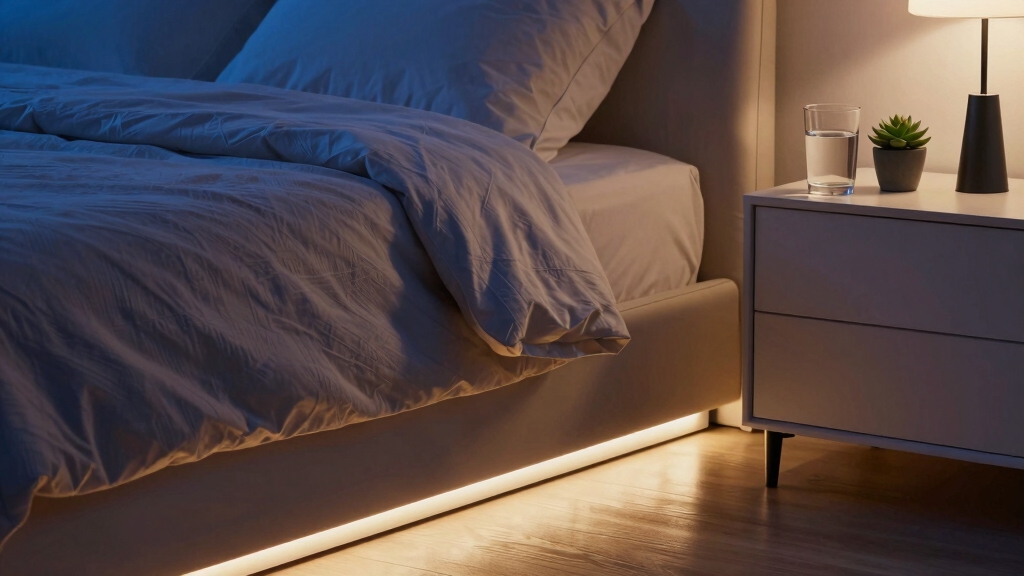

You can leave LED lights on all night safely if you use high-quality strips with proper heat sinks and ventilation to prevent overheating.
Match your power supply’s voltage and current exactly to the LEDs’ specifications to avoid electrical stress and shorten lifespan.
Beware that cheap or poorly installed LEDs can risk fire hazards and flickering issues. Continuous use slightly accelerates wear but maintains performance when managed correctly.
Explore how to optimize your setup for safe, efficient long-term operation.
Key Takeaways
- High-quality LEDs designed for continuous 24/7 use can safely remain on all night with minimal fire risk.
- Proper power supply matching LED voltage and current prevents stress and prolongs LED lifespan during overnight use.
- Effective heat management, like aluminum heat sinks and ventilation, prevents overheating and ensures safe all-night operation.
- Regular inspection for flickering, discoloration, or warm surfaces helps detect overheating or electrical issues early.
- Avoid substandard LEDs and power supplies, as poor quality increases risks of electrical faults and fire hazards overnight.
Can You Leave LED Lights on All Night Safely?
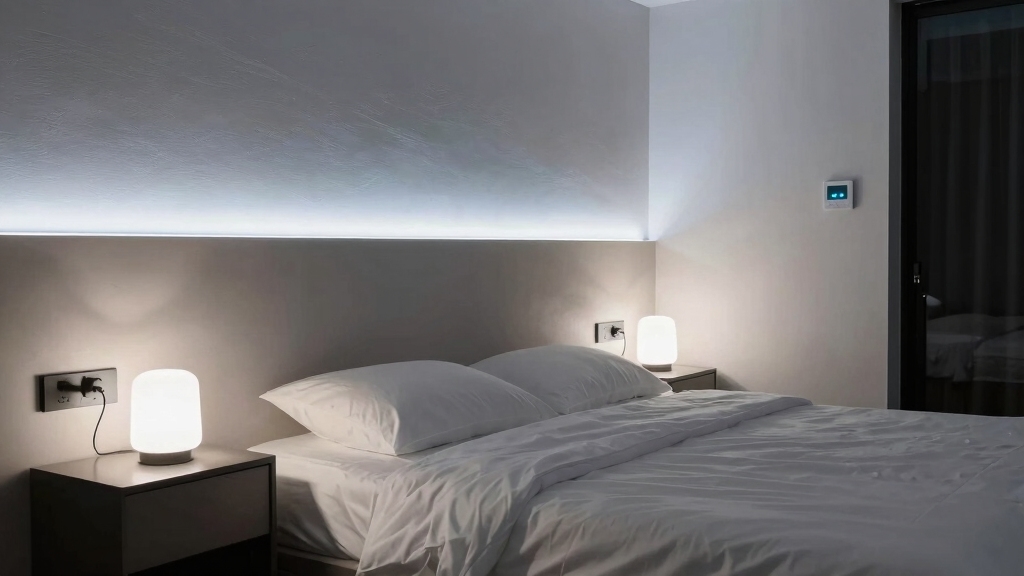
You can generally leave LED lights on all night safely, provided they’re high-quality and properly installed.
LEDs are engineered for continuous 24/7 operation, minimizing fire risks common to incandescent bulbs. Proper installation includes matching power supply voltage and current to LED load, preventing electrical hazards like short circuits or melted insulation.
LEDs support continuous use safely when paired with correct power supplies, reducing fire hazards typical of incandescent bulbs.
High-quality LEDs with adequate ventilation and thermal design eliminate most safety concerns associated with extended use. Conversely, substandard LED strips lacking ventilation or using low-quality power supplies increase risks of electrical fires and component failure.
Continuous operation itself doesn’t compromise safety if these conditions are met. Consequently, ensuring component quality, correct electrical parameters, and secure installation are critical factors for safe all-night LED operation without significant risk. Selecting cables and components that comply with UL certification standards further enhances safety and reliability.
Why Good Heat Management Keeps Your LEDs Safe?
Hey there! So, let’s talk about something super important for your LEDs: heat management. You really want to make sure there’s proper ventilation around them.
Why? Well, without it, heat can build up, which not only speeds up LED degradation but can also lead to safety hazards. It’s definitely something to keep in mind!
One great tip is to use aluminum channels. They’re fantastic for enhancing heat dissipation. This way, you can maintain those ideal operating temperatures, even when your LEDs are in continuous use.
And here’s a little heads-up: keep an eye out for any signs of trouble. If you notice discoloration, flickering, or even unusual warmth, those could be signs of overheating. If that happens, it’s crucial to take immediate action!
Proper ventilation and heat management can prevent thermal stress that might otherwise cause system delays or damage in connected cooling units.
Importance Of Ventilation
When operating LED lights continuously, ensuring effective ventilation plays a critical role in maintaining safe temperatures and preventing thermal damage.
Without adequate airflow, heat generated by the LEDs and their power supplies accumulates, raising ambient temperature and accelerating component degradation.
This thermal buildup can cause discoloration, flickering, and reduced light output, signaling stress on the LED chips.
Effective ventilation dissipates heat, preserving electrical insulation integrity and preventing short circuits or fire hazards.
You should position LEDs in spaces with unobstructed airflow and avoid enclosed or poorly ventilated fixtures.
Monitoring surface temperatures helps detect early signs of overheating.
Proper ventilation complements other thermal management strategies, ensuring LEDs perform safely and maintain longevity during continuous operation without compromising efficiency or safety.
Additionally, understanding the role of load wires in electrical circuits helps ensure safe wiring practices that prevent hazards related to overheating and electrical faults.
Aluminum Channels Usage
Building on effective ventilation, incorporating aluminum channels markedly enhances heat dissipation for LED strips.
These channels act as heat sinks, efficiently conducting thermal energy away from the LED components, which mitigates temperature rise during prolonged operation.
By maintaining lower junction temperatures, aluminum channels prevent accelerated degradation and preserve the LED’s luminous efficacy.
Additionally, they provide structural support, ensuring consistent physical contact for optimal thermal transfer.
You should select channels with adequate surface area and thickness tailored to your LED strip’s power density to maximize cooling.
Ignoring aluminum channels or using inferior materials risks heat accumulation, leading to early failure.
Consequently, pairing aluminum channels with proper ventilation forms a critical thermal management strategy that safeguards your LEDs’ performance and longevity during continuous all-night use.
For added protection, consider using thermal management techniques such as applying heat-resistant coatings to further enhance durability under extended operation.
Overheating Signs To Watch
Frequently, overheating signals serve as early warnings that your LED system requires immediate attention to prevent damage. You should monitor these signs closely to maintain safe and efficient operation.
Key indicators include:
- Discoloration of LED chips or circuit boards, indicating thermal stress.
- Flickering or dimming lights, which often result from inconsistent electrical conditions caused by heat.
- Excessive warmth on surfaces near LED strips or power supplies, suggesting inadequate heat dissipation.
- Melting or deformation of wire insulation, exposing conductors and raising electrical hazards.
Recognizing these symptoms early lets you address ventilation or power supply issues promptly. Good heat management, including aluminum channels and proper airflow, assures your LEDs operate safely and sustain their lifespan during continuous use.
Additionally, repeated or intense sparking caused by loose wiring or overloaded circuits can exacerbate heat-related risks and should be inspected by a professional to ensure electrical safety and prevent fire hazards linked to overloaded circuits.
What Can Go Wrong With Cheap LED Strips?
Cheap LED strips often fall short in critical areas like thermal management and voltage regulation, which can quickly lead to operational failures.
When heat dissipation is inadequate, the LEDs and circuitry can overheat, accelerating degradation and causing dimming or flickering.
Voltage irregularities from substandard components stress the LEDs, shortening their lifespan and increasing the risk of electrical faults such as short circuits or melted insulation.
You may also encounter poor soldering or low-quality wiring, which compromises connection integrity and creates fire hazards during continuous operation.
Without proper design for heat and voltage control, these strips can fail prematurely, posing safety risks and increased maintenance costs.
To avoid these issues, carefully evaluate build quality and component specifications before continuous use.
Additionally, selecting components with proper thermal management can significantly enhance the durability and safety of LED lighting installations.
How to Pick the Best Power Supply for Your LED Lights?
When it comes to choosing the right power supply for your LED lights, it’s super important to find one that matches your LED strip’s voltage and current requirements exactly. This helps to avoid unnecessary stress on the system and keeps your LEDs from failing prematurely.
So, what should you look for? Well, make sure to prioritize high-quality power supplies that come with built-in safety features. Look for things like overvoltage protection, overload protection, and thermal protection. These features are great because they help ensure stable and continuous operation of your lights.
And don’t forget, taking the time to verify these specifications can really pay off! It minimizes any potential electrical hazards and can even extend the lifespan of your entire LED system. So, happy lighting!
Additionally, integrating your LED setup with dusk to dawn lighting controls can improve energy efficiency by automatically turning lights off during daylight hours.
Voltage Matching Essentials
When selecting a power supply for your LED lights, guaranteeing proper voltage matching is essential to prevent electrical hazards and maximize longevity.
Mismatched voltage can cause overheating, flickering, or premature failure. To pick the right power supply, consider these factors:
- Confirm the LED strip’s rated voltage, commonly 12V or 24V, and select a power supply with the exact output voltage.
- Calculate the total wattage of your LED load and choose a power supply with a slightly higher wattage rating to accommodate inrush current and prevent overload.
- Avoid significant voltage drops by using adequate wire gauge and minimizing cable length between the power supply and LED strip.
- Guarantee the power supply provides stable voltage output under continuous load to reduce stress on LED components and optimize lifespan.
Additionally, maintaining proper temperature and humidity levels around your LED setup can help prevent premature component degradation and ensure consistent performance, as humidity control plays a key role in indoor electrical device longevity.
Power Supply Quality
Reliability forms the cornerstone of an effective power supply for LED lighting systems. When choosing a power supply, make certain its voltage and current ratings precisely match your LED load to prevent overstress and premature degradation.
Opt for high-quality, regulated units that maintain stable output despite input fluctuations, as unstable power accelerates LED wear and causes flickering. Look for supplies with low ripple and noise to minimize electromagnetic interference and extend LED lifespan.
Avoid generic or underpowered models lacking thermal protection and efficient heat dissipation, since these deficiencies increase failure risks during continuous operation.
Selecting a power supply with consistent performance and robust construction guarantees your LED lights operate safely and efficiently throughout all-night use, preserving both light quality and component longevity.
Additionally, incorporating MIL-standard certified components can enhance the durability and reliability of your entire lighting system.
Safety Features Check
Matching voltage and current ratings is only part of selecting a power supply for LED lighting systems; evaluating safety features is equally important to guarantee stable, hazard-free operation.
You should prioritize these four aspects when choosing a power supply:
- Overcurrent and short-circuit protection to prevent electrical faults and potential fires.
- Thermal shutdown mechanisms that deactivate the supply during overheating to avoid damage.
- Voltage regulation ensuring consistent output despite load variations, minimizing LED stress.
- Compliance with recognized safety certifications (e.g., UL, CE) verifying tested reliability under continuous operation.
Additionally, ensuring uninterrupted power supply through backup solutions can prevent hazardous outages and maintain lighting stability.
How Does Continuous Use Affect LED Lights’ Lifespan?
Although LED lights are designed for long operational lifespans, continuous use impacts their durability primarily through heat accumulation and component stress.
When you leave LEDs on all night, heat buildup accelerates degradation of semiconductor materials, reducing luminous output and overall lifespan.
Proper thermal management, such as aluminum heat sinks and adequate ventilation, mitigates this effect, preserving efficiency.
Additionally, voltage fluctuations and mismatched power supply ratings exacerbate electrical stress, further shortening service life.
Unlike fluorescent lamps, frequent switching on and off doesn’t materially affect LED longevity, but constant operation does increase thermal load.
To maximize lifespan during continuous use, you should guarantee high-quality components and stable power sources.
Monitor temperature and apply dimming strategies when possible to reduce heat and stress on LED chips, thereby extending operational hours effectively.
How Does LED Flicker Affect Your Health?
When you use LED lights, you may not notice their flicker because it often occurs at a frequency of about 120 times per second, which is imperceptible to the naked eye.
However, this rapid flicker can still affect your health subtly.
Despite being invisible, rapid flicker from LED lights can subtly impact your health.
The imperceptible flicker may cause:
- Headaches and visual fatigue due to fluctuating light intensity.
- Migraines triggered by stress on the visual cortex.
- Disruption of circadian rhythms by blue light emissions combined with flicker.
- Hormonal imbalances linked to hypothalamus and pituitary gland stress from flicker exposure.
Though evidence of direct harm to healthy individuals is limited, sensitive populations may experience discomfort.
Using flicker-free drivers or high-frequency PWM dimmers above 25 kHz can mitigate these health risks effectively.
Practical Tips to Prolong LED Life When Used All Night
Managing LED operation to extend lifespan requires careful attention to heat dissipation, power supply compatibility, and usage patterns.
You should make certain LEDs have adequate ventilation or aluminum channels to prevent heat buildup, which accelerates degradation.
Match power supply voltage and current precisely to your LED load to avoid electrical stress and premature failure.
Employ dimming strategies or timers to reduce full-brightness hours, thereby limiting thermal and electrical strain.
Avoid standard dimmers; instead, use high-frequency PWM dimmers (>25 kHz) to minimize flicker-related wear.
Regularly inspect connections and LED surfaces for signs of overheating, discoloration, or damage.
How to Install LED Strips for Safe 24/7 Use?
Making sure proper installation of LED strips is critical for safe 24/7 operation and long-term reliability. You need to address heat dissipation, power supply compatibility, and secure mounting to avoid hazards and premature failure. Follow these steps:
Proper LED strip installation ensures safe, reliable 24/7 operation by managing heat, power, and secure mounting.
- Mount LED strips on aluminum channels or heat sinks to efficiently dissipate heat and prevent thermal damage.
- Use a power supply with voltage and current ratings that match the LED load precisely, eliminating electrical stress.
- Ensure adequate ventilation around the installation site to prevent heat buildup that accelerates degradation.
- Inspect connections regularly for looseness or damage, reducing risks of shorts or overheating.
Adhering to these technical measures ensures your LED strips operate safely and maintain performance during continuous use.
Frequently Asked Questions
Are LED Lights Energy-Efficient Compared to Other Lighting Options?
Yes, you’ll find LED lights are markedly more energy-efficient than incandescent or fluorescent bulbs.
They convert a higher percentage of electricity into visible light, wasting less as heat.
LEDs typically consume up to 75% less energy than incandescent options and last longer, reducing replacement frequency.
Their efficiency depends on quality components and proper installation, which also mitigate energy loss from heat buildup or voltage mismatches, maximizing overall performance and savings.
Can LED Lights Be Used Outdoors Overnight Safely?
Imagine installing high-quality outdoor LED floodlights with proper IP ratings and heat dissipation; you can safely use them overnight without risk.
When outdoors, make certain LEDs are weatherproof, have matched power supplies, and adequate ventilation to prevent overheating.
Poor-quality or improperly installed LEDs outdoors risk moisture damage and electrical faults.
Do LED Lights Attract More Insects at Night?
LED lights generally attract fewer insects at night compared to traditional incandescent or UV-rich bulbs.
This is because they emit less heat and minimal ultraviolet light, which insects are drawn to.
However, blue light-heavy emissions from some LEDs can still attract certain insects.
To minimize insect attraction, choose LEDs with warmer color temperatures and lower blue light content.
Proper selection and installation help reduce insect presence around your illuminated areas effectively.
Is It Safe to Use LED Night Lights Around Children?
You might wonder if LED night lights pose risks around children, but rest assured, they’re generally safe.
Their low heat output reduces burn hazards, and high-quality LEDs emit minimal flicker, lowering visual fatigue risks.
However, choose products with proper voltage regulation and flicker-free drivers to avoid electrical issues.
Keep an eye on overheating signs and make certain proper installation.
With these precautions, LED night lights offer a safe, efficient lighting solution for kids.
How Do LED Lights Impact Home Electricity Bills Overnight?
LED lights consume markedly less power than incandescent bulbs, so leaving them on overnight has a minimal impact on your home electricity bill.
Their high energy efficiency means continuous operation uses only a fraction of electricity, typically just a few watts per bulb or strip.
However, the total cost depends on the number and wattage of LEDs used. You can further reduce expenses by dimming or using timers to limit operating hours.
Built to Glow: Keeping Your LEDs Strong All Night
Leaving LED lights on all night isn’t just possible—it’s practical, provided you manage heat properly and choose quality components.
Think of your LEDs as athletes: without proper care, they’ll burn out prematurely. Cheap strips and inadequate power supplies risk flicker and failure, impacting both health and lifespan.
By installing thoughtfully and maintaining prime conditions, you’ll make certain your LEDs shine efficiently, safely, and continuously, turning your lighting into a reliable, long-lasting asset.