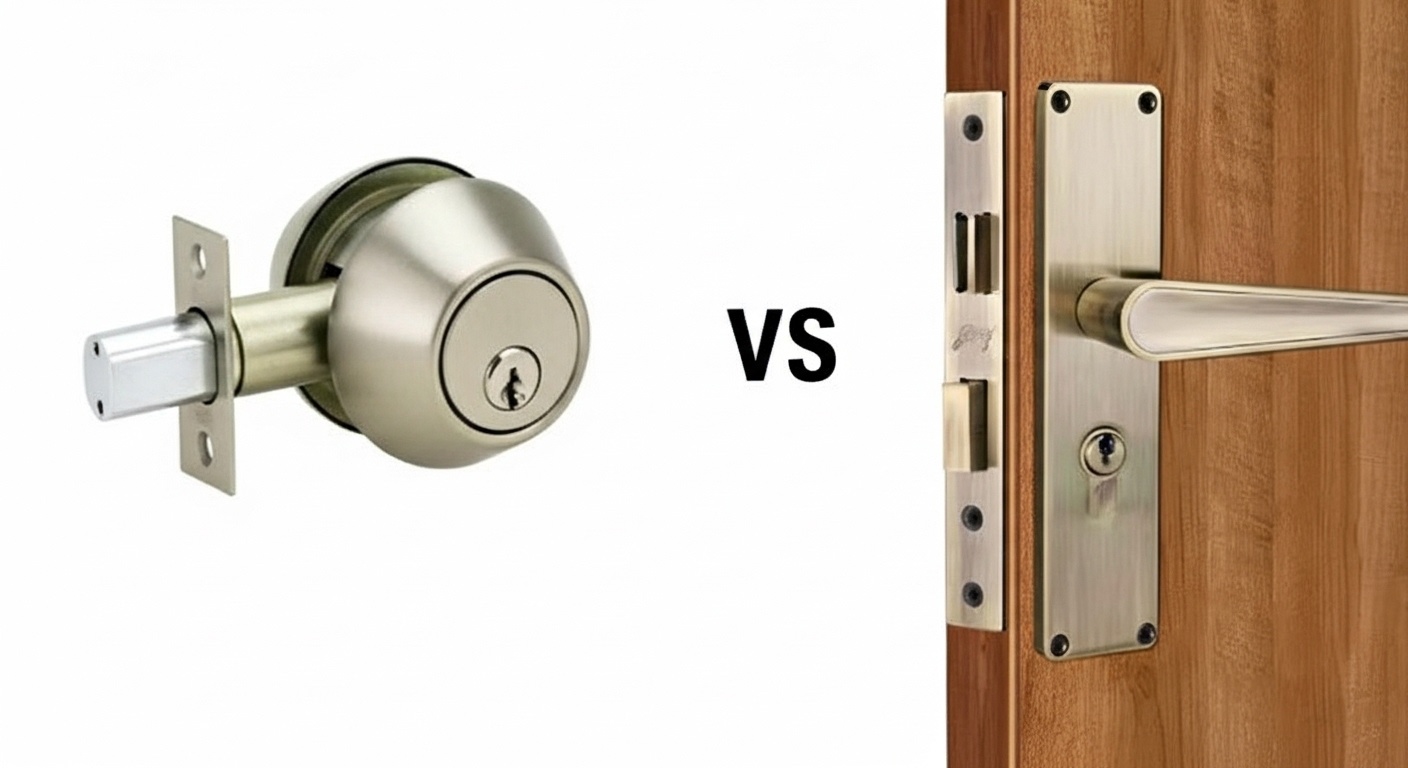

You’ll find deadbolt locks offer straightforward, single-point security with easy DIY installation, ideal for residential use.
Mortise locks, embedded within the door edge, integrate latch and deadbolt mechanisms for multi-point locking and superior resistance to forced entry.
They suit commercial or high-security needs. Mortise locks demand precise installation and higher costs but provide enhanced durability and advanced security features.
Understanding these distinctions will help you determine which lock meets your specific security and installation requirements.
Key Takeaways
- Mortise locks embed into the door edge with integrated latch and deadbolt, while deadbolts are surface-mounted with a single solid bolt.
- Mortise locks offer multi-point locking and stronger resistance to forced entry compared to the single-point locking deadbolts provide.
- Deadbolts are simpler to install with basic tools, whereas mortise locks require skilled woodworking and specialized equipment for precise pocket cutting.
- Mortise locks, constructed from reinforced brass or steel, are more durable but need regular maintenance; deadbolts require less upkeep and are easier to maintain.
- Deadbolts are cost-effective and suitable for residential use; mortise locks are pricier and ideal for commercial or high-security applications.
What Are Deadbolt and Mortise Locks? Key Differences Explained?
While both deadbolt and mortise locks enhance door security, they differ fundamentally in design and operation.
A mortise lock embeds within a pocket cut into the door edge, combining a latch and deadbolt into an integrated lockset and handle system.
Conversely, a deadbolt surface-mounts through drilled holes and features a solid bolt extending independently into the strike plate, separate from the door handle.
Mortise locks use a multi-component framework with latch, deadbolt, and housing, offering multi-point locking and reinforced construction.
Deadbolts provide single-point locking with a simpler mechanism activated by key or thumb turn.
Understanding these structural and functional distinctions helps you choose the appropriate lock based on your security priorities, installation capacity, and door type.
Multi-point locking systems, commonly found in mortise locks, engage bolts at multiple locations to distribute force evenly and resist prying, enhancing overall security multi-point locking systems.
How Deadbolt Locks Work: Features and Mechanisms?
Understanding the basic structure of deadbolt locks lays the foundation for grasping their operational mechanics.
Deadbolts consist of a solid metal bolt that extends directly into the door frame’s strike plate, providing single-point locking.
Deadbolts use a solid metal bolt extending into the door frame for reliable single-point locking security.
You activate the bolt via a key cylinder or a thumb turn on the interior side, which rotates a cam mechanism converting rotational motion into linear bolt extension or retraction.
Unlike latch-based locks, deadbolts lack springs, minimizing vulnerability to forced retraction.
The bolt’s thickness and length determine resistance to forced entry, while the lock housing guarantees alignment and smooth operation.
You’ll find deadbolts surface-mounted through two drilled holes, simplifying installation.
Their straightforward mechanical design reduces maintenance needs, though their single locking point offers less reinforcement than multi-point systems.
However, standard deadbolt locks with pin-tumbler cylinders can be susceptible to lock bumping attacks if not equipped with anti-bump features.
How Mortise Locks Work: Features and Mechanisms
Because mortise locks embed within a precisely cut pocket in the door edge, they combine multiple locking components, including a latch and deadbolt, into a single, integrated mechanism.
You’ll find a heavy-duty housing that accommodates both elements, allowing seamless interaction between the latch operated by the door handle and the deadbolt controlled by a key or thumb turn.
This multi-component framework uses a lever or pin system to resist picking attempts effectively.
When you operate the handle, the latch retracts smoothly. Turning the key extends the deadbolt into the strike plate, securing the door firmly.
The mortise lock’s design demands precise alignment and robust materials like reinforced brass or steel, ensuring durability and consistent performance in high-traffic or commercial settings.
Certified locksmiths often use lock-picking sets and tension wrenches to manipulate such mechanical locks when necessary.
Comparing Security: Deadbolt vs Mortise Lock Strength
When evaluating lock security, you’ll find mortise locks offer superior protection through multi-point locking and robust construction, compared to the single-point engagement of deadbolts.
Mortise locks embed multiple levers and a combined latch and deadbolt mechanism within a reinforced steel or brass housing, markedly enhancing resistance to forced entry and lock picking.
In contrast, deadbolts rely on a single solid bolt extending into the strike plate, which, while effective against basic attacks, remain more vulnerable to bumping, drilling, and other manipulation techniques.
Mortise locks achieve Grade 1 security ratings, reflecting their rigorous testing under high-stress scenarios, whereas deadbolts typically meet lower grades.
If security strength is your priority, the integrated, multi-component framework of mortise locks outperforms the simpler, surface-mounted deadbolt system.
Additionally, combining mortise locks with hardened steel strike plates and reinforced frames significantly increases resistance to pry attacks, further enhancing overall security.
Installation Differences Between Deadbolt and Mortise Locks
Although both deadbolt and mortise locks provide security, their installation processes differ markedly in complexity and required skills.
Deadbolt and mortise locks both secure your door but differ greatly in installation complexity and skill needed.
When installing a deadbolt, you’ll drill two holes through the door and align the lock with the strike plate. This process is straightforward with basic tools.
Mortise lock installation, however, requires cutting a precise pocket within the door edge. This demands woodworking skills and professional tools to avoid damage.
Here’s what you should consider:
- Deadbolts use standard hole saws; mortise locks need specialized routing.
- Mortise installation integrates lockset and handle, requiring precise alignment.
- Deadbolt fitting risks minimal door damage; mortise fitting risks structural compromise if misaligned.
- Mortise locks embed seamlessly in wooden doors; deadbolts surface-mount externally.
Keep in mind that professional locksmith services often charge based on the complexity of installation and may include emergency surcharges for after-hours work.
Choose based on your skill level and door type for best results.
Durability and Maintenance of Deadbolt vs Mortise Locks
When it comes to locks, you’ll notice that mortise locks are typically made from reinforced brass or steel. This gives them a strength that’s really suited for heavy-duty use.
On the other hand, deadbolts, while durable, tend to use less robust materials and have a single-point locking mechanism. This can limit how well they resist force.
Now, let’s talk about maintenance. Mortise locks require a bit more attention because of their complex multi-component design. This means you’ll need to check and maintain them more regularly.
In contrast, deadbolts are much simpler, with fewer parts to keep track of, so they usually require minimal upkeep.
For enhanced security, it is important to reinforce strike plates with long tamper-resistant screws anchoring into studs or masonry to prevent frame failure.
Material Strength Comparison
Evaluating material strength reveals clear distinctions between mortise and deadbolt locks in durability and maintenance demands.
You’ll find mortise locks constructed from reinforced brass or steel, engineered to withstand significant force, especially in commercial settings.
Deadbolts also use durable materials but lack the multi-component reinforcement mortise locks provide.
- Mortise locks embed a multi-layered framework protecting internal components against tampering.
- Deadbolts rely on a solid bolt but offer only single-point locking.
- Mortise lock materials endure heavy, repeated use without degradation.
- Deadbolt materials resist force but have limited leverage in high-stress attacks.
Additionally, integrating security features like a solid brass viewer can further enhance door protection alongside these locks.
Maintenance Requirements
Regular maintenance plays a crucial role in ensuring the longevity and peak performance of both mortise and deadbolt locks, but their requirements differ markedly. Mortise locks, with their complex multi-component framework, demand periodic lubrication, inspection of internal levers, and tightening of screws to avoid misalignment and wear. Neglecting these steps can compromise their multi-point locking efficiency. Conversely, deadbolt locks feature fewer moving parts, so you only need to lubricate the bolt and check the strike plate alignment occasionally. This simplifies upkeep and reduces maintenance time and costs. While mortise locks offer superior durability under heavy use, they require consistent care to maintain that advantage. Deadbolts provide reliable, streamlined operation with minimal upkeep, making them ideal if you prefer low-maintenance security solutions. Like replacing a damaged peephole, timely maintenance ensures continued security and functionality without costly repairs or replacements, highlighting the importance of replacement readiness in door hardware upkeep.
Cost Comparison: Which Lock Fits Your Budget?
When weighing your options, understanding the cost implications of mortise locks versus deadbolts is essential for aligning security needs with budget constraints.
Mortise locks generally demand a higher initial investment due to their complex construction and professional installation requirements.
Deadbolts offer a more budget-friendly alternative with simpler, do-it-yourself fitting.
Consider these factors:
- Mortise locks cost 3-5 times more than standard deadbolts.
- Installation of mortise locks requires skilled labor, increasing expenses.
- Deadbolts need minimal maintenance, reducing long-term costs.
- Mortise locks’ multi-component framework demands periodic upkeep, adding to total ownership cost.
Additionally, just as peepholes have specific design features to enhance inside visibility while limiting outside viewing, choosing the right lock involves understanding how security features impact overall safety and privacy.
When to Use Deadbolt vs Mortise Locks: Best Use Cases
Although both deadbolt and mortise locks serve to secure doors effectively, their distinct designs and features make them suitable for different applications.
You’ll want to use deadbolts primarily for residential doors where straightforward, reliable security with minimal installation complexity matters. Deadbolts provide single-point locking, ideal for private homes requiring quick, cost-effective protection.
On the other hand, mortise locks excel in commercial or high-security environments. Their multi-point locking and reinforced framework offer superior resistance against forced entry and tampering, making them perfect for exterior doors in businesses or areas demanding enhanced security.
Besides, mortise locks integrate smoothly into wooden or metal doors, maintaining aesthetics while delivering robust protection. Choosing between them hinges on your security needs, door type, and installation capabilities, with deadbolts favoring simplicity and mortise locks prioritizing extensive durability and security. Proper identification and connection in electrical components nearby can also enhance overall safety in secured environments.
How to Choose the Right Lock for Your Door
When it comes to choosing the right lock for your door, the first thing you should do is think about your security needs. What level of protection do you really require? It’s all about finding that balance between how safe you want to feel and the potential threats you might face.
Next up, let’s talk about the door material. Did you know that mortise locks need precise mortise pockets? They usually work best with solid wood doors. On the other hand, deadbolts are pretty versatile and can fit most types of doors, which is a bonus!
Finally, consider how tricky the installation will be and what your skill level is. If you’re thinking about a mortise lock, be aware that it usually needs a professional to install it properly. But if you go for a deadbolt, you might find it’s a lot easier to handle on your own, making it a great option for a DIY project.
Assess Security Needs
Since your door’s security requirements vary based on location and usage, evaluating these needs is critical to selecting the right lock. You need to analyze the threat level and access control demands accurately.
Consider these factors to assess security needs effectively:
- Risk of Forced Entry: Identify if the door faces high-risk areas requiring multi-point locking or if single-point locking suffices.
- Access Frequency: Determine if the door is used frequently, demanding durable, heavy-duty mechanisms.
- Tampering Exposure: Evaluate vulnerability to lock picking, drilling, or bumping attacks to decide on lock complexity.
- Security Grade Requirements: Confirm if compliance with strict standards (e.g., Grade 1) is necessary for your application.
This analytical approach helps you decide if a mortise lock’s advanced security is justified over a deadbolt’s simpler protection.
Consider Door Material
When selecting a lock, you must match its design and installation requirements to your door’s material to guarantee proper fit and function.
Mortise locks require a thick, solid door, typically wood or metal, capable of accommodating the mortise pocket cut without compromising structural integrity.
Thin or hollow doors lack the depth needed for mortise installation and risk damage or weakened security.
Deadbolt locks suit a broader range of door materials, including hollow-core and metal doors, as they surface-mount with holes drilled for the bolt and cylinder.
You should verify the door’s thickness and composition to ensure compatibility.
Mortise locks demand precise woodworking and sturdier substrates, while deadbolts offer flexible installation with less invasive preparation, making them preferable for diverse residential door materials.
Evaluate Installation Complexity
Although both mortise and deadbolt locks offer robust security, you’ll need to carefully assess installation complexity to determine the best fit for your door and skill level.
Mortise locks require precise mortise pocket cutting, demanding advanced woodworking skills and professional tools. Conversely, deadbolts suit DIY installation with basic hole saws and standard tools.
Consider these factors:
- Mortise lock installation risks door damage if misaligned. Deadbolts have lower damage risk due to simpler drilling.
- Mortise locks integrate into door edges, requiring multi-component alignment. Deadbolts involve installing two holes, easing positioning.
- Mortise fitting demands time and experience. Deadbolts install quickly, ideal for non-professionals.
- Mortise locks fit best on wooden doors, while deadbolts adapt to various door materials with minimal modification.
Choose based on your technical ability and door type.
Frequently Asked Questions
Can Mortise Locks Be Rekeyed Like Deadbolt Locks?
Yes, you can rekey mortise locks just like deadbolt locks, but it’s more complex.
Mortise locks have multi-lever or pin systems requiring specialized knowledge and tools to rekey properly.
Unlike simple deadbolts, you’ll likely need a professional locksmith experienced with mortise mechanisms to make certain security isn’t compromised.
While both locks are rekeyable, mortise locks demand precise adjustments given their intricate internal components and integrated framework.
Do Mortise Locks Affect Door Insulation or Energy Efficiency?
Mortise locks can slightly affect door insulation and energy efficiency due to the mortise pocket cut into the door edge.
This cavity may create minor air gaps if not sealed properly.
However, if you guarantee precise installation with quality weatherstripping and sealants around the mortise, you can minimize thermal bridging and air infiltration.
Properly installed mortise locks won’t materially compromise your door’s overall insulation performance or energy efficiency.
Are There Smart Lock Versions of Mortise and Deadbolt Locks?
Think of smart lock versions as the digital evolution of traditional locks, blending old-world security with new-age convenience.
Yes, you’ll find smart mortise and deadbolt locks equipped with Bluetooth, Wi-Fi, or keypad controls.
Smart mortise locks integrate advanced electronics within their complex framework, while smart deadbolts retrofit easily onto standard doors.
Both offer remote access, monitoring, and enhanced security features, letting you control entry with precision and confidence.
How Do Weather Conditions Impact Deadbolt Versus Mortise Locks?
You’ll find weather impacts deadbolts more noticeably. Moisture and temperature changes can cause metal expansion or corrosion, potentially jamming the bolt.
Mortise locks, embedded within the door, face less direct exposure, offering better resistance to environmental stress. Their reinforced materials and internal housing protect components from rust and warping.
Still, both need weatherproofing measures like lubricants or seals to maintain smooth operation and prevent deterioration over time.
What Are the Common Warranty Terms for Deadbolt and Mortise Locks?
You’ll typically find deadbolt locks come with warranties ranging from one to ten years, covering defects in materials and workmanship.
Mortise locks often offer longer warranties, sometimes lifetime, reflecting their heavy-duty construction and commercial-grade use.
Both warranties exclude damage from improper installation or misuse.
Make sure you register your product and keep purchase records to activate warranty coverage.
Check specific terms, as coverage varies by manufacturer and lock model.
Securing Your Home Starts with the Right Lock Decision
Choosing between a deadbolt and a mortise lock ultimately depends on your security needs and door type. Deadbolts offer straightforward installation and solid protection, while mortise locks provide enhanced durability and integrated locking mechanisms.
So, which lock truly safeguards your home without compromising convenience? By understanding their mechanisms, installation, and cost differences, you can confidently pick the lock that balances security, maintenance, and budget.
This ensures your door is as secure as you expect it to be.