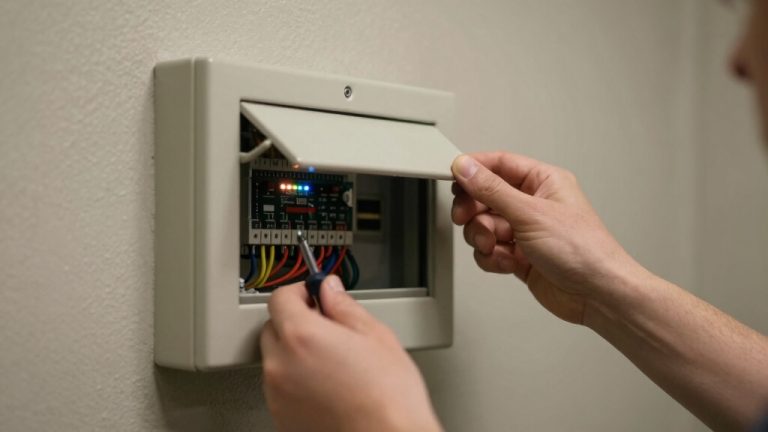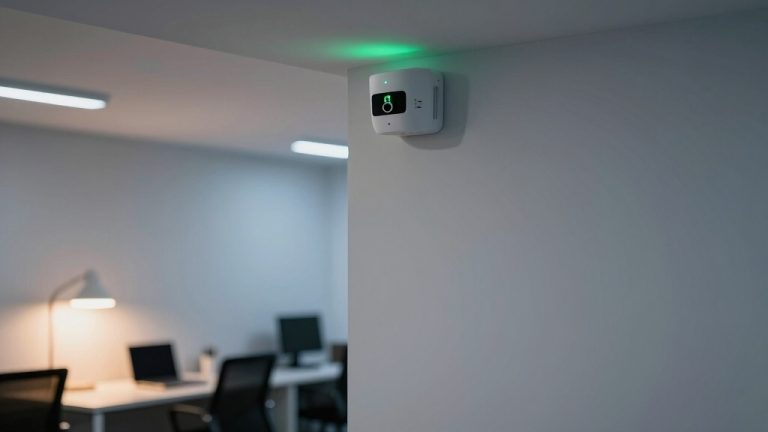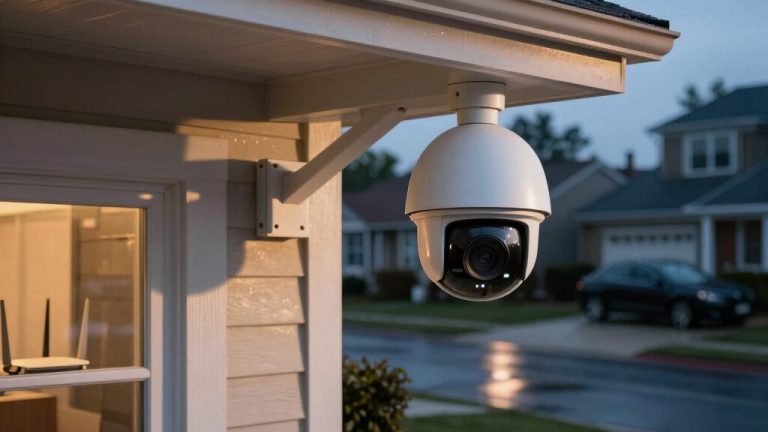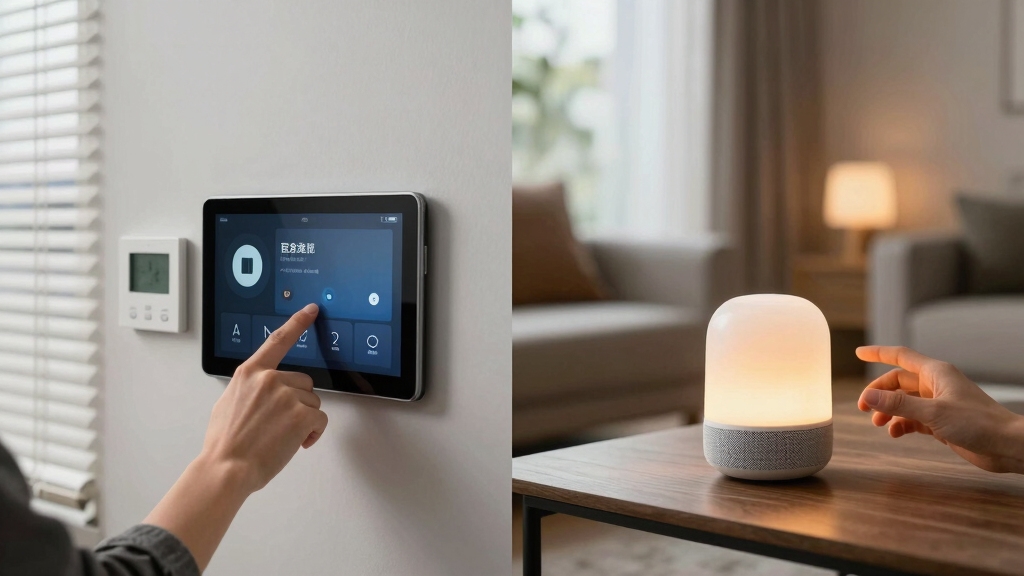

You’ll find home automation relies on preset rules and local controls to execute tasks predictably without internet dependence. This ensures reliability and energy efficiency.
In contrast, smart homes use AI and internet connectivity to adapt dynamically to your habits. They offer remote control and personalized adjustments.
Both have unique strengths: dependable automation versus flexible, personalized experiences. Understanding these distinctions helps you choose the right system or combine both for peak convenience, security, and efficiency.
Explore further to see how.
Key Takeaways
- Home automation relies on preset rules and local control, ensuring predictable, reliable task execution without internet dependency.
- Smart homes use AI and IoT for dynamic, real-time adaptation and remote control via cloud-connected apps or voice commands.
- Home automation typically uses wired connections and professional installation, while smart homes favor wireless protocols and cloud integration.
- Home automation excels in security and continuous operation during outages; smart homes offer enhanced convenience with remote monitoring and customization.
- Choosing between them depends on desired control (predictable vs adaptive), network reliance, installation complexity, and budget considerations.
Key Differences at a Glance between Home Automation & Smart Home
| Feature | Home Automation | Smart Home |
|---|---|---|
| Control System | Preset rules and schedules | AI-driven and adaptive control |
| Connectivity | Local or wired (works without internet) | Internet-based (WiFi, cloud, IoT) |
| Flexibility | Fixed and predictable actions | Dynamic and personalized responses |
| User Interaction | Limited manual changes after setup | Remote control via apps and voice assistants |
| Reliability | Highly reliable, even during outages | Depends on internet connectivity |
| Installation | Often complex, may require professionals | Easier, often wireless and DIY-friendly |
| Integration | Focused system with limited device interaction | Fully interconnected ecosystem |
| Best For | Consistent automation and security | Convenience, customization, and smart living |
What Is Home Automation and How Does It Work?
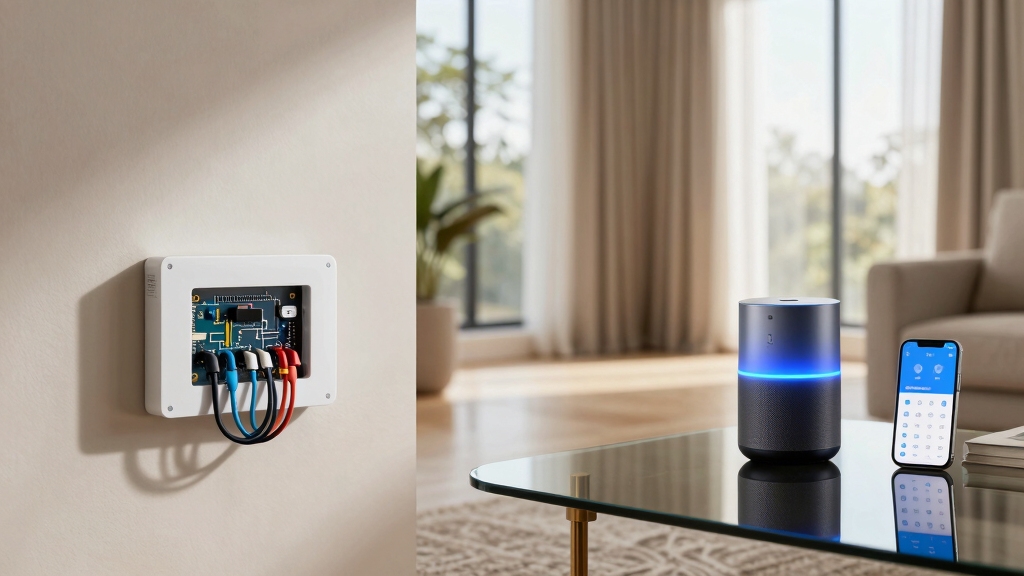
Although you mightn’t realize it, home automation plays a crucial role in simplifying everyday tasks by automating specific functions such as lighting, thermostats, and security systems through a centralized platform.
Home automation streamlines daily life by controlling lighting, thermostats, and security from a single platform.
You set predefined rules or schedules that trigger actions without manual input, like lights turning on when you enter a room or the thermostat adjusting at specific times.
This system often relies on wired electrical connections or Ethernet, ensuring reliable operation without internet dependency.
Typically installed by professionals, home automation uses sensors and timers to execute tasks consistently, improving energy efficiency and convenience.
While it lacks inter-device communication seen in more advanced setups, its focused, task-specific automation provides a secure and dependable way to manage essential household functions automatically.
For enhanced safety integration, home automation systems can incorporate hardwired detectors to ensure continuous power and reliable alerts during emergencies.
What Is a Smart Home and How Does It Work?
How exactly does a smart home function to enhance your living environment? It creates an interconnected ecosystem where devices, systems, and appliances communicate seamlessly via the internet, using AI and IoT technologies.
This network enables you to control and customize your home remotely through apps or voice commands, improving convenience and efficiency.
Key features include:
Real-time data sharing and contextual adaptation powered by AI for personalized experiences.
Integration of diverse devices like thermostats, lights, and locks into unified modes (e.g., “Movie Mode”).
Dynamic responsiveness, allowing overrides and adjustments beyond preset schedules.
Wireless systems often use IP-based connectivity for easier integration and remote monitoring.
Key Differences Between Smart Homes and Home Automation
When comparing smart homes and home automation, you’ll find distinct differences in connectivity and functionality that shape how each system operates.
Smart homes and home automation differ significantly in connectivity and functionality, influencing their operational approach.
Home automation primarily uses wired connections and local networks, enabling preset tasks like lighting or climate control without internet dependency. It focuses on predefined rules, offering reliable, secure automation based on schedules or sensor triggers.
In contrast, smart homes rely on wireless technologies like WiFi, Bluetooth, and Z-Wave, along with cloud services to interconnect devices. This allows real-time communication and remote control via apps or voice commands.
This creates a dynamic environment where AI adapts settings contextually. While home automation guarantees consistent local operation, smart homes provide a broader ecosystem with enhanced personalization but depend on stable internet connectivity.
Many smart home systems also integrate with networked video recorders to enhance security and monitoring capabilities.
How Connectivity Enables Automation and Smart Homes?
Because connectivity forms the backbone of both home automation and smart home systems, understanding its role is essential to grasp how these technologies function.
In home automation, connectivity often relies on wired electrical systems or a central hub, enabling preset tasks without internet dependency.
Conversely, smart homes depend heavily on wireless protocols like WiFi, Bluetooth, and cloud servers. This allows devices to interconnect and share real-time data.
You should note these key connectivity aspects:
- Home automation guarantees local, reliable operation via wired or hub-based links.
- Smart homes create a unified device ecosystem through internet-based communication.
- Cloud integration in smart homes supports remote access and dynamic device collaboration.
Additionally, smart thermostats use built-in sensors to continuously monitor ambient conditions and optimize system performance through adaptive learning.
This connectivity difference shapes how each system communicates, operates, and adapts within your living environment.
Functionality: Pre-Set Rules Vs. AI Adaptation
When it comes to home automation, many people rely on predefined rules. You know, the kind that triggers specific actions based on schedules or sensors? This setup gives you predictable and consistent outcomes, which is super reassuring.
On the flip side, smart homes take it a step further by using AI. This means they can analyze your habits and adapt dynamically to your behavior. So, instead of just following a set schedule, your smart home gets to know you better over time, offering personalized control that evolves as you do.
Understanding this difference really shines a light on the trade-off between reliability and flexibility in managing your living space. It’s all about choosing what works best for you!
Passive alarm systems, which rely on always-on sensors, provide continuous monitoring without manual input, emphasizing reliability through automation.
Predefined Logic Automation
Although both home automation and smart home systems aim to simplify daily tasks, they differ fundamentally in how they handle automation logic.
Home automation relies on predefined rules, fixed conditions you set beforehand, to trigger actions like turning lights on at sunset. You program these rules, and the system executes them consistently without deviation.
Smart homes, however, extend beyond preset commands by learning preferences, but that’s part of AI-driven control, which we’ll cover later.
In home automation, predefined logic means:
- Actions occur based on scheduled or sensor-triggered events you define.
- The system operates independently of internet connectivity.
- It offers predictable performance but lacks adaptation to unexpected changes.
Low voltage wiring is often used in home automation systems to ensure safe and reliable connections for sensors and controls.
AI-Driven Dynamic Control
While predefined logic in home automation delivers consistent and reliable task execution, it lacks the flexibility to adjust to changing conditions or user behavior.
You rely on preset schedules and triggers that execute tasks uniformly, regardless of contextual shifts.
In contrast, AI-driven dynamic control in smart homes adapts in real time by analyzing patterns and environmental variables, tailoring responses to your habits.
This approach enables personalized adjustments, such as modifying lighting or climate based on occupancy trends or external weather changes without manual intervention.
However, AI adaptation requires continuous data processing and connectivity, introducing complexity and potential privacy concerns.
Ultimately, you gain enhanced responsiveness and customization with AI-driven systems.
Preset rules guarantee predictability and simplicity, highlighting a fundamental functional divergence between traditional home automation and smart home technologies.
In fact, integrating motion detection capabilities from smart security devices can further enhance AI-driven responsiveness by providing real-time environmental data.
Adaptation Versus Predictability
Because home automation relies on pre-set rules, it delivers consistent and predictable task execution without deviation. When you set specific triggers or schedules, the system executes actions exactly as programmed, guaranteeing reliability and stability.
Conversely, smart homes utilize AI to adapt dynamically to your habits and environment, offering a more responsive experience.
Consider these differences:
Home automation: predefined scenes activate at set times or sensor triggers, offering stability.
Smart homes: AI learns your preferences, adjusting lighting or temperature contextually.
Predictability vs. adaptation: automation guarantees uniformity; AI enables personalized, evolving control.
Understanding this balance helps you decide if you prefer dependable routine operations or a system that evolves with your lifestyle.
Both approaches serve distinct needs within modern home technology.
Additionally, integrating AI analytics in smart homes allows for enhanced automation capabilities beyond simple pre-set rules.
Benefits of Home Automation and Smart Homes for Energy, Security, and Convenience
Frequently, people underestimate how markedly home automation and smart home technologies improve energy management, security, and everyday convenience.
With home automation, you can schedule lighting and HVAC to optimize energy use, reducing waste through preset scenes and sensor triggers without needing internet connectivity.
This reliability guarantees consistent energy savings and security functions like automated locks and alarms.
On the other hand, smart homes offer remote access and real-time control through apps and voice commands, enabling you to customize settings dynamically and receive instant security alerts.
Their interconnected devices collaborate to adapt to your routines, enhancing convenience and responsiveness.
Smart thermostats with adaptive learning can save families approximately $100 annually by optimizing energy use based on occupancy and climate.
When to Choose Home Automation or Smart Home Systems?
Understanding the distinct advantages of home automation and smart home systems helps you determine which approach best suits your needs and environment.
Recognizing the unique benefits of home automation versus smart homes guides you to the ideal solution for your lifestyle.
If you prioritize reliability without internet dependence, home automation fits well, offering preset task automation with local control.
Conversely, if you want adaptive, remote control with seamless device interaction, smart homes deliver broader functionality through AI and IoT connectivity.
Consider these factors:
- Network dependence: Choose home automation for offline reliability; smart homes for cloud-based integration.
- Control preferences: Opt for automation when preset schedules suffice; smart homes for dynamic, personalized control.
- Installation complexity and budget: Home automation often requires professional setup but less ongoing management. Smart homes may need more initial effort but offer greater flexibility.
Evaluating these aspects guarantees your system aligns with your lifestyle and technical environment. Additionally, leveraging AI and sensor fusion in smart systems can significantly enhance detection and automation accuracy.
How to Combine Automation and Smart Homes for Best Results?
When you combine home automation with smart home technologies, you create a system that leverages the reliability of preset, local controls alongside the adaptability and remote access offered by AI-driven connectivity.
To optimize results, start by establishing core automation routines, like lighting schedules or HVAC controls, that operate independently of internet connectivity.
Then, integrate smart devices capable of real-time data exchange and AI-driven personalization, enabling dynamic adjustments based on occupancy or user behavior.
Use a unified platform supporting both wired automation and wireless smart devices to guarantee seamless interoperability.
This hybrid approach maximizes energy efficiency, security, and user convenience by balancing dependable local triggers with flexible remote management.
Ultimately, combining the two lets you enjoy uninterrupted baseline functionality while benefiting from intuitive, context-aware enhancements.
Frequently Asked Questions
Can Home Automation Systems Work Without Professional Installation?
Yes, you can install some home automation systems yourself, especially basic ones controlling lights or thermostats. Many devices come with user-friendly instructions and plug-and-play features.
However, complex setups involving wired connections or integration with HVAC and security often require professional installation to guarantee reliability and safety.
You should evaluate the system’s complexity, your technical skills, and the need for centralized control before deciding whether to DIY or hire an expert.
What Are Common Security Risks Specific to Smart Homes?
You face common security risks like unauthorized access through weak passwords or unpatched firmware in smart homes.
Cyber attackers can exploit vulnerabilities in WiFi, Bluetooth, or cloud services to intercept data or control devices remotely.
Privacy concerns arise from constant data collection and sharing with third-party servers.
You should regularly update software, use strong authentication, and segment your network to reduce these risks and protect your smart home ecosystem.
How Do Firmware Updates Affect Home Automation Devices?
Firmware updates enhance your home automation devices by fixing bugs, patching security vulnerabilities, and improving performance.
They guarantee your systems run smoothly and securely, preventing potential exploits.
However, if updates fail or are delayed, your devices might become unstable or exposed to risks.
You should regularly check for and install updates to maintain reliability, compatibility with new features, and protect your automated tasks from disruptions or cyber threats.
Are There Compatibility Issues Between Different Smart Home Brands?
Yes, you’ll often face compatibility issues between different smart home brands because each uses specific protocols like Zigbee, Z-Wave, or proprietary standards.
While some brands support multiple protocols or integrate via platforms like Amazon Alexa or Google Home, others don’t interoperate smoothly.
To avoid frustration, you should check device compatibility, supported ecosystems, and communication standards before purchasing.
This ensures your smart home devices work seamlessly together.
What Is the Average Lifespan of Home Automation Hardware?
Think of home automation hardware like a reliable workhorse. It typically lasts about 7 to 10 years.
Its lifespan depends on build quality, usage intensity, and environmental factors like humidity or power surges.
Regular maintenance, firmware updates, and avoiding physical damage can extend its life. Since technology evolves rapidly, you might upgrade sooner for better features.
Solid hardware often keeps performing well throughout that timeframe.
From Control to Intuition: The Evolution of Smart Homes
Maneuvering the landscape of home automation and smart homes is like choosing between a skilled conductor and an intuitive musician.
Home automation follows precise, pre-set rules, orchestrating your environment with reliable predictability. In contrast, smart homes learn and adapt, responding like a living organism to your habits.
Understanding their unique rhythms helps you craft a space that’s both efficient and responsive. By blending these technologies, you create a seamless symphony of comfort, security, and energy savings.