
If your smoke alarm goes off unexpectedly, start by ventilating the area and addressing any power issues or battery changes.
For battery-powered alarms, remove the battery, hold the test button for 15–30 seconds to clear residual charge, then reinsert it and test.
For hardwired units, cut power, disconnect and remove the battery, discharge power with the test button, reconnect, and restore power.
Silencing nuisance beeps and regular monthly testing help keep your alarm reliable. Discover how to manage false alarms and ensure safety effectively.
Key Takeaways
- Ventilate the area thoroughly to clear smoke, steam, or cooking odors before resetting the alarm.
- For battery-powered alarms, remove the battery, hold the test button 15–30 seconds, then reinsert the battery and test.
- For hardwired alarms, turn off the main breaker, disconnect power and battery, hold the test button 15 seconds, then reconnect and restore power.
- Clean the alarm interior and exterior to remove dust, spider webs, or debris causing false alarms before resetting.
- Test the alarm after resetting by pressing the test button to ensure it beeps loudly and functions correctly.
Why Smoke Alarms Go Off and When to Reset?
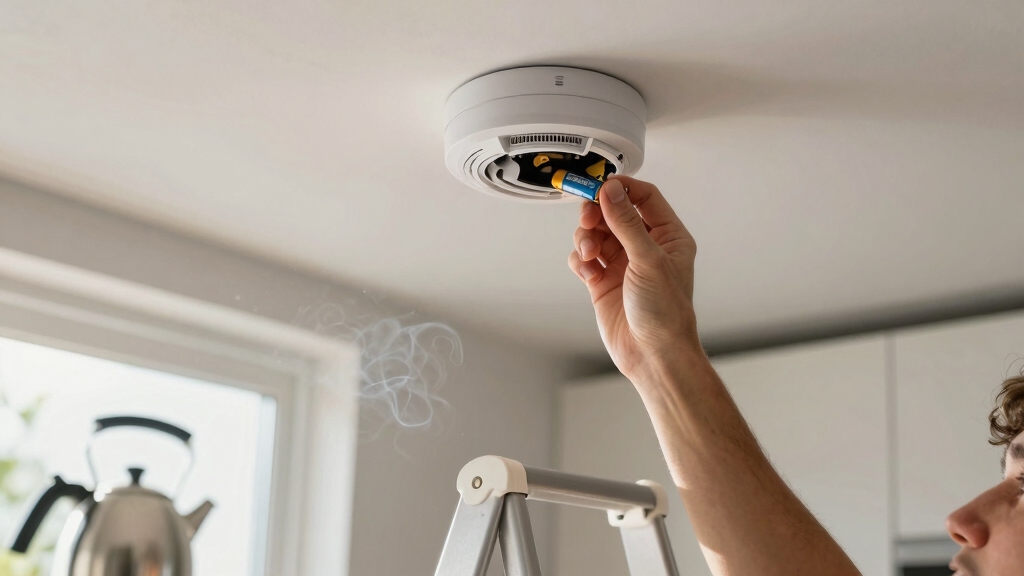
Why do smoke alarms go off unexpectedly, and when should you reset them? Smoke alarms may trigger due to residual charge after replacing or reconnecting batteries or when brief power interruptions occur.
Smoke alarms can sound unexpectedly due to residual battery charge or brief power interruptions.
Environmental factors like cooking smoke, steam, humidity, or excess airflow near the unit can cause nuisance alarms. Dust buildup inside the sensor also leads to false activations.
You should reset the alarm after ventilating the area thoroughly to clear smoke or steam or once you’ve addressed power issues. Additionally, cleaning the unit helps prevent false alarms caused by dust.
Resetting guarantees the alarm returns to standby mode and functions correctly. Avoid resetting immediately without addressing these causes, as doing so may result in repeated false alarms or malfunction.
Regularly testing the alarm monthly using the built-in test button is essential to ensure proper function and prevent malfunctions and false alarms.
How to Reset a Battery-Powered Smoke Alarm?
After addressing any environmental factors or power issues that caused your smoke alarm to sound, you’ll need to reset your battery-powered unit to ensure it returns to standby mode.
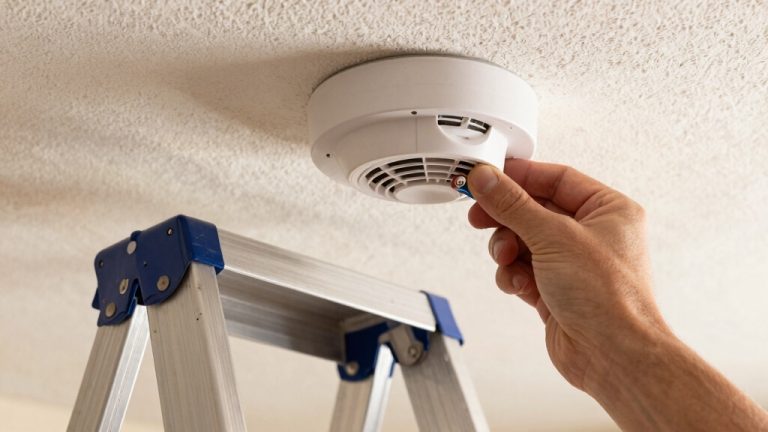
Start by removing the battery from the alarm. Press and hold the test button for 15 to 30 seconds to discharge any residual power inside.
Reinsert the battery securely, then press the test button again. You should hear a loud beep confirming the alarm is functioning correctly.
If the alarm continues to chirp or sound, make certain the area is well-ventilated to clear any lingering smoke or steam. Cleaning the unit’s exterior with a microfiber cloth or compressed air can prevent false alarms.
This reset process ensures your smoke alarm accurately monitors your environment and remains ready to alert you. Using the built-in test button regularly can also help identify the specific unit triggering alerts and maintain alarm reliability.
How to Safely Reset a Hardwired Smoke Alarm?
Begin by turning off the main circuit breaker to cut power to your hardwired smoke alarm, ensuring your safety during the reset process.
Next, carefully unmount the alarm from its bracket and disconnect the power cable.
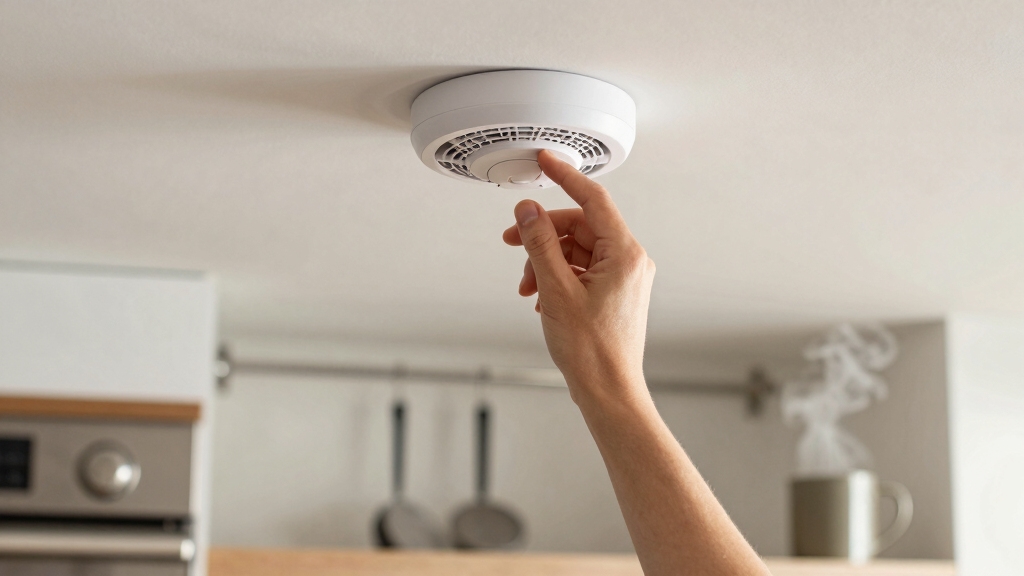
Remove the battery, then press and hold the test button for about 15 seconds to discharge any residual power and silence the unit.
Reconnect the power cable and reinsert the battery, making sure the compartment is secure.
Remount the alarm onto its bracket.
Finally, restore power by switching the circuit breaker back on.
Listen for a single chirp, which confirms the reset and power restoration.
To verify functionality, press the test button briefly; a loud beep indicates the alarm is working correctly.
Remember to replace your Kidde smoke alarm every 10 years from the manufacture date to ensure reliable detection and safety.
Handling Smoke Alarm False Alarms and Nuisance Beeps
False alarms and nuisance beeps can throw off your day and drain your smoke alarm’s battery if left unchecked. Start by silencing the alarm with a brief press of the test or silence button.
False alarms disrupt your day and drain batteries—silence them quickly with a brief press of the test or silence button.
Check for common triggers like cooking smoke, shower steam, or exhaust fans within three feet. Ventilate the area thoroughly by opening windows or using fans to clear lingering particles.
Inspect your alarm for dust or spider webs, which can cause false activations; clean it gently with a microfiber cloth or compressed air. Also, ensure the environment is within the ideal temperature range (40-95°F) and free of excess humidity or airflow near the unit.
Address these factors promptly to prevent repeated false alarms and preserve your alarm’s reliability and battery life. Regularly testing the detector at least once a month helps ensure proper operation and prevents unexpected alerts from dust and debris.
Testing Your Smoke Alarm After Reset
Press the test button briefly to confirm your smoke alarm has returned to standby mode and is functioning properly. A loud, clear beep indicates the unit is ready to detect smoke and alert you effectively.
If your alarm is hardwired, make sure it’s connected to AC power and has a fresh battery installed before testing. Listen for a single chirp, which confirms power restoration. If you don’t hear these signals, repeat the reset steps or replace the battery.
Testing after reset verifies that any residual charge is cleared and the sensor is clean. Regular testing guarantees your smoke alarm functions reliably in emergencies, giving you peace of mind. If problems persist, contact a professional to inspect or replace the unit.
Remember to replace batteries annually or immediately on low-battery warnings for continuous protection.
Frequently Asked Questions
How Often Should I Replace My Smoke Alarm Batteries?
You should replace your smoke alarm batteries at least once a year to guarantee reliable operation.
Some experts recommend doing this when you change your clocks for daylight saving time.
If your alarm chirps, that’s a clear sign the battery’s low and needs immediate replacement.
Always use fresh, high-quality batteries, and test the alarm after installing them.
Regular battery replacement keeps your smoke alarm ready to protect you and your family.
Can I Use Any Type of Battery for My Smoke Alarm?
You shouldn’t use just any battery for your smoke alarm. Always check the manufacturer’s recommendations and use the specified battery type, typically 9-volt or AA alkaline batteries.
Using the wrong battery can cause malfunctions or false alarms. Stick to high-quality, fresh batteries to guarantee reliable operation.
If you replace batteries, press the test button afterward to confirm the alarm functions properly and avoid unnecessary resets or failures.
What Is the Typical Lifespan of a Smoke Alarm Unit?
You can expect your smoke alarm to last about 8 to 10 years. After that, its sensors degrade and become less reliable.
Manufacturers usually print the manufacture date on the unit’s back, so check that to track its age. Replace the entire alarm once it hits that lifespan, not just the batteries.
Keeping your smoke alarm updated guarantees it’ll respond accurately in emergencies, providing vital early warning and safety.
How Do I Dispose of an Old Smoke Alarm Safely?
About 90% of smoke alarms contain small amounts of radioactive material, so you can’t just toss them in the trash.
To dispose of your old smoke alarm safely, check local hazardous waste facilities or recycling centers that accept smoke detectors.
Remove the battery first, then follow guidelines for radioactive waste disposal.
Contact your municipality if unsure. Proper disposal protects the environment and complies with safety regulations.
Are Smoke Alarms Affected by Extreme Temperatures?
Yes, smoke alarms are affected by extreme temperatures. If it gets too hot or too cold, outside the recommended range of 40-95°F, the sensor may malfunction or trigger false alarms.
High heat can damage internal components. Cold can reduce battery efficiency. You should avoid placing alarms near heaters, air conditioners, or drafty windows to guarantee reliable operation and prevent nuisance alerts caused by temperature fluctuations.
From Chaos to Calm: Your Alarm Survival Guide
So, next time your smoke alarm screams like an opera diva at 2 a.m., don’t just glare at it. Reset it like the professional you are.
Whether battery-powered or hardwired, a quick reset keeps your home safe without the drama. Remember, false alarms are just your smoke detector’s way of auditioning for attention.
Test it afterward, or risk living with an overenthusiastic, shrieking metal friend. Stay sharp, stay safe!