
You should upgrade your garage door opener to rolling code technology, which generates a unique encrypted signal each time to prevent replay and brute force attacks.
Add smart security features like real-time Wi-Fi alerts, motion sensors, and lockdown modes to monitor activity and block unauthorized access.
Physically secure emergency release cords and reinforce doors against tampering.
Also, protect your network with strong passwords and two-factor authentication.
These combined steps greatly enhance your garage door’s safety and reliability.
Discover more ways to strengthen your system’s defenses.
Key Takeaways
- Upgrade fixed-code remotes to rolling code openers to prevent code grabbing and replay attacks.
- Use motion sensors and obstacle detection to trigger alerts and prevent forced entry attempts.
- Secure emergency release cords with protective covers or zip ties to block unauthorized access.
- Enable Wi-Fi alerts and smart notifications for real-time monitoring of door status and unusual activity.
- Protect network security with strong passwords, two-factor authentication, and regular firmware updates.
Why Traditional Garage Door Openers Are Vulnerable?
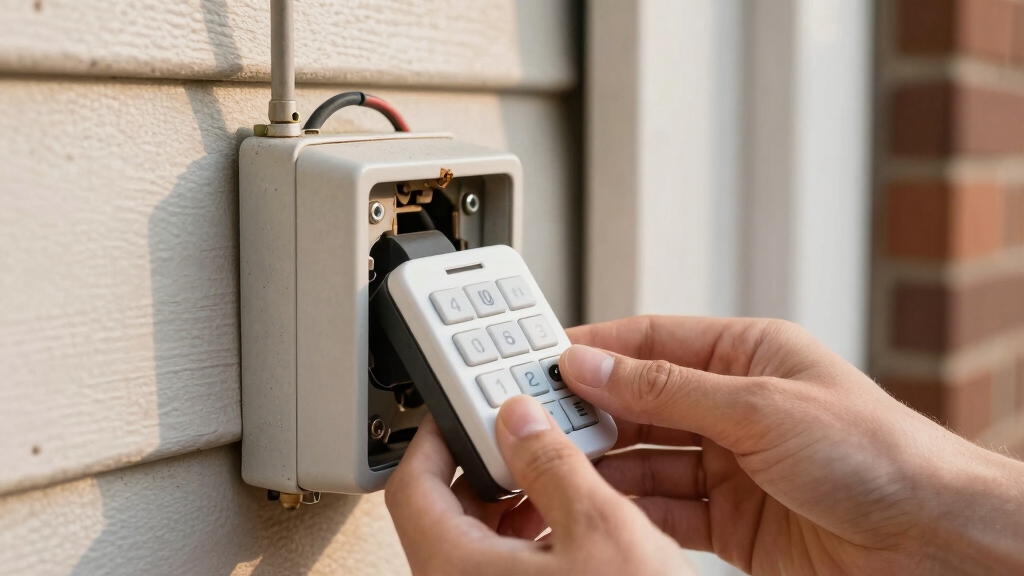
When you rely on traditional garage door openers, you leave your security open to several well-known vulnerabilities.
These systems use fixed code remotes that broadcast an identical signal every time you press the button. Hackers can intercept this signal from up to 100 meters away.
Without encryption, the signals are susceptible to code grabbing and replay attacks, allowing unauthorized access. Additionally, the emergency release cord can be manipulated from outside using simple tools like a coat hanger, bypassing electronic security entirely.
Wireless signals on older openers are vulnerable to hacking attempts, brute force, or jamming, compromising system reliability. Furthermore, outdated models often share access codes with neighbors, increasing the risk of accidental or malicious entry.
Understanding these vulnerabilities is essential to safeguarding your property against intrusion. It is also important to recognize that bypassing garage door sensors can create significant safety and legal risks, and should only be done temporarily and with caution.
How Rolling Code Technology Improves Garage Door Security?
You know how important it’s to keep your garage secure, right? Well, rolling code technology is a game-changer for that. Every time you use your remote, it creates a unique code. This means that replay attacks—where someone tries to use a previous code to gain access—are pretty much a thing of the past.
And it gets better! This system uses military-grade encryption, so your transmissions stay confidential and are tough to intercept. With trillions of possible code combinations, the chances of someone getting unauthorized access are incredibly slim.
It’s a smart way to keep your garage safe and give you peace of mind. Regular firmware updates also help maintain security by patching vulnerabilities and preventing hacking through smart home integrations.
Enhanced Signal Encryption
Although traditional garage door openers transmit fixed codes vulnerable to interception and replay attacks, rolling code technology enhances security by dynamically generating a unique encrypted code with each remote activation.
This approach employs military-grade encryption algorithms that guarantee each signal is distinct and unpredictable. This prevents unauthorized code duplication. You benefit from a robust system that resists hacking attempts and signal interception.
| Feature | Benefit |
|---|---|
| Dynamic Code Generation | Prevents reuse of captured signals |
| Military-Grade Encryption | Secures communication integrity |
| Trillions of Combinations | Drastically reduces brute force risk |
Additionally, pairing rolling code technology with smart home automation can provide seamless integration and further enhance your garage door security system.
Replay Attack Prevention
Building on the dynamic encryption methods discussed earlier, rolling code technology directly addresses replay attacks by ensuring that every transmitted signal is unique and valid only once.
When you press your remote, it generates a new, encrypted code synchronized with the garage door receiver. If an attacker captures this signal, it becomes useless because the system rejects repeated codes.
This eliminates the primary vulnerability of fixed-code systems, where intercepted signals can be replayed to gain unauthorized access.
Rolling codes employ military-grade encryption algorithms to maintain synchronization and prevent code prediction or duplication.
In addition to cryptographic protections, integrating electronic lock systems can further enhance garage door security by eliminating traditional mechanical vulnerabilities.
Trillions Code Combinations
Millions of unique code combinations form the foundation of rolling code technology, drastically reducing the risk of unauthorized garage door access. Each time you activate your remote, it generates a new, unpredictable code from trillions of possibilities. This makes intercepted signals useless for future attempts.
This dynamic coding prevents replay attacks and code grabbing, vulnerabilities common in fixed-code systems. Military-grade encryption secures the transmission, ensuring that even if a signal is intercepted, it can’t be decrypted or replicated.
Tri-Tran+ remotes exemplify this with trillions of code variants, offering robust protection compliant with ACMA standards. By relying on these vast combinations and encrypted communication, you markedly enhance your garage door’s defense against hacking and unauthorized entry.
This secures your property with cutting-edge technology. NVR systems, known for their advanced encryption and network security features, similarly utilize strong protections to safeguard data transmissions in surveillance applications.
Key Smart Security Features for Your Garage Door Opener
You’ll love the convenience of Wi-Fi alerts! They instantly notify you if your garage door opens, closes, or stays open longer than expected. This feature really boosts your real-time security monitoring, giving you peace of mind.
And let’s not forget about motion sensors! These handy devices add an essential layer of safety by detecting obstacles. If something gets in the way, they can reverse the door, helping to prevent forced entry or any injuries.
Regular professional servicing every 1 to 2 years is recommended to ensure all safety features, including sensors, continue to function correctly.
Wi-Fi Alert Benefits
Frequently, Wi-Fi alerts serve as a critical line of defense by instantly notifying you via app or email when your garage door opens, closes, or remains open longer than expected.
This real-time information lets you act swiftly to secure your property, deterring potential intrusions. By leveraging these alerts, you maintain continuous oversight without physical presence.
Key benefits include:
Immediate awareness of unauthorized or accidental door activity, enhancing response time. Remote monitoring capability allows you to verify door status anytime, anywhere.
Integration with smart home systems for automated security protocols upon alert.
Using Wi-Fi alerts complements other security layers, providing a transparent and proactive approach to garage door safety. You reduce vulnerability windows and increase control over access events with precision and reliability.
These alerts function by utilizing motion detection hardware that continuously scans for movement and sends notifications selectively based on user-configured settings, ensuring timely and relevant motion alerts.
Motion Sensor Safety
Building on the advantages of Wi-Fi alerts, motion sensor safety adds a vital layer of protection by actively detecting obstacles or movement near your garage door.
These sensors use infrared or ultrasonic technology to monitor the door’s path, triggering an immediate stop or reversal if any motion is detected.
This prevents forced entry attempts that rely on physical obstruction and protects against accidental damage or injury.
Additionally, motion sensors integrate with your smart opener system to send real-time alerts when unexpected movement occurs, enabling prompt response to potential security breaches.
To maximize effectiveness, make sure your sensors are correctly aligned, clean, and regularly tested.
Proper calibration and maintenance of motion sensors are essential for reliable performance and enhanced security of your garage access.
Regular sensor alignment checks and cleaning help prevent sensor malfunction due to obstructions or misplacement, ensuring consistent operation.
Stay Informed With Smart Alerts and Lockdown Modes
Monitoring your garage door status through smart alerts keeps you instantly aware of any activity or security concerns. By enabling real-time notifications via your smartphone app or email, you can promptly respond to unusual events and prevent unauthorized access.
Stay informed with real-time smart alerts to quickly address garage door activity and enhance security.
Additionally, lockdown modes enhance security by temporarily disabling all remote and keypad controls, effectively blocking remote exploitation during heightened risk periods.
Key features to utilize include:
- Instant alerts for open, close, or prolonged open status to monitor door activity continuously.
- Vacation or lockdown modes to suspend remote operations and safeguard against hacking attempts.
- Integration with motion sensors and obstacle detection to trigger automated responses when forced entry is suspected.
Leverage these smart capabilities to maintain tight control over your garage door’s security posture, and ensure regular maintenance to keep sensors and wiring in optimal condition for reliable operation.
Physical Steps to Prevent Garage Door Tampering and Emergency Release Access
Although smart technology enhances security, you must also implement physical measures to prevent tampering and unauthorized emergency release access.
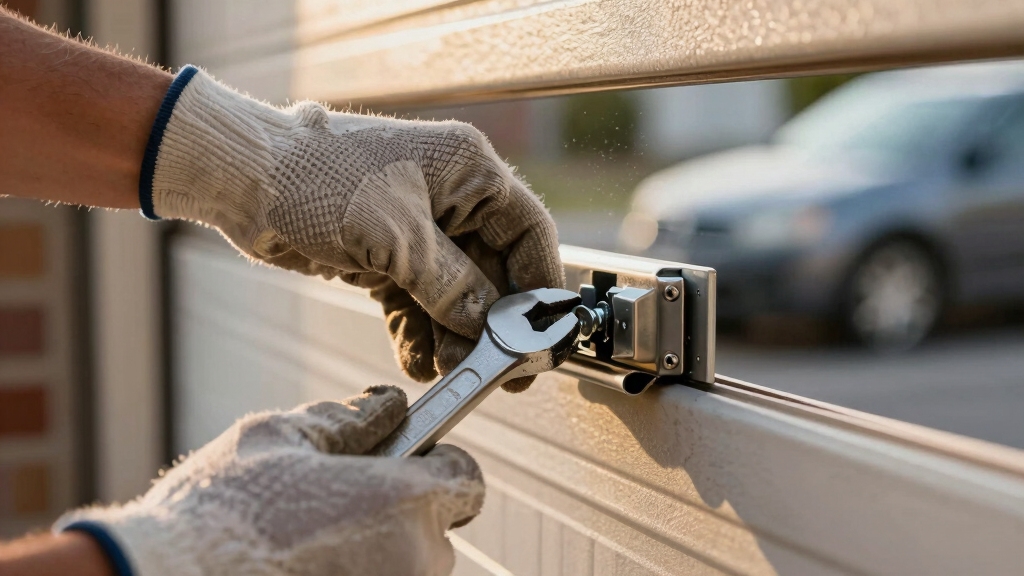
First, shield or disable the external emergency release cord, which can be manipulated with simple tools, by installing a protective cover or securing it with a zip tie to block access.
Supplement your opener with mechanical locks, deadbolts, slide locks, or garage door defenders to reinforce the door’s resistance to forced entry.
Cover garage windows to eliminate interior visibility and deter targeting.
Strengthen structural components using robust tracks, wind-rated panels, and heavy-duty hinges to resist prying attempts.
These physical reinforcements work cohesively with your smart system, reducing vulnerabilities inherent in manual overrides and external access points.
This approach maintains a secure barrier against tampering and unauthorized emergency release exploitation.
For added protection, consider installing high-security deadbolts to further resist picking and bumping attempts.
Network Security Tips for Your Smart Garage Opener
When you connect your garage opener to the internet, securing your network becomes critical to prevent unauthorized access. Your smart opener relies on Wi-Fi, so weak network defenses can expose your system to hacking, brute force, or replay attacks.
To safeguard your device, follow these essential network security practices:
Use a unique, complex Wi-Fi password. Consider setting up a separate network exclusively for IoT devices like your garage opener.
Enable two-factor authentication on the mobile app controlling your opener. This adds an extra security layer.
Regularly update your router’s firmware and change app passwords every quarter. This helps patch vulnerabilities and reduces breach risk.
Employing these measures guarantees your smart garage opener remains protected against cyber threats and unauthorized control.
Upgrading and Maintaining Your Garage Door Opener
Beyond securing your network, maintaining and upgrading your garage door opener guarantees continued reliability and protection.
Regularly lubricate moving parts, inspect tracks for damage, and clean sensors to ensure smooth operation and prevent mechanical failure.
Update your opener’s firmware promptly to patch vulnerabilities and enhance security features.
If you’re still using a fixed-code system, upgrade to a rolling code opener to eliminate replay attacks and unauthorized access.
Schedule professional servicing to calibrate sensors, verify auto-reverse functionality, and assess physical components.
Consider integrating smart notifications to alert you of forced entry attempts or prolonged door openings.
By proactively maintaining and upgrading your garage door opener, you strengthen both its mechanical integrity and digital defenses.
This reduces the risk of compromise and ensures seamless, secure operation over time.
Protecting Your Garage Door: Best Practices and Next Steps
Securing your garage door requires a thorough approach that combines technology, physical barriers, and network security measures.
Effective garage door security blends advanced technology, physical reinforcements, and robust network protection.
You need to address vulnerabilities from all angles to prevent unauthorized access and signal interception. Start by upgrading to a rolling code opener if you haven’t already. This ensures encrypted transmissions that foil replay attacks.
Physically reinforce your door with additional locks and shield the emergency release mechanism to block tool-based tampering. On the network side, maintain strict Wi-Fi hygiene by using strong, unique passwords and isolating your garage devices on a separate network.
Key best practices include:
- Installing smart opener features like auto-lock and motion detection to deter forced entry.
- Regularly updating firmware and changing access codes to maintain security integrity.
- Physically securing the door with supplementary locks and tamper-proofing emergency releases.
Following these steps bolsters your garage’s security posture markedly.
Frequently Asked Questions
Can Pets Accidentally Trigger My Smart Garage Door Opener?
Yes, pets can accidentally trigger your smart garage door opener if motion sensors or obstacle detection systems are sensitive enough to detect small movements.
To prevent this, you should adjust sensor sensitivity settings or position sensors to avoid common pet activity areas.
Some systems allow you to create exclusion zones within the app.
Regularly calibrate sensors to differentiate between pets and humans, ensuring accurate detection and preventing unintended door activation.
How Do Weather Conditions Affect Garage Door Opener Performance?
Weather can be a bit of a challenge for your garage door opener’s performance.
Extreme cold may thicken lubricants and stiffen components, slowing operation.
Moisture from rain or humidity can cause corrosion or sensor misalignment, leading to malfunctions.
High winds might trigger safety reversals or strain the mechanism.
You’ll want to ensure regular maintenance, weatherproof seals, and timely lubrication to keep your opener running smoothly despite nature’s whims.
Are There Specific Brands Known for Better Garage Door Security?
You’ll find brands like LiftMaster, Chamberlain, and Genie leading in garage door security. They incorporate rolling code technology with military-grade encryption, preventing code grabbing and replay attacks.
Their smart openers offer advanced features like motion sensors, auto-lock, and Wi-Fi alerts. Choosing these brands guarantees compliance with industry standards and access to regular firmware updates.
This helps you maintain robust protection against hacking, physical tampering, and unauthorized entry attempts.
How Long Do Garage Door Opener Batteries Typically Last?
Batteries in garage door openers typically last between one to two years, depending on usage and battery type.
Think of them as the heart of your opener. Without a steady power pulse, performance weakens.
Alkaline batteries drain faster under heavy use, while lithium variants offer longer life and better temperature tolerance.
To maintain peak function, check and replace batteries annually. This ensures your system stays reliable and secure without unexpected failures.
Can Multiple Users Share Access Without Compromising Security?
Yes, multiple users can share access securely by assigning unique user codes or profiles, especially on smart openers with app-based controls.
You should avoid sharing fixed codes, as they risk interception.
Utilize rolling code technology and enable features like two-factor authentication and vacation modes to limit unauthorized use.
Regularly update access credentials and monitor usage alerts to maintain strict control while allowing multiple authorized users convenient entry.
Lock It Down: Make Your Garage Door Security Unbreakable
Securing your garage door opener is like locking a vault; every layer of protection matters.
By adopting rolling code technology, enabling smart alerts, and reinforcing physical and network security, you drastically reduce vulnerabilities.
Regular upgrades and maintenance keep your system resilient against evolving threats.
Don’t leave your garage exposed; take these precise, proactive steps to safeguard your home with confidence and control.
Ensure your security system remains a robust barrier against intruders.