
Your garage door opens by itself mainly due to wireless interference, faulty remotes, or wiring issues causing false signals. Nearby electronics or neighbors’ remotes can trigger your opener if frequencies overlap.
Damaged wall controls, stuck buttons, or sensor misalignment also cause unintended activation. Electrical surges and environmental factors like heat or moisture stress components, leading to erratic behavior.
Identifying the root cause requires checking remotes, wiring, sensors, and surge protection to restore secure, reliable operation and prevent unwanted openings. Discover more detailed solutions ahead.
Key Takeaways
- Wireless interference from nearby electronics or neighbor remotes can cause unintended garage door openings.
- Stuck or damaged remote buttons and low batteries may continuously send false open signals.
- Faulty or shorted wall control wiring can mimic continuous button presses, triggering random door movements.
- Misaligned or dirty safety sensors can cause erratic door behavior, including spontaneous openings.
- Power surges and circuit board issues may produce unintended commands, causing the door to open by itself.
How Remote Controls Cause Your Garage Door to Open by Itself?
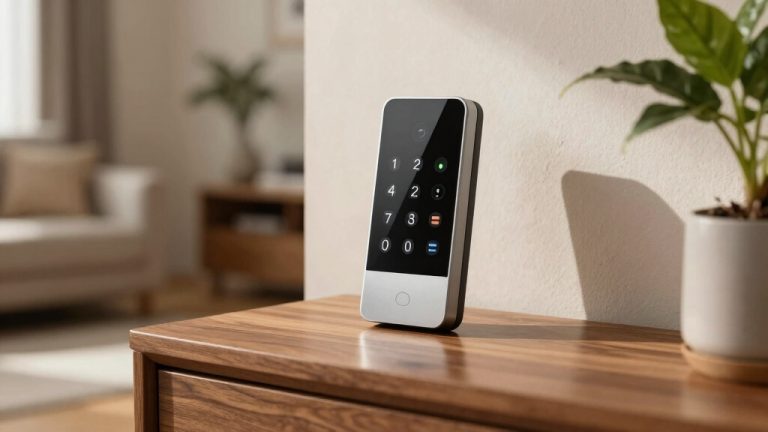
When your garage door opens by itself, remote controls often play a central role in the issue.
Interference from nearby electronics like Wi-Fi routers, baby monitors, or LED lights can disrupt the radio frequency (300-400 MHz) communication between your remote and opener, causing unintended activation.
Ensuring proper sensor alignment can also help prevent false triggers caused by signal disruptions. Multiple remotes in proximity may also create cross-signal interference.
Additionally, a faulty receiver or logic board within the opener can misinterpret stray signals due to electrical surges, aging components, or wiring faults. This can trigger door movement without input. Reprogramming the opener after power outages or part replacements can sometimes resolve these false activations.
Finally, damaged remote units with stuck buttons or moisture exposure can continuously send false signals. Checking and addressing these technical factors will help prevent your garage door from opening unexpectedly.
What to Do If Your Neighbor’s Remote Opens Your Garage Door?
If your neighbor’s remote happens to open your garage door, the first thing you should do is check for any frequency conflicts. You can do this by testing the remotes near each other to see if they interact.
Once you’ve confirmed there’s an issue, the next step is to perform a full memory erase on your garage door opener. After that, reprogram only your authorized remotes, making sure they each have unique codes or dip-switch settings.
This will help eliminate any code overlap and ensure that you have exclusive control over your garage door again. Keep in mind that some services may include trip or dispatch fees, so it’s wise to verify any additional costs if you decide to call a professional locksmith for help.
Identifying Frequency Conflicts
Frequently, garage doors open unexpectedly due to overlapping radio frequencies shared between neighboring openers operating in the 300–390 MHz band. This interference is similar to the challenges faced by RF signal–based detectors that scan overlapping frequency ranges.
You can identify frequency conflicts by observing if your door activates in sync with a neighbor’s arrivals, especially if your opener uses fixed-frequency codes or older DIP-switch systems lacking rolling-code security.
To confirm, disconnect your opener’s power and see if the door still responds to remote signals. Coordinate with neighbors to test their remotes while you watch your door. If their transmitters activate your opener, you’ve found the source.
Dense housing increases this risk. To minimize cross-activation, consider repositioning your opener’s antenna or installing shielding to reduce reception of distant signals.
Additionally, changing the frequency of your garage door opener following manufacturer’s instructions can effectively resolve this interference without replacing your equipment. These steps help isolate your system without reprogramming your remote.
Reprogramming Your Remote
To stop your neighbor’s remote from opening your garage door, you’ll need to clear your opener’s memory and reprogram your devices.
Locate and hold the LEARN/PROGRAM button on your opener head for about 6–10 seconds until the LED blinks rapidly or turns off, erasing all stored remotes and keypads. Using a remote control system compatible with your garage door opener ensures proper synchronization.
Test previous remotes to confirm the memory clear.
Next, press the LEARN button once to enter learn mode, then press each remote button to reprogram with new rolling codes. This step is crucial especially if your garage door opener model is the PDS 800 / PDS800, which has been reported to experience interference issues in certain areas.
Ensure distinct buttons for different doors. For wireless keypads, re-add them with a new multi-digit PIN and verify exclusive control.
This process eliminates unintended activations caused by cross-programmed remotes, restoring secure and reliable garage door operation.
Wiring Issues That Make Your Garage Door Open Unexpectedly
Wiring problems often cause your garage door to open unexpectedly by sending unintended signals to the opener.
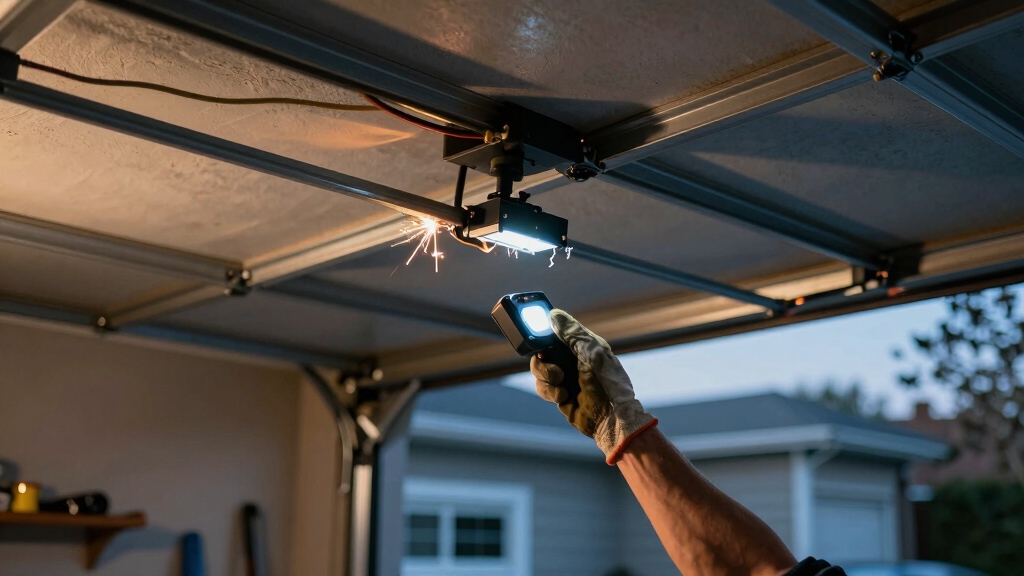
Shorted or damaged low-voltage control wiring, such as bare spots or rodent damage, can simulate a constant wall button press. You should inspect and replace any compromised bell wire rather than rely solely on temporary fixes like electrical tape.
Faulty wall control switches with stuck or corroded contacts also trigger phantom openings. Disconnecting the wall control wires at the opener helps isolate this issue and ensures proper door closer function.
Sensor wiring faults, like cuts, corrosion, or miswiring, can cause erratic door behavior. So check and replace suspect sensor cables.
Finally, examine the opener’s terminal connections and internal wiring for looseness or corrosion. These issues create unstable signals. Inspecting wiring length near the opener button is important to detect compromised insulation. Addressing these wiring faults promptly guarantees reliable, controlled operation.
How Electrical Surges Trigger Your Garage Door to Open?
Sure! Let’s rephrase that in a more conversational tone. You know, electrical surges can really mess with your garage door.
It’s not just lightning strikes, either; things like fluctuations in the power grid or even when big appliances start up can cause these sudden voltage spikes. These surges can also affect other electrical systems that rely on electrical resistance elements similar to those in electric furnaces.
What happens is these surges can send out signals that mimic the ones meant to open your garage door, and before you know it, your door is popping open unexpectedly.
But it doesn’t stop there. These surges can actually damage the circuit board or microprocessor in your garage door opener.
When that happens, you’ll start to see some pretty weird behavior—like your door opening on its own over and over again.
In some cases, faulty wiring caused by these surges can also lead to unexpected door operation, which is a safety concern.
So, what can you do about it? Well, it’s a good idea to put some surge protection in place and to regularly check the circuit board.
Power Surges Impact
Experiencing a sudden voltage spike can cause your garage door opener’s microcontroller to reset unexpectedly. This forces the control board to reboot in an undefined state.
This can trigger unplanned door movements as the system misinterprets transient signals. You might notice false open or close commands due to:
- Transient voltage on control circuits being read as a wall-button signal.
- Power restoration surges causing brief overvoltage that triggers sensor input pins.
- Low-voltage wiring acting as antennas, injecting false signals during surges.
- Corrupted door position memory causing the opener to run a full cycle on reboot.
Many smart garage door openers include integrated surge protection that detects and absorbs excess voltage to prevent these issues. Installing surge protectors and ensuring proper grounding helps stabilize voltage.
This prevents nuisance openings caused by power surges and enhances overall electrical system reliability.
Circuit Damage Effects
Power surges don’t just cause momentary glitches; they can inflict lasting damage on your garage door opener’s circuitry that triggers unexpected door movements.
Voltage spikes may corrupt microcontroller logic, causing false “open” commands or stuck inputs that mimic constant wall-button presses.
Surges can pit relay contacts or damage motor drivers, intermittently energizing the motor without input.
Additionally, sensor circuits and photo-eyes may malfunction, sending erratic signals that cause partial or repeated openings. Regular sensor maintenance can help detect and prevent such malfunctions early.
Memory corruption and RF receiver damage increase false triggers by misreading commands or interference.
Power-supply faults after surges can destabilize control boards, prompting random resets that default to open cycles.
Because surges travel through ground, water, and nearby objects, your garage door opener can be damaged even without a direct lightning strike.
To resolve this, inspect circuit boards for damage, test relays and sensors, and consider professional diagnostics to replace compromised components and restore reliable operation.
Surge Protection Benefits
When voltage surges strike, your garage door opener’s logic boards can misinterpret electrical noise as legitimate open or close commands. This can cause the door to activate unexpectedly.
Electrical surges lead to erratic behavior by corrupting microcontroller memory, rebooting electronics mid-cycle, and inducing electromagnetic interference on control wiring.
Because garage door openers often share circuits with other devices, surges can propagate and cause circuit sharing vulnerability. Using surge protectors with low self-discharge batteries helps maintain stable power and prevent such issues.
To prevent these false activations, surge protection is essential. Here’s how it helps:
- Clamps excess voltage before it reaches sensitive circuitry, stopping misfires.
- Filters EMI/RFI noise to avoid false remote signals.
- Maintains stable power to sensors and control boards during fluctuations.
- Extends component lifespan by reducing stress from repeated spikes.
Installing dedicated surge protectors or opting for smart openers with integrated protection enhances reliability and safety by eliminating ghost openings caused by surges.
Why Safety Sensors Cause Your Garage Door to Open on Its Own?
If your garage door opens by itself, misaligned safety sensors often lie at the root of the problem.
Misaligned safety sensors are a common cause of a garage door opening on its own.
Sensors knocked out of alignment by vibrations, accidental bumps, or temperature shifts fail to detect obstructions, causing erratic door operation.
Even if their LED lights appear on, slight misalignment disrupts the infrared beam, allowing the door to open unexpectedly.
Additionally, dirty or fogged lenses block sensor signals, while physical obstructions in the sensor path can trigger false readings.
Wiring issues, corrosion, and hardware failures also impair sensor function, leading to unintended door movement.
Because sensors are located at the bottom of the garage door, they are especially vulnerable to debris and physical damage.
Peepholes with covering guards demonstrate how physical covers can protect sensitive components from dust and impacts, a principle useful when maintaining garage door sensors.
To resolve this, carefully realign sensors by visually adjusting their beam paths.
Clean lenses with a microfiber cloth, inspect wiring for damage, and replace faulty components promptly to restore reliable, safe door operation.
How Wall Control Button Problems Lead to Unexpected Door Opening?
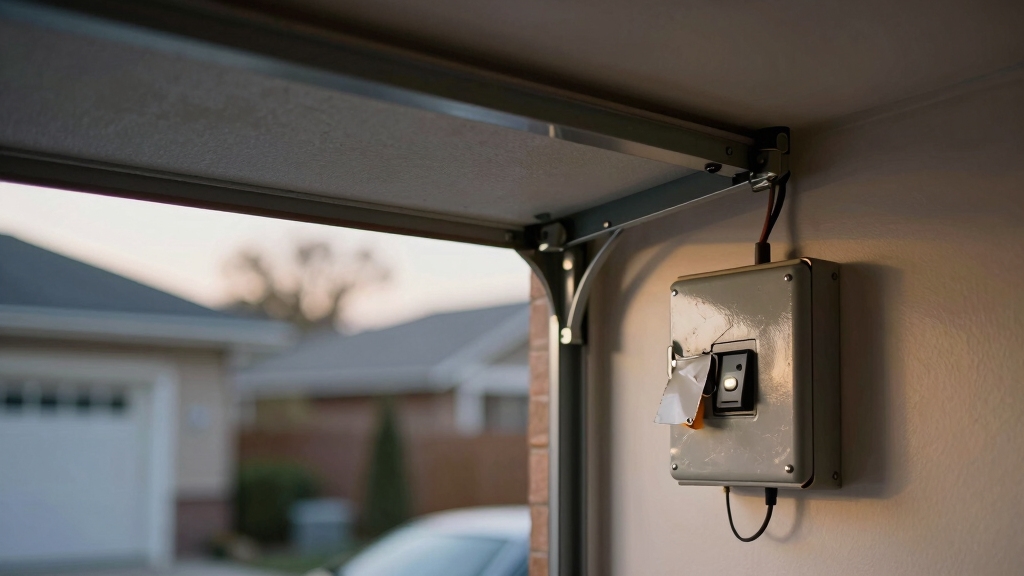
Wall control button issues can easily trigger your garage door to open unexpectedly by sending unintended signals to the opener.
You might face these common problems:
- Lock mode toggles accidentally due to rapid or partial button presses, causing the door to activate when disabled remotes retry commands.
- Worn or stuck buttons intermittently close the low-voltage circuit, mimicking continuous presses.
- Pinched or damaged wiring shorts the control circuit, leading to random door movements.
- Faulty wall console electronics or corrupted logic create spurious open/close commands.
Additionally, “Lock” (vacation) mode enabled on the wall control can cause unexpected door behavior if not properly managed lock mode.
To fix this, inspect and replace damaged buttons, verify wiring integrity, and reset or replace the wall control console if logic errors persist.
Proper diagnosis guarantees you stop unexpected door openings caused by wall control malfunctions.
How Mechanical Failures Make Your Garage Door Open Without Warning?
Unintended garage door openings aren’t always caused by control panel glitches; mechanical failures often play a significant role.
Mechanical issues frequently contribute to unintended garage door openings, not just control panel malfunctions.
Broken torsion springs or frayed cables can cause the door to collapse or open erratically, posing safety risks.
Worn rollers and misaligned tracks increase friction, leading to jerky movements or sudden openings.
Dirt and debris exacerbate these issues, so regular cleaning and lubrication with silicone-based products are essential.
Additionally, misaligned safety sensors may falsely detect obstacles, triggering unexpected door reversal or opening.
Faulty wiring can short-circuit the motor, activating the door without input.
Regular inspections of all garage door components help detect these mechanical issues early, preventing dangerous malfunctions.
To resolve these mechanical failures, inspect springs, cables, rollers, tracks, sensors, and wiring systematically.
Prompt professional repair guarantees safe operation and prevents hazardous, unintentional door movements.
How Weather Causes Your Garage Door to Open Unexpectedly?
When weather conditions shift, they directly affect your garage door’s mechanical and electronic components, causing unexpected openings.
Cold contracts metal parts, misaligning tracks and springs, so the opener’s logic board detects false obstructions.
Similarly, frozen lubricants increase resistance, triggering automatic reversals. Heat stresses circuit boards, causing phantom signals or erratic cycling.
Sunlight on sensors can mimic obstructions, forcing reopenings. Consider these scenarios:
- Ice binds the door to the floor, increasing load and prompting safety reversals.
- Thermal expansion causes slight binding, which sensors interpret as obstacles.
- Direct sunlight overwhelms photo-eye sensors, causing false obstruction signals.
- Humidity condenses inside controls, leading to short circuits and unintended activations.
Persistent moisture can also promote corrosion and mold, further impairing door operation.
Understanding these weather effects helps you diagnose why your garage door might open unexpectedly.
Simple Steps to Prevent Your Garage Door From Opening on Its Own
Regularly inspecting and securing your garage door opener controls is essential to prevent the door from opening on its own.
Check remotes and wall buttons for stuck or damaged keys. Replace batteries to avoid low-voltage misfires, and clean devices to remove dirt or moisture causing phantom signals. Stuck buttons in remotes or wall-mounted controls can send continuous signals, leading to unintended operation.
Position the wall button out of reach to prevent accidental activation. Reprogram remotes and clear old codes to eliminate unauthorized access, adjusting frequency or rolling codes to reduce interference.
Wireless signal conflicts, especially when operating on the same frequency as nearby devices or other garage doors, can cause the door to open or close randomly.
Maintain sensors by cleaning lenses, ensuring alignment, and removing obstructions. Inspect wiring for damage or loose connections that could trigger false signals. Dirt and debris buildup can obstruct sensors and affect behavior, potentially causing the door to malfunction.
Reset the opener by unplugging it briefly, update firmware when possible, and adjust travel limits to prevent automatic reversal.
Schedule professional maintenance and install surge protection for long-term reliability. Note flashing garage door light as a possible indicator of circuit board or logic board issues that may require expert attention.
Frequently Asked Questions
Can Pets Accidentally Trigger My Garage Door to Open?
Yes, pets can accidentally trigger your garage door to open. Pets might press wall-mounted or visor remotes placed within their reach, or step on keychain remotes on the floor.
Pets crossing or interrupting infrared safety sensors can cause the door to reverse or cycle. Additionally, smart home integrations may misinterpret pet-related signals.
To prevent this, secure remotes, adjust sensor sensitivity, and review automation settings to minimize unintended activations.
Does My Garage Door Opener Need Regular Software Updates?
Yes, your garage door opener needs regular software updates to maintain security, functionality, and performance.
Updates patch vulnerabilities, prevent hacking, and improve connectivity, especially if your opener supports Wi-Fi or smart home integration.
They also enable diagnostics, automation features, and reliable operation during power outages.
Without updates, your system becomes prone to failures, security risks, and degraded performance.
Can a Power Outage Cause My Garage Door to Open by Itself?
Sure, your garage door thinks it’s a drama queen and loves spontaneous performances during power outages.
Yes, outages can cause your opener’s circuit board to misinterpret power flickers or surges as commands, triggering unwanted opening.
To stop these surprise acts, install a surge protector, unplug and reset the opener after outages, and inspect wiring for damage.
If the door keeps acting up, call a professional to fix or replace faulty components.
Are Smart Home Integrations a Risk for Unintended Garage Door Opening?
Yes, smart home integrations can pose a risk for unintended garage door openings.
If you don’t secure your Wi-Fi, use strong credentials, or configure automation rules carefully, attackers or misconfigurations might trigger the door remotely.
To reduce risks, update firmware regularly, employ encryption standards like WPA3, and audit automation rules and voice assistant permissions.
Properly managing these factors helps you maintain control and prevent unauthorized or accidental openings.
How Does Humidity Affect Garage Door Sensor Performance?
Just like a steampunk contraption struggles with steam, your garage door sensors falter in high humidity.
Moisture causes condensation on sensor lenses, scattering infrared beams and triggering false signals. It also promotes corrosion on wiring and electronics, degrading performance.
To fix this, regularly clean sensor lenses, make certain proper sealing, and inspect wiring for rust.
Installing dehumidifiers or protective covers can reduce moisture buildup, maintaining reliable sensor operation and preventing erratic door behavior.
Reclaim Control Before Your Garage Door Opens Again
Think of your garage door like a trusted gatekeeper, sometimes tricked by hidden signals or worn-out parts. When it opens by itself, it’s a silent alarm telling you to check remotes, wiring, sensors, and weather impacts carefully.
By addressing these issues step-by-step, you regain control and restore security. Don’t let unseen forces keep your gate ajar. Take precise action now to keep your home safe and your peace of mind intact.