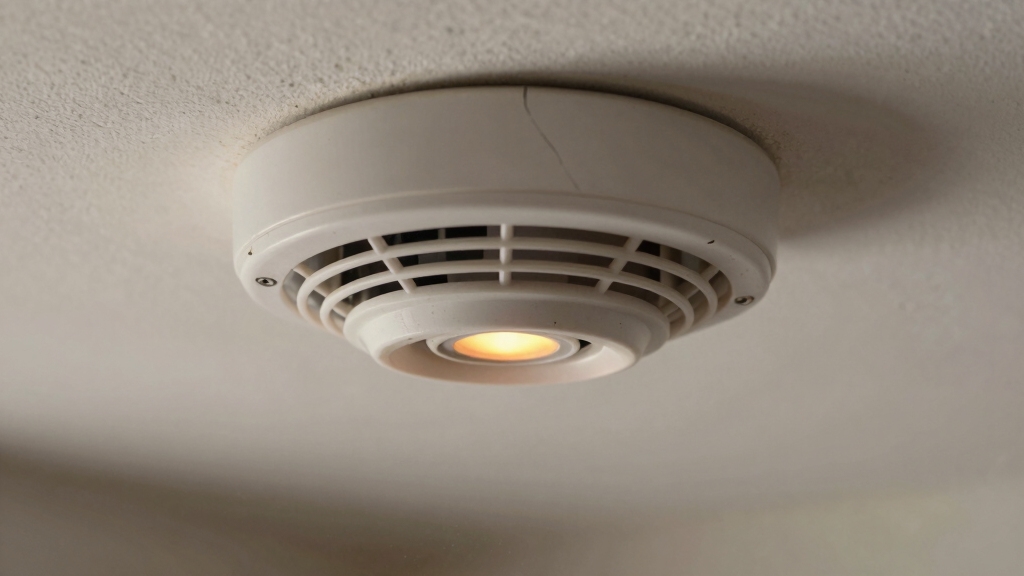

Your smoke detector beeps mainly to warn you of issues like low battery, power interruptions, or sensor malfunctions caused by dust, insects, or environmental factors such as steam and humidity.
Erratic chirping often signals the need for cleaning, battery replacement, or wiring inspection in hardwired units.
Persistent alerts despite maintenance may indicate the unit’s end-of-life. Understanding why your alarm beeps helps ensure your system stays reliable and safe for your home.
Key Takeaways
- Smoke detectors beep due to low battery power, typically signaling replacement every 30 to 60 seconds.
- Dust, insects, or debris inside the sensor chamber can cause false alarms and erratic beeping.
- Environmental factors like high humidity, steam, or temperature fluctuations often trigger false alerts.
- Wiring issues or power interruptions in hardwired units can provoke intermittent chirping sounds.
- Persistent beeping despite maintenance usually indicates the detector has reached its end-of-life and needs replacement.
Why Is My Smoke Detector Beeping?
If your smoke detector keeps beeping, it’s usually signaling an issue that needs immediate attention.
This audible alert often indicates a malfunction or environmental interference.
Common causes include dust or debris interfering with sensor accuracy, leading to false alarms.
High humidity or steam can mimic smoke particles, triggering the sensor erroneously.
Improper battery installation or loose connections may interrupt the voltage supply, causing intermittent chirps.
Power surges or wiring faults in hardwired units also provoke beeping.
Additionally, extreme temperature fluctuations can disrupt sensor performance or battery function.
Persistent beeping despite addressing these factors might indicate the unit has reached its end-of-life and requires replacement.
Understanding these mechanisms helps you identify and resolve the root cause promptly, ensuring your smoke detector remains reliable for safety.
Continuous or irregular beeping can also signal a critical equipment malfunction or hazardous condition that requires immediate attention.
How a Low Battery Makes Your Smoke Detector Beep?
When your smoke detector’s battery starts to run low, you’ll hear a short chirp every 30 to 60 seconds. It’s like a little reminder that it’s time to take action!
To keep your home safe, make sure to replace the batteries every six months, whether you have a battery-operated unit or a hardwired one with a backup battery.
Now, some smoke detectors come with sealed batteries that can last up to ten years. That’s pretty convenient since you won’t have to worry about replacing them often.
However, even with these models, it’s still super important to test them regularly to ensure they’re working properly. Better safe than sorry, right?
Remember, hardwired smoke detectors still need backup batteries to maintain continuous protection during power outages.
Low Battery Chirp Timing
Typically, a smoke detector emits a short chirp every 30 to 60 seconds to indicate a low battery condition. This timing allows you to quickly identify a power issue without confusing it for a full alarm.
The detector’s internal circuitry monitors battery voltage continuously. When it falls below a threshold, the device triggers these periodic chirps. Some models standardize the interval at 60 seconds, while others vary between 30 and 60 seconds.
This consistent timing helps conserve battery life while ensuring you notice the warning. If you hear these chirps, you should address the battery status promptly to maintain reliable operation. Ignoring the chirp can lead to the alarm failing to detect smoke due to insufficient power to trigger the alarm sound.
Replacing low batteries promptly with fresh, properly installed batteries is essential to stop frequent beeping and ensure the alarm functions correctly, as explained in the Batteries, Rechargeables, and Replacement Guidance.
Battery Replacement Frequency
Understanding the timing of low battery chirps leads directly to the importance of regular battery replacement.
Your smoke detector signals a low battery by emitting short chirps every 30 to 60 seconds, alerting you to replace the battery promptly.
For battery-operated or hardwired units with backup batteries, replacing batteries every six months guarantees reliable operation and prevents unexpected beeping.
Ignoring these warnings risks detector failure during emergencies.
After battery replacement, confirm proper installation and reset the unit if necessary to clear error states.
Maintaining this schedule sustains peak detector performance, preserving safety.
Using alkaline 9V batteries is common in many smoke detectors due to their availability and reliable power output.
Sealed Battery Alarms
Sealed battery alarms integrate a long-life power source designed to last up to ten years, eliminating the need for regular battery replacements.
Despite this, these alarms still emit a low battery warning beep, usually a short chirp every 30 to 60 seconds, when the internal battery approaches end-of-life.
This alert signals you to replace the entire unit rather than just the battery. You should test these alarms regularly to guarantee reliable performance throughout their lifespan.
Unlike traditional units where you swap batteries every six months, sealed battery alarms simplify maintenance but require timely replacement once the battery depletes.
Ignoring the chirp compromises safety by reducing detector responsiveness.
Consequently, understanding this low battery signal helps you maintain effective smoke detection without unnecessary battery changes.
Regular testing at least once a month ensures the alarm’s reliable performance and safety.
Why Dust and Debris Make Smoke Detectors Sound Off?
When dust, insects, or debris accumulate inside your smoke detector, they interfere with its sensors, causing random beeping or false alarms.
Dust particles disrupt the ionization beam or electrical current within the sensor chamber, impairing its ability to detect smoke accurately.
Similarly, insects nesting can block sensor openings, leading to generic fault alerts or erratic chirping.
Debris buildup also mimics smoke particulates, triggering false alarms.
To maintain optimal functionality, you should clean your smoke detector every few months using compressed air or a soft brush.
This ensures sensor pathways remain clear.
Neglecting this can cause persistent false alerts and reduce detector reliability.
Regular maintenance prevents soot or dust accumulation from compromising sensor performance and guarantees your smoke detector operates correctly when needed.
Additionally, it is important to test all units monthly to verify proper operation and maintain safety.
How Humidity and Steam Affect Smoke Detectors?
You know, steam from your showers or cooking can really mess with smoke detectors. It often mimics smoke particles, which can lead to those annoying false alarms.
Plus, when humidity levels are high, it can throw off the sensor’s accuracy, resulting in unpredictable beeping.
Photoelectric smoke alarms use an optical chamber designed to block stray light and reduce false alarms caused by steam and cooking fumes.
Steam Triggered False Alarms
Often, high humidity and steam from everyday activities like showering or cooking can mimic the presence of smoke, causing your smoke detector to emit false alarms.
Steam particles scatter light or interrupt the sensor’s ionization process, similar to smoke, triggering the alarm.
This is especially common when detectors are installed near bathrooms or kitchens where steam accumulates.
To prevent these false alarms, you should relocate detectors away from direct steam exposure or improve ventilation in these areas.
Additionally, temperature fluctuations caused by steam can temporarily affect sensor response, increasing sensitivity to non-smoke particles.
Understanding this interaction helps you manage alarm placement and environmental conditions, reducing unnecessary beeping while maintaining reliable smoke detection in your home.
Regular cleaning and choosing detectors with pet-immune technology can also reduce false alarms caused by particles and disturbances.
Humidity Impacts Sensor Accuracy
Besides steam triggering false alarms, humidity plays a significant role in affecting smoke detector sensor accuracy.
High moisture levels can mimic smoke particles, causing the sensor to interpret humidity as a fire hazard and trigger false beeping.
Humidity impacts the sensor’s internal components by altering electrical conductivity and scattering the detection beam, which reduces sensitivity.
Additionally, rapid temperature fluctuations linked to humidity changes can interfere with battery performance, leading to intermittent chirping.
You should note that extreme environmental conditions, including excessive humidity, degrade sensor calibration over time, increasing the likelihood of erroneous alarms.
Understanding these effects is vital because they directly influence the detector’s reliability in distinguishing actual smoke from environmental moisture.
Maintaining an appropriate indoor environment helps preserve sensor functionality and prevents unnecessary alarm activations.
Similar to how a peephole lens prevents clear outside viewing due to light scattering, humidity causes scattering within smoke detector sensors, reducing their accuracy.
Preventing Moisture-Related Chirping
Although humidity and steam can cause your smoke detector to chirp unnecessarily, you can take specific steps to minimize this issue.
First, avoid installing detectors too close to bathrooms or kitchens where steam and moisture levels fluctuate frequently. Relocate units at least 10 feet away from these areas to reduce false alarms caused by humidity mimicking smoke particles.
Assure proper ventilation in high-moisture rooms to lower ambient humidity.
Maintain a stable temperature around your detector, as extreme heat or cold can impair sensor function and battery performance.
Regularly inspect and clean the detector to prevent dust and pollen buildup, which may worsen moisture-related chirping.
Additionally, installing high-quality 9V batteries can help maintain stable voltage and reduce false low-battery alerts caused by environmental factors.
How Wiring and Power Problems Make Your Alarm Chirp?
When your smoke detector chirps unexpectedly, power and wiring issues often lie at the root. Power surges or interruptions can cause your alarm to emit chirps once power restores.
In hardwired detectors, loose wiring connections disrupt the continuous supply of AC power, triggering random beeps. If your unit loses AC power entirely, it switches to battery backup, which may cause periodic chirping to signal this condition.
Environmental factors like airflow from HVAC vents can also affect wiring stability, leading to intermittent alerts. Since these issues involve electrical components, you should have a qualified electrician inspect your home’s wiring and connections.
Ensuring stable power and secure wiring prevents false chirps caused by voltage fluctuations or interruptions in your smoke detector system.
How to Fix Common Smoke Detector Beeping Problems?
After ruling out wiring and power issues, you can address other common causes of smoke detector beeping to restore proper function.
Once wiring and power are confirmed, focus on typical causes to fix smoke detector beeping effectively.
Start by replacing the battery, especially if you hear short chirps every 30-60 seconds. This is the most frequent cause.
Make sure the battery is installed correctly and terminals are clean and secure. Next, clean the detector with compressed air or a soft brush to remove dust, debris, or insects that may interfere with sensors.
Avoid placing detectors near steam or humidity sources like bathrooms or kitchens, as moisture can trigger false alerts. Finally, reset the alarm after maintenance to clear error conditions.
Following these steps methodically will resolve most beeping issues and maintain your detector’s reliability.
When to Replace Your Smoke Detector?
Since smoke detectors play a critical role in home safety, you need to replace them regularly to make sure they function properly.
Typically, smoke alarms have a lifespan of 10 years, while combination smoke and CO detectors require replacement every 7 years.
Check the manufacture date on the back of your unit to determine its age. If your detector continues to beep despite fresh batteries and thorough cleaning, it likely signals end-of-life. Operating smoke alarms outside the recommended temperature range (40-100°F) can impair performance.
However, replacement is still necessary once the time limit is reached.
Regularly test your detectors to confirm functionality. Timely replacement guarantees reliable detection and prevents false alerts caused by sensor degradation or internal faults.
Don’t delay; prioritize safety by replacing outdated units promptly.
Frequently Asked Questions
Can Smoke Detectors Detect Carbon Monoxide as Well?
Yes, some smoke detectors also detect carbon monoxide (CO). These combo alarms combine smoke and CO sensors to protect you from both fire and toxic gas.
You should check the device’s specifications or label to see if it includes CO detection. Remember, CO sensors have a shorter lifespan, typically around 7 years.
You’ll need to replace these alarms more frequently than smoke-only detectors.
How Often Should I Test My Smoke Detector?
You should test your smoke detector at least once a month to make sure it functions properly.
Press and hold the test button until you hear a loud alarm. Regular testing helps verify sensor responsiveness and battery condition.
For best performance, replace batteries every six months if applicable, and clean the unit to prevent dust interference.
Remember to replace the entire detector every 10 years to maintain safety and reliability.
What Types of Batteries Work Best in Smoke Detectors?
Picture your smoke detector’s steady, vigilant pulse powered by crisp, reliable energy. Alkaline batteries work best, offering consistent voltage and long life.
Lithium batteries excel too, especially in sealed, ten-year units. They resist temperature swings and last longer without leakage.
Avoid rechargeable or zinc-carbon types; they can cause erratic beeping or shorter life.
Always replace batteries every six months, ensuring your detector maintains its sharp, life-saving alertness without interruption.
Are There Smart Smoke Detectors With Phone Alerts?
Yes, smart smoke detectors with phone alerts are available.
These devices connect to your Wi-Fi and send real-time notifications to your smartphone if smoke or carbon monoxide is detected.
You can monitor multiple alarms remotely, silence false alerts, and receive battery or maintenance warnings.
Brands like Nest Protect and First Alert Onelink offer these features, enhancing safety by keeping you informed even when you’re away from home.
Can Pets Trigger Smoke Detector Alarms?
Oh sure, your pet’s innocent tail wagging is totally a smoke detector’s top concern.
In reality, pets themselves don’t directly trigger alarms since detectors sense smoke particles or electrical changes, not motion or fur.
However, pet dander, dust, or even pet hair accumulating inside the sensor can cause false beeps.
Keeping your detector clean and away from high pet activity zones helps maintain precise sensor function and prevents unnecessary alarms.
Be Proactive: Maintain Your Smoke Detector for Maximum Safety
If your smoke detector beeps, don’t ignore it. Over 80% of fire-related deaths occur in homes without working alarms.
Low batteries, dust, humidity, or wiring issues often cause these alerts. Regular maintenance, like replacing batteries annually and cleaning the unit, keeps it reliable.
If problems persist despite troubleshooting, it’s time to replace your detector to guarantee peak safety. Staying proactive with your smoke detector protects you and your loved ones from preventable hazards.