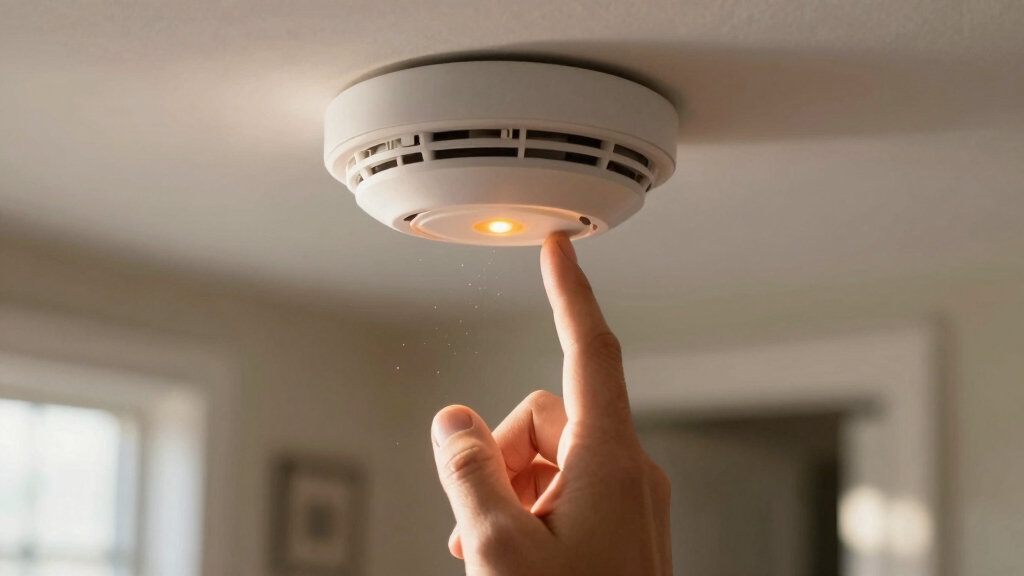

When your smoke detector beeps, it’s warning you of issues like a low or loose battery, sensor interference from dust or humidity, or even a critical emergency like smoke or carbon monoxide.
A single chirp usually means you need to replace the battery soon. Continuous beeping signals immediate danger requiring evacuation.
Sometimes beeping indicates the detector is malfunctioning or has reached its end of life. Understanding these signals helps you keep your home safe and prepared.
Key Takeaways
- A short chirp every 30–60 seconds usually signals a low battery needing immediate replacement.
- Loose or improperly installed batteries can cause random beeping due to interrupted power supply.
- Dust, insects, or debris inside the detector may trigger false alarms and intermittent beeping.
- Continuous beeping indicates a serious safety threat like smoke, heat, or carbon monoxide, requiring immediate evacuation.
- Consistent chirping over time may mean the detector is malfunctioning or has reached its end of life and needs replacement.
What Low Battery Beeps Mean on Smoke Detectors?
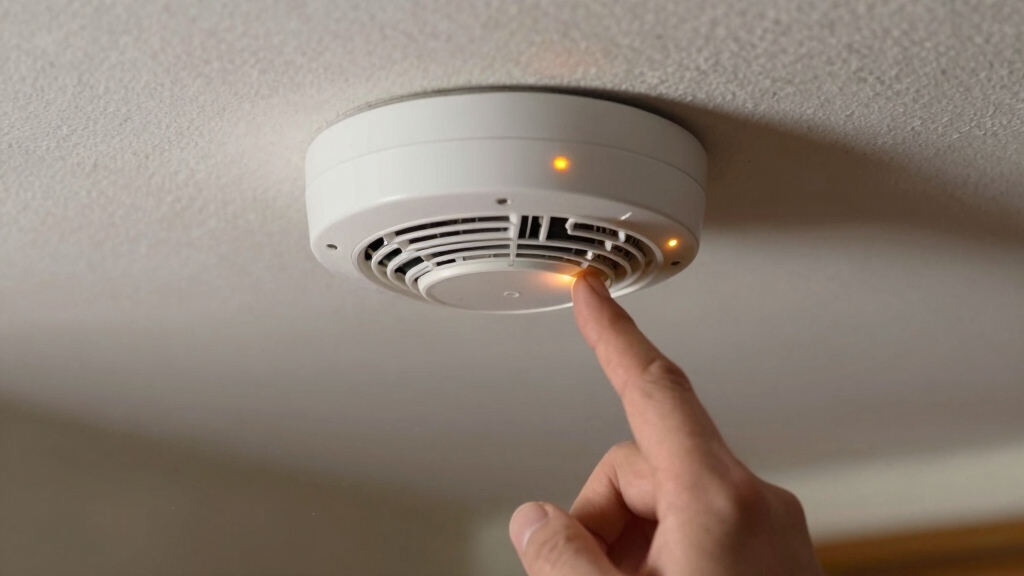
Low battery beeps on smoke detectors frequently signal that it’s time to replace the battery immediately. Your smoke detector is programmed to emit a short chirp every 30 to 60 seconds when the battery power drops below a critical level.
This single beep is a precise warning that the device’s functionality is at risk. You must act quickly to swap out the old battery to maintain uninterrupted protection. Regularly replacing batteries at least once a year prevents these interruptions and guarantees your smoke detector operates effectively.
Ignoring these warnings could lead to your detector failing when you need it most. Always use the recommended battery type to guarantee consistent performance and avoid downtime in your home’s fire safety system. Using batteries with stable voltage output helps reduce the chance of unexpected detector failure during critical moments.
How Loose or Improper Batteries Cause Beeping?
Replacing batteries promptly is essential, but it’s equally important to ensure they’re installed correctly and securely. A loose or improperly installed battery can cause your smoke detector to beep randomly, interrupting its operation and causing frustration.
Replacing batteries promptly and installing them securely prevents random beeping and ensures your smoke detector works reliably.
Here’s why proper battery installation matters:
- Loose terminals break the constant voltage supply your detector needs.
- Corroded or dirty contacts interfere with electrical connections.
- Improper alignment prevents the sensor from receiving power fully.
- A broken signal triggers the unit’s alert system to beep continuously.
To stop random beeping, always check that batteries fit snugly with clean terminals, oriented according to polarity markings. Maintaining a solid connection guarantees your detector performs reliably, protecting your home and family without interruption.
Using sealed 10-year lithium batteries can help reduce the frequency of low-battery chirps and improve overall alarm reliability.
How Dust and Debris Trigger Smoke Detector Beeps?
Dust and debris can really mess with your smoke detector’s sensors, leading to those annoying random beeps or even false alarms. It’s pretty frustrating, right?
To keep it running smoothly, you’ll want to give your detector a good cleaning every so often.
Using compressed air or a soft brush can do wonders! Just a little maintenance goes a long way in preventing those unnecessary alerts.
Plus, it ensures that your smoke detector is always ready to keep you safe. Regular cleaning and timely battery replacement are key parts of smoke detector maintenance to maintain reliability and reduce false alarms.
Impact Of Dust Accumulation
Accumulating debris inside your smoke detector can interfere with its sensors and cause unexpected beeping. Dust, insects, and soot particles disrupt the device’s ability to accurately detect smoke, prompting false alarms or random chirps. Understanding this impact helps you identify when dust buildup is the culprit behind beeping.
Consider these key points:
- Dust particles scatter sensor signals, mimicking smoke presence.
- Insects nesting inside distort sensor readings, triggering alerts.
- Soot accumulation from fires increases false alarm risks.
- Debris blocks airflow, impairing sensor function and causing intermittent beeps.
Recognizing how dust and debris affect your smoke detector is vital for maintaining reliable fire safety. Addressing this issue promptly guarantees your alarm operates correctly, avoiding unnecessary disturbances or overlooked dangers. Additionally, regular maintenance including battery replacement is essential to ensure uninterrupted detector functionality.
Cleaning To Prevent Beeps
Regularly cleaning your smoke detector plays a crucial role in preventing random beeping caused by dust and debris interference. Dust, insects, and soot can block sensors, triggering false alarms or intermittent beeping.
To maintain peak detector function, clean it every few months using compressed air or a soft brush. This simple step guarantees dust does not interfere with the sensor’s ability to detect smoke accurately.
False or erratic beeping can be caused by sensor contamination or dust; clean vents and sensor gently and consult manufacturer if persists.
| Cleaning Step | Purpose |
|---|---|
| Use compressed air | Remove dust from sensor chamber |
| Soft brush | Dislodge debris without damage |
| Regular schedule | Prevent buildup causing false alarms |
Why Humidity and Temperature Cause False Alarms?
When humidity rises or temperatures shift rapidly, your smoke detector may misinterpret these changes as smoke, causing false alarms.
Steam from showers or cooking mimics smoke particles. Extreme heat or cold can disrupt sensor function or battery performance.
To minimize false alarms, consider these points:
- Avoid installing detectors near bathrooms or kitchens where steam and heat are frequent.
- Keep detectors away from poorly insulated areas prone to temperature swings.
- Ensure proper ventilation to reduce humidity buildup around the device.
- Regularly monitor environmental conditions that can affect your smoke detector’s accuracy.
Understanding how humidity and temperature impact your smoke detector helps you prevent unnecessary beeping and ensures reliable fire safety. Photoelectric smoke alarms use a light scattering method that can be sensitive to particles like steam, which may increase false alarms under high humidity conditions.
What Continuous Beeping Means for Smoke and Carbon Monoxide Detectors?
When your smoke or carbon monoxide detector starts beeping continuously, it’s a serious situation that you can’t afford to ignore. It’s basically sending you an urgent warning that something’s not right. So, first things first: you need to get out of the house right away.
Once you’re safely outside, make sure to call emergency services. It’s really important to do this to ensure everyone’s safety. Remember, ignoring that alarm can put you and your loved ones in a dangerous position.
Stay alert and prioritize your safety! Continuous beeping can indicate dangerous CO levels or a critical malfunction requiring immediate evacuation and emergency contact.
Urgent Alarm Signals
Recognize that continuous beeping from your smoke or carbon monoxide detector signals an urgent alert requiring immediate attention. This persistent alarm sound means the device has detected a dangerous condition, such as smoke or carbon monoxide presence, and should never be ignored.
Here’s what continuous beeping indicates:
- Your detector senses smoke or heat, signaling a potential fire hazard.
- Carbon monoxide presence is detected, posing a silent but lethal threat.
- The alarm emits a loud, repetitive pattern to maximize your awareness.
- This alert demands urgent response; delaying action risks your safety.
Understanding these signals ensures you treat every continuous beep as a critical warning, emphasizing swift evaluation and necessary emergency protocols. For comprehensive safety, ensure your detectors are installed within 10 feet of bedroom doors to guarantee alarms are audible during sleep.
Immediate Safety Actions
Respond immediately to continuous beeping from your smoke or carbon monoxide detector, as it signals a serious threat to your safety. First, evacuate everyone from the premises without delay.
Call emergency services once you’re safely outside. Do not ignore the alarm or attempt to silence it without confirming the environment is safe.
Monitored fire alarm systems can automatically notify emergency responders, but occupants must still call 911 after a local alarm to ensure prompt assistance and reduce response times for fire department dispatch.
| Action | Description | Priority |
|---|---|---|
| Evacuate | Leave the building immediately | Highest |
| Call Emergency Services | Dial 911 or local emergency number | Highest |
| Verify Alarm Source | Check for smoke or carbon monoxide signs | After Evacuation |
| Do Not Re-Enter | Avoid re-entering until cleared by experts | Critical |
Taking swift, deliberate action can save lives during a continuous alarm event.
When Your Smoke Detector Is Malfunctioning or at End of Life?
If your smoke detector emits consistent chirping every 30 to 60 seconds, it likely signals a malfunction or that the unit has reached its end of life.
You need to address this promptly to guarantee your safety. Smoke detectors typically have a lifespan of 7 to 10 years, after which their sensors and processors may fail.
Even replacing the battery won’t stop the chirping if the device is faulty. Here’s what you should do:
- Check the manufacture date on the detector to confirm its age.
- Replace the entire unit if it’s beyond its recommended lifespan.
- Inspect for loose wiring or sensor damage causing the malfunction.
- Test the new or repaired detector to guarantee proper operation.
Ignoring these signs risks your home’s fire safety. Regular maintenance, including cleaning vents and sensors, is essential to prevent false alarms and ensure reliable operation, which can help avoid unnecessary chirping from smoke alarms.
Frequently Asked Questions
How Often Should I Test My Smoke Detector for Proper Function?
You should test your smoke detector at least once a month to make certain it’s working properly.
Press and hold the test button until you hear a loud alarm. If it doesn’t sound, replace the battery or the unit immediately.
Regular monthly testing helps catch issues early, keeping you safe.
Also, replace batteries yearly and the entire unit every 7 to 10 years, depending on the type of detector you have.
Can Smoke Detectors Be Interconnected for Whole-Home Alerts?
Yes, you can interconnect smoke detectors for whole-home alerts, but it’s more than just linking devices.
When one alarm senses smoke, all units sound simultaneously, giving you instant, all-encompassing warnings no matter where you are.
This system enhances safety by ensuring prompt response, especially in larger homes.
You can use wireless or hardwired options, but professional installation guarantees reliable communication and compliance with local codes, so don’t skip that step.
What Types of Batteries Are Best for Smoke Detectors?
You should use high-quality 9-volt alkaline batteries for most smoke detectors. They provide reliable power and last longer than zinc-carbon batteries.
For newer models, lithium 9-volt batteries offer even longer life and better performance in extreme temperatures. Avoid rechargeable batteries, as their voltage may drop too low.
Always check your smoke detector’s manual to confirm the recommended battery type. Replace batteries at least once a year to guarantee continuous protection.
How Do I Reset My Smoke Detector After an Alarm?
To reset your smoke detector after an alarm, first press and hold the reset button for 15-20 seconds until the beeping stops.
If it continues, remove the battery, wait 30 seconds, then reinstall it.
For hardwired units, turn off power at the breaker before resetting.
Always make certain the detector is clean and batteries are fresh.
This clears false alarms and restores proper function efficiently.
Are There Smoke Detectors That Detect Both Smoke and Carbon Monoxide?
Imagine a single device quietly watching over your home, sensing both invisible smoke wisps and deadly carbon monoxide gas.
Yes, there are combination smoke and carbon monoxide detectors designed to do just that.
They provide dual protection by continuously monitoring air quality, alerting you instantly with distinct alarms.
Installing one means you’re covered against fire hazards and invisible, odorless CO threats, ensuring your family’s safety with one reliable, compact unit.
Don’t Ignore the Beep: Protect Your Home and Family
When your smoke detector beeps, it’s like a persistent whisper urging you to act. Whether it’s a low battery, loose connection, or dust lurking inside, ignoring it is like leaving a door ajar during a storm.
By addressing these signals promptly, you make certain your home remains a secure haven. Remember, continuous beeping might mean it’s time for a replacement, so don’t hesitate. Your safety depends on it.