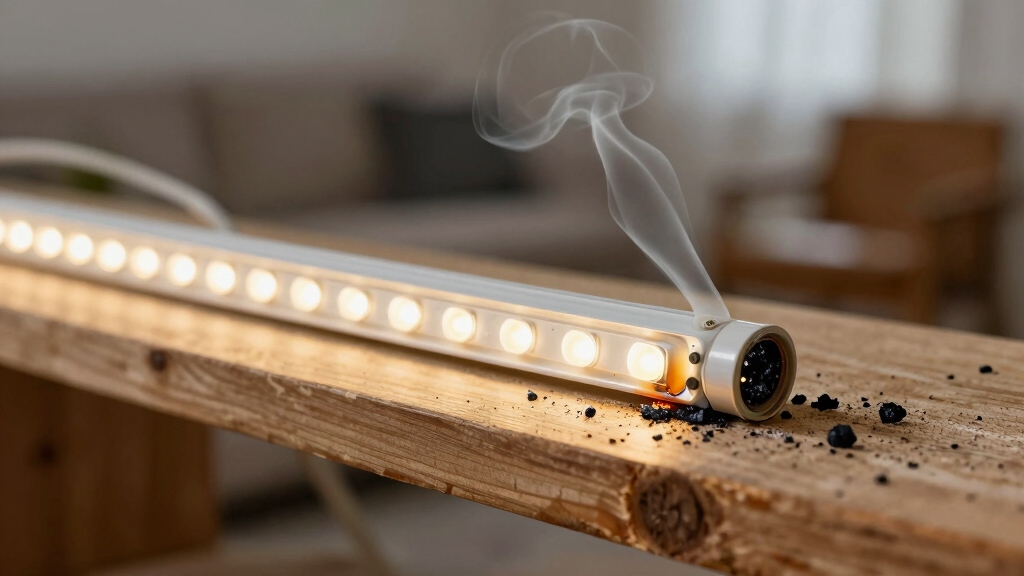

You can use LED lights safely, but they can cause fires if you’re not careful. Poor-quality or counterfeit bulbs, wrong dimmer switches, and bad installation can lead to overheating or electrical faults.
LEDs generate less heat than incandescent bulbs but still need proper ventilation and surge protection. Regular checks for flickering or warmth help catch issues early.
To keep your home safe, it’s important to understand common risks, proper setup, and essential safety features.
Key Takeaways
- LEDs produce less heat than incandescent bulbs, reducing but not eliminating fire risk.
- Poor-quality, counterfeit, or uncertified LEDs lack safety features, increasing fire hazards.
- Improper installation, such as lack of ventilation or incompatible dimmers, can cause overheating.
- Power surges and dust buildup in fixtures can lead to dangerous heat and electrical fires.
- Regular inspections and using certified products with built-in protections help prevent fire risks.
LED Lights and Fire Risks: What You Should Know
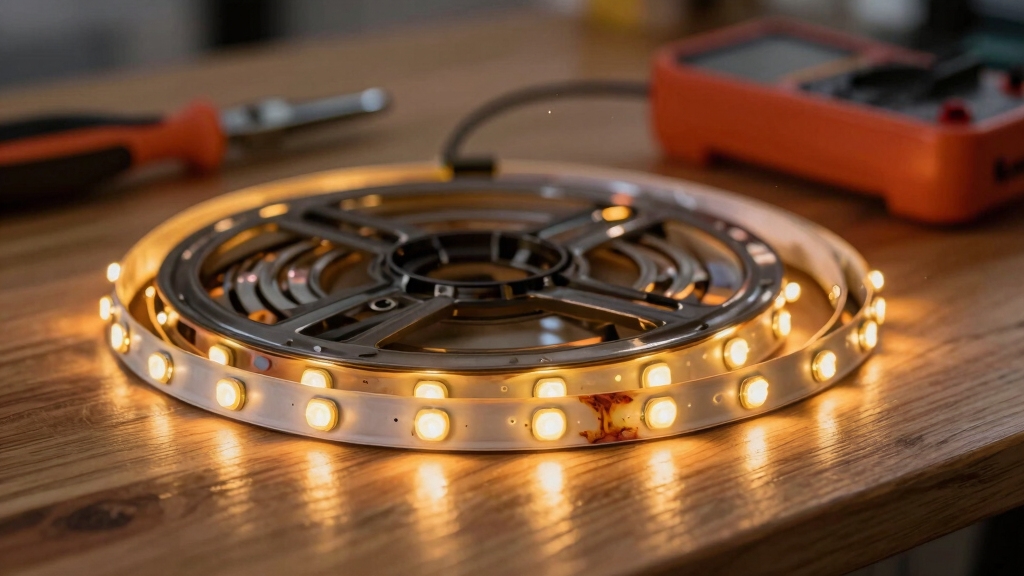
Although LED lights are generally safer than traditional bulbs due to their lower heat output, they can still pose fire risks if you don’t use them correctly.
You should understand that while LEDs produce notably less heat, improper use, such as poor installation or using low-quality products, can increase risk.
The lower operating temperature helps reduce ignition chances near flammable materials, but it doesn’t eliminate fire hazards entirely.
You need to make sure you buy certified LED products with built-in electrical protections and follow manufacturer guidelines carefully.
Proper ventilation and clearance from combustible items are essential to prevent heat buildup.
Staying informed about product recalls and avoiding counterfeit LEDs also helps keep your home safe from potential fire dangers related to LED lighting.
Regular inspection for signs like flickering, discoloration, or unusual warmth can help detect early overheating indicators and prevent fire hazards.
Common Causes of Fire Hazards in LED Lighting
When you use LED lighting, several factors can increase the risk of fire hazards despite their generally safer design.
Poor-quality materials in cheap LEDs may cause short circuits and excessive heat buildup. Using counterfeit or uncertified products often means missing critical safety features, raising fire risks.
Incompatible dimmer switches can cause your LEDs to overheat. Power surges may damage internal components, increasing the chance of electrical fires.
Additionally, dust accumulation on LED fixtures can block ventilation, causing heat to build up dangerously. While LEDs produce less heat than traditional bulbs, these risk factors can negate that advantage.
Brief sparks or micro-arcs can occur in outlets powering LED lights, but persistent or intense sparking is a warning sign of potential electrical faults that require immediate attention.
Being aware of these common causes helps you choose safer products and maintain your lighting to prevent potential fire hazards.
Installation Mistakes That Raise Fire Risks
If you don’t install LED lighting correctly, you could unintentionally create fire hazards.
Installing LEDs in enclosed spaces without proper ventilation traps heat, increasing the risk of overheating.
Using incompatible dimmer switches or wrong wattage bulbs can cause electrical stress and fires.
Overloading circuits or retrofitting LEDs into fixtures not designed for them also raises fire risks.
Moisture infiltration in outdoor LED fixtures may lead to short circuits, while dust accumulation blocks airflow, causing heat buildup. Faulty wiring or poor connections further heighten danger.
To avoid these mistakes, follow manufacturer guidelines closely and use compatible components. Make sure proper clearance and ventilation are in place.
Taking these precautions helps prevent electrical failures that could ignite fires, keeping your home safe and your LED lighting functioning reliably.
Regular cleaning to prevent dust buildup and monitoring for electrical issues can reduce false alarms and potential fire hazards.
How Safety Features Protect Against LED Fires?
Since LED lights produce markedly less heat than traditional bulbs, their built-in safety features play an essential role in minimizing fire risks.
LEDs operate at much lower temperatures, around 32.6°C compared to incandescent bulbs at 216°C. This reduces ignition chances near flammable materials.
Additionally, quality LED products include advanced electrical protections, such as surge guards and thermal cutoffs. These features help prevent overheating and short circuits.
They detect irregular electrical currents and shut down the fixture before damage occurs. However, these protections rely on using certified, well-manufactured LEDs.
Poor-quality or counterfeit LEDs often lack these safeguards, increasing fire hazards. By choosing LEDs with proper safety certifications and built-in electrical defenses, you greatly reduce the risk of fire.
This makes your lighting safer and more reliable.
To further enhance safety, using surge protection helps clamp excess voltage and filter electrical noise that could otherwise damage LED circuitry or cause fire hazards.
Simple Steps to Prevent Fires With LED Lights
To prevent fires caused by LED lights, you should start by choosing high-quality, certified products that meet safety standards.
Avoid counterfeit or uncertified bulbs, as they often lack essential protections.
Next, install LEDs according to manufacturer guidelines, ensuring proper ventilation and avoiding enclosed fixtures not rated for LEDs.
Use compatible dimmer switches and install surge protectors to minimize electrical risks.
Keep wiring in good condition and avoid overloading circuits.
Regularly clean fixtures to prevent dust buildup, which can trap heat.
Also, maintain clearance between LEDs and flammable materials.
If you notice flickering, overheating, or discoloration, turn off the light immediately and have a professional inspect it.
Additionally, ensure proper ventilation and airflow around lighting fixtures to reduce heat accumulation and fire risk.
Taking these simple, cautious steps helps you reduce fire hazards associated with LED lighting.
Frequently Asked Questions
Can LED Lights Cause Electrical Shocks?
Yes, LED lights can cause electrical shocks if they’re faulty or improperly installed.
You might face shocks due to damaged wiring, poor-quality products, or exposure to moisture.
To protect yourself, always use certified, high-quality LEDs and follow installation guidelines carefully.
Avoid handling bulbs with wet hands and make sure fixtures are properly grounded.
Taking these precautions will minimize your risk of electrical shocks from LED lighting.
Are LED Lights Safe for Outdoor Use in Wet Conditions?
Don’t let your LED lights turn into a soggy disaster!
Yes, LEDs can be safe outdoors in wet conditions, but only if you choose waterproof, weatherproof models with proper IP ratings.
You’ve got to avoid moisture infiltration that causes short circuits and fires.
Always check manufacturer guidelines, guarantee proper sealing, and install them correctly.
Otherwise, you risk costly damage and safety hazards.
Stay cautious and pick quality products for peace of mind.
How Long Do LED Lights Typically Last Before Failing?
LED lights typically last between 25,000 to 50,000 hours before failing, depending on quality and usage.
You can expect them to run for several years with normal daily use.
However, factors like overheating, poor installation, or power surges can shorten their lifespan.
To maximize how long they last, you should use high-quality LEDs and ensure proper ventilation.
Avoid incompatible dimmer switches or electrical issues that might cause premature failure.
Do LED Lights Consume More Electricity Than Incandescent Bulbs?
Imagine your electricity bill as a slowly rising tide. LED lights help keep it at bay. You don’t have to worry; LEDs consume far less electricity than incandescent bulbs.
They use about 75-80% less energy, shining bright without guzzling power. By choosing LEDs, you not only save money but also reduce your environmental impact.
Just make sure you pick quality products and install them correctly to keep everything safe and efficient.
Can LED Lights Trigger Smoke Alarms Falsely?
Yes, LED lights can sometimes trigger smoke alarms falsely, but it’s rare. The flickering or electromagnetic interference from certain LED drivers might confuse sensitive alarms.
If your smoke detector is too close to LED fixtures or uses ionization technology, you might notice false alarms. To avoid this, place alarms away from lighting and use photoelectric smoke detectors, which are less prone to interference from LED lighting systems.
Keeping Your LED Lighting Bright, Safe, and Worry-Free
While LED lights are generally safe, overlooking proper installation and maintenance can lead to unwanted sparks of trouble.
By paying attention to quality products and following simple safety steps, you can keep your home glowing without worry.
Remember, a little caution goes a long way in preventing those rare but serious flare-ups.
Stay informed and proactive, so your LED lighting remains a bright, secure addition to your space.