
You should place fire extinguishers along normal travel paths and near exits for swift access during emergencies.
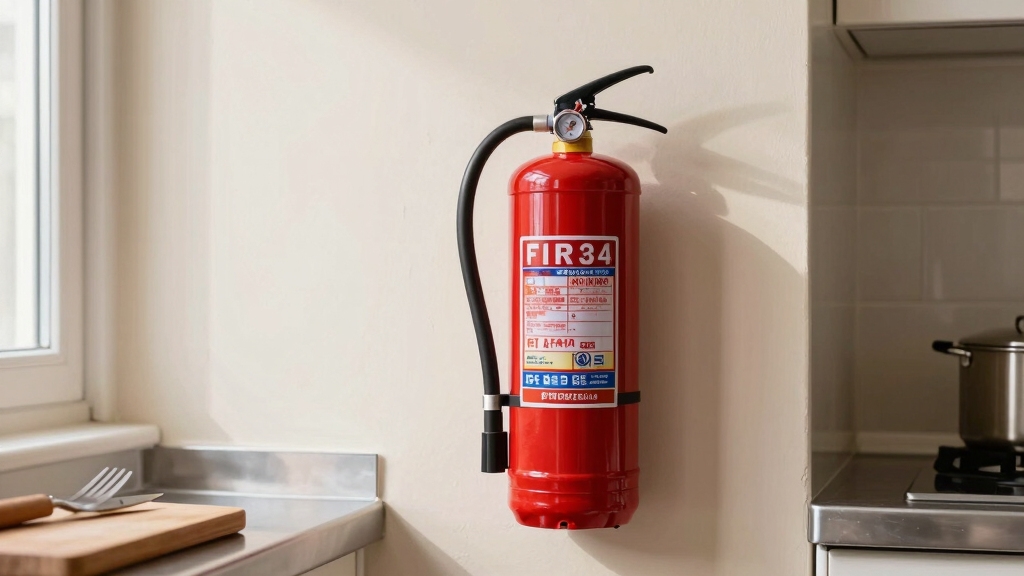
Mount them at eye level, with the handle between 3½ and 5 feet from the floor, guaranteeing the bottom is at least 4 inches above ground.
Avoid obstructions like furniture or locked cabinets without signage. Kitchens and garages need specific placement for hazard types.
Proper spacing, signage, and secure mounting optimize visibility and functionality. Details you can explore further to guarantee full compliance and safety.
Key Takeaways
- Mount fire extinguishers along normal travel paths near exits for quick and easy access during emergencies.
- Position extinguishers at eye level, with handles 3½ to 5 feet from the floor for optimal reachability and visibility.
- Ensure extinguishers are visible, unobstructed, and complemented by clear signage, especially in low-light or smoky conditions.
- Place kitchen extinguishers near cooking appliances but not too close to heat or flames, maintaining clear access without cabinet doors.
- In garages or workshops, mount higher-rated extinguishers near exits and flammable material storage, keeping paths clear of clutter.
Key Placement Principles for Easy Fire Extinguisher Access
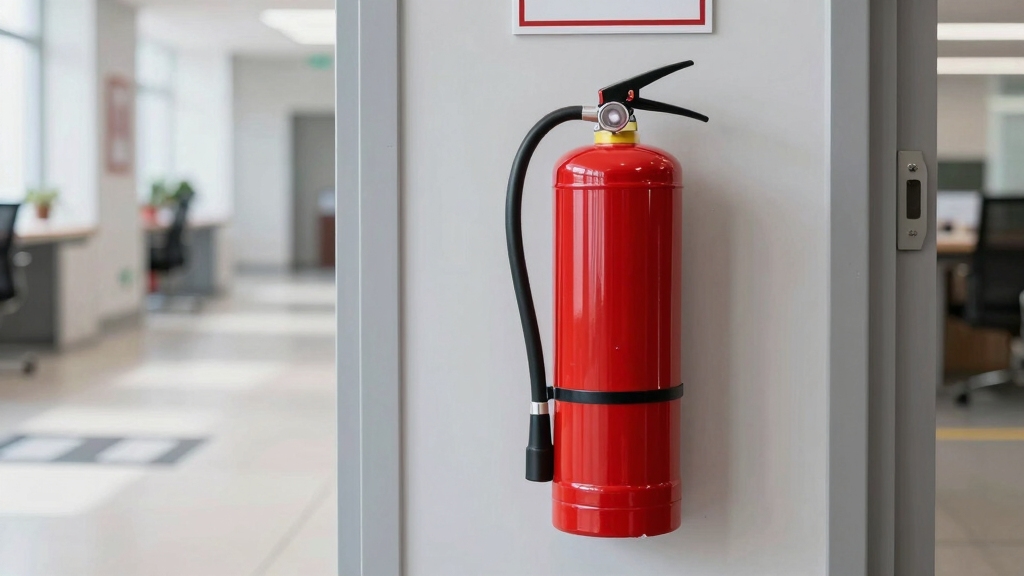
When placing fire extinguishers, you must guarantee they’re easily accessible and clearly visible to maximize emergency response effectiveness.
Ensure fire extinguishers are always accessible and visible to enhance emergency response efficiency.
Position extinguishers along normal travel paths and near exits to ensure rapid retrieval during emergencies.
Mount them on stable brackets or within wall cabinets to prevent accidental displacement or damage.
Avoid obstructing access with furniture or storage, as blocked extinguishers delay response time.
Assure visibility by placing extinguishers at eye level, complemented by clear signage and lighting to guide occupants swiftly.
The maximum travel distance to an extinguisher shouldn’t exceed 75 feet for Class A hazards, and spacing must reflect hazard severity.
For larger homes, installing extinguishers every 30 to 50 feet ensures adequate coverage and accessibility.
Fire Extinguisher Height Requirements
When it comes to fire extinguisher placement, it’s important to get the height just right. You’ll want to position the carrying handle between 3½ and 5 feet off the ground. This ensures that anyone can reach and control it effectively.
For extinguishers that weigh less than 40 pounds, the tops shouldn’t go higher than 3.5 feet. On the flip side, if you’re dealing with heavier units, they shouldn’t exceed 5 feet.
And don’t forget about clearance! Make sure there’s at least 4 inches of space from the floor. This helps prevent any damage and keeps the extinguisher easily accessible when you need it.
Regular inspections of the valve and hose integrity are essential to ensure the extinguisher remains functional and safe to use.
Handle Height Range
Positioning the fire extinguisher handle between 3½ and 5 feet from the ground guarantees peak accessibility for most users during emergencies.
You must ensure the handle height aligns with extinguisher weight: units under 40 pounds shouldn’t exceed 3.5 feet, while heavier ones can be mounted up to 5 feet.
Additionally, maintain a minimum clearance of 4 inches from the floor to the extinguisher’s bottom to prevent damage and allow quick retrieval.
Proper handle height minimizes unnecessary movement and optimizes reachability, enabling you to act swiftly.
Adhering to these precise height specifications complies with safety standards and enhances operational readiness.
This guarantees the extinguisher is both visible and physically accessible when seconds count.
Regular inspections and maintenance are essential to ensure the extinguisher remains fully functional and accessible over time, as outlined in inspection and maintenance guidelines.
Extinguisher Weight Limits
Mount fire extinguishers according to their weight to guarantee safe and effective accessibility. For units weighing less than 40 pounds, position the top no higher than 3.5 feet from the floor to ensure most users can reach and operate them quickly.
Heavier extinguishers, those exceeding 40 pounds, require mounting with the top no more than 5 feet above the ground to prevent strain during emergency use. Additionally, maintain a minimum clearance of 4 inches from the bottom to the floor to avoid damage and facilitate inspection.
These height requirements optimize ergonomic handling and comply with safety standards, minimizing the risk of injury or delay in accessing the extinguisher.
By adhering to weight-specific height limits, you enhance readiness and ensure extinguishers remain within comfortable reach for all potential users. Proper maintenance and inspection are also crucial to ensure the extinguisher performs effectively when needed.
Ground Clearance Standards
Although fire extinguishers must be easily accessible, maintaining proper ground clearance is essential to prevent damage and guarantee reliable operation.
You need to position extinguishers correctly to comply with safety standards and ensure quick access during emergencies. Proper placement safeguards the extinguisher from moisture, dirt, and physical impact, which can impair functionality.
Key ground clearance standards include:
- Carrying handles must be between 3½ and 5 feet from the ground.
- The extinguisher’s bottom should be at least 4 inches above the floor.
- Extinguishers under 40 pounds must have their top no higher than 3.5 feet.
- Extinguishers over 40 pounds require the top to be no more than 5 feet above ground.
Adhering to these height requirements optimizes accessibility and preserves extinguisher integrity.
Regular inspections and safety checks are critical to ensure the extinguisher remains functional and ready for use.
Travel Distance and Accessibility for Extinguisher Placement
You need to ensure that no spot in your area is more than 75 feet away from a fire extinguisher. This is really important, especially since the spacing can vary depending on the hazard level and the extinguisher’s rating.
It’s a good idea to place extinguishers along regular travel paths and close to exits. This way, everyone can grab one quickly and easily during an emergency.
Travel distance must be measured along the shortest navigable walking path, accounting for any obstructions and clear access routes, not just as a straight line.
Maximum Travel Distance
Every fire extinguisher must be accessible within a maximum travel distance of 75 feet for Class A fires to guarantee rapid response. This limit ensures you can reach an extinguisher quickly before a fire escalates.
Travel distance requirements can vary by hazard type and extinguisher rating, but 75 feet remains the standard for general Class A hazards.
To comply, consider these key points:
- Extinguishers should be installed along normal paths of travel for immediate access.
- Spacing between extinguishers may range from 30 to 50 feet based on hazard level.
- Mount extinguishers securely on brackets or in cabinets to maintain stability.
- Locate extinguishers near exits to provide an efficient escape route and firefighting option.
Adhering to these guidelines maximizes safety and guarantees regulatory compliance.
Proper placement also supports the PASS method by ensuring quick and safe extinguisher operation when needed.
Strategic Extinguisher Placement
Meeting maximum travel distance requirements sets the foundation for effective extinguisher placement, but strategic positioning goes further to enhance accessibility and usability during emergencies.
You should install extinguishers along normal travel paths and near exits to guarantee rapid access. Mount extinguishers on brackets or in cabinets at proper heights, with handles between 3½ and 5 feet from the ground, to prevent obstruction and damage.
Maintain maximum travel distances of 30 to 75 feet depending on fire class and hazard level. Prioritize visibility by placing extinguishers at eye level and supplement with clear signage.
In high-risk zones like kitchens or workshops, place higher-rated extinguishers within safe but reachable proximity. This strategic approach guarantees occupants can quickly locate and operate extinguishers, maximizing fire control effectiveness and safety.
Regular inspection and timely replacement of extinguishers are essential to avoid failures caused by expired fire extinguishers.
Fire Extinguisher Placement in the Kitchen
When positioning a fire extinguisher in the kitchen, prioritize accessibility near stoves and cooking appliances without obstructing the workspace.
Place fire extinguishers near stoves for quick access without blocking kitchen work areas.
You must place the extinguisher where you can reach it quickly in an emergency but not so close that heat or flames hinder access.
For smaller kitchens, mounting it inside a nearby closet is acceptable if it remains readily accessible.
Use a 2-A:10-B:C rated extinguisher for effective residential cooking fire protection.
Ensure the extinguisher is mounted securely, complying with height requirements for ease of use.
Install near cooking appliances but at a safe distance to avoid heat damage.
Maintain clear access paths free of obstructions.
Mount between 3½ and 5 feet from the floor for best reach.
Avoid placing inside cabinets that require opening doors under emergency conditions.
Keep a dry chemical extinguisher on hand as backup for unexpected flare-ups.
Positioning Fire Extinguishers on Every Home Level
Although fire extinguishers are essential throughout your home, placing a primary unit on each level greatly enhances safety and compliance with fire protection standards.
You should install at least one 2-A:10-B:C rated extinguisher per floor, ensuring spacing doesn’t exceed 40 feet.
On upper levels, mount extinguishers in hallways for easy access, especially near bedrooms where nighttime fire risks increase.
Position the extinguisher’s carrying handle 3½ to 5 feet above the floor, with the bottom at least 4 inches off the ground, adjusting height based on weight to maintain accessibility.
Always place extinguishers along normal traffic paths to facilitate quick retrieval during emergencies.
This systematic distribution optimizes rapid response, meets NFPA guidelines, and provides occupants with the best chance to control fires effectively on every home level.
Regular hands-on practice with fire extinguishers is essential to build confidence and ensure effective use in emergencies.
Fire Extinguisher Placement in High-Risk Areas Like Garages
Beyond placing extinguishers on every level, you must prioritize high-risk areas like garages and workshops where flammable liquids and energized equipment increase fire hazards.
In these spaces, you need extinguishers with appropriate ratings to effectively combat potential fires involving gasoline, solvents, or electrical components. Position them near but not directly adjacent to heat sources to promote safety and accessibility.
Consider these key points for placement in garages and workshops:
- Use higher-rated extinguishers (e.g., 4-A:40-B:C) suitable for flammable liquids and energized equipment.
- Mount extinguishers on brackets 3½ to 5 feet from the ground for quick access.
- Locate extinguishers along normal paths of travel and near exits.
- Maintain clear, unobstructed access, avoiding storage behind heavy equipment or clutter.
This strategic placement optimizes response time and fire control effectiveness in high-risk zones.
Ensuring Fire Extinguishers Are Visible and Clearly Marked
Since emergencies demand rapid response, you must make certain fire extinguishers are immediately visible and clearly marked. Position extinguishers at eye level to maximize visibility and guarantee quick identification during tense moments.
Use clear signage with reflective or illuminated indicators to guide occupants directly to the extinguisher’s location, especially in low-light or smoky conditions. Mount extinguishers along normal travel paths and near exits to increase accessibility.
Avoid placing them behind obstacles or inside locked cabinets without proper signage. Visibility directly correlates with effective emergency response; unclear or hidden extinguishers delay action and increase risk.
Frequently Asked Questions
How Often Should Fire Extinguishers Be Inspected and Maintained?
You should inspect fire extinguishers monthly, checking for physical damage, pressure gauge status, and proper mounting.
Conduct a thorough maintenance annually by a certified professional, including internal examination, recharging, or replacing parts as needed.
Hydrostatic testing is required every 5 to 12 years depending on extinguisher type.
Staying proactive guarantees your extinguisher functions reliably during emergencies, complies with safety regulations, and protects occupants effectively.
What Types of Fire Extinguishers Are Best for Different Fire Classes?
Think of fire extinguishers as guardians wielding specific powers.
For Class A fires (ordinary combustibles), use water or multi-purpose (ABC) extinguishers.
For Class B (flammable liquids), choose foam or CO2 types.
Class C fires (electrical) demand non-conductive agents like CO2 or dry chemical.
Class D (metal fires) need specialized dry powders.
Class K extinguishers combat cooking oil fires in kitchens.
Selecting the right type guarantees your safety arsenal is always effective.
Can Fire Extinguishers Be Placed Outside Near the Home?
Yes, you can place fire extinguishers outside near your home, but you must make certain they’re housed in weatherproof cabinets to protect against moisture and temperature extremes.
Position them close to entry points or high-risk outdoor areas like garages or grills, maintaining easy accessibility within 75 feet travel distance.
Use extinguishers rated for typical outdoor hazards, and mount them securely to prevent damage, assuring compliance with safety standards and maximizing emergency readiness.
How Long Does a Fire Extinguisher Typically Last Before Replacement?
A fire extinguisher typically lasts 5 to 15 years before you need to replace it, depending on the manufacturer’s guidelines and the type.
You should inspect it regularly for pressure gauge readings, physical damage, or corrosion.
Hydrostatic testing is required every 5 to 12 years to guarantee safety.
If an extinguisher fails inspection, shows signs of damage, or discharges fully, replace it immediately to maintain effective fire protection.
Are There Special Considerations for Placing Extinguishers in Commercial Buildings?
Yes, commercial buildings demand specific extinguisher placement based on occupancy hazard level and floor layout.
You must guarantee extinguishers are visible and within a maximum travel distance, typically 75 feet for Class A hazards.
They should be mounted at proper heights. High-risk areas like kitchens, electrical rooms, and warehouses need specialized ratings and strategic locations.
You also have to comply with local fire codes and NFPA standards, ensuring accessibility during emergencies without obstructing egress routes.
Fire Protection Isn’t About Luck: It’s About Position
So, you could just hide your fire extinguisher in some dark, unreachable corner and hope for the best if you enjoy living on the edge.
But if you’re serious about safety, place it where it’s easy to spot and grab, at the right height, and near potential fire hazards.
Remember, a well-placed extinguisher isn’t just a box on the wall; it’s your first line of defense. Don’t make fire safety a guessing game.