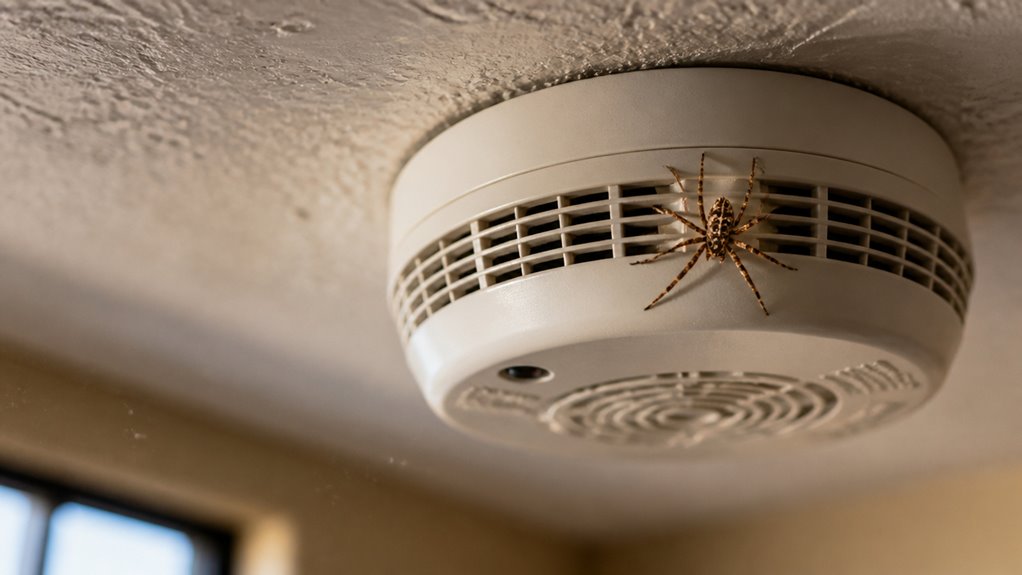

Yes, a spider can set off a smoke alarm by infiltrating the detection chamber and disrupting its sensor optics.
Its webs and trapped insects block or scatter the sensor’s light beam. Organic debris disturbs the sensor’s ability to accurately detect smoke.
This contamination causes false alarms by misinterpreting light patterns or mechanically triggering the sensor.
Understanding how infestation and obstruction affect your alarm’s performance can help you prevent these issues effectively.
Key Takeaways
- Spiders entering the detection chamber can disrupt sensor optics and trigger false smoke alarms.
- Spider webs scatter light and block airflow, leading to sensor misinterpretation as smoke.
- Physical contact between webs or spiders and sensor components may cause unintended alarm activation.
- Organic buildup from webs and insects increases false alarm frequency by interfering with optical sensors.
- Poor ventilation encourages spider infestation, raising the likelihood of false smoke alarm triggers.
How Spiders Trigger False Smoke Alarm Alarms?
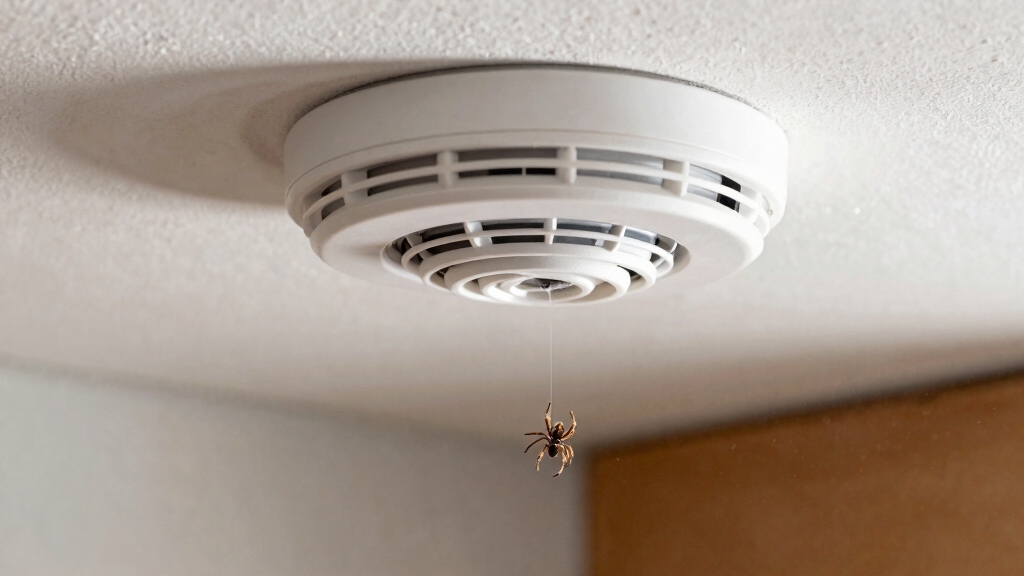
Spiders can set off false smoke alarms by infiltrating the detection chamber, where their webs and the insects they catch interfere with the sensor’s optical system.
Spiders invading the detection chamber disrupt the sensor’s optics, causing false smoke alarm triggers.
When spiders enter this compartment, their physical presence may disturb sensor components, causing unintended triggers.
The accumulation of webs and trapped insects creates obstructions that alter light paths within optical sensors, increasing the likelihood of false alarms.
These contaminants also impair air circulation inside the unit, which is vital for accurate smoke particle detection.
Repeated incidents, especially in residential environments, demonstrate that even minimal debris buildup heightens sensitivity, prompting unnecessary alarm activation.
To prevent this, understanding how spider intrusion compromises sensor function is essential for maintaining smoke alarm reliability and avoiding disruptions caused by false alerts.
Additionally, regular maintenance practices such as cleaning the sensor chamber can reduce false alarms caused by debris like spider webs.
How Spider Webs and Insects Block Smoke Alarm Sensors?
Did you know that spider webs and insect debris can actually interfere with smoke alarm sensors? It’s pretty fascinating!
These little nuisances can physically block the sensors, messing with their optical detection systems.
When that buildup happens, it scatters or even completely blocks the light beam from the sensor. This means the alarm’s ability to accurately detect smoke particles goes down.
Regularly cleaning the detector with compressed air or a soft brush is recommended to remove dust, debris, or insects that interfere with the sensor chamber.
Sensor Obstruction Effects
When spider webs and insects accumulate within a smoke alarm’s detection chamber, they obstruct the sensor’s optical system. This disruption affects the light beam that detects smoke particles.
Such interference reduces the sensor’s ability to accurately identify smoke, leading to potential false alarms or failure to alert. The dense webbing also restricts airflow, critical for timely smoke detection.
Physical contact between webs or insects and sensor components can trigger the alarm erroneously. Understanding these obstruction effects helps you maintain reliable smoke detection.
It is important to perform regular maintenance and cleaning to avoid sensor contamination that can impair smoke alarm performance.
| Obstruction Type | Sensor Impact |
|---|---|
| Spider webs | Light beam scattering, airflow blockage |
| Insect accumulation | Optical sensor contamination |
| Physical contact | False alarm activation |
| Debris density | Reduced smoke particle detection |
Web and Debris Buildup
Accumulating spider webs and insect debris inside smoke alarm sensors obstruct critical detection pathways, impairing the device’s ability to function correctly.
When webs and insect parts collect around the detection chamber, they physically block sensor openings, restricting airflow essential for smoke particle detection.
This buildup reduces the sensor’s responsiveness by limiting the entry of smoke into the chamber and interfering with the sensor’s internal components.
Additionally, dense organic matter can contact sensor elements, causing erratic signals or false alarms.
You’ll find that these obstructions increase the frequency of alarms triggered without smoke presence, especially in residential areas with poor ventilation attracting insects and spiders.
Regular inspection and cleaning are vital to prevent such contamination, ensuring sensors remain clear and maintain peak detection performance.
Routine cleaning and inspection support reliable operation by reducing false alarms and sensor malfunctions.
Optical Detection Disruption
Spider webs and insect debris interfere directly with the optical detection systems inside smoke alarms by obstructing the sensor’s light pathways. When webs or insect buildup block the optical chamber, the sensor’s light beam scatters or dims. This reduces its ability to detect smoke particles accurately.
This disruption can trigger false alarms or prevent real smoke detection. You should understand how specific obstructions affect sensor function:
| Obstruction Type | Impact on Sensor Function |
|---|---|
| Spider webs | Scatter light, reduce sensitivity |
| Insect debris | Block light paths, cause false alarms |
| Dense buildup | Impede air flow, impair smoke detection |
Regular inspection and cleaning prevent optical interference. This ensures reliable smoke alarm performance and minimizes false triggers caused by biological contaminants. For best results, clean detectors regularly with compressed air or a soft brush to reduce dust and debris buildup.
What Happens Inside a Contaminated Smoke Alarm Detection Chamber?
You know, when spider webs start building up inside the detection chamber of a smoke alarm, things can get a bit tricky. Those webs can really block the sensor’s optical pathways, which messes with the normal function of the light beam. This interference is no small deal; it can actually cause the sensor to misread signals.
As a result, you might end up with a false alarm going off when there’s no smoke at all. Regular maintenance, like replacing your smoke alarm’s battery with the correct battery size and voltage, helps ensure reliable operation and prevents malfunctions.
Spider Web Obstruction
Inside a smoke alarm’s detection chamber, webbing and insect debris can severely disrupt sensor function by blocking the optical pathways essential for accurate smoke detection.
When spider webs accumulate, they physically obstruct the sensor’s light beam, hindering smoke particle detection. This blockage can cause the alarm to malfunction or trigger false alarms.
Additionally, dense webbing impedes proper air circulation within the chamber, reducing the sensor’s responsiveness.
You should recognize these key impacts:
- Optical pathway obstruction diminishes smoke detection accuracy.
- Restricted airflow compromises sensor sensitivity.
- Organic debris buildup increases false alarm frequency.
Understanding these effects helps you appreciate why regular cleaning and maintenance are critical to prevent spider web obstruction and guarantee your smoke alarm operates reliably. Proper inspection frequency and maintenance intervals are essential to ensure long-term sensor reliability.
Sensor Optical Interference
Although smoke alarms rely on precise optical sensors to detect smoke particles, contamination within the detection chamber can markedly disrupt their function.
When spider webs and insect debris accumulate, they interfere with the light beam’s path, reducing sensor sensitivity. This contamination blocks airflow and scatters light irregularly, causing the alarm to misinterpret signals.
| Contaminant Type | Effect on Sensor |
|---|---|
| Spider webs | Scatter light, block airflow |
| Insect debris | Absorb/reflect light, obstruct detection |
| Dust and dirt | Reduce optical clarity, impair smoke detection |
You must regularly inspect and clean the detection chamber. Otherwise, optical interference from these contaminants compromises the alarm’s accuracy and reliability, increasing false alarm risks. The chamber’s design to prevent stray light and maintain controlled airflow is compromised when these contaminants accumulate.
False Alarm Activation
Optical interference from spider webs and insect debris doesn’t just reduce sensor sensitivity; it actively causes false alarm activation. When organic buildup contaminates the detection chamber, the optical sensors misinterpret irregular light patterns as smoke particles, triggering the alarm unnecessarily.
Additionally, physical contact between spider webs or insects and sensor components can directly activate the alarm’s circuitry.
You should understand these key mechanisms behind false alarms in contaminated smoke detectors:
- Disrupted light beam functionality due to accumulated webs or insect debris.
- Impeded airflow within the chamber, causing sensor misreads.
- Direct mechanical triggering from physical contact with sensor elements.
Recognizing how contamination alters sensor behavior helps you maintain reliable alarm performance and prevent unwarranted alerts. Using appropriate temporary covers during maintenance or construction can help prevent contamination that causes false alarms.
How Poor Ventilation Increases Spider and Insect Infestation in Smoke Alarms?
Poor ventilation sets the stage for increased spider and insect activity around smoke alarms by creating stagnant air zones that attract these pests.
When airflow is restricted, humidity and temperature stabilize, providing an ideal habitat for insects and spiders.
These pests congregate near the alarm housing, feeding on trapped insects and building webs inside the detection chamber.
The enclosed environment of the alarm offers shelter and protection, further encouraging infestation.
Accumulated webs and insects obstruct sensor pathways, impairing optical detection and increasing false alarm risk.
You can mitigate this by ensuring proper ventilation in areas where alarms are installed, reducing insect attraction and discouraging spider habitation.
Maintaining airflow disrupts the microenvironment spiders and insects rely on, preventing buildup that compromises smoke alarm functionality and reliability.
Offline systems prioritize privacy and uninterrupted recording but cannot provide real-time remote monitoring or prompt, actionable remote alert capability.
How False Alarms Disrupt Residential Safety and Sleep?
Frequently, false alarms caused by spider and insect interference disrupt the safety and rest of residential occupants. These false triggers occur when webs or insects block the sensor’s optical path or physically contact sensor components, causing the alarm to activate unnecessarily.
This malfunction can markedly affect your household by:
- Interrupting sleep cycles, leading to fatigue and reduced alertness during emergencies.
- Undermining trust in your alarm system, possibly causing delayed responses in real fire situations.
- Impairing safety for hearing-impaired residents who rely on consistent alarm signals.
Understanding these impacts emphasizes the importance of addressing sensor contamination to maintain reliable alarm functionality and protect your family’s safety and well-being.
How Regular Cleaning Prevents Spider and Insect Alarm Triggers?
Addressing false alarms caused by spider webs and insect interference starts with consistent maintenance.
You need to regularly clean the smoke alarm’s detection chamber to remove webs, insects, and debris that obstruct optical sensors.
Use a soft brush or compressed air to clear particles that disrupt the sensor’s light beam and airflow, which are critical for accurate smoke detection.
Neglecting this allows contamination to accumulate, increasing false alarm frequency due to sensor blockage and optical interference.
Additionally, make certain proper ventilation around the alarm to reduce insect attraction.
Disconnect the alarm before cleaning to avoid accidental triggers or damage.
Adhering to a scheduled cleaning routine helps maintain sensor functionality and reliability, preventing unnecessary alarms triggered by environmental contaminants like spiders and insects.
Best Pest Control Tips for Protecting Your Smoke Alarms
To effectively protect your smoke alarms from pest-related interference, implement targeted pest control measures that reduce insect and spider presence near alarm units.
These steps minimize contamination risks, maintaining prime sensor functionality and reducing false alarms. Focus on controlling the environment and applying preventative methods.
- Improve Ventilation: Enhance airflow around alarm locations to deter insects attracted to stagnant air and humidity.
- Apply Insecticide Strategically: Use non-corrosive insect surface sprays on ceilings and nearby areas. Ensure alarms are disconnected during application to avoid damage.
- Establish Routine Inspections: Schedule professional or self-conducted checks to identify early signs of infestation or debris buildup. This enables timely cleaning or intervention.
When to Replace a Spider-Infested Smoke Alarm?
Determining when to replace a spider-infested smoke alarm hinges on evaluating the extent of contamination and the alarm’s performance reliability.
If spider webs, insects, or debris severely obstruct the detection chamber, cleaning may no longer restore optimal sensor function.
Persistent false alarms or failure to trigger during testing indicate compromised reliability.
You should also consider replacement if the alarm shows physical damage from spider activity or if contamination recurs rapidly despite routine maintenance.
Additionally, alarms older than 10 years with infestation issues warrant replacement to guarantee safety standards are met.
Professional Inspection and Maintenance for Long-Term Smoke Alarm Reliability
Make sure your smoke alarms function reliably over time by scheduling professional inspections and maintenance. Experts can detect early contamination from spiders, webs, and insects that may impair sensor performance. Neglecting this can lead to false alarms or sensor failure.
To maintain long-term reliability, follow these key steps:
- Have professionals clean and inspect the detection chamber to remove debris and webs disrupting optical sensors.
- Replace units compromised by severe infestation to restore full sensitivity.
- Implement integrated pest management and ventilation improvements to reduce insect attraction and spider habitation.
Regular professional oversight guarantees your smoke alarms provide accurate, dependable warnings. This safeguards your home and family from fire hazards.
Frequently Asked Questions
Can Smoke Alarms Detect Other Types of Insects Besides Spiders?
Yes, smoke alarms can detect other insects besides spiders.
When insects like flies, ants, or moths enter the detection chamber, their presence disrupts the optical sensor’s light beam or airflow.
This interference can cause false alarms, especially if insect webs or debris accumulate.
To maintain accuracy, you should regularly clean the alarm and ensure proper ventilation around it.
This prevents insect ingress and reduces false triggers caused by various small insects.
Are Certain Smoke Alarm Brands More Resistant to Insect Infestations?
You want durability, reliability, and resistance against insect infestations in a smoke alarm.
Certain brands design sealed detection chambers and use insect-repellent coatings to minimize contamination.
Look for alarms with enhanced sensor shielding, tighter housing gaps, and optical sensors less prone to blockage.
While no model is completely immune, choosing alarms with these features reduces false alarms caused by spiders and insects.
This ensures better performance and fewer maintenance hassles over time.
How Quickly Can Spider Webs Form Inside a Smoke Alarm?
Spider webs can start forming inside a smoke alarm within just a few days, especially in environments with poor ventilation and abundant insects.
You’ll notice that spiders quickly build webs in the detection chamber, disrupting sensor function.
Regular inspection and cleaning every few weeks help you prevent significant buildup.
Maintaining proper airflow and controlling insect presence around the alarm also slows web formation, ensuring your alarm works reliably without false triggers.
Can Environmental Modifications Alone Prevent Spider-Related False Alarms?
Like a well-tuned machine, environmental modifications can markedly reduce spider-related false alarms, but they rarely prevent them entirely.
You’ll need to improve ventilation, eliminate stagnant air pockets, and apply insect deterrents near alarms to disrupt spider habitats.
However, without regular cleaning and maintenance, spider webs and insects can still accumulate inside detection chambers.
Combining environmental control with scheduled inspections guarantees peak smoke alarm reliability and minimizes false triggers effectively.
Are There Smoke Alarms Designed Specifically to Prevent Insect Entry?
Yes, some smoke alarms are designed with insect-resistant features like fine mesh screens or sealed detection chambers to prevent insect entry and contamination.
These design elements reduce false alarms caused by spiders and insects interfering with optical sensors.
When selecting alarms, look for models specifying insect-proof or tamper-resistant capabilities.
However, combining these with regular maintenance and environmental control guarantees peak reliability and minimizes sensor blockage from pests.
Protect Your Home with Proper Smoke Alarm Maintenance
You should know that nearly 30% of false smoke alarms stem from sensor contamination, often caused by spider webs and insects.
These intrusions block the detection chamber, triggering unnecessary alarms. Regular cleaning and proper ventilation are vital to prevent infestations and maintain alarm reliability.
If your smoke alarm shows persistent false alarms despite maintenance, replacing it is necessary.
Professional inspections guarantee your system functions correctly, safeguarding both your home and peace of mind.