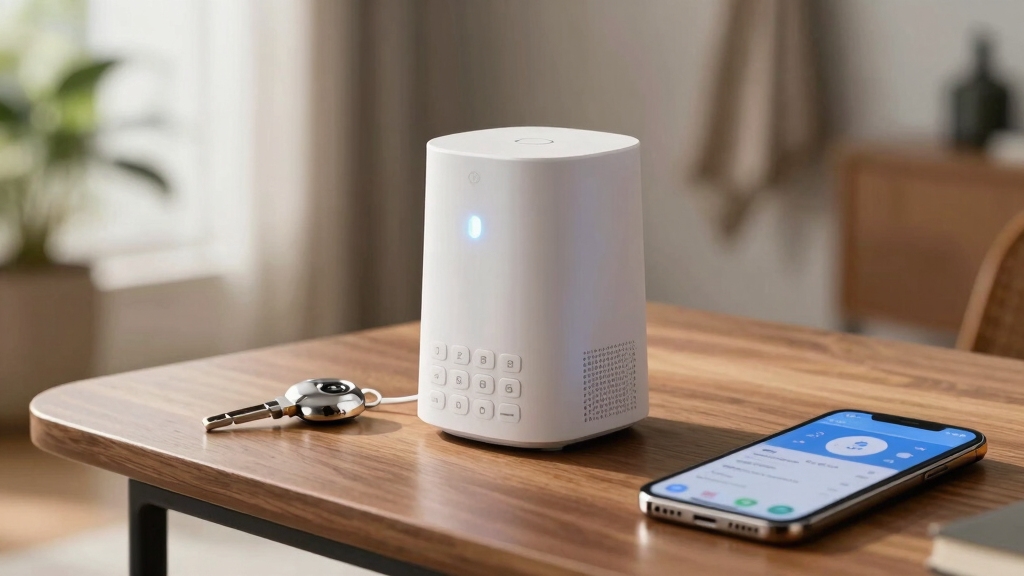

You get a reliable Ring Alarm system with DIY installation that typically takes 10–30 minutes. It features a base station with a cellular chip and 24-hour battery backup, ensuring continuous operation during outages.
The system covers 2,000+ sq. ft., supports up to 14 customizable sensors, and offers real-time mobile alerts. Integration with Alexa and Ring devices enhances smart home control, though Google Assistant and Siri aren’t supported.
For deeper insights on performance, pricing, and setup, keep exploring the details.
Key Takeaways
- The Ring Alarm System offers DIY installation with a quick 10–30 minute setup and customizable sensor settings via an intuitive app.
- Its base station includes cellular backup and a 24-hour battery for continuous protection during power or internet outages.
- Real-time mobile alerts, low false alarm rates, and integration with Ring cameras and Alexa improve monitoring and response.
- Professional monitoring is available month-to-month starting at $3, with expanded plans up to $20 for cloud recording and 24/7 support.
- Limited smart home compatibility due to Alexa-only integration excludes Google Assistant and Siri, which may restrict some users.
Ring Alarm Overview: What You Need to Know?
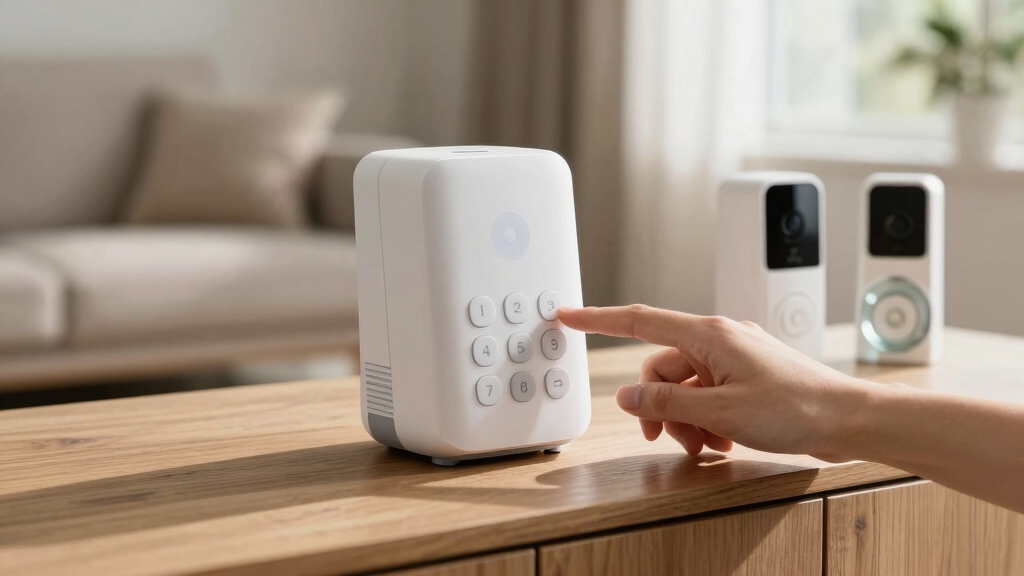
Although security systems can often feel complicated, the Ring Alarm system simplifies home protection with its straightforward DIY installation and all-inclusive features.
Ring Alarm makes home security easy with simple DIY setup and comprehensive features.
You get a base station equipped with a cellular chip and 24-hour battery backup, ensuring uninterrupted operation even during power outages.
The system covers up to 2,000+ square feet and supports a 14-piece kit with a built-in Wi-Fi router.
Sensors are compact, customizable, and integrate seamlessly with the base station and other alarm components.
Real-time mobile and email alerts keep you informed instantly.
Optional cellular backup and professional monitoring enhance reliability.
You can control the system via Alexa voice commands, with event history and customizable sensor settings available through the app.
The Ring ecosystem integrates cameras, doorbells, and smart locks for consolidated home security management.
Additionally, the system’s dual-path communication ensures continuous operation by using both cellular and Wi-Fi networks for reliable alerts.
Ring Alarm Installation: Quick and Easy Setup
Setting up your Ring Alarm system is designed to be straightforward and efficient, typically taking between 10 and 30 minutes.
You’ll start by plugging in the base station, which connects to your Wi-Fi and establishes the system’s cellular backup.
The Ring app guides you step-by-step through pairing each device, ensuring proper communication across the network.
Components are well-labeled, making installation intuitive whether you’re mounting sensors or positioning the keypad.
To streamline your setup:
- Plug in and connect the base station to Wi-Fi.
- Use the app to identify and pair each sensor.
- Follow placement recommendations for ideal coverage.
This DIY process minimizes errors and doesn’t require professional installation, though that option remains available.
For optimal performance, verifying wireless signal strength at each device location can help prevent connectivity issues during use.
How Ring Alarm’s Design Enhances Home Security?
Once your Ring Alarm system is installed, its design plays a pivotal role in bolstering your home security. The base station’s cellular chip and 24-hour battery backup guarantee continuous operation even during power or internet outages.
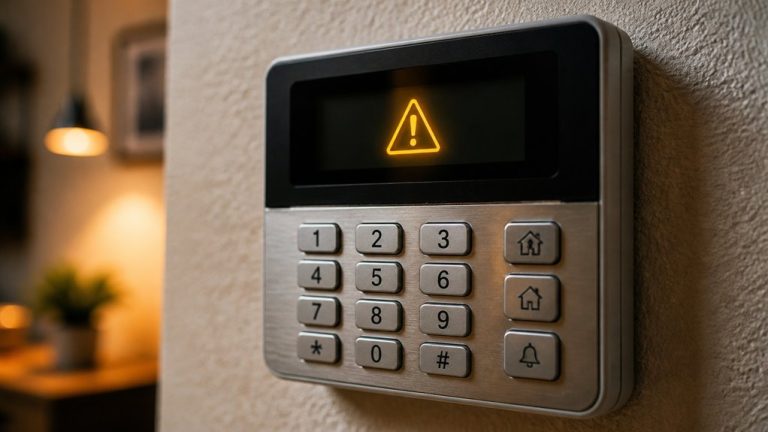
You’ll appreciate the compact sensors, which cover up to 2,000+ sq. ft. They allow you to customize names, locations, and settings for precise monitoring. The keypad’s dual power options, battery or hardwired, offer flexible placement, whether wall-mounted or portable.
Additionally, the 14-piece kits include a built-in Wi-Fi router, optimizing network stability and device communication. This integrated design minimizes vulnerabilities by maintaining seamless connectivity among components. It assures you receive accurate alerts and maintain control through the Ring app, enhancing your system’s overall reliability and responsiveness.
Ring systems also use unique identifiers to securely manage device connections and prevent unauthorized access.
Ring Alarm Performance: Reliability and Response Times
You’ll notice that the Ring Alarm system really shines when it comes to response times. It typically connects you to monitoring services within 45 to 60 seconds after a trigger. That’s pretty quick, right? Plus, its design effectively minimizes false alarms, which means you get fewer unnecessary alerts.
And let’s talk about reliability. The components are built to last, maintaining 90-95% functionality even after four years. So, you can count on consistent performance over the long haul. Sounds good, doesn’t it?
In comparison, some systems offer 4G LTE cellular backup to ensure uninterrupted monitoring even during outages.
Alarm Response Speed
Ring Alarm delivers rapid response times, typically notifying monitoring services within 45 to 60 seconds after a sensor trigger. This speed hinges on the system’s integrated cellular chip in the base station, ensuring communication continues even if Wi-Fi fails. When an event occurs, the system immediately transmits alerts to both the monitoring center and your mobile device, enabling swift action.
Key factors influencing response speed include:
- Cellular backup activation when Wi-Fi is interrupted, preventing delays.
- Prioritized signal processing within the base station to reduce latency.
- Real-time mobile notifications allowing you to verify and respond instantly.
These elements combine to optimize Ring Alarm’s reliability, ensuring rapid, consistent alert delivery critical for effective home security. Cellular-based systems provide remote alerts and feeds without relying on WiFi by using 4G/LTE networks, enhancing response capabilities when internet connectivity is compromised.
False Alarm Reduction
A critical measure of any security system’s effectiveness is its ability to minimize false alarms. This system excels in that regard with a remarkably low false alarm rate.
You benefit from advanced sensor technology that detects genuine threats accurately while filtering out environmental noise and minor disturbances. The system’s customizable sensor settings let you adjust sensitivity according to your environment, reducing unintended triggers.
Additionally, the app’s real-time alerts enable you to verify events promptly, preventing unnecessary dispatches. Its integration with Alexa Guard further refines detection by identifying specific incidents like glass breaking or smoke alarms.
Combined with a rapid 45-60 second monitoring response, these features guarantee you receive reliable alerts without frequent false positives. This enhances overall trust in the system’s performance.
Fine-tuning Motion Zones and Sensitivity further optimizes detection accuracy and reduces false alerts by focusing on relevant areas and adjusting responsiveness.
Long-Term Component Durability
Although most security systems degrade over time, this alarm maintains high functionality with 90-95% of components still operational after four years.
You can rely on its durable design, including a base station with a cellular chip and 24-hour battery backup, which guarantees continuous operation during power outages.
The sensors, redesigned for durability and compactness, sustain performance with minimal maintenance.
Key factors supporting long-term reliability include:
- Robust hardware construction resisting wear and environmental stress.
- Seamless integration preserving communication among components.
- Efficient battery management extending sensor and keypad life.
Your system’s response times stay consistent, with monitoring alerts triggering within 45-60 seconds, maintaining dependable security over the long term.
You can trust this setup to perform reliably year after year. However, it is important to avoid frequent bypassing zones as this can create vulnerabilities and reduce overall system effectiveness.
Ring Alarm Key Features
When you set up this alarm system, you gain access to real-time mobile and email alerts that instantly notify you of any sensor triggers. This ensures prompt awareness of potential security breaches.
The base station includes a cellular chip and 24-hour battery backup, providing continuous protection even during power outages or Wi-Fi failures.
You can customize sensor names, locations, and settings via the app, enhancing control and monitoring precision.
Alexa Guard integration adds detection for glass breakage and smoke/CO alarms, while voice commands allow arming or disarming through Alexa devices.
The system supports event history logging, multiple alarm modes, adjustable chirp tones, and LED indicators on individual sensors, ensuring a tailored security experience.
Optional 24/7 professional monitoring and cellular backup further enhance overall reliability and rapid response.
Moreover, integration with smart home systems enables seamless control and automation across various security devices for improved protection.
Ring Alarm Compatibility and Integration With Smart Devices
Beyond its core security functions, the Ring Alarm system excels in compatibility and integration. It allows you to unify your smart home devices under one platform.
The Ring Alarm system seamlessly unifies your smart home devices into a single, integrated platform.
You can seamlessly connect Ring cameras, doorbells, and lighting with the alarm system, controlling everything via the Ring app. Additionally, it supports third-party smart locks like Kwikset, Schlage, and Yale, enhancing security automation.
Integration is optimized for Alexa, enabling voice commands and routines. However, it doesn’t support Google Assistant or Siri.
Key integration features include:
- Centralized control through a single app ecosystem, simplifying device management.
- Automatic connection to indoor/outdoor cameras and video doorbells for thorough monitoring.
- Alexa Guard compatibility, allowing voice arm/disarm and sensor-based routines.
This setup guarantees efficient smart home coordination without system conflicts. Choosing the right subscription plan can further optimize your system’s functionality and cost-effectiveness.
Ring Alarm Durability and Long-Term Reliability
Since you depend on your security system every day, the Ring Alarm demonstrates impressive durability and long-term reliability. Its base station includes a cellular chip and 24-hour battery backup, ensuring uninterrupted operation during power or internet outages.
The sensors maintain 90-95% functionality after four years, thanks to robust design and quality components. You’ll appreciate the system’s seamless integration and consistent performance, minimizing maintenance needs.
| Component | Durability Feature |
|---|---|
| Base Station | Cellular chip, 24-hour battery backup |
| Sensors | 90-95% functional after 4 years |
| Keypad | Battery-powered or hardwired options |
| System Integration | Seamless connectivity among components |
Regular maintenance such as monthly testing and battery replacement helps sustain this level of performance and prevents sensor degradation over time, ensuring ongoing long-term reliability.
Ring Alarm Pricing and Monitoring Explained
Although Ring Alarm offers robust security features, understanding its pricing and monitoring options is essential for selecting the right plan.
Choosing the right Ring Alarm plan means balancing security features with pricing and monitoring options.
Ring provides professional monitoring starting at $3 per month, with no contracts and month-to-month flexibility.
For $20 monthly, you get expanded services, including cloud recording for unlimited cameras.
The Ring Protect Plus plan offers 24/7 professional support, but its price has doubled from the original $10 monthly rate.
When deciding, consider these key points:
- Monitoring costs: Range from $3 to $20 monthly, depending on features and camera integration.
- Contract terms: All plans are month-to-month with no long-term commitments.
- Additional services: Cloud storage and 24/7 monitoring come with higher-tier plans.
This pricing structure makes Ring competitive among DIY security systems.
Pros and Cons of Using Ring Alarm System
When evaluating the Ring Alarm System, you’ll find a range of strengths and limitations that influence its suitability for your security needs.
Its DIY setup is quick and guided by a user-friendly app, making installation accessible.
The system offers robust coverage with a cellular chip and 24-hour battery backup in the base station, ensuring reliability during outages.
Its loud sirens and low false alarm rate enhance response efficiency, while seamless integration with Ring cameras and smart locks provides thorough monitoring.
However, the system’s Alexa-only compatibility restricts smart home integration options.
Also, professional monitoring costs have increased, potentially impacting affordability.
The system’s modular design offers flexibility, but relying on Wi-Fi and cellular connections may pose connectivity risks.
You should weigh these factors against your specific security priorities.
Should You Choose Ring Alarm for Your Home Security?
Deciding whether to choose the Ring Alarm system for your home security depends on how well its features align with your specific needs and priorities.
Choosing Ring Alarm hinges on how its features match your unique security needs and priorities.
You should evaluate the system’s capabilities in relation to your home’s size, your desired level of monitoring, and compatibility with existing smart devices.
- Installation & Coverage: Ring offers quick DIY setup with clear app guidance. It supports coverage up to 2,000+ sq. ft., suitable for most homes.
- Integration & Automation: It seamlessly integrates with Ring cameras and Alexa-enabled devices. However, it lacks support for Google Assistant or Siri, limiting some smart home flexibility.
- Monitoring & Cost: The optional professional monitoring is competitively priced with month-to-month plans, but costs have increased over time.
If you value ease of installation, robust sensor performance, and Alexa integration, Ring Alarm is a strong candidate for your security solution.
Frequently Asked Questions
Can Ring Alarm Be Controlled Without Internet Access?
You can control the Ring Alarm system locally through the keypad without internet access, as it connects directly to the base station via Wi-Fi and cellular backup.
However, remote control via the app and receiving real-time alerts require internet connectivity.
The system’s cellular chip guarantees monitoring continues during internet outages.
But full smart features, like voice commands and app management, depend on an active internet connection for seamless operation.
Are There Any Discounts for Purchasing Multiple Ring Alarm Kits?
There aren’t official discounts specifically for purchasing multiple Ring Alarm kits directly from Ring.
However, you can often find bundle deals or seasonal promotions through authorized retailers that may offer price reductions when buying several kits.
You should check third-party sellers or Ring’s website during holiday sales.
Additionally, some sellers provide free shipping or accessory discounts with multiple purchases, so comparing options will help you maximize savings when buying multiple kits.
How Does Ring Alarm Protect User Privacy and Data Security?
You won’t find a Fort Knox tougher than Ring’s privacy and data security.
Ring encrypts your data both in transit and at rest, ensuring only you and authorized parties access it.
They use multi-factor authentication to protect your account and conduct regular security audits.
Plus, all communication between devices and the app is secured with TLS protocols.
Your privacy is safeguarded with strict data policies and transparent user controls.
Can Ring Alarm Systems Be Expanded With Non-Ring Sensors?
You can’t directly expand Ring Alarm systems with non-Ring sensors, as the system is designed to integrate primarily with Ring’s own sensors for seamless functionality.
However, it supports third-party smart locks like Kwikset, Schlage, and Yale.
For sensors, you’ll need to stick with Ring-compatible devices to guarantee full integration, reliable performance, and proper app control.
Non-Ring sensors typically won’t pair or trigger alerts within the Ring ecosystem.
Securing Your Home with Confidence and Control
Choosing the Ring Alarm system is like equipping your home with a modern-day fortress, melding advanced technology with user-friendly design.
Its reliable performance, quick installation, and all-encompassing monitoring provide a robust security solution, much like the watchful eyes of a vigilant guardian.
While no system is flawless, Ring’s durability and feature set make it a compelling choice for those seeking detailed control and dependable protection in their home security strategy.