
Yes, you can keep a fire extinguisher in your car even though no law requires it for personal vehicles. A 2.5-pound ABC dry chemical extinguisher is ideal for common car fire risks like combustibles and electrical fires.
Mount it securely within arm’s reach, near an exit, using a quick-release bracket. Regular inspection and proper use are essential for safety. Understanding the right extinguisher and usage can materially improve your roadside fire response.
Key Takeaways
- No law requires fire extinguishers in personal vehicles, but keeping one is highly recommended for safety and quick fire response.
- A 2.5-pound ABC dry chemical extinguisher is ideal for most personal cars due to its effectiveness on common vehicle fires.
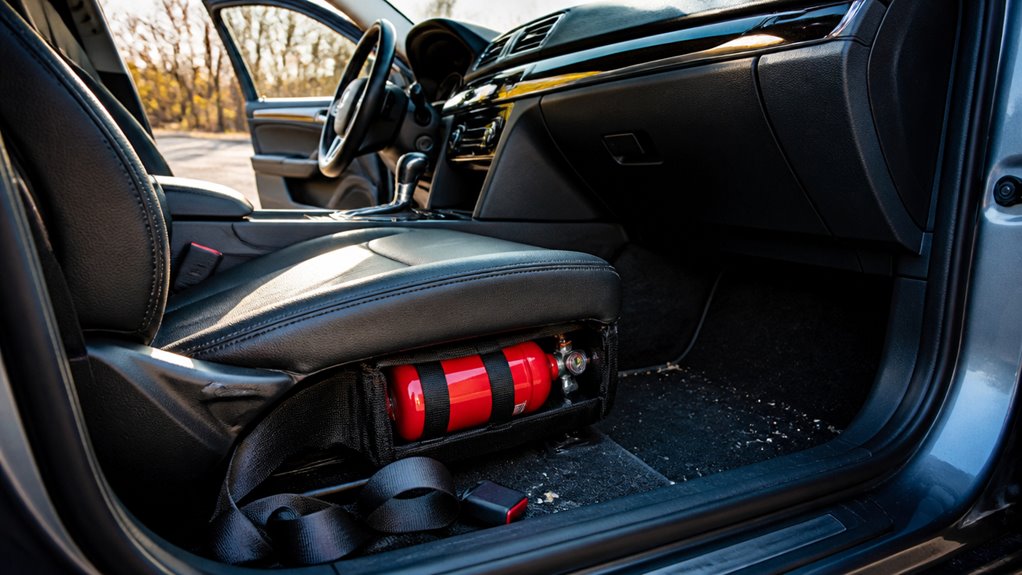
- Mount the extinguisher securely within arm’s reach, near an exit, using a quick-release bracket for fast access in emergencies.
- Regularly inspect the extinguisher’s pressure gauge, safety pin, and expiration date to ensure it is fully operational.
- Carrying a fire extinguisher in your car enhances safety, enabling quick fire control and protecting passengers and property.
Can You Legally Keep a Fire Extinguisher in Your Car?
While no law requires you to carry a fire extinguisher in your personal vehicle, having one can markedly improve your safety in emergencies.
No law mandates fire extinguishers in personal vehicles, but carrying one greatly boosts emergency safety.
Federal regulations mandate fire extinguishers only for commercial trucks, buses, and recreational vehicles, with specific size and rating requirements. For example, commercial trucks without hazardous materials need at least a 5 B:C extinguisher, while those carrying hazardous materials must have a 10 B:C unit.
Recreational vehicles require a 5-pound BC extinguisher near each exit. However, no statutes compel private car owners to equip their vehicles with extinguishers.
Still, choosing to keep one aligns with best safety practices, especially since most car fires involve common combustible or electrical materials that standard ABC extinguishers can handle effectively.
You’re legally free to keep one, and doing so enhances your preparedness.
For vehicles, a 5 lb ABC extinguisher is generally recommended as it balances capacity and ease of use for small car fires involving flammable liquids and electrical components.
Best Fire Extinguisher Size for Your Car
When it comes to picking the right fire extinguisher size for your car, it’s all about your vehicle type and how easy it’s to use. For most personal cars, a 2.5-pound ABC dry chemical extinguisher is a solid choice. It gives you effective coverage without taking up too much space, which is super important in a compact environment.
Now, if you’re driving a larger vehicle, like an RV or a commercial truck, things get a bit different. You’ll want to consider a bigger extinguisher or maybe even have multiple ones on hand.
This not only helps you meet safety regulations but also ensures you’re prepared for any situation that might arise. Understanding the fire classes suitable for dry chemical extinguishers can help you select the most effective type for your vehicle’s specific fire risks.
Recommended Extinguisher Sizes
Selecting the right fire extinguisher size for your car guarantees quick and effective response during emergencies. For most personal vehicles, a 2.5-pound ABC dry chemical extinguisher offers a perfect balance of portability and sufficient extinguishing power. It fits easily and is simple to handle under stress.
Consider these size recommendations:
2.5-pound ABC extinguisher for standard passenger cars.
5-pound extinguishers for recreational vehicles near exits.
10 B:C rating for commercial trucks over 10,000 pounds.
Multiple extinguishers for off-road vehicles, placed front and rear.
Racing cars require 2.5-pound extinguishers with quick-release mounts.
Choosing the right size makes certain you can quickly suppress fires while maintaining ease of access and control. It is also important to mount extinguishers within easy reach and along normal travel paths for rapid deployment during emergencies.
Vehicle Type Considerations
Consider your vehicle type carefully to determine the most effective fire extinguisher size and rating.
For most personal cars, a 2.5-pound ABC extinguisher offers a balance of portability and firefighting power. It fits easily without adding unnecessary bulk.
If you drive an RV, you’ll need a larger 5-pound BC-rated extinguisher mounted near each exitedto comply with federal guidelines.
Commercial trucks over 10,000 pounds require at least a 5-pound B:C extinguisher, with 10-pound units mandated when transporting hazardous materials.
Off-road vehicles benefit from multiple extinguishers positioned for quick access both front and rear.
Your choice must align with your vehicle’s size, typical fire risks, and accessibility during emergencies.
Selecting the right extinguisher ensures you’re prepared without compromising space or safety.
Keep in mind that ABC fire extinguishers use monoammonium phosphate-based dry chemical, making them suitable for handling multiple fire classes you might encounter in vehicles.
How to Mount a Fire Extinguisher Securely in Your Vehicle?
Mount your fire extinguisher securely to prevent it from sliding, rolling, or shifting during vehicle movement or an accident. Proper mounting guarantees quick access and safety. Here’s how you can do it effectively:
Securely mount your fire extinguisher to ensure safety and quick access during vehicle movement or emergencies.
Attach a bracket to a sturdy location like the front passenger seat rail or vehicle frame.
Use quick-release mounts for easy, fast removal in emergencies.
Avoid storing the extinguisher in the trunk or under the hood, where access is limited.
Make sure the mount holds the extinguisher firmly to withstand sudden stops or crashes.
Place it within arm’s reach, near an exit point, so you can grab it during an emergency without delay.
Additionally, ensure that all mounting hardware is installed using the correct tools and techniques to maintain system integrity and safety.
Which Fire Extinguisher Types Handle Common Car Fires?
With your fire extinguisher securely mounted and within easy reach, knowing which types effectively handle common car fires becomes the next priority.
For most personal vehicles, a 2.5-pound ABC dry chemical extinguisher is ideal. It tackles Class A fires involving ordinary combustibles like cloth or rubber, Class B fires with flammable liquids such as gasoline, and Class C fires involving energized electrical equipment.
This versatility makes ABC extinguishers the best choice for typical car fire hazards. You should avoid extinguishers designed solely for specialized fires like Class D or K, as they won’t cover the common risks your vehicle faces.
Always choose UL-listed, OSHA-approved models to assure effectiveness and safety when responding to automotive fire incidents. Regular inspection and maintenance are essential to ensure your extinguisher functions properly when you need it most.
How to Use a Fire Extinguisher Safely in Your Vehicle?
To use a fire extinguisher safely in your vehicle, it’s important to handle it firmly and aim at the base of the fire. You’ll want to remember the PASS technique—it’s super helpful! That stands for Pull the pin, Aim low, Squeeze the handle, and Sweep side to side. This way, you can effectively suppress those flames.
Oh, and don’t forget to keep a safe distance! It’s always better to be cautious. If the fire starts to grow out of control, be ready to evacuate. Your safety comes first!
Always position yourself with a clear exit behind you when using the extinguisher to ensure you can escape quickly if needed.
Proper Extinguisher Handling
Before attempting to use a fire extinguisher in your vehicle, you should quickly assess the situation to guarantee your safety and the effectiveness of the response.
Handle the extinguisher with confidence, following these key steps:
Pull the pin to break the tamper seal. Aim the nozzle at the base of the fire, not the flames. Squeeze the handle firmly and evenly. Sweep the nozzle side to side, covering the fire’s base.
Maintain a safe distance, moving closer only as the fire diminishes. Always make certain your footing is stable, and never turn your back on a fire. If the fire grows or you feel unsafe, evacuate immediately.
Proper handling maximizes control and minimizes risk during a vehicle fire emergency. Always position yourself with a clear exit behind you to ensure a safe escape route.
Safe Fire Suppression Steps
Act swiftly but cautiously when you spot a fire in your vehicle, ensuring your safety is the top priority.
First, pull over safely and turn off the engine to cut fuel and electrical sources.
Grab your extinguisher and position yourself upwind to avoid smoke inhalation.
Aim the nozzle at the fire’s base, not the flames, to effectively smother it.
Use a sweeping motion side to side while maintaining a safe distance.
Always keep an escape route clear in case the fire grows.
If the fire doesn’t diminish quickly, evacuate immediately and call emergency services.
Never attempt to fight a large or spreading fire.
Regularly inspect your extinguisher to confirm it’s charged and accessible, so you’re ready when every second counts.
Properly following the PASS method ensures the extinguisher is used effectively and safely.
How to Maintain and Inspect Your Car’s Fire Extinguisher?
Regularly inspecting and maintaining your car’s fire extinguisher guarantees it will function properly when you need it most. Neglecting checks can render it useless in emergencies. Here’s how to keep it ready:
Check the pressure gauge; make certain the needle is in the green zone.
Check the pressure gauge regularly to ensure the needle stays within the green zone for optimal performance.
Confirm the safety pin is intact and secure.
Inspect the extinguisher body for dents, corrosion, or leaks.
Verify the expiration date; replace if it’s past 12 years or damaged.
Make certain the mounting bracket is firmly secured to prevent movement.
Perform these inspections monthly and after any use. Proper maintenance ensures your extinguisher complies with safety standards and remains reliable, protecting you and your passengers effectively.
Regular maintenance and timely recharging are essential to maintain spray duration consistency and optimal fire suppression performance.
What Extra Safety Gear Should You Carry With Your Fire Extinguisher?
Although a fire extinguisher is essential for vehicle safety, carrying additional emergency gear enhances your preparedness and response capabilities.
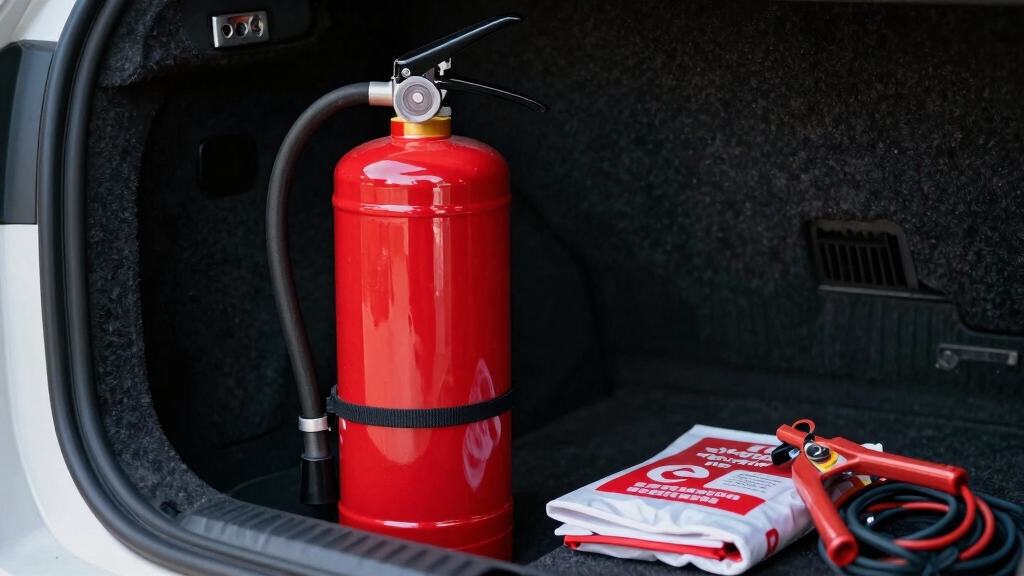
Equip your car with a first aid kit, reflective warning triangles, and jumper cables to handle various roadside emergencies effectively. A sturdy flashlight and warm blankets provide comfort and visibility during night or cold-weather incidents.
| Gear Item | Purpose | Key Feature |
|---|---|---|
| First Aid Kit | Treat minor injuries | Compact, thorough |
| Warning Triangles | Alert other drivers | Highly reflective, foldable |
| Jumper Cables | Restart dead battery | Durable, heavy gauge |
| Flashlight & Blanket | Visibility & warmth | Long battery life, insulated |
This combination makes certain you’re ready for fire, injury, or breakdown. It increases safety until help arrives.
Fire Extinguisher Requirements for RVs, Commercial, and Off-Road Vehicles
Alongside carrying extra safety gear, understanding the specific fire extinguisher requirements for your vehicle type guarantees proper protection. For RVs, federal rules require a 5-pound BC extinguisher near each exit.
Commercial vehicles must comply with stricter mandates depending on their cargo and size. Off-road vehicles benefit from multiple extinguishers for quick access during rough terrain challenges.
Key requirements include:
- RVs: 5-pound BC extinguisher near every exit
- Commercial trucks (non-hazardous): One 5 B:C or two 4 B:C extinguishers
- Commercial trucks (hazardous materials): Minimum 10 B:C extinguisher
- Off-road vehicles: Multiple extinguishers, including near driver and rear
- Secure mounting to prevent movement during travel and accidents
Knowing and following these rules guarantees safety and compliance on the road.
Frequently Asked Questions
Can Extreme Heat Affect My Car’s Fire Extinguisher Performance?
Extreme heat won’t affect your car’s fire extinguisher performance. These devices are designed to withstand temperature fluctuations without losing pressure or functionality.
However, you should regularly check the gauge to make certain it’s in the green zone, indicating readiness. Proper mounting and storage away from direct sunlight help maintain longevity.
Always use UL-listed extinguishers and replace or service them as recommended to ensure reliable operation in emergencies.
Are There Specific Brands Recommended for Vehicle Fire Extinguishers?
You want reliability, not just a name. Brands like Kidde, First Alert, and Amerex consistently meet UL and OSHA standards for vehicle fire extinguishers.
They offer ABC-rated models that handle common car fires effectively. Choosing a well-reviewed, certified extinguisher guarantees quick, confident use during emergencies.
Avoid generic or uncertified options; your safety depends on proven quality, proper ratings, and secure mounting for easy access when seconds count.
How Often Should I Replace a Discharged Fire Extinguisher in My Car?
You should replace or recharge a discharged fire extinguisher in your car immediately after use.
Even partial discharge reduces its effectiveness, so don’t delay. Regularly check the pressure gauge to make certain it’s in the green zone.
Inspect the extinguisher for damage or expiration, typically every 12 years. Prompt maintenance guarantees reliable performance when you need it most, keeping you prepared for emergency fire situations on the road.
Can I Carry Multiple Types of Extinguishers in One Vehicle?
You can carry multiple types of fire extinguishers in one vehicle, and it’s often wise to do so, especially if you face varied risks.
For example, off-roading vehicles benefit from having one extinguisher near the driver and another at the rear.
Just make certain each extinguisher matches potential fire classes, like ABC for common fires and a Class K for cooking oils.
Securely mount each for quick, safe access during emergencies.
What Should I Do if My Extinguisher Gauge Is in the Red Zone?
If your extinguisher gauge is in the red zone, you need to replace or recharge it immediately. The red zone indicates low or no pressure, meaning it won’t function properly during an emergency.
Don’t attempt to use an extinguisher with insufficient pressure; it’s unsafe. Always check the gauge regularly, and if it’s compromised, take it to a certified service center or buy a new UL-listed extinguisher to guarantee reliable fire protection.
Fire Extinguisher in Your Car: A Small Tool with Life-Saving Power
Think of a fire extinguisher in your car as a lifebuoy on a stormy sea. It’s small, yet vital when flames threaten. Keeping one isn’t just smart; it’s a legal and safety shield that gives you control amid chaos.
Choose the right size, mount it securely, and maintain it diligently. This simple tool can turn a fiery disaster into a minor hiccup, protecting you and your vehicle when seconds matter most.