
Yes, your local fire department often installs smoke detectors for free, especially if you qualify based on income, age, or disability. They provide and install alarms on every home level, inside bedrooms, and near sleeping areas following safety codes.
Many departments use hardwired or interconnected alarms with battery backup for enhanced protection. They also replace batteries and test units during visits. To understand how these services improve your home safety, check out the full details on fire department support.
Key Takeaways
- Many local fire departments offer free smoke alarms and installation services, especially for eligible single-family homes.
- Installation is often prioritized for elderly, disabled, and low-income households to ensure greater fire safety.
- Fire department personnel use proper tools and follow NFPA guidelines during installation to ensure code compliance.
- They verify alarm functionality and conduct safety evaluations during installation visits.
- Eligibility and scheduling usually require contacting the Fire Prevention Bureau with proof of residency or income.
What Smoke Alarm Laws Do Fire Departments Enforce?
Fire departments routinely enforce smoke alarm laws designed to guarantee your home meets strict safety standards.
You must have smoke alarms installed on every floor, inside each bedroom, and outside sleeping areas, including basements, following NFPA 72.
If your level lacks bedrooms, place alarms in living rooms or near stairways.
For new constructions, alarms need to be hardwired with battery backup and interconnected so one triggers all.
You should install alarms on ceilings or high on walls, avoiding placement near heaters, vents, kitchens, or bathrooms.
Maryland law, for example, requires interconnected alarms that comply with UL 217 standards and cover all sleeping areas and hallways.
Fire officials can order you to install alarms within five days after inspection if your home doesn’t meet these requirements.
Regular testing and maintenance of your smoke detectors are crucial to ensure reliable operation and household safety.
Which Fire Departments Offer Free Smoke Alarms?
Did you know that many local fire departments offer free smoke alarms? If you live in a single-family home, this could be a great option for you! Departments in places like Syracuse and Austin not only provide the alarms but often help with installation and even battery replacements—all for free.
Now, keep in mind that eligibility might depend on certain factors, such as your income or age. So, it’s a good idea to reach out to your local fire department. They can give you all the details on whether you qualify and how to get a free installation. It’s a simple step that can make a big difference in keeping your home safe!
Many fire departments also recommend regular professional inspection of smoke detectors to ensure they function properly over time.
Fire Departments Providing Alarms
Many local departments install free smoke alarms to enhance community safety, especially in single-family homes.
You’ll find that departments like Syracuse, Austin, and Fort Worth actively provide alarms and install them upon request. They prioritize residents who need assistance, including the elderly, disabled, or low-income households.
These programs not only distribute detectors but also guarantee proper installation, battery replacement, and safety inspections. Fire departments follow NFPA guidelines, verifying that alarms meet standards for placement and functionality.
When you contact your local fire department, they often offer free alarms along with installation services, helping reduce fire risks markedly.
Taking advantage of these programs secures your home complies with safety regulations and improves your family’s protection against fire hazards.
Many of these smoke alarms are single-station systems that require occupants to call 911 in case of an emergency, emphasizing the importance of prompt human action.
Eligibility for Free Installation
Several local departments offer free smoke alarm installation programs, targeting residents who meet specific eligibility criteria. Typically, these programs prioritize homeowners who are elderly, have fixed incomes, or face disabilities, guaranteeing vulnerable populations receive proper protection.
For instance, fire departments in Texas cities like Gainesville and Sherman specifically assist elderly and handicapped residents. In Syracuse, the Fire Prevention Bureau installs alarms upon request in one- and two-family homes.
Austin and Fort Worth fire departments provide free alarms and battery replacements to eligible private homeowners. To qualify, you may need to prove residency or income level, so check with your local fire department for guidelines.
These programs not only distribute alarms but also conduct safety evaluations and ensure proper, NFPA-compliant installation for peak fire protection. It is important that these alarms are installed according to key placement guidelines to maximize safety and ensure audible warnings throughout the home.
Where Do Fire Departments Install Smoke Alarms in Homes?
Fire departments typically install smoke alarms on every level of your home, including inside each bedroom and just outside sleeping areas. This ensures that you meet safety standards and are well-protected.
They follow specific placement guidelines, which means they usually prefer to mount alarms on ceilings or high walls. It’s important to steer clear of spots near vents, heaters, or kitchens because those areas can trigger false alarms.
Additionally, they pay special attention to common areas and basements. This way, you get comprehensive coverage throughout your home. However, they won’t install alarms in unoccupied spaces like garages or attics since those areas don’t need the same level of monitoring.
For maximum safety, fire departments often recommend using interconnected smoke detectors to ensure all alarms sound simultaneously during an emergency.
Required Installation Locations
Although smoke alarms are essential throughout your home, fire departments focus installation in specific locations to maximize safety and compliance. They prioritize every level, including basements, and install alarms inside each bedroom and outside sleeping areas.
On floors without bedrooms, detectors go in living rooms or near stairways. Departments avoid garages, unoccupied attics, and crawl spaces.
It is important to ensure these alarms have a reliable battery backup to maintain functionality during power outages and provide continuous protection.
| Location | Reason |
|---|---|
| Inside each bedroom | Immediate alert while sleeping |
| Outside sleeping areas | Covers all bedrooms efficiently |
| Every floor, including basement | Guarantees whole-home coverage |
| Living room or near stairs | Protects common living spaces |
| Hallways (post-2013 homes) | Meets updated safety codes |
This targeted approach makes certain alarms activate promptly, maximizing your home’s fire safety.
Placement Guidelines Overview
When installing smoke alarms, fire departments follow strict placement guidelines to ensure maximum protection throughout your home.
They place alarms inside every bedroom and outside sleeping areas, ensuring coverage where you rest.
Each level, including basements, requires at least one alarm. If a floor lacks bedrooms, detectors go in living rooms or near stairs.
Firefighters prefer ceiling installations or high on walls if necessary, keeping alarms 4 to 12 inches away from corners or vents to avoid false alarms.
Pitched ceilings require mounting at the peak, following manufacturer instructions.
These placements comply with NFPA 72 standards, ensuring alarms detect smoke early and alert you effectively.
For optimal safety, fire departments recommend using interconnected alarms with battery backup to maintain functionality during power outages.
Special Considerations Areas
Since proper smoke alarm placement is critical for effective detection, fire departments give special attention to areas that require unique considerations.
You’ll find smoke alarms installed inside each bedroom, outside sleeping areas, and on every level including basements.
Firefighters avoid placing alarms near kitchens, bathrooms, heaters, or vents to reduce false alarms.
In homes with pitched ceilings, alarms sit at the peak or follow manufacturer instructions.
If ceilings aren’t accessible, they mount alarms on walls at least 4 inches below the ceiling.
On floors without bedrooms, alarms go in living rooms or near stairways.
Fire departments prioritize hallways or common areas outside sleeping rooms, especially in newer homes.
These targeted placements guarantee early warning while minimizing nuisance alarms, maximizing safety in your home.
Photoelectric smoke alarms are especially recommended in these areas due to their sensitivity to smoldering fires, providing earlier alerts and fewer false alarms.
What Types of Smoke Alarms Do Fire Departments Provide?
Fire departments typically provide smoke alarms that meet or exceed NFPA and UL 217 standards to guarantee maximum safety for your home. These alarms are either battery-operated, hardwired with battery backup, or interconnected to assure comprehensive coverage.
You’ll often receive alarms designed to detect both visible and invisible particles, enhancing early fire detection. The choice depends on your home’s wiring and layout, but all offered devices comply with the strict requirements for residential safety.
| Type | Features |
|---|---|
| Battery-Operated | Easy installation, standalone |
| Hardwired with Backup | Power from home wiring, battery backup |
| Interconnected Alarms | One triggers all alarms |
| Photoelectric Sensors | Detect smoldering fires |
| Ionization Sensors | Detect fast-flaming fires |
These options assure your home gets reliable, code-compliant protection. Many fire departments prefer alarms featuring dual-sensor technology because they improve detection accuracy and reduce false alarms.
How Do Fire Departments Support Smoke Alarm Installation?
Knowing the types of smoke alarms available helps you understand what to expect, but how do fire departments actually support installation?
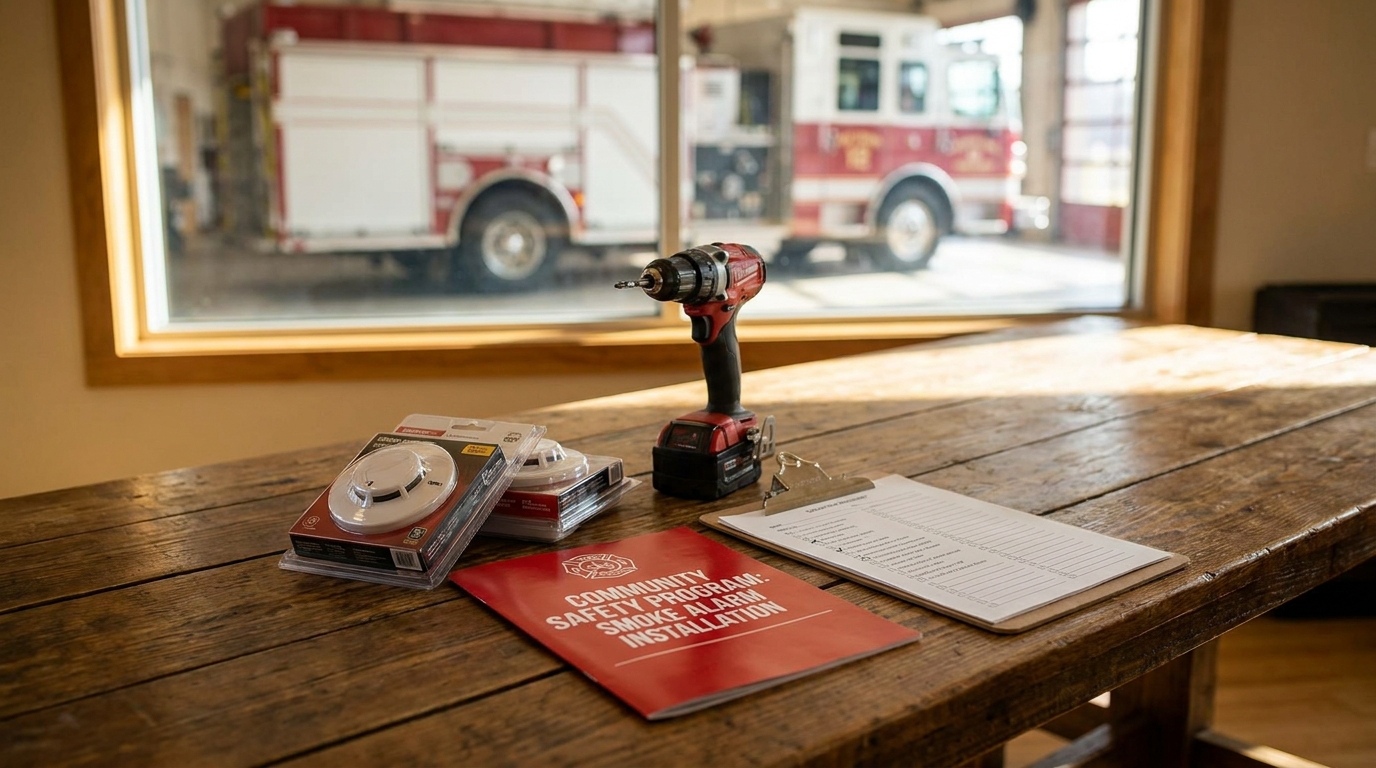
Fire departments often provide free installation services, especially for single-family homes. They send trained personnel equipped with necessary tools like step ladders and double-sided tape to guarantee proper placement per NFPA 72 standards.
They verify alarms’ functionality before installing them in required locations: bedrooms, hallways, and every level of your home. Departments also replace batteries for those unable to do so themselves and conduct safety evaluations during visits.
Many programs prioritize vulnerable populations, including the elderly and disabled. Additionally, fire officials follow strict procedures to verify alarms are UL-listed, interconnected where required, and maintained post-installation.
This helps reduce fire fatalities markedly.
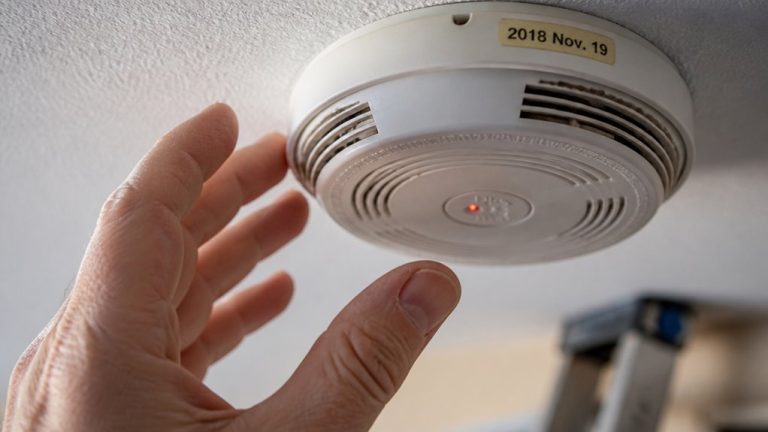
This hands-on support guarantees you get reliable smoke detection tailored to your home’s needs. It is also important to note that Kidde smoke alarms should be replaced every 10 years to ensure optimal sensor sensitivity and reliable detection.
How Do You Request Smoke Alarm Installation From Your Fire Department?
If you’re looking to get a smoke alarm installed, the first step is to reach out to your local Fire Prevention Bureau. It’s a good idea to check if you’re eligible for their services and to see what areas they cover.
Many fire departments actually offer free installation, especially for single-family homes, seniors, or folks with limited income. Once they confirm that you qualify, you can set up an appointment for a professional to come out and get it installed at a time that works for you.
Contacting Fire Prevention Bureau
Reaching out to your local Fire Prevention Bureau is the first step when you want a smoke alarm installed by your fire department.
You can typically contact them via phone, email, or through an online request form on the fire department’s official website.
Clearly explain your need for smoke alarm installation, providing your address and any relevant details about your home.
Many bureaus prioritize requests from residents in single-family homes and verify eligibility before scheduling.
Once you submit your request, expect a confirmation call or email outlining the next steps, including appointment scheduling.
Keep in mind that the Fire Prevention Bureau coordinates installation to ensure compliance with NFPA standards.
Providing accurate information helps expedite the process and guarantees your home’s safety.
Eligibility and Service Areas
Who qualifies for free smoke alarm installation through your fire department? Typically, eligibility focuses on those at greater risk or with limited resources. You’ll often find these priority groups:
Elderly residents, fixed-income households, and individuals with disabilities.
Owners or residents of single-family or duplex homes within the department’s jurisdiction.
Those who request assistance via the Fire Prevention Bureau or designated program channels.
Service areas usually cover privately owned homes within city limits or specific districts. Some departments extend services to multi-family dwellings or special community zones.
To confirm your home qualifies, check your local fire department’s official website or contact their Fire Prevention Bureau directly. They’ll confirm if your address falls within their installation program boundaries and guide you through the request process.
Scheduling Installation Appointment
When you’re ready to schedule a smoke detector installation with your fire department, the process usually starts by contacting their Fire Prevention Bureau through phone, email, or an online request form.
Provide your address, contact information, and details about your home’s layout. Some departments may ask about the number of bedrooms or floors to prepare the right number of alarms.
After your request is received, they’ll schedule a convenient appointment for a trained technician to visit your residence. During the visit, the technician will assess proper placement following NFPA guidelines and install alarms accordingly.
Make sure to confirm the appointment and ask about any preparation needed. This streamlined process guarantees your home meets safety standards promptly and efficiently.
Why Do Hardwired and Interconnected Smoke Alarms Matter?
Hardwired and interconnected smoke alarms consistently provide the most reliable protection for your home. They ensure every alarm sounds simultaneously during a fire emergency.
This immediate, synchronized alert gives you and your family vital extra seconds to escape safely. Unlike standalone units, interconnected alarms guarantee all-encompassing coverage throughout your home.
Here’s why they matter:
Enhanced Safety: One detector’s activation triggers all alarms, alerting everyone regardless of location.
Code Compliance: Meets NFPA and local regulations requiring interconnected systems in new homes.
Dependable Power: Hardwired with battery backup prevents failure due to dead batteries or power outages.
When Do Fire Departments Replace Batteries or Maintain Smoke Alarms?
Fire departments often replace batteries and maintain smoke alarms during scheduled home visits or upon resident requests, especially for those who may have difficulty performing these tasks themselves.
You can rely on them if you’re elderly, disabled, or lack the tools to safely access alarms. These visits guarantee your smoke detectors function correctly, reducing fire risk.
Firefighters inspect alarms for proper placement, verify batteries, and test operation per NFPA standards. They also clean units and educate residents on ongoing maintenance.
Routine battery replacement typically follows manufacturer recommendations or occurs during annual fire safety checks. By letting your local fire department assist, you maintain compliance with safety codes and extend device lifespan.
This ensures your home remains protected without the hassle of DIY upkeep.
What Tools and Procedures Do Firefighters Use to Install Smoke Alarms?
Although installing smoke alarms might seem straightforward, firefighters follow specific tools and procedures to guarantee safety and compliance with NFPA standards.
Before installation, they verify that alarms are UL-listed and functional. They use appropriate equipment to ensure proper placement, avoiding areas near vents or kitchens, and mounting alarms on ceilings or high walls as recommended.
Key tools and procedures include:
Step ladders for safe access to installation points.
Double-sided tape or mounting hardware for secure attachment.
Inspection and cleaning post-installation to confirm device readiness.
These steps ensure alarms meet NFPA 72 requirements, such as placement inside bedrooms, outside sleeping areas, and on every level. Firefighters also follow manufacturer instructions and local codes, assuring interconnected or battery-backed alarms function ideally to protect your home.
How Do Fire Department Programs Reduce Fire Risks in Communities?
Community fire risk substantially decreases when local fire departments actively run smoke alarm programs. By providing free installations and battery replacements, these programs ensure your home complies with NFPA standards. This includes placing alarms on every level and near sleeping areas.
Firefighters inspect, install, and verify alarms using proven procedures to guarantee functionality. This proactive approach addresses vulnerabilities before fires start, cuts response times, and enhances early warning. Programs also focus on vulnerable populations like the elderly or low-income residents, further reducing risk.
When alarms are properly installed and maintained, studies show fire death risk drops by half. By participating in or supporting these initiatives, you help build a safer community where fire hazards are minimized through education, accessible equipment, and professional oversight.
Frequently Asked Questions
How Long Does a Typical Smoke Alarm Installation Take?
A typical smoke alarm installation takes about 15 to 30 minutes per unit.
You’ll spend time verifying the alarm’s functionality, selecting proper locations per NFPA guidelines, and securely mounting the detector.
If you’re doing a no-drill install using double-sided tape, it might be quicker.
Fire departments conducting installations often combine this with safety checks, so allow some extra time for a thorough evaluation of your home’s fire safety.
Can Fire Departments Install Smoke Alarms in Rental Properties?
Think of fire departments as guardians who don’t just watch but step right into your home’s safety story.
Yes, many fire departments can install smoke alarms in rental properties, especially when tenants ask for help or in collaboration with landlords.
You’ll want to check with your local department’s program since availability and eligibility vary.
They often provide free installation, ensuring your rental stays protected and compliant with safety codes.
Are There Any Costs Associated With Fire Department Installations?
You usually won’t pay anything for fire department smoke detector installations. Many departments offer free alarms and installation services, especially for single-family homes or vulnerable populations like the elderly or low-income residents.
However, availability can vary by location, so you should contact your local fire department to confirm. They might also replace batteries or provide safety checks at no cost, making it easier for you to stay protected without extra expenses.
Do Fire Departments Offer Smoke Alarm Education to Children?
Fire departments often serve as guardians of safety, lighting the path for young minds. Yes, they offer smoke alarm education to children, teaching essential fire safety skills that act like shields in emergencies.
Through interactive programs, they show you how alarms protect homes and lives, emphasizing the importance of early detection.
What Should I Do if My Smoke Alarm Keeps Sounding False Alarms?
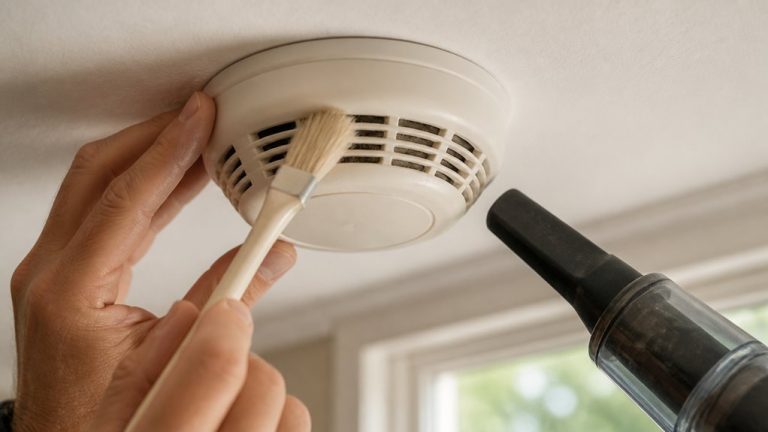
If your smoke alarm keeps sounding false alarms, first check for common triggers like steam, cooking fumes, or dust buildup.
Clean the alarm gently with a vacuum or soft cloth.
Make sure it’s installed away from kitchens, bathrooms, or vents per NFPA guidelines.
Replace old batteries or the entire unit if it’s outdated.
If false alarms persist, contact your local fire department for inspection or professional advice to guarantee your safety.
Protect Your Home With Proper Smoke Alarm Placement
You might think installing smoke detectors is your responsibility alone, but fire departments play a crucial role in keeping you safe.
They don’t just enforce laws; they often provide free alarms, install them in key spots, and maintain them for you.
By partnering with your local fire department, you make certain your home is protected with the latest, most effective devices, reducing fire risks considerably.
Don’t wait; reach out and let the experts help safeguard your home today.