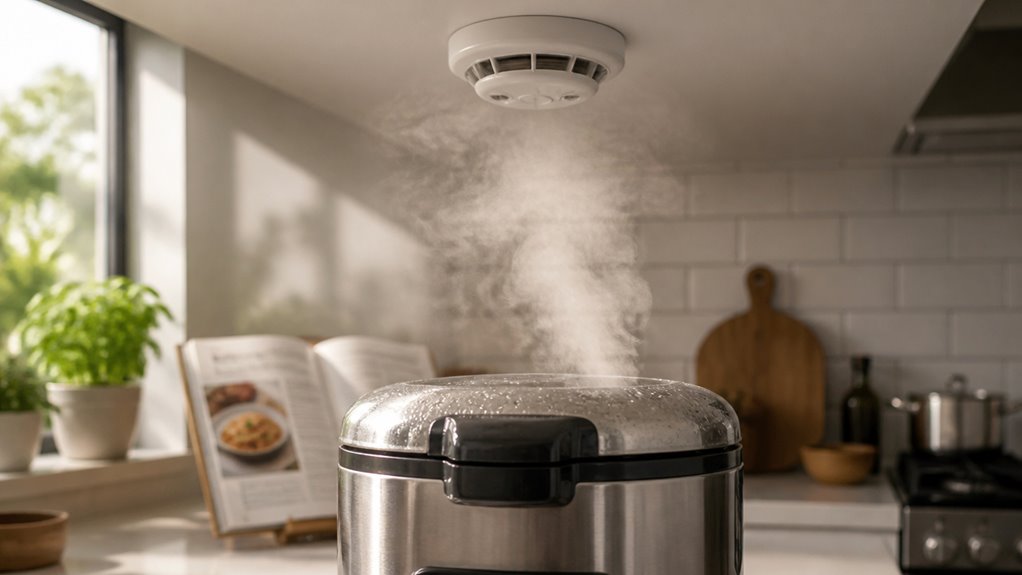

Yes, your rice cooker can trigger a smoke detector, especially if steam or burnt rice smoke reaches sensitive alarms nearby.
Photoelectric detectors usually resist steam but may activate if steam density gets high or detectors sit too close.
Ionization alarms react more easily to steam and fine smoke particles.
Proper detector placement, ventilation, and heat detectors help reduce false alarms.
If you want to minimize nuisance alerts and manage your kitchen safety effectively, understanding these details is essential.
Key Takeaways
- Steam from rice cookers rarely triggers smoke detectors unless steam concentration is unusually high or detectors are placed too close.
- Burnt rice produces smoke particles sufficient to activate both ionization and photoelectric smoke detectors.
- Ionization detectors are more prone to false alarms from steam and humidity than photoelectric detectors.
- Proper ventilation and detector placement away from the rice cooker reduce false alarms caused by steam.
- Heat detectors are less likely to be triggered by rice cooker steam, lowering nuisance alarms in kitchens.
Can a Rice Cooker Set Off a Smoke Detector?
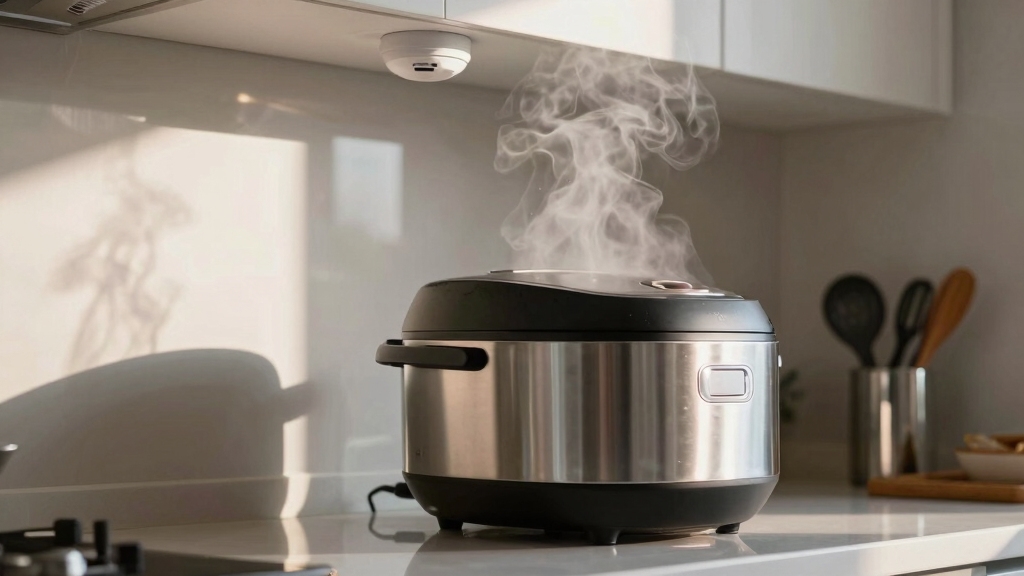
When you’re cooking rice, the steam released rarely sets off smoke detectors, especially photoelectric types designed to ignore larger moisture particles.
Cooking rice produces steam that seldom triggers smoke detectors, particularly photoelectric models sensitive to smoke, not moisture.
Ionization detectors can respond to smaller particles, but they require substantial steam volume to activate.
The steam density from typical rice cooker operation usually falls below this threshold, making false alarms uncommon.
However, overly sensitive detectors in confined spaces increase the risk of nuisance alerts.
It’s important to understand that while steam mimics smoke particle behavior, its concentration is generally insufficient to trigger alarms reliably.
Consequently, standard rice cooker usage under normal ventilation conditions doesn’t pose a significant risk of setting off smoke detectors, ensuring both safety and convenience during cooking.
Proper ventilation and strategic placement of detectors significantly reduce the likelihood of steam-induced false alarms.
How Different Smoke Detectors React to Rice Cooker Steam?
You know, when it comes to smoke detectors, photoelectric ones tend to be less sensitive to the steam from a rice cooker. That’s because they’re designed to detect larger particles. So, if you’re using one of those, you might be in the clear!
On the flip side, ionization detectors can be a bit more touchy. They can easily trigger alarms from the smaller steam particles, especially if you’re in a confined space. It can be a real hassle when you’re just trying to make dinner!
Now, if you want a more reliable option, heat detectors might be the way to go. They focus on changes in temperature instead of airborne particles, which means fewer false alarms in the kitchen. Sounds like a solid choice, right?
Maintaining proper placement away from humid areas and regular maintenance can help reduce false alarms caused by steam and condensation, ensuring your alarm stays accurate and reliable. This is especially important for ionization detectors which are sensitive to high humidity.
Photoelectric Detector Sensitivity
Although steam can resemble smoke particles, photoelectric smoke detectors respond primarily to larger combustion particles. This makes them less likely to trigger from rice cooker steam.
These detectors use a light source and sensor to detect scattered light from sizable smoke particles. As a result, the fine water vapor from steam rarely causes false alarms.
Unless steam density is unusually high or confined, photoelectric units maintain stable operation near rice cookers. You should still avoid placing detectors too close to steam sources to reduce risk.
Additionally, steam dissipates quickly, minimizing sustained interference. Compared to ionization detectors, photoelectric types offer superior resistance to steam-induced false alarms.
This makes them a preferred choice near kitchens where rice cookers operate regularly. Proper placement and ventilation further enhance their reliability in detecting genuine combustion events.
Their design includes an optical chamber that blocks stray light and dust, helping to prevent false alarms from non-combustion particles like steam.
Ionization Detector Response
Photoelectric detectors resist false alarms from rice cooker steam better than ionization types, which are more sensitive to smaller particles.
Ionization smoke detectors detect tiny particles, including those found in steam, making them more prone to false alarms near rice cookers.
However, it usually takes a substantial volume of steam for these alarms to trigger.
Ionization detectors respond quickly to fine particles, increasing false alarm risk from steam.
Rice cooker steam rarely reaches densities high enough to activate ionization alarms.
Confined spaces with ionization detectors heighten sensitivity to rice cooker steam.
Overly sensitive ionization alarms may require relocation or replacement in kitchen areas.
Understanding ionization response helps you prevent unnecessary alarms when cooking with a rice cooker.
Low voltage or weak batteries can mimic smoke particle effects, sometimes causing persistent false alarms even without actual smoke.
Heat Detector Advantages
Choosing heat detectors over traditional smoke alarms near cooking areas markedly reduces false alarms caused by rice cooker steam.
Heat detectors respond to temperature rises instead of airborne particles, making them immune to steam’s moisture and density fluctuations.
Unlike ionization or photoelectric smoke detectors, which can falsely trigger from steam mimicking smoke particles, heat detectors activate only when a predefined heat threshold is met.
This targeted sensitivity minimizes nuisance alarms during normal rice cooker operation.
You’ll benefit from consistent fire detection without interruptions from cooking vapors.
For kitchens with frequent steam exposure, installing heat detectors guarantees reliable safety while maintaining peace of mind.
However, remember heat detectors won’t detect smoldering fires early, so combine them with other safety measures for all-encompassing protection.
It is also important to follow manufacturer guidelines for installation and maintenance to ensure optimal detector performance in varying environments.
When Burnt Rice Smoke Triggers Your Alarm?
When burnt rice produces smoke, your alarm can activate just like it would with any other cooking smoke. The smoke particles from burnt rice are sufficient to trigger most ionization and photoelectric smoke detectors, especially if smoke accumulates in confined spaces.
You’ll notice alarms going off because smoke density exceeds the detector’s threshold.
Keep these points in mind when burnt rice smoke triggers your alarm:
Ionization detectors respond quickly to small smoke particles from burnt rice.
Photoelectric detectors detect larger particles but still react to thick smoke.
Alarms in small kitchens or near the rice cooker are more prone to activation.
Burnt rice smoke is chemically similar to other cooking smoke, making alarm activation inevitable.
Understanding this helps you respond safely and avoid confusion during cooking.
Regular maintenance, including cleaning vents and sensors, can reduce false alarms caused by cooking smoke.
Preventing False Alarms From Rice Cooker Steam
Steam escaping from your rice cooker can sometimes set off smoke detectors. However, you can take specific steps to prevent false alarms.
Position your cooker away from detectors and flammable items. Use a range hood to vent steam and avoid overfilling the cooker. Choose photoelectric smoke detectors for reduced steam sensitivity or consider smart alarms with temporary sensitivity adjustments.
| Prevention Method | Detector Type | Key Benefit |
|---|---|---|
| Range hood installation | Photoelectric | Vent steam effectively |
| Cooker placement | Ionization | Minimize steam exposure |
| Overfill avoidance | Smart alarms | Temporary sensitivity reduction |
| Use of heat detectors | Heat detectors | No false alarms from steam |
| Regular maintenance | All types | Assures proper detector function |
Proper ventilation and airflow control also reduce the concentration of steam particles, lowering the chance of triggering false alarms.
Using Heat Detectors Near Rice Cookers to Prevent False Alarms
Hey there! If you’ve got a rice cooker, you might want to think about putting a heat detector nearby. It can really help cut down on those annoying false alarms that happen because of steam.
You see, heat detectors are great because they respond to temperature changes instead of particles. This means they’re not as sensitive to cooking steam, which is a real plus. Just make sure you place them a bit away from the direct steam flow. That way, you can ensure reliable fire detection without those unnecessary triggers. Heat detectors are especially useful in kitchens where smoke alarms often cause false alarms due to steam and cooking fumes, making heat alarms a better choice for these areas.
Heat Detector Benefits
Choosing heat detectors near rice cookers markedly reduces false alarms caused by steam and cooking fumes. Unlike smoke detectors, heat detectors respond to temperature changes, not particles, so they’re less sensitive to harmless steam bursts from cooking. This makes them ideal in kitchens with rice cookers, cutting nuisance alerts and ensuring alarms trigger only when actual fires occur.
You’ll benefit from heat detectors because they:
- Resist activation by steam or smoke particles from rice cookers
- Provide reliable fire detection without frequent false alarms
- Enhance safety by focusing on temperature thresholds, not air quality
- Complement smoke alarms in areas prone to cooking vapors
Using heat detectors near rice cookers guarantees you maintain safety without sacrificing alarm reliability. Heat detectors are often preferred in kitchen environments where frequent steam exposure can cause nuisance alarms with traditional smoke detectors.
Installation Best Practices
Proper placement and installation of heat detectors near rice cookers play a critical role in minimizing false alarms while maintaining fire safety.
You should install heat detectors at least 3 feet away from the rice cooker to avoid steam exposure that mimics smoke particles.
Position detectors on ceilings or high walls where heat from actual fires rises, but away from direct steam vents.
Avoid installing detectors near curtains or shelves that trap steam.
Use heat detectors instead of smoke alarms, as they respond to temperature changes rather than particles, reducing false triggers.
Integrate range hoods or ventilation systems to disperse steam effectively.
Regularly test detectors and make certain they comply with local fire safety standards.
Adopting these practices helps maintain reliable alarm function without compromising kitchen safety.
Additionally, placing detectors away from direct heat sources is essential to prevent thermal interference that can cause false alarms.
Managing Cooking Alarms With Smart Smoke Detectors
When cooking activities generate steam or minor smoke, smart smoke detectors can help reduce false alarms by making sure you can temporarily lower their sensitivity. This feature is especially useful when using rice cookers, which emit steam that might otherwise trigger alarms.
You can manage cooking alarms effectively by:
Temporarily lowering detector sensitivity for 15-20 minutes via app control.
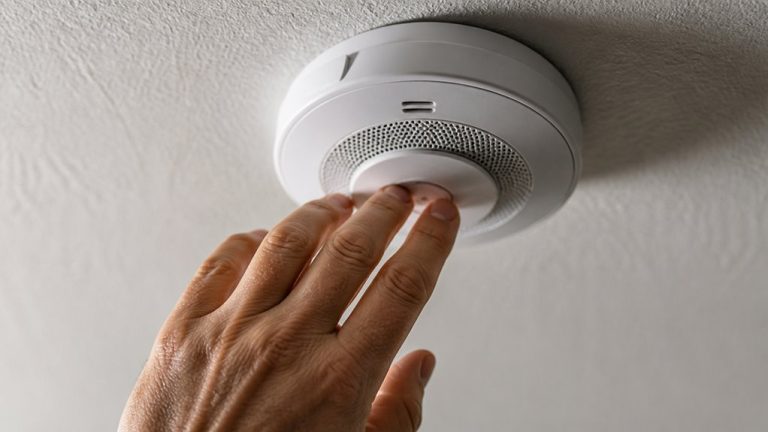
Using the hush button to silence alarms during minor steam occurrences.
Monitoring detector notifications remotely to ensure safety without false interruptions.
Allowing alarms to auto-reset sensitivity after cooking finishes.
Best Rice Cooker Placement to Avoid False Alarms
Near steam-sensitive detectors, placing your rice cooker thoughtfully can prevent false alarms. Position it at least three feet away from any smoke or ionization detectors, especially in confined spaces.
Avoid placing it near curtains, shelves, or flammable items vulnerable to steam damage. Use a range hood or vent to direct steam away from detectors. Consider installing heat detectors near cooking areas as alternatives.
| Placement Location | Impact on False Alarms |
|---|---|
| Near smoke detector | High risk of false alarm |
| Under range hood | Low risk, steam properly vented |
| Beside curtains/shelves | Increased false alarm risk |
| Open countertop space | Minimal false alarm risk |
Proper placement minimizes steam’s effect on detectors, ensuring safer, uninterrupted cooking.
What to Do If Your Rice Cooker Keeps Triggering Alarms?
If your rice cooker keeps triggering alarms, start by confirming there’s no actual fire hazard before taking any action.
Once safety is guaranteed, focus on managing the false alarms efficiently. First, press the hush button on your smoke detector instead of removing batteries to temporarily silence it.
Check that the rice cooker isn’t overfilled, as excessive steam or burnt rice can cause alarms. Consider relocating the cooker away from detectors or installing heat detectors, which are less sensitive to steam.
Regularly test and maintain your alarms to guarantee proper function.
- Confirm no fire or smoke is present before silencing alarms
- Use hush or silence features for temporary alarm reset
- Avoid overfilling rice cooker to minimize steam and smoke
- Consider heat detectors if false alarms persist near cooking areas
Safety Tips to Protect Your Kitchen From Rice Cooker Steam and Smoke
Managing steam and smoke from your rice cooker effectively reduces the risk of triggering smoke detectors and prevents damage to nearby materials.
Proper steam and smoke management from your rice cooker helps avoid smoke detector alarms and protects surrounding items.
Position your rice cooker away from curtains, shelves, and any steam-sensitive items to limit exposure. Use a range hood or ensure proper ventilation to capture and expel steam and fumes efficiently.
Avoid overfilling the cooker to minimize excess steam generation. Regularly test your smoke or heat detectors, and consider replacing sensitive ionization alarms near cooking areas with heat detectors to reduce false alarms.
Keep power cords and sockets dry to prevent electrical hazards. If your alarm frequently triggers, check for burnt rice residue inside the cooker and clean it promptly.
Implementing these safety measures will help maintain a safer kitchen environment.
Frequently Asked Questions
Are There Specific Rice Cooker Brands Less Likely to Cause Smoke Alarms?
You’ll find that rice cookers with advanced steam control and heat-limiting technology, like Zojirushi or Tiger, are less likely to trigger smoke alarms.
These brands manage steam release efficiently, reducing false alarms. Avoid budget or poorly ventilated models, especially in confined spaces.
To minimize risks, place the cooker away from detectors and use range hoods. Always check for product recalls and prioritize models with heat sensors over basic steam-only designs.
How Often Should I Replace Smoke Detector Batteries in a Kitchen?
Think of your smoke detector battery like a heartbeat. It needs regular attention to keep you safe.
You should replace the batteries at least once a year, or sooner if the detector chirps a low-battery warning.
In kitchen areas, where steam and cooking smoke are common, test detectors monthly to guarantee functionality.
Using high-quality batteries and following manufacturer guidelines ensures your alarm remains reliable against real fire risks.
Can Rice Cooker Steam Damage Wooden Kitchen Cabinets?
Yes, rice cooker steam can damage wooden kitchen cabinets over time. The escaping steam raises moisture levels, potentially causing wood to warp, swell, or develop mold if ventilation is poor.
To protect your cabinets, position the rice cooker away from wood surfaces. Use a range hood or exhaust fan to vent steam efficiently.
Regularly check for moisture buildup and maintain proper kitchen airflow to prevent long-term damage.
What Electrical Safety Features Should a Rice Cooker Have?
Your rice cooker should have fail-safe electrical features that could rival a spaceship’s tech.
Look for automatic shut-off to prevent overheating, a thermal fuse to cut power during faults, and a residual current device (RCD) for electrical shock protection.
Make certain it has heat-resistant, insulated cords and waterproof controls to avoid short circuits.
These features keep your cooking safe, reliable, and compliant with safety standards.
Don’t settle for less.
Is It Safe to Use a Rice Cooker in a Small Hotel Room?
Using a rice cooker in a small hotel room can be safe if you take precautions.
Position it away from curtains or flammable items to avoid steam damage.
Make certain the room’s smoke detectors won’t be overly sensitive to steam or burnt rice smoke.
Use a rice cooker with proper UK plug compatibility and avoid overfilling.
Always monitor cooking to prevent smoke buildup and have a fire extinguisher nearby for emergencies.
Keep Your Kitchen Safe During Rice Cooking
Don’t let your rice cooker turn your kitchen into an alarm battlefield!
While steam rarely triggers smoke detectors, burnt rice smoke can set off a full-blown siren frenzy.
Position your cooker wisely, opt for heat detectors, and use smart alarms to keep peace.
With these technical safeguards, you’ll prevent false alarms from turning your cooking routine into an emergency drill.
Stay sharp; your kitchen’s safety depends on it!