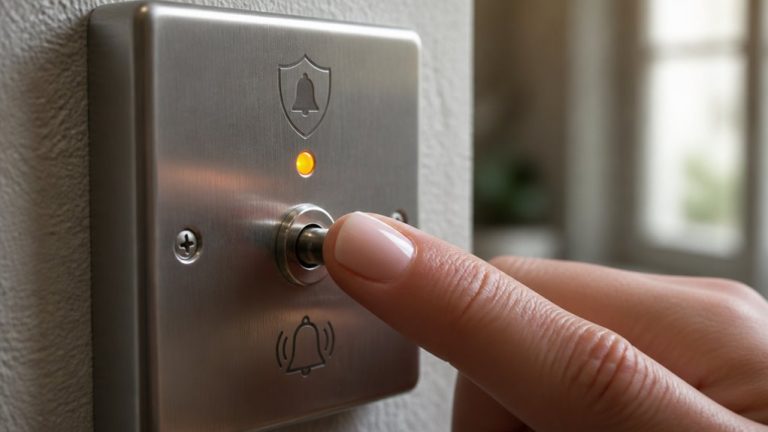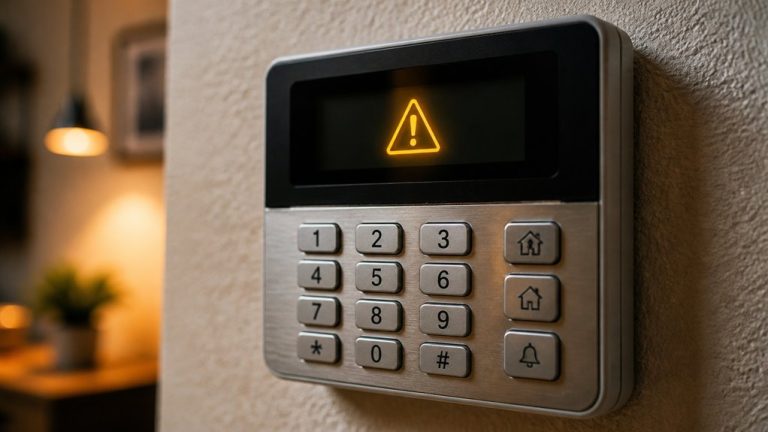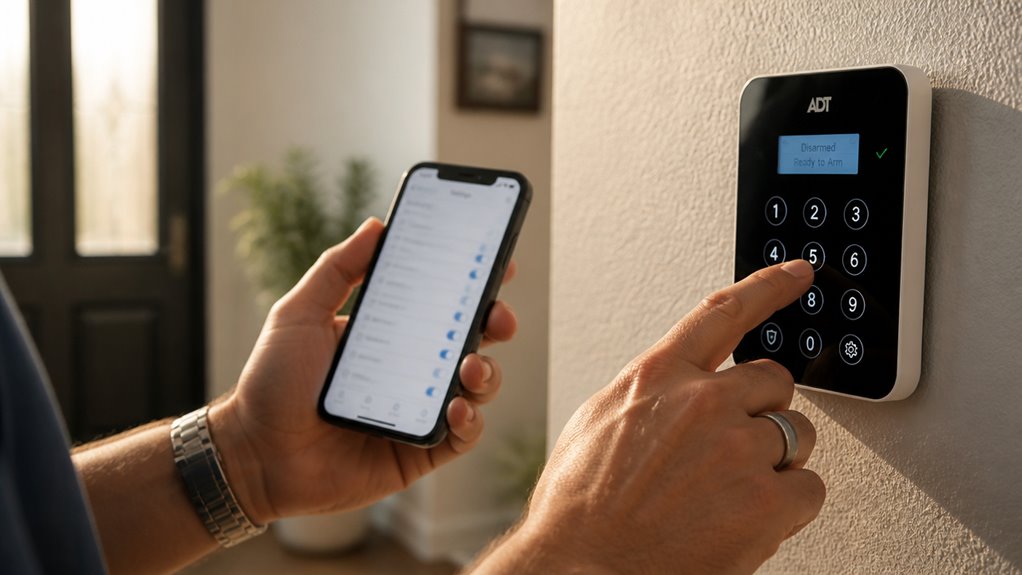

To change your ADT alarm code, first access the control panel by entering the current master code and navigating to the “User Codes” or “Security Codes” menu.
On keypad models, use the 8-0-2 sequence; for Safewatch or Vista, enter current code then 8-02.
Input your new 4-digit code twice to confirm. Listen for a chirp indicating success, then test by arming and disarming.
Follow these precise steps to ensure secure code updates. More detailed instructions and troubleshooting tips are available.
Key Takeaways
- Verify the current master code and ensure the keypad is powered with the green ready light on before starting the code change process.
- Enter the master code, then press 8-0-2 on the keypad to access the master code programming menu for most ADT panels.
- Input the new 4-digit master code twice exactly as prompted to confirm and avoid code rejection or errors.
- Listen for a chirp sound signaling successful code acceptance, then test arming and disarming the system with the new code.
- Avoid simple or previously used codes, and contact ADT support if the code change fails or the system locks out.
Access the ADT Control Panel to Change Codes
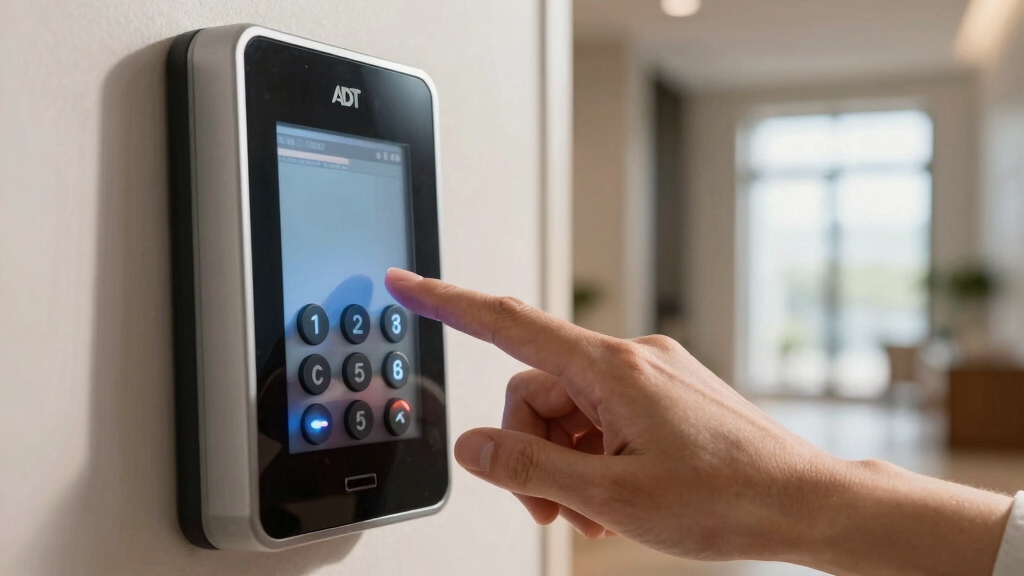
To change your ADT alarm code, start by accessing the ADT control panel directly.
Begin changing your ADT alarm code by first accessing the control panel directly.
Locate the menu or settings button on the panel and press it to open the main menu.
You’ll need to enter your current master code to proceed.
Once authenticated, navigate to the option labeled “User Codes” or “Security Codes.”
Select the code you want to change and input the new code when prompted.
Make sure to enter the new code twice for confirmation to avoid errors.
After confirming, save your changes.
Finally, test the new code by arming and disarming your system to verify it functions correctly.
Following these precise steps will allow you to update your ADT alarm code securely and efficiently.
For additional security, always ensure your system is disarmed before making changes to avoid accidental alarms.
Change ADT Master Code on Keypad Models
Sure! Here’s a more conversational version of your text:
To change the ADT master code on your keypad model, you’ll want to start by accessing the keypad menu using your current code. Once you’re in, go ahead and enter the designated sequence to bring up the code change option.
After that, just input your new 4-digit code. Don’t forget to confirm it to make sure everything’s set. And that’s it! Your new master code will be updated. Easy, right?
If you experience any issues during the process, you might want to check for trouble codes on your keypad to identify any system problems that could affect programming.
Accessing The Keypad Menu
Start by powering up your ADT keypad and ensuring the green ready light is on, indicating the system is prepared for input.
To access the keypad menu for changing the master code, you need to perform a precise sequence that grants you entry to the security settings.
Follow these steps to access the menu:
Enter the current 4-digit master code to authenticate your access.
Press the sequence “8-0-2” to open the master code programming location.
Wait for the keypad to prompt you for the new code entry.
This process opens the specific menu where you can update your master code securely.
Make sure you complete these steps without delay to avoid system timeouts or errors.
After changing the code, be sure to write down new master codes and store them securely to prevent lockout.
Entering And Confirming Code
Enter your new 4-digit master code carefully when prompted by the keypad after accessing the programming location.
Once you input the new code, the system will ask you to re-enter it for confirmation.
This second entry must exactly match the first to guarantee accuracy.
If the codes match, the keypad will emit a chirp sound, signaling successful acceptance.
If you hear a protest beep or no sound, it indicates a mismatch or duplicate code, and you’ll need to repeat the process.
After confirming, save the changes by exiting the menu or following the keypad’s instructions.
Finally, test the new master code by arming and disarming the system to verify it functions correctly and securely controls your ADT alarm.
For enhanced security, avoid using codes that are easily guessable or commonly used, as maintaining system integrity is crucial.
Update User Codes on ADT Command Panels
Access the ADT Command Panel by entering your master code. Then navigate to the Tools menu where you’ll find the Users section. Here, you can update user codes efficiently.
Select the user whose code you want to modify or add a new user. Enter the new 4-digit code carefully and save the changes to guarantee system recognition.
Key steps to update codes include selecting the existing user or adding a new one in the Users section. Input the new user code twice for confirmation.
Save the changes and test the code by arming the system in Stay mode. Always verify the updated code works to maintain system security without interruptions.
For added security, remember that all commands require a valid user code to maintain system integrity.
Change ADT Codes on Safewatch and Vista Systems
Updating user codes on ADT Command Panels prepares you for managing security settings on other ADT systems. To change codes on Safewatch and Vista panels, start by entering the current master code, which is often 1234.
Then press 8 followed by 02 to access the master code location. Enter the new 4-digit code twice continuously to confirm. This method applies to Vista 20P, Safewatch 3000, and Pro models.
Be sure to perform a verification step after updating codes to ensure the system accepts the changes properly.
| Step | Input Sequence | Confirmation |
|---|---|---|
| Enter Master Code | 1234 (default) | Proceed to next step |
| Access Code Menu | Press 8, then 02 | System ready for new code |
| New Code Entry | New 4-digit code x2 | No chirp means code accepted |
| Test Code | Arm/Disarm system | Confirms code change success |
Always verify by arming or disarming after code updates.
Change Codes Using the ADT Pulse Web Portal
You can easily change your ADT alarm codes through the ADT Pulse Web Portal by logging in as the site owner and finding your way to the System tab.
From there, navigate to the Access Codes section to manage your security credentials efficiently.
To change a code, follow these steps:
Select the Change Code option next to the target user code.
Enter your account password and the new code twice for confirmation.
Save the changes; the system logs all modifications in the History tab for audit purposes.
If you need to update the master code, access the Devices page.
This web portal method offers a streamlined, secure approach to managing your alarm codes remotely without using the keypad.
For enhanced security, ADT uses encrypted communication protocols to ensure that only authorized actions are executed when managing your system.
Troubleshoot Code Rejection and Acceptance Issues
If your code change gets rejected, the first thing to do is double-check that you entered the correct current master code. It’s also important to follow the exact sequence for your system. You’d be surprised how often things like duplicate codes or incorrect code lengths trip people up.
And don’t forget about those confirmation steps—skipping them can lead to a rejected code as well.
Once you think you’ve got everything right, make sure to confirm acceptance. You can do this by listening for those system beeps or by testing out the new code to see if you can arm and disarm the system with it.
It’s always good to do a quick check!
Remember, if you enter the master code incorrectly multiple times, the system may lock you out, so contacting your installer or locksmith might be necessary to regain access to programming mode and avoid long beeps caused by incorrect master code entry.
Common Rejection Causes
When your ADT system rejects a new or changed code, it often signals a conflict with existing settings or input errors. To resolve this, check for common causes that trigger rejection:
- Duplicate or previously used codes: The system may protest if you try to reuse a code already assigned to a user slot or the master code.
- Incorrect code length or format: Entering fewer or more digits than the required 4-digit code or using invalid characters will cause rejection.
- Failure to follow the exact input sequence: Deviating from the prescribed keypress order, such as missing confirmation steps or entering the wrong menu, prevents acceptance.
- It is also essential to enter the security code on the keypad to silence tamper alerts and prevent monitoring notifications during code changes, as outlined in Tamper Alerts Handling.
Confirming Code Acceptance
To confirm code acceptance on your ADT system, start by carefully observing the auditory and visual feedback provided during the code change process. A successful code update typically triggers a confirmation chirp or beep and may flash the keypad’s green ready light.
If the system rejects the new code, listen for protest beeps or error tones and look for red or flashing lights indicating failure. In that case, re-enter the code, ensuring it meets length and format requirements while avoiding duplicates.
After acceptance, test the new code by arming and disarming your system to verify functionality. If issues persist, reset the panel or consult the user manual for model-specific troubleshooting to confirm the code was correctly programmed and saved.
For persistent issues, it is recommended to call a professional to avoid damaging the system or triggering false alarms.
Test Your New ADT Alarm Code After Changing It
Always verify your new ADT alarm code immediately after changing it to ensure it functions correctly. Testing prevents lockouts and confirms system responsiveness.
Always verify your new ADT alarm code immediately to ensure proper functionality and prevent lockouts.
Start at the keypad or control panel where you made the change. Follow a systematic approach:
Arm the system in Stay or Away mode using the new code. Make certain the system arms without error.
Disarm immediately with the new code. Confirm the system disarms and the keypad signals success.
Trigger a status check or system beep to verify the code activates all intended functions.
If any step fails, re-enter the code change process or contact ADT support. Testing confirms your new code is correctly registered, ensuring your security system operates reliably without interruption.
Security Tips for Choosing a Strong ADT Alarm Code
Testing your new ADT alarm code confirms it works, but choosing a strong code is equally important to maintain security.
Avoid simple sequences like “1234” or repetitive digits such as “1111” that hackers can easily guess.
Use a random combination of numbers that isn’t related to personal information like birthdays or anniversaries.
Make sure your code is unique across all security devices and accounts to minimize vulnerability.
Change your code periodically to protect against unauthorized access.
Limit the number of users who know the code and instruct them to keep it confidential.
Finally, verify any new code change immediately by arming and disarming the system to confirm functionality and security integrity.
These precautions strengthen your system’s defense against breaches.
Common Issues When Changing ADT Codes and How to Fix Them
Although changing your ADT alarm code is straightforward, you might encounter common issues such as incorrect code entry, system lockouts, or failure to save changes.
To fix these, first verify you enter the current master code correctly before proceeding. Next, make certain you follow the exact keypad sequence or portal steps for your ADT model. Finally, confirm the new code by entering it twice as required.
Common issues include:
- Incorrect code entry: Causes access denial or lockout; double-check digits before submission.
- System lockouts: Triggered by multiple failed attempts; wait or contact support to reset.
- Failure to save changes: Happens if confirmation steps are incomplete; always confirm and test new codes immediately.
Addressing these prevents errors and secures your system effectively.
Frequently Asked Questions
Can I Change My ADT Code Remotely Without Internet Access?
You can’t change your ADT alarm code remotely without internet access because remote changes require logging into ADT Pulse or a similar online portal.
Without internet, you’ll need physical access to the control panel or keypad to enter the current master code and update the code manually.
Remote code changes depend on web connectivity or the ADT app, so offline, you must update codes directly at the system.
How Often Should I Update My ADT Alarm Codes for Security?
Think of your ADT alarm code like a key to a fortress; changing it regularly keeps intruders guessing.
You should update your codes every 3 to 6 months or immediately after any security breach, lost codes, or personnel changes.
Frequent updates minimize vulnerability by reducing the window for unauthorized access.
Keep a strict schedule and always confirm changes by testing arming and disarming to guarantee your fortress remains secure.
What Happens if I Forget My ADT Master Code?
If you forget your ADT master code, you won’t be able to arm, disarm, or change system settings.
You’ll need to contact ADT customer support for identity verification and assistance resetting the code.
In some cases, a technician may visit to reset the system.
Always keep your code secure but accessible to avoid lockouts.
Consider using the ADT Pulse portal for easier code management and recovery options.
Are Temporary Codes Available for Guests or Service Personnel?
Temporary codes for guests or service personnel are available like a digital key that expires after use. You can create these codes via your ADT control panel, ADT Pulse web portal, or mobile app by adding a new user code with limited access and set expiration.
This way, you control who enters and when, enhancing security without sharing your master code. Always test codes to confirm proper function before use.
Can Multiple Users Have Unique Access Codes Simultaneously?
Yes, you can assign multiple unique access codes for different users simultaneously on your ADT system. Each user gets a distinct code linked to their profile, allowing individualized access control and activity tracking.
You manage these codes via the keypad, ADT Command Panel, or Pulse Web Portal under the Users or Access Codes section. This setup enhances security by limiting access and logging who arms or disarms the system at any time.
Final Steps After Changing Your ADT Alarm Code
Changing your ADT alarm code is straightforward when you follow the right steps. Whether you’re updating the master code or user codes on various systems, precision and care are key.
Don’t let code rejection delay your security; test thoroughly and troubleshoot as needed. Remember, a strong, unique code is your first line of defense.
So, change, test, secure, repeat because your safety deserves nothing less than vigilant protection.