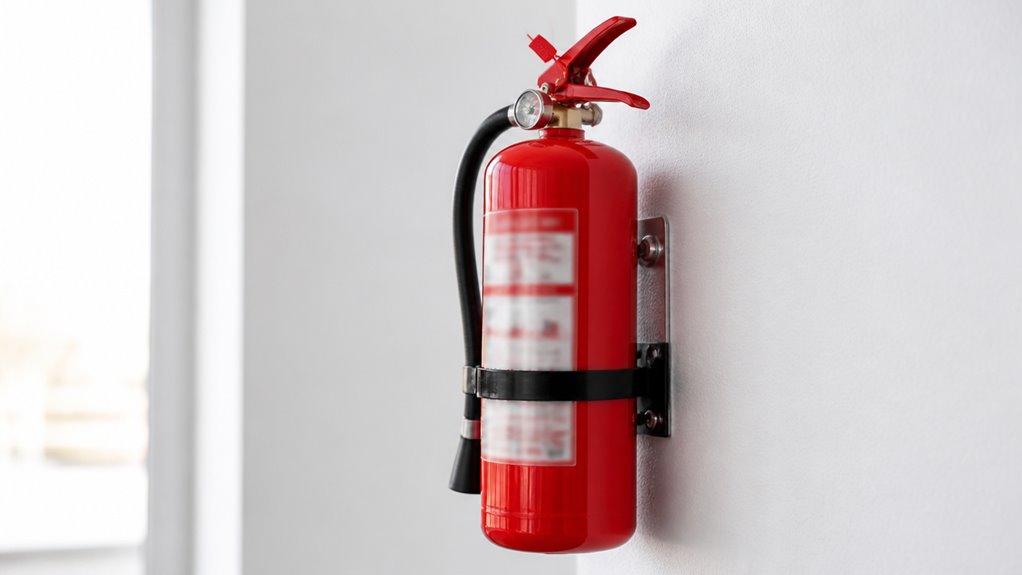

You should mount fire extinguishers according to their weight: those 40 pounds or less need the handle no higher than 5 feet, and over 40 pounds no higher than 3.5 feet.
Maintain a 4-inch minimum clearance from the floor for wall-mounted units. Ensure the highest operable part is within ADA reach limits—48 inches maximum, or 44 inches if obstructed.
Use approved brackets for support and quick removal. Learn how proper placement and code compliance guarantee safety and accessibility.
Key Takeaways
- Extinguishers 40 lb or less must have their top handle mounted no higher than 5 ft (60 in) from the floor.
- Extinguishers over 40 lb must have the top handle mounted no higher than 3.5 ft (42 in) from the floor.
- The highest operable part should be no more than 48 in above the floor for unobstructed ADA reach.
- If recessed or obstructed, limit the highest operable part to 44 in to meet ADA accessibility standards.
- Maintain a minimum bottom clearance of 4 in from the floor for wall-mounted extinguishers for safety and compliance.
How High Should Fire Extinguishers Be Mounted by Weight?
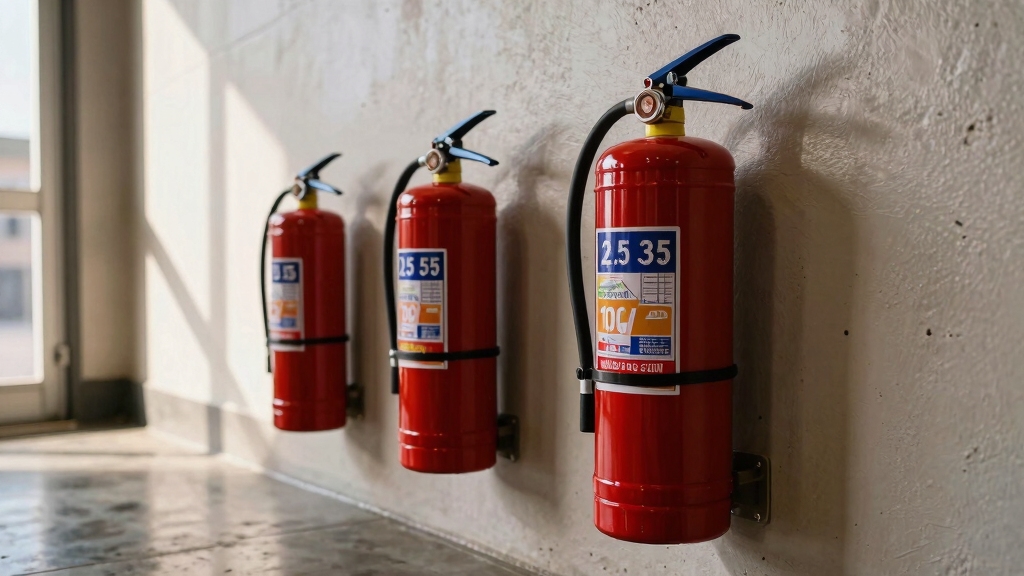
When mounting fire extinguishers, you must consider the extinguisher’s weight to guarantee proper height placement.
For extinguishers weighing 40 pounds or less, mount the top no higher than 5 feet (60 inches) above the floor. If the extinguisher weighs more than 40 pounds, limit the top height to 3.5 feet (42 inches).
This height refers to the carrying handle or highest operable part, not the lowest point of the cylinder. Make certain the extinguisher remains accessible and easy to reach, complying with these weight-based height limits to facilitate quick use during emergencies.
Confirm the mounting hardware supports the extinguisher’s weight plus the bracket. Adhering to these precise height guidelines ensures compliance with NFPA and OSHA standards and optimizes safety and accessibility.
For outdoor installations, ensure you use secure mounting methods to prevent displacement by wind or tampering.
Required Bottom Clearance for Wall-Mounted Fire Extinguishers
Although mounting height often focuses on the top of the extinguisher, you must guarantee a minimum bottom clearance of 4 inches from the floor for wall-mounted fire extinguishers.
Ensure wall-mounted fire extinguishers have at least 4 inches of clearance from the floor for safety and accessibility.
This clearance prevents damage from cleaning equipment, moisture, and floor debris while ensuring ease of access during emergencies.
When mounting, consider these key points:
Use approved brackets, hangers, or cabinets designed to maintain the 4-inch clearance.
Confirm the mounting hardware supports the extinguisher’s full weight plus the bracket.
Make certain the extinguisher remains visible, unobstructed, and accessible without moving objects.
Adhering to this bottom clearance standard aligns with NFPA and OSHA requirements.
This safeguards both extinguisher integrity and user safety.
Always verify clearance before and after installation to maintain compliance.
Additionally, position the carrying handle between 3½ and 5 feet off the ground to ensure effective reach and control, following height and mounting requirements.
What ADA Accessibility Rules Mean for Fire Extinguisher Height?
Securing a minimum bottom clearance of 4 inches sets a foundation for safe extinguisher installation.
However, meeting ADA accessibility rules adds specific height constraints to consider.
You must mount extinguishers so the highest operable part is no more than 48 inches above the floor for unobstructed reach. In recessed or obstructed locations, reduce this to 44 inches.
Additionally, the extinguisher’s lowest part should be at least 15 inches above the floor to maintain accessibility. These limits often require you to mount extinguishers lower than general fire code mandates.
This is especially true for units weighing 40 pounds or less, which have a 60-inch maximum top height, and heavier units limited to 42 inches. Always cross-check ADA reach requirements with NFPA and OSHA standards to ensure full compliance and accessibility.
For general accessibility, aim for a handle height between 80 and 120 cm (31.5–47 in) above the floor to accommodate most users and comply with regulatory positioning rules.
Proper Bracket and Cabinet Mounting for Fire Extinguishers
When it comes to mounting fire extinguishers, it’s really important to use approved brackets or cabinets. These are specially designed to support the full weight of the extinguisher securely.
You definitely want to ensure that the mounting hardware is rated for both the extinguisher and the bracket itself; this helps prevent any failures down the line.
Proper installation is key. It not only keeps the extinguisher visible and accessible, but it also ensures you’re compliant with safety standards.
Mount extinguishers near fire-prone areas and exits within 3–5 feet reach to ensure quick and easy access in an emergency.
Approved Mounting Hardware
When mounting fire extinguishers, selecting approved brackets, hangers, or cabinets is essential to maintain safety and compliance. You must use hardware specifically designed to support the extinguisher’s full weight, assuring stability and preventing accidental falls.
Approved mounting devices also guarantee proper clearance from the floor and facilitate quick access during emergencies.
Keep these requirements in mind:
Use brackets or cabinets certified to meet NFPA 10 and OSHA standards, assuring they accommodate the extinguisher size and weight.
Verify that mounting hardware maintains the minimum 4-inch floor clearance for wall-mounted extinguishers, except for wheeled units.
Assure the extinguisher remains visible, unobstructed, and easily removable without tools or excessive force.
Choosing the right mounting hardware is critical for compliance and operational readiness.
Regular inspection and maintenance by licensed fire protection services ensure mounting hardware and extinguishers remain safe and functional over time.
Ensuring Secure Installation
Although selecting approved brackets and cabinets is essential, proper installation is equally important to guarantee fire extinguisher stability and accessibility.
You must mount extinguishers using hardware rated to support the unit’s full weight, assuring the bracket or cabinet is securely anchored to a structurally sound surface.
Position the extinguisher so the top height complies with weight-specific limits: 5 ft max for 40 lb or less, 3.5 ft max for heavier units.
Maintain at least 4 inches clearance from the floor.
Confirm visibility and unobstructed access, avoiding interference with walkways or equipment.
After mounting, verify height compliance and bracket integrity.
Regular inspections should assure the extinguisher remains stable, accessible, and clearly visible.
This ensures compliance with NFPA, OSHA, and ADA standards for effective emergency readiness.
Additionally, mounting heights should consider accessibility requirements to accommodate all users, including those with disabilities.
Placement Rules for Fire Extinguishers: Safety & Access
When it comes to mounting fire extinguishers, there are some important height requirements to consider. These guidelines take into account the weight of the extinguisher and accessibility standards, including ADA reach limits. You want to make sure that everyone can easily access them when needed.
It’s also crucial that each extinguisher is visible and not blocked by anything. Keeping a clear space around the extinguisher is key, as it ensures that there’s proper clearance from the floor and any surrounding objects. This way, in case of an emergency, everyone can grab the extinguisher quickly and safely.
Following these placement rules not only helps you stay compliant with relevant codes but also significantly enhances safety in your environment. So, let’s keep those fire extinguishers accessible and ready for action! Regular inspections and maintenance are essential to ensure extinguishers remain functional and safe to use.
Mounting Height Requirements
Because proper mounting height directly affects both accessibility and compliance, you must position fire extinguishers according to their weight and operational reach.
For portable extinguishers weighing 40 lb or less, mount the top no higher than 5 ft (60 in) above the floor. For those over 40 lb, the top must be no higher than 3.5 ft (42 in).
Maintain a minimum clearance of 4 in from the floor for wall-mounted units, except wheeled extinguishers, which are exempt.
Key mounting height requirements include:
- Top of extinguisher no higher than 60 in (≤40 lb) or 42 in (>40 lb)
- Bottom clearance at least 4 in above floor for standard units
- Use approved brackets or cabinets to secure extinguishers safely
Confirm these standards before and after mounting to ensure compliance. Proper storage within recommended temperature ranges preserves propellant and agent functionality.
Accessibility And Reach
Proper mounting height guarantees compliance and basic accessibility, but meeting regulatory standards for reachability and unobstructed access requires additional attention.
You must guarantee the highest operable part of the extinguisher doesn’t exceed 48 inches above the floor to comply with ADA reach ranges. If the extinguisher is recessed or partially obstructed, limit this height to 44 inches.
Additionally, maintain a minimum bottom clearance of 4 inches from the floor for wall-mounted units. Avoid mounting the extinguisher lower than 15 inches to prevent accessibility issues.
Use approved brackets or cabinets securely rated to support the extinguisher’s weight. Confirm that no furniture or equipment blocks immediate access.
Regularly verify mounting height and accessibility to guarantee compliance with NFPA, OSHA, and ADA standards, prioritizing safe and efficient emergency use.
Mounting fire extinguishers at the proper height also ensures that fire extinguisher visibility is maintained for quick identification during emergencies.
Visibility And Clearance
Fire extinguishers must always remain clearly visible and unobstructed to guarantee prompt identification and access during emergencies.
You need to mount them so the extinguisher’s highest operable part stays within required height limits: no higher than 5 ft for units 40 lb or less, and 3.5 ft for heavier models.
Keep a minimum clearance of 4 in from the floor for wall-mounted extinguishers, ensuring the bottom doesn’t block walking paths.
To maintain visibility and clearance, adhere to these key points:
- Avoid placing extinguishers behind furniture, inventory, or equipment that could obstruct access.
- Use approved brackets or cabinets that support weight and keep units secure.
- Install extinguishers in locations consistent with NFPA and ADA reach requirements to assure unobstructed access.
Following these guidelines guarantees compliance and safety. It is also important to ensure regular maintenance and inspection to maintain extinguisher performance and readiness.
Keeping Fire Extinguishers Visible and Unobstructed
Keep extinguishers in plain sight and free from obstructions to guarantee immediate access during emergencies. Avoid blocking extinguishers with furniture, inventory, or equipment, ensuring clear visibility and quick identification.
Mount extinguishers in corridors or passageways without creating protrusion hazards that impede safe movement. If unavoidable obstructions exist, install signage directing personnel to the extinguisher’s location.
Regularly inspect to confirm extinguishers remain properly mounted, unobstructed, and accessible. Adhere strictly to mounting height and clearance requirements, and use approved brackets or cabinets to secure units.
Proper visibility and unobstructed access are critical to effective emergency response; neglecting these jeopardizes safety and code compliance. Your diligence in maintaining clear, visible extinguisher placement directly supports rapid, safe fire suppression efforts.
Codes and Standards for Fire Extinguisher Mounting
Although mounting fire extinguishers might seem straightforward, adhering to established codes and standards is essential to guarantee compliance and safety.
You must consider weight-based height limits, accessibility, and proper clearance to meet regulations like NFPA 10, OSHA 1910.157, and ADA guidelines.
For instance, extinguishers weighing 40 pounds or less must be mounted with the top no higher than 5 feet, while heavier units have a 3.5-foot limit.
Additionally, ADA rules require the highest operable part to be within 48 inches for unobstructed reach.
Key requirements include:
- Mounting extinguishers on approved brackets or cabinets with a minimum 4-inch floor clearance.
- Ensuring clear visibility and unobstructed access.
- Verifying compliance with both fire codes and accessibility standards before installation.
Frequently Asked Questions
How Often Should Fire Extinguishers Be Inspected After Installation?
You should inspect fire extinguishers monthly after installation to ensure they remain visible, accessible, and fully charged.
A thorough annual maintenance check by a certified professional is also required to verify mechanical condition, pressure, and operability.
Keep inspection records up to date to comply with OSHA and NFPA standards.
Regular inspections help detect damage, obstruction, or malfunction early, guaranteeing extinguishers perform effectively in an emergency.
Can Fire Extinguishers Be Mounted on Glass or Non-Structural Surfaces?
You shouldn’t mount fire extinguishers on glass or non-structural surfaces because they may not support the extinguisher’s weight or withstand the forces during use.
Since extinguishers often weigh more than 40 pounds, mounting hardware and surfaces must be structurally sound.
Instead, use approved brackets on sturdy walls or cabinets designed to hold the extinguisher securely.
This guarantees safety, accessibility, and compliance with NFPA and OSHA standards.
What Type of Signage Is Required to Indicate Extinguisher Locations?
You need to use highly visible, standardized fire extinguisher signs that comply with OSHA and NFPA standards.
These signs should be mounted where the extinguisher is visible from a distance, especially if it’s obstructed.
Use clear, contrasting colors, typically red and white, and symbols or text indicating “Fire Extinguisher.”
Make sure signs are placed above or near the extinguisher, unobstructed, and comply with ADA accessibility requirements for height and visibility.
Are There Special Mounting Considerations for Outdoor Fire Extinguishers?
Yes, when mounting outdoor fire extinguishers, you must use weather-resistant cabinets or enclosures to protect against moisture, dust, and UV exposure.
Make certain the extinguisher remains visible and accessible, avoiding direct ground contact to prevent corrosion.
Secure mounting hardware that withstands environmental conditions is essential.
Regular inspections are critical to verify operability and check for damage caused by weather or vandalism, maintaining compliance with safety standards.
How Should Extinguishers Be Mounted in Areas With Limited Wall Space?
When wall space is tight, don’t cram extinguishers into awkward spots; instead, use approved cabinets or freestanding stands to keep them accessible and visible.
You’ll want to make certain the extinguisher’s top doesn’t exceed height limits and the bottom maintains clearance from the floor.
Avoid placing extinguishers where they block pathways or get obscured by equipment.
Prioritize unobstructed reach, combining compliance with NFPA, OSHA, and ADA standards for safe, practical mounting.
Correct Fire Extinguisher Placement Helps Create a Safer Environment
When mounting fire extinguishers, you’re not just following rules. You’re enhancing preparedness with thoughtful precision.
By positioning units at the right height, ensuring clear accessibility, and adhering to ADA and code requirements, you create a safer environment without compromise.
Remember, proper mounting isn’t merely a formality; it’s a subtle safeguard that empowers swift action during emergencies.
Your attention to these details transforms equipment into an unobtrusive yet essential guardian of safety.