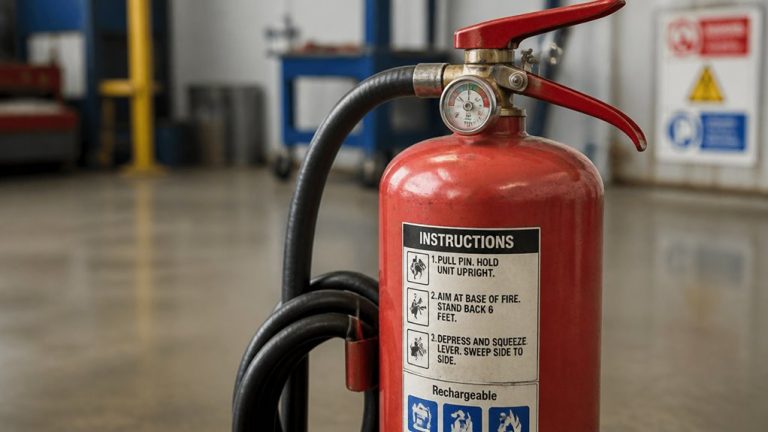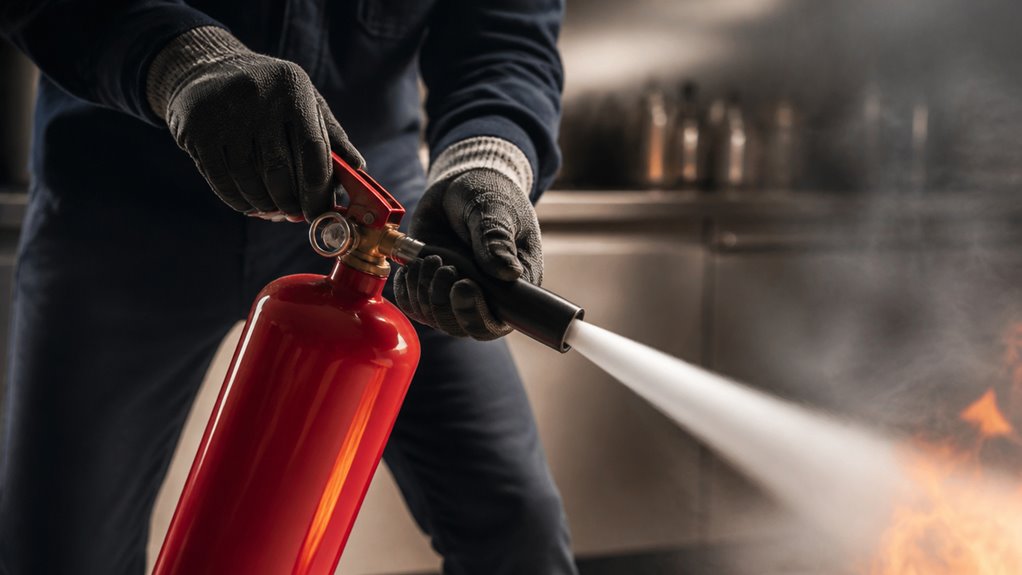

You should always follow the PASS sequence to use a fire extinguisher correctly: Pull the pin to unfasten the handle. Aim the nozzle at the fire’s base. Squeeze the handle firmly to release the agent. Sweep the nozzle side to side across the fire’s base until it’s out.
Before acting, make sure the fire is small, you have a clear escape route, and it’s safe to approach. Understanding these steps helps you act quickly and confidently. There’s more to master for complete safety.
Key Takeaways
- Pull the pin firmly to unlock the operating lever and enable extinguisher use.
- Aim the nozzle at the base of the fire, not the flames, from a safe distance.
- Squeeze the handle or lever firmly to release the extinguishing agent under pressure.
- Sweep the nozzle side-to-side across the fire’s base to cover the entire fuel source.
- Maintain a clear escape route behind you and retreat if the fire spreads or agent runs out.
Why You Should Know the Fire Extinguisher Steps?
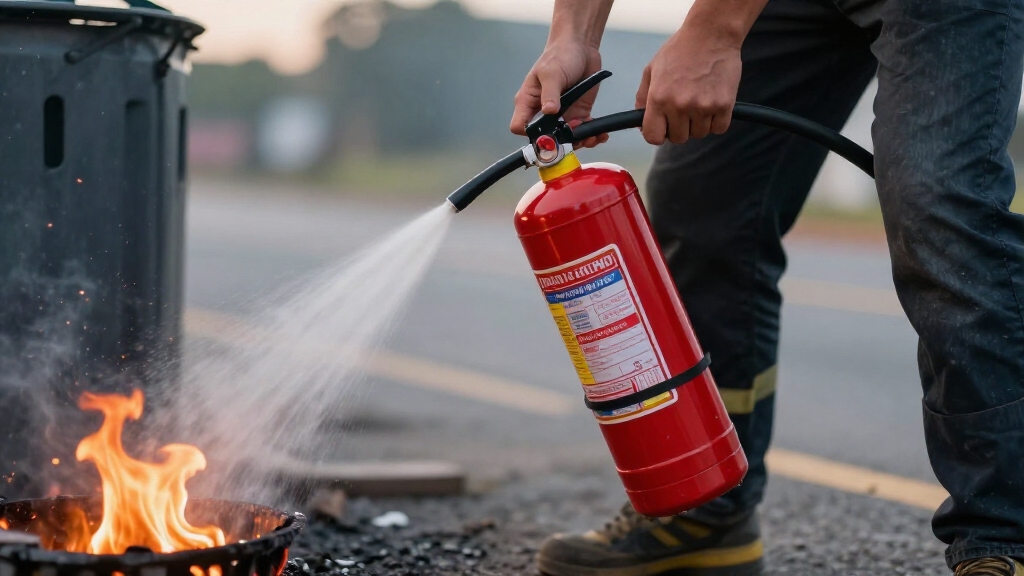
Although fire emergencies can be unpredictable, knowing the fire extinguisher steps guarantees you’re prepared to act quickly and effectively.
Fire emergencies are unpredictable, but knowing the extinguisher steps ensures fast, effective action when it matters most.
When you understand the precise sequence—Pull, Aim, Squeeze, and Sweep—you reduce hesitation and confusion during a critical moment.
This knowledge helps you operate the extinguisher confidently and efficiently, increasing your chances of putting out a fire before it spreads.
You’ll also protect yourself by maintaining control and aiming correctly at the fire’s base.
In an emergency, every second counts. Having these steps memorized means you can respond instantly without second-guessing.
Ultimately, knowing the fire extinguisher steps equips you to handle small fires safely, minimizing damage and risk to yourself and others around you.
Remember to always position yourself with a clear exit behind you for safe escape while using the extinguisher.
Preparing Safely Before Using a Fire Extinguisher
Before you grab that fire extinguisher, take a moment to size up the fire. Is it something you can handle? You want to make sure it’s manageable before jumping in.
Also, don’t forget to identify a clear escape route. You never know if the fire might grow, so it’s smart to have a safe way out just in case.
Oh, and make sure to alert anyone nearby. It’s always good to raise awareness and get help on the way. Better safe than sorry, right?
Remember to position yourself with a clear exit behind you to assure a quick escape if needed.
Assess Fire Size
A crucial step in preparing to use a fire extinguisher is evaluating the size of the fire to guarantee it’s manageable.
You need to determine if the fire is small and contained enough to handle safely with a portable extinguisher.
If the flames are spreading rapidly or the fire covers a large area, don’t attempt to fight it yourself.
Assess whether the fire is limited to a single object or confined space, like a wastebasket or stove.
If it is, proceed cautiously. If not, evacuate immediately and call for professional help.
Taking a moment to evaluate fire size prevents you from putting yourself at unnecessary risk and ensures you use the extinguisher effectively and safely.
Never underestimate the fire’s potential to grow quickly.
Always ensure the extinguisher you use matches the fire classification to maximize effectiveness and safety.
Identify Escape Routes
When you prepare to use a fire extinguisher, always identify a clear escape route that lets you exit quickly if the fire worsens.
Position yourself so the exit is behind you, ensuring an unobstructed path. Avoid places where smoke or flames might cut off your retreat.
Check doors and hallways to confirm they’re accessible, and plan your actions with your back to the exit. This way, if the fire spreads rapidly or the extinguisher runs out, you can leave immediately without hesitation.
Never block your escape by advancing too far or entering confined spaces. Prioritizing a safe exit route protects you and others, allowing you to respond confidently and retreat promptly if conditions become dangerous.
Always keep your safety as the top priority when using a fire extinguisher. Understanding the PASS sequence ensures you operate the extinguisher correctly while maintaining safety.
Alert Others Nearby
You should always alert others nearby immediately upon discovering a fire to make certain everyone remains safe and aware.
Quickly inform people in your vicinity by shouting or activating an alarm if available. This prompt action gives everyone time to evacuate or prepare for possible danger.
Don’t assume others have noticed the fire; clear communication is critical. Alerting others also helps ensure someone calls emergency services while you prepare to use the extinguisher.
Keep your voice calm but firm to avoid panic. Once others are informed, confirm escape routes are clear before you approach the fire.
Early intervention often prevents escalation, so acting promptly can significantly improve safety outcomes by enabling effective fire control.
Pull the Fire Extinguisher Pin
Start by firmly holding the extinguisher upright and pulling the pin completely out to release the operating lever. The pin acts as a safety device, preventing accidental discharge before use.
You may need to twist the pin slightly to break the seal before pulling it free. While doing this, keep the nozzle pointed away from your body to avoid injury if the extinguisher discharges unexpectedly.
Removing the pin frees the handle, allowing you to squeeze it and release the extinguishing agent when ready. This step is vital because without pulling the pin, you won’t be able to activate the extinguisher.
Make sure you pull the pin fully out. A partial pull won’t disengage the safety mechanism effectively.
Using the extinguisher correctly also involves following the PASS technique to maximize fire suppression effectiveness.
Aim the Fire Extinguisher at the Fire Base
Aiming the nozzle at the base of the fire targets the fuel source, which is essential for effective suppression. If you aim at the flames instead, the extinguishing agent will likely pass through without stopping the fire.
Target the fire’s base, not the flames, to effectively cut off the fuel and extinguish the fire.
To do this correctly:
- Stand at a safe distance facing the fire and point the nozzle low, directly at where the fire meets the fuel.
- Maintain control of the extinguisher and keep your body positioned with a clear exit route behind you.
- Focus on the base of the flames throughout the process to maximize the extinguisher’s effectiveness.
Remember to follow the PASS method—Pull, Aim, Squeeze, Sweep—when using a fire extinguisher.
Squeeze the Handle to Release the Agent
Squeeze the handle or lever firmly to release the extinguishing agent stored under pressure inside the cylinder.
As you do this, maintain steady control of the nozzle to direct the agent precisely where it’s needed: at the base of the fire.
Apply pressure evenly and avoid sudden or jerky movements to guarantee a consistent flow.
Some extinguishers might’ve a button or alternative activation method instead of a lever, but the principle remains the same: activate the release mechanism to deploy the agent.
Keep a firm grip on the extinguisher throughout discharge to maintain accuracy and safety.
Remember, releasing the agent is a critical step that initiates the fire suppression process.
Your control here directly impacts the extinguisher’s effectiveness.
Always ensure the extinguisher is fully serviced and inspected by a certified technician before use to guarantee optimal performance.
Sweep the Nozzle Side to Side Across the Fire
When you’re tackling the fire, start by sweeping the nozzle side to side across the base. It’s important to cover that entire fuel source evenly. As you move the stream, keep your eyes on the fire to make sure you don’t miss any hotspots.
And as the flames start to shrink, remember to advance carefully. Always keep a clear exit path in mind, just in case you need to make a quick getaway. Safety first! Using short, controlled bursts in your spray technique helps conserve the extinguishing agent and maximizes effectiveness.
Proper Sweep Technique
Consistently sweeping the nozzle side to side guarantees you cover the entire base of the fire, effectively cutting off its fuel source. To do this properly, follow these steps:
- Position yourself at a safe distance, aiming low at the base where the fuel feeds the flames.
- Move the nozzle steadily from one side to the other, ensuring the extinguishing agent blankets the entire fire base without gaps.
- Advance carefully as the fire shrinks, maintaining the sweep to prevent reignition.
This side-to-side motion maximizes coverage, allowing you to extinguish the fire quickly and efficiently. Avoid focusing on the flames themselves. Concentrating on the base disrupts the fire’s fuel supply and stops it from spreading.
Keep control of the nozzle throughout to maintain consistent coverage. Fire extinguishers are typically reserved as last resort options due to cleanup and toxicity concerns.
Maintaining Fire Focus
Always keep the nozzle focused on the base of the fire while sweeping it side to side. Your goal is to smother the fuel source, cutting off the flames’ energy.
Don’t aim at the flames themselves; that wastes extinguishing agent and won’t stop the fire. Move the nozzle steadily from one edge of the fire to the other, ensuring thorough coverage.
Maintain control of the extinguisher and keep the discharge concentrated on the base as you sweep. If the fire shrinks, continue sweeping until it’s completely out.
Stay alert for any signs of reignition and be ready to reapply the extinguishing agent if needed. This focused approach maximizes your chances of putting out the fire quickly and safely.
Advancing Safely
When the fire starts to diminish, advance carefully while sweeping the nozzle side to side across the base. This motion guarantees you cover the entire fuel source, preventing flare-ups.
Follow these steps to advance safely:
- Maintain control: Keep a firm grip on the extinguisher and nozzle, directing the agent steadily at the base.
- Move slowly forward: Only inch closer as the flames shrink, ensuring the fire doesn’t reignite or spread unexpectedly.
- Watch your escape path: Always keep your exit clear behind you in case conditions change suddenly.
Use a Fire Extinguisher Only When Safe
Before you attempt to use a fire extinguisher, make sure the situation is safe and manageable.
Only tackle small, contained fires when you have a clear escape route behind you.
If the fire is spreading rapidly, smoke is thick or toxic, or you feel unsure, evacuate immediately and call emergency services.
Alert others in the area before you try putting out the fire.
Never use a fire extinguisher if young children, elderly, or anyone untrained is involved.
Your safety is the priority; don’t take unnecessary risks.
Remember, a fire extinguisher is a tool for limited use in controlled situations, not a substitute for professional firefighting.
Always assess conditions carefully before deciding to intervene.
Monitor the Fire After Use
After you’ve used a fire extinguisher to put out a fire, don’t assume the danger is over.
Fires can reignite quickly, so it’s essential to stay vigilant. Here’s what you need to do:
- Continue Monitoring: Keep an eye on the fire area, watching for any flare-ups or smoldering hot spots that could reignite.
- Back Away Carefully: Slowly move away while maintaining a clear view of the scene to avoid sudden flare-ups.
- Report and Replace: Notify the appropriate personnel that the extinguisher was used so it can be serviced or replaced promptly. This ensures it’s ready for the next emergency.
Avoid These Common Fire Extinguisher Mistakes
Although fire extinguishers are essential tools for safety, many people make critical mistakes that reduce their effectiveness or put themselves at risk.
Don’t aim at the flames; always target the base of the fire to cut off its fuel source.
Avoid pulling the pin incorrectly; pull it fully to release the lever.
Never squeeze the handle too quickly or unevenly, as this wastes the extinguishing agent.
Don’t forget to sweep side to side to cover the fire completely.
Also, never use an extinguisher if you don’t have a clear exit route or if the fire is too large.
After use, watch for reignition and replace or recharge the extinguisher promptly.
These steps keep you safe and guarantee the extinguisher works when you need it most.
Frequently Asked Questions
How Often Should Fire Extinguishers Be Professionally Inspected?
You should have fire extinguishers professionally inspected at least once a year to make sure they’re in proper working order.
Regular inspections help identify any damage, pressure loss, or corrosion that might affect performance.
Additionally, monthly visual checks on your part can catch obvious issues early.
Don’t forget to replace or service extinguishers immediately after use, so they’re always ready when you need them most.
What Types of Fires Require Different Extinguishing Agents?
Think of extinguishing fires like matching keys to locks.
Class A fires involve ordinary combustibles like wood and paper. Use water or foam.
Class B fires, fueled by flammable liquids, demand foam or dry chemical agents.
Electrical fires, or Class C, require non-conductive agents like CO2.
For kitchen grease fires, Class K extinguishers are essential.
Using the wrong agent can worsen the fire. Always match the extinguisher to the fire type for safety.
Can Fire Extinguishers Be Reused After Partial Discharge?
You shouldn’t reuse a fire extinguisher after a partial discharge.
Once you use it, even a little, the pressure inside drops, reducing its effectiveness.
You need to have it professionally inspected, recharged, or replaced to make certain it’ll work properly next time.
Always report any use so the extinguisher can be serviced.
This keeps you safe and ready for any future emergencies.
Don’t rely on a partially discharged unit.
How Long Does a Typical Fire Extinguisher Discharge Last?
A typical fire extinguisher discharges for about 8 to 15 seconds, giving you a brief but critical window to control a small fire.
You’ll need to act quickly and efficiently, aiming at the base and sweeping side to side.
Remember, the key is to use the extinguisher effectively within that short time frame.
Practicing the PASS technique beforehand can make all the difference in an emergency.
Where Is the Best Place to Install Fire Extinguishers in a Home?
You should install fire extinguishers in easily accessible, visible spots near high-risk areas like the kitchen, garage, and near heating equipment.
Keep one on each floor, especially near exits for quick escape. Mount them about 3-5 feet off the ground, guaranteeing they’re unobstructed.
Avoid placing extinguishers where extreme temperatures or moisture could damage them.
Regularly check their pressure and condition to make certain they’re ready when you need them.
Final Answer: What Is the Correct Sequence for Using a Fire Extinguisher?
Using a fire extinguisher is like holding a key to safety in your hands.
When you pull the pin, aim, squeeze, and sweep, you’re not just fighting flames; you’re reclaiming control.
Remember, only act when it’s safe and always watch the fire afterward.
Mastering these steps means you’re ready to turn danger into calm, symbolizing your power to protect what matters most in any crisis.
Stay prepared, stay confident.