
To extinguish an electrical fire, first cut power to the device or circuit if you can do so safely. Unplug the appliance or switch off the breaker.
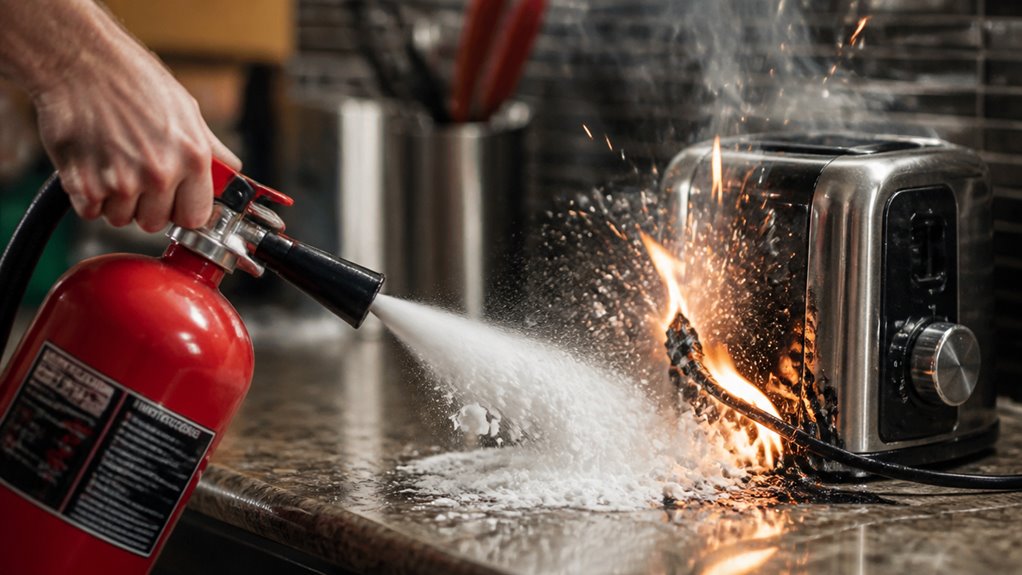
Use a Class C fire extinguisher or sprinkle baking soda for small flames. Never apply water, as it conducts electricity and increases shock risk.
If the fire grows or you can’t control it quickly, evacuate and call emergency services. Understanding these steps helps you respond effectively in an electrical fire emergency.
Key Takeaways
- Cut power safely by unplugging or switching off the breaker before attempting to extinguish the fire.
- Use a Class C or ABC-rated extinguisher designed for electrical fires, following the PASS method.
- Sprinkle baking soda on small fires if an extinguisher is unavailable, avoiding disturbance of the flames.
- Never use water on electrical fires due to electrocution and fire-spread risks.
- Evacuate immediately and call emergency services if the fire cannot be controlled quickly and safely.
How to Safely Cut Power Before an Electrical Fire?
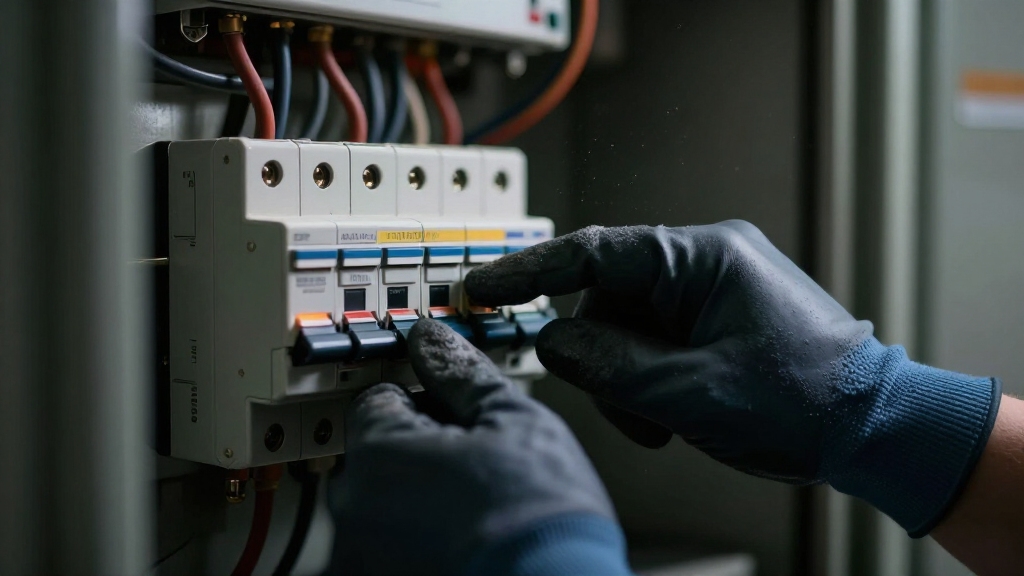
Begin by safely cutting power to the affected device or circuit to stop the electrical fire’s fuel source.
Start by safely cutting power to the affected device or circuit to halt the electrical fire’s fuel source.
If possible, unplug the appliance without exposing yourself to flames or smoke.
If the plug is unreachable, access the breaker panel and switch off the corresponding breaker or the main power.
Never touch exposed wires, burned components, or wet surfaces while shutting off power, as these pose electrocution risks.
Disconnecting electricity immediately removes the fire’s fuel source, halting its progression.
Prioritize your safety: only attempt power shutoff if you can do so without risk.
This step is critical and foundational in fire safety protocols to effectively manage electrical fires before deploying extinguishing methods.
Regularly testing smoke detectors monthly helps ensure early detection and safety during electrical fire emergencies, as recommended in monthly testing.
How to Choose the Right Fire Extinguisher for Electrical Fires?
When tackling an electrical fire, you need to pick the right extinguisher to avoid making the situation worse. Always use a Class C extinguisher designed for energized electrical equipment.
These extinguishers contain non-conductive agents that safely interrupt the fire without risking electrocution. Many household extinguishers are rated ABC, which include Class C capability, but verify the label to make certain of the proper rating.
Never use water or Class A extinguishers, as they conduct electricity and increase danger. Before applying the extinguisher, cut power to the affected device if you can do so safely.
Use the PASS method: Pull the pin, Aim at the base, Squeeze the handle, and Sweep side to side. Choosing the correct extinguisher is critical to controlling electrical fires effectively and safely.
Regular inspection and maintenance ensure the extinguisher’s reliable performance when you need it most.
How to Use Baking Soda for Small Electrical Fires?
Sprinkle baking soda directly onto a small electrical fire to help smother the flames by cutting off their oxygen supply. Use baking soda only if a Class C extinguisher isn’t immediately available and the fire is contained and manageable.
Apply enough baking soda to cover the burning area without getting too close to heat or smoke. Avoid disturbing the fire or stirring embers. Baking soda releases carbon dioxide when heated, which helps suffocate the fire chemically and physically.
Do not treat baking soda as a substitute for proper extinguishing equipment in larger fires. Always prioritize cutting power safely before attempting suppression. If the fire grows or can’t be controlled quickly, evacuate immediately and call emergency services.
Using a dry chemical extinguisher is the recommended method for safely extinguishing electrical fires.
Your safety and prompt response are critical.
Why You Should Never Use Water on Electrical Fires?
While baking soda offers a limited option for small electrical fires, water is never an appropriate choice.
Water conducts electricity, increasing the risk of shock or electrocution when applied to energized electrical equipment.
Using water can also spread the fire by carrying electrical current to nearby combustible materials, worsening the situation.
Electrical fires require suppression methods that don’t conduct electricity, such as Class C fire extinguishers or smothering agents.
Applying water-based extinguishing agents to live circuits violates safety protocols and can lead to serious injury or fatality.
Always disconnect power before attempting to extinguish an electrical fire.
Additionally, water is unsuitable for electrical fires because of the risk of electric shock and potential to worsen the fire.
When to Evacuate and Call Emergency Services?
If you can’t extinguish the electrical fire quickly and safely, evacuate immediately to protect yourself from smoke, heat, and toxic fumes.
Close doors behind you to contain the fire and limit smoke spread. Leave the building without delay and avoid attempting further suppression if the fire grows or you feel unsafe.
Once at a safe distance, call 911 or your local emergency services to report the fire. Don’t re-enter the premises until firefighters or authorities declare it safe.
Visible flames, smoke, strange odors, or fire originating from wires or electrical equipment are clear indicators to treat the situation as an emergency.
Prioritize your safety and the safety of others by evacuating promptly and alerting professionals trained to handle electrical fires.
Using portable fire extinguishers designed to interrupt the chemical chain reaction can be effective if the fire is small and conditions allow safe use.
Frequently Asked Questions
Can Electrical Fires Damage Wiring Beyond Repair?
Yes, electrical fires can damage wiring beyond repair. When wiring overheats or burns, its insulation melts, and the metal conductors weaken or break, causing permanent failure.
You can’t simply replace the fire source; the compromised wiring poses ongoing electrical hazards like shorts or shocks.
After a fire, you must have a qualified electrician inspect and replace all affected wiring to guarantee safety and restore proper function.
What Causes Electrical Fires to Start Initially?
Electrical fires often start because of faulty wiring, which causes about 51,000 fires annually in the U.S. You might encounter overloaded circuits, damaged insulation, or loose connections that create heat and sparks.
Defective appliances and improper use of extension cords also contribute. These issues generate enough heat to ignite nearby combustible materials, sparking a fire.
Recognizing and correcting wiring problems early is essential to prevent electrical fires from starting.
Are There Specific Fire Blankets Designed for Electrical Fires?
Yes, you can find fire blankets specifically designed for electrical fires.
These blankets are made from fire-resistant, non-conductive materials like fiberglass, which prevent electrical conduction and help smother flames safely.
When using one, make sure you avoid contact with live wires and place the blanket gently over the fire to cut off oxygen.
Standard blankets or clothing may pose shock hazards, so always choose a certified electrical fire blanket for this purpose.
How Often Should Electrical Fire Extinguishers Be Inspected?
You should inspect electrical fire extinguishers monthly to ensure they’re fully charged and free of damage.
Interestingly, nearly 20% of extinguishers fail routine checks due to pressure loss or corrosion.
Check the pressure gauge, nozzle, and body for signs of wear.
Keep a detailed log and schedule professional maintenance annually.
Regular inspections guarantee your extinguisher performs optimally during an emergency, protecting you and your property effectively.
Can Smoke From Electrical Fires Be Toxic?
Yes, smoke from electrical fires can be highly toxic.
Electrical fires release harmful chemicals from burning insulation, plastics, and metals. This produces toxic gases like carbon monoxide, hydrogen cyanide, and dioxins.
You shouldn’t inhale this smoke, as it can cause respiratory distress, poisoning, or long-term health effects.
Always evacuate immediately if you detect smoke from an electrical fire. Avoid re-entering until professionals declare the area safe.
Use the Right Extinguisher and Never Use Water
So, when your toaster decides to throw a fiery tantrum, don’t reach for that glass of water like you’re watering plants.
Bad idea. Cut the power first, grab a Class C extinguisher or some baking soda, and show that electrical fire who’s boss.
If things get out of hand, evacuate like a pro and call the experts.
Remember, playing firefighter without the right tools is just a shocking way to get burned.