
You should first protect yourself by wearing gloves, goggles, and a mask to avoid irritation or inhalation.
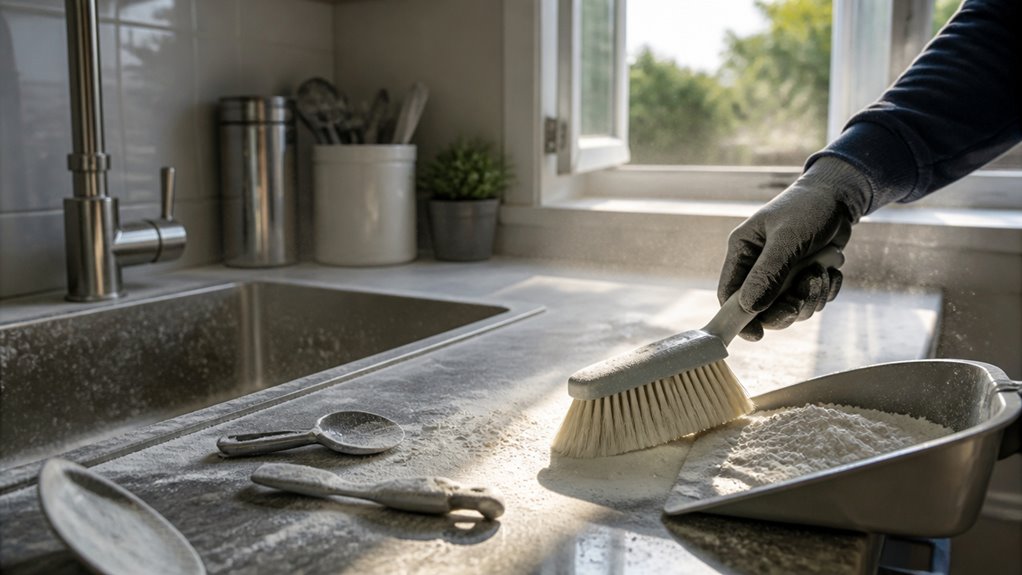
Use a HEPA vacuum or gently sweep loose powder without stirring dust.
Clean hard surfaces with soap and water, while delicate ones need mild detergent or diluted disinfectant.
Avoid contaminating electronics and shut off power before cleaning them.
Collect all waste in sealed bags and dispose of it according to local guidelines.
If you want safe, detailed steps for different powders and surfaces, keep going.
Key Takeaways
- Wear gloves, goggles, and a mask to protect from skin contact, eye irritation, and inhalation of powder particles.
- Use a HEPA-filter vacuum or gently sweep with a soft broom to remove loose extinguisher powder safely.
- Clean hard surfaces with soap and water, and use mild detergent or diluted isopropyl solution for delicate surfaces.
- For electronics, power off and remove powder with compressed air or a soft brush to avoid damage.
- Collect powder and cleanup materials in sealed bags, avoid washing powder into drains, and follow local disposal regulations.
Protect Yourself Before Cleanup
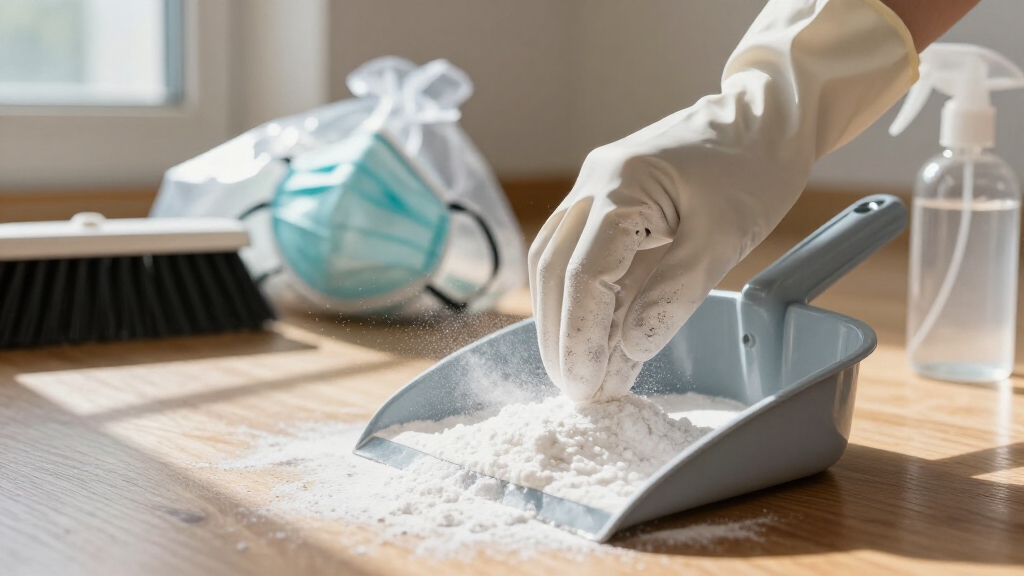
Before you begin cleaning fire extinguisher powder, make sure you protect yourself properly.
Wear gloves, goggles, and a mask or respirator to prevent skin contact, eye irritation, and inhalation of fine particles.
Check the extinguisher’s SDS or MSDS to identify the specific powder type and any special precautions.
Improve ventilation by opening doors and windows, but avoid creating strong drafts that could spread the powder further.
Shut down or cover ventilation systems to prevent powder recirculation in the air.
Be cautious around electrical equipment; powder residue can contaminate and damage electronics or conductive surfaces.
Taking these safety steps minimizes your exposure risk and helps guarantee a safer, more effective cleanup process.
Don’t rush this stage; it’s essential for your health and the success of the cleanup.
Remember that fire extinguisher powders may absorb moisture over time, which can affect their effectiveness and cleanup properties.
Remove Loose Fire Extinguisher Powder Safely
Once you’ve protected yourself and secured the area, start removing loose fire extinguisher powder carefully to prevent it from becoming airborne. Avoid stirring up dust by handling the powder gently.
Follow these steps:
- Use a HEPA-filter vacuum to capture fine particles without spreading dust.
- If you don’t have a vacuum, gently sweep with a soft broom and dustpan, avoiding aggressive motions.
- For small amounts, lift powder with a dry cloth before any wet cleaning.
- Shut down ventilation systems to prevent powder circulation during cleanup.
Maintain good ventilation without creating strong drafts that could disperse powder.
Handle electrical equipment cautiously to avoid contamination.
Removing loose powder carefully reduces inhalation risk and prepares surfaces for residue cleaning. Always verify that the powder is non-conductive to ensure safety when cleaning near electrical equipment.
Clean Fire Extinguisher Residue by Surface Type
When cleaning fire extinguisher residue, you’ll need to tailor your approach based on the surface type and the chemical composition of the powder.
For hard surfaces like tile or metal, start with a HEPA vacuum or gentle brushing. Then use soap and water to wash away remaining residue.
On painted walls or delicate surfaces, avoid harsh scrubbing. Instead, apply a mild detergent or a 50% isopropyl solution diluted with warm water.
For bicarbonate-based powders, a hot water and vinegar rinse helps neutralize residue.
When dealing with electronics, power them off first. Then remove powder with compressed air or a soft brush to prevent damage.
Always finish by rinsing with clean water and thoroughly drying the surface to minimize corrosion or staining risks.
It is important to wear protective gloves and goggles while cleaning to ensure personal safety and avoid irritation from chemicals.
Dispose of Fire Extinguisher Powder and When to Seek Help
After thoroughly cleaning surfaces affected by fire extinguisher powder, handle disposal carefully to prevent environmental contamination and health risks.
Collect all powder, rags, and disposable materials into sturdy, sealed trash bags. Avoid washing powder into drains, as it can pollute waterways.
Follow local hazardous-waste regulations when disposing of these materials, as some powders require special handling. Keep cleanup waste separate from regular trash until you confirm disposal rules.
Seek medical help if skin or eye irritation lasts after washing or if you experience breathing difficulties from inhalation.
For large spills or contamination in sensitive areas, consider professional cleanup services to guarantee safety.
Proper disposal may include environmentally responsible recycling handled by certified providers.
- Seal residue and cleanup materials in sturdy bags
- Follow local hazardous-waste disposal rules
- Avoid draining powder into waterways
- Seek medical or professional help when necessary
Clean Different Types of Extinguisher Powder
Although cleaning fire extinguisher powder can seem straightforward, different types of extinguishing agents require specific methods to ensure effective removal and prevent damage.
You need to tailor your cleanup approach depending on the powder type to avoid corrosion or residue spread. Here’s a quick guide:
| Extinguisher Type | Cleaning Method | Precaution |
|---|---|---|
| ABC Dry Chemical | HEPA vacuum, damp wipe, wash | Avoid harsh scrubbing |
| K-Class | Hot water and soap | Rinse thoroughly |
| Class D Dry Powder | Vacuum or brush, contain waste | Avoid moisture, dispose properly |
Following these steps ensures safe, thorough cleanup while protecting surfaces and electronics. Always wear protective gear and ventilate the area during cleanup. For safety and compliance, always confirm the extinguisher has undergone professional servicing before handling discharged powder.
Frequently Asked Questions
How Long Does It Take for Fire Extinguisher Powder Residue to Fully Disappear?
The powder residue from a fire extinguisher can linger indefinitely if not properly cleaned. It won’t disappear on its own and may cause corrosion or damage over time.
You’ll need to remove it promptly using vacuuming, wiping, and washing techniques specific to the powder type. After thorough cleaning and drying, the residue should be eliminated within hours.
However, any missed spots might remain visible or harmful for weeks or longer.
Can Fire Extinguisher Powder Damage Painted Walls Permanently?
Don’t beat around the bush. Fire extinguisher powder can damage painted walls if not cleaned promptly. The powder’s chemicals, especially monoammonium phosphate, can etch or discolor paint over time.
You should act quickly by vacuuming residue with a HEPA filter and washing surfaces using appropriate solutions like soap and water or specialized mixtures. Failing to do so might leave permanent stains or corrosion. Handle cleanup with care and thoroughness.
Are There Any Natural Alternatives to Chemical Cleaning Agents for Powder Residue?
Yes, you can use natural alternatives like a hot water and vinegar solution to neutralize bicarbonate-based powder residue. For monoammonium phosphate residue, a baking soda and hot water paste works well.
These options reduce harsh chemical exposure but still require careful application. Always test on a small area first to avoid damage. Rinse thoroughly with clean water afterward to prevent corrosion or staining.
How Do You Prevent Powder From Spreading During Cleanup in Carpeted Areas?
To prevent powder from spreading in carpeted corners, carefully contain the contamination.
Close doors to confine the cloud and curb strong currents by shutting off fans and ventilation.
Use a HEPA-filter vacuum to vacuum gently, avoiding aggressive brushing that stirs the substance.
If you lack a vacuum, softly scoop with a dustpan.
Wear protective gear and guarantee slow, steady movements to stop stray specks from scattering and settling deeper into fibers.
Is It Safe to Use Household Vacuum Cleaners on Extinguisher Powder Residue?
You shouldn’t use a regular household vacuum on extinguisher powder residue because it can spread fine particles into the air and damage your vacuum.
Instead, use a HEPA-filter vacuum designed to capture hazardous dust safely. If you don’t have one, gently sweep with a soft broom and dustpan.
Always wear protective gear and avoid stirring up powder. Proper containment and disposal after cleanup are essential for your safety and preventing contamination.
Clean Fire Extinguisher Powder Safely Before It Spreads
Cleaning up fire extinguisher powder might seem simple, but it demands careful attention and the right approach.
While the powder looks harmless, it can irritate your skin and lungs if handled carelessly. You’ll want to protect yourself first, then methodically remove and clean residues based on the surface type.
Remember, what seems like a quick cleanup can turn complicated. So take your time, follow proper disposal steps, and don’t hesitate to seek professional help if needed.