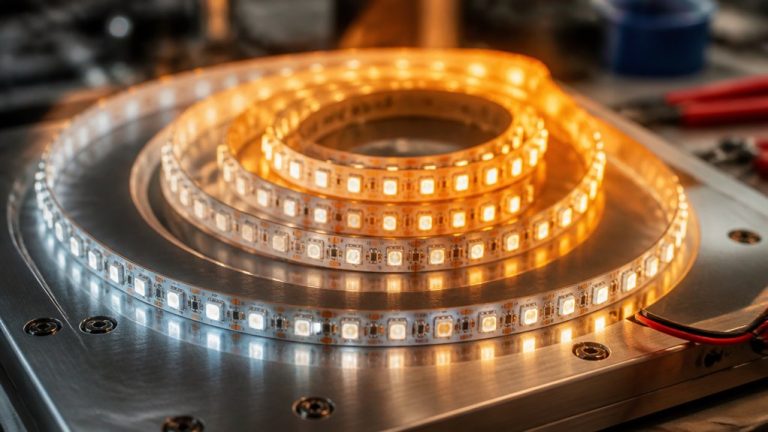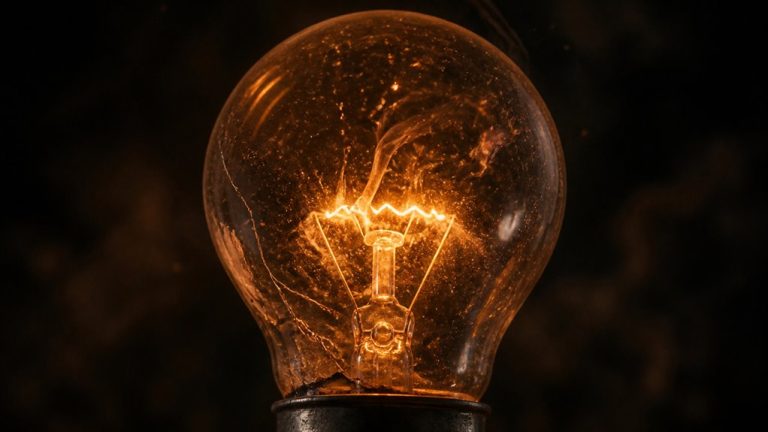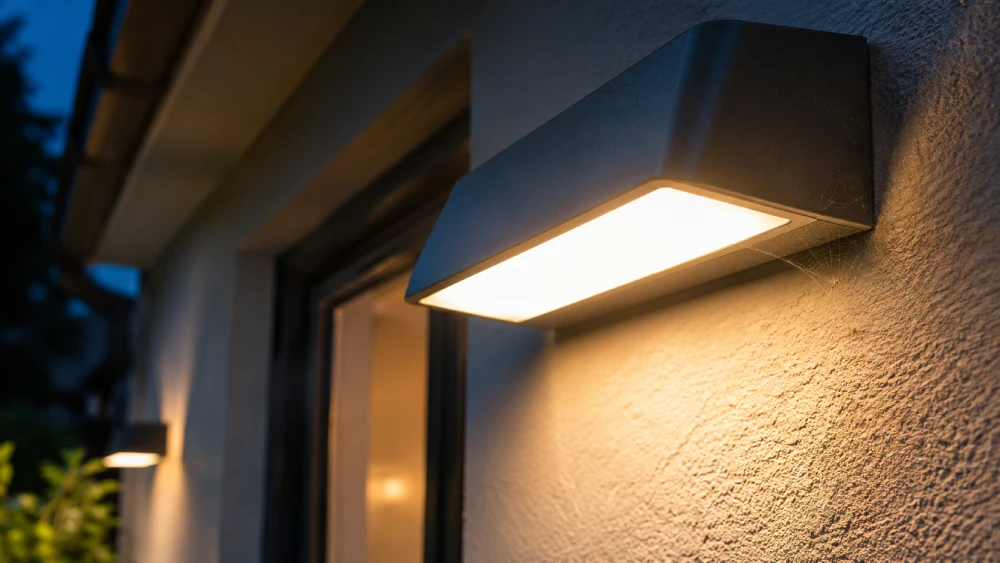

You’ll find spiders near LED lights because those lights attract insects, their primary prey, not because spiders are drawn to the light itself.
Cooler blue or white LEDs emit short wavelengths that attract more insects, increasing spider activity nearby.
Warm white or amber LEDs attract fewer insects, reducing spider presence.
Spider species rely on prey vibrations, so they forage where insects gather, often near porch and doorway lights.
Understanding these interactions helps you manage unwanted spider hotspots effectively.
Key Takeaways
- Spiders are not directly attracted to LED lights but to the insects that gather near these lights.
- Cooler blue or white LEDs attract more insects, increasing spider presence nearby due to prey availability.
- Warm white or amber LEDs attract fewer insects, resulting in reduced spider activity near those lights.
- Spiders build webs near LED-lit areas to exploit insect congregations, enhancing their foraging success.
- Reducing LED brightness and using warm-spectrum lights can minimize insect and spider buildup around lighting.
How LED Lights Influence Spider Presence Near Your Home?
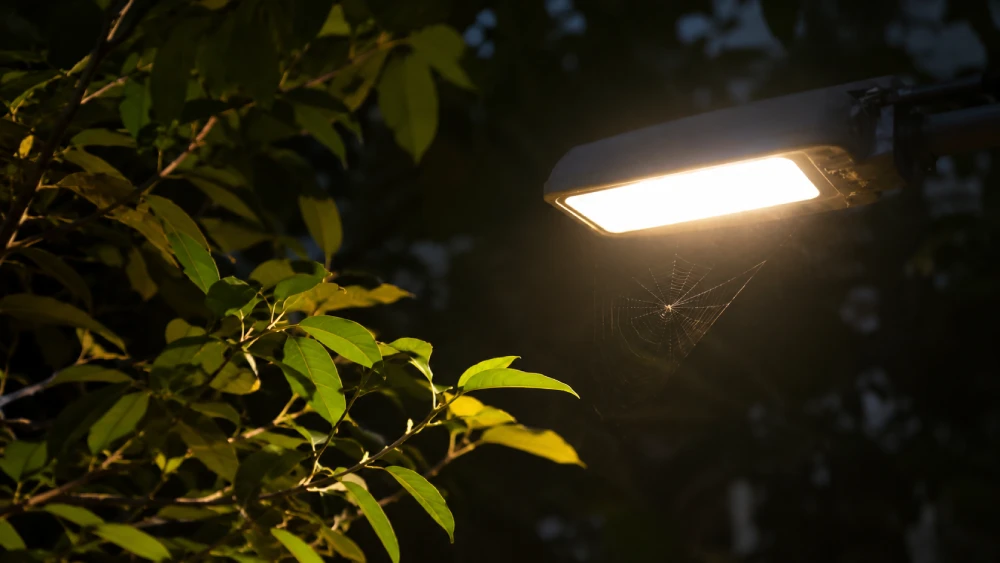
Frequently, you’ll notice spiders near LED-lit areas around your home. This presence stems primarily from the insects attracted to those lights rather than the LEDs themselves.
You’ll find spiders clustering near exterior LEDs at doors, windows, and porches, where insect activity is naturally higher. These locations offer ample prey, so orb-weaving spiders often build webs in these zones to maximize feeding opportunities.
The intensity and spectrum of LED light influence insect behavior, indirectly affecting spider distribution. Cooler blue or white LEDs attract more insects, increasing spider presence, while warmer tones tend to reduce it.
Consequently, when you observe spiders near LEDs, it reflects a response to prey availability rather than a direct attraction to the light source itself.
For homeowners seeking to monitor these areas effectively, installing a solar-powered outdoor security camera can provide continuous surveillance without adding electrical load.
Why Spiders Are Attracted to Insects, Not Lights?
You know, spiders aren’t actually attracted to LED lights directly. What really pulls them in is the insects that those lights attract. It’s pretty clever if you think about it!
Spiders are all about finding the best spots to hunt, and they know that light sources tend to bring in a lot of tasty bugs. So, if you see a spider hanging around a light, it’s because there’s a buffet of insects nearby.
This just goes to show that for spiders, it’s all about the food. They choose their hunting grounds based on where they can find the most prey, not because they’re fans of bright lights. Isn’t nature fascinating?
To reduce unwanted insects—and thus spiders—around your home, consider optimizing your outdoor lighting placement and types, following environmental optimization best practices.
Spiders Follow Their Prey
Spiders are primarily drawn to areas where their prey congregates rather than to light sources themselves. You’ll notice spiders near LED lights because insects gather there, offering abundant feeding opportunities. This behavior reflects prey availability, not an attraction to the light itself.
When evaluating why spiders cluster near lit zones, consider:
- Insects are attracted to certain light spectra, increasing prey density.
- Spiders detect prey through vibrations and movements, guiding their foraging.
- Web placement typically coincides with insect traffic, maximizing capture chances.
- Artificial light indirectly benefits spiders by creating localized insect aggregations.
Understanding this helps clarify that spiders follow their prey, adapting foraging strategies to exploit insect-rich environments illuminated by LEDs. Similarly, strategic placement in high-prey areas increases the effectiveness of any predator’s hunting strategy.
Insect Attraction Drives Spiders
Often, the presence of spiders near LED lights owes more to the insects these lights attract than to any direct lure of the illumination itself.
You’ll find that cooler white and blue-toned LEDs emit spectra rich in UV and short wavelengths, which effectively draw flying insects.
Since insects congregate near these light sources, spiders follow to exploit the increased prey availability.
This indirect relationship explains why spiders cluster in lit outdoor areas like porches or doorways, where insect traffic peaks.
Scientific studies confirm that prey abundance, rather than illumination, primarily governs spider foraging behavior.
Consequently, when you observe spiders near LED lights, they’re responding to the insect influx rather than the light itself.
Understanding this distinction helps clarify the ecological dynamics between artificial lighting, insect attraction, and spider presence.
Similar to how steam triggers false alarms in smoke detectors by mimicking particles, the presence of insects attracted by LED lights creates an indirect environmental cue that spiders respond to, highlighting the importance of particle mimicry in ecological interactions.
Food Availability Over Light
The attraction of spiders to illuminated areas stems primarily from the abundance of prey rather than the light itself. You’ll find spiders near LED lights because insects cluster there, not because the light attracts them directly. This distinction matters when managing outdoor lighting to minimize spider presence.
Consider these key points:
- Insects are drawn to certain light spectra, especially cool white and blue tones.
- Spiders position their webs where prey is most plentiful, often near porch or door lights.
- Artificial light creates local insect congregations, indirectly benefiting spider foraging success.
- Reducing light intensity and using warm-toned LEDs decreases insect accumulation and consequently spider activity.
Understanding this prey-driven behavior helps you control spider populations by targeting insect attraction, not the light itself. Using yellow-toned outdoor lighting near cameras and outdoor areas reduces insect attraction, which in turn lowers spider presence.
How Different LED Colors Affect Insect and Spider Activity?
You might’ve noticed that cool white and blue-toned LEDs tend to attract more insects. This, in turn, draws more spiders to those areas. It’s interesting how that works, right?
On the flip side, warm white and amber LEDs emit light that’s less appealing to insects. As a result, you’ll find fewer spiders hanging around those lights.
Using lighting with adjustable intensity or specific wavelength control can help reduce insect attraction and consequently decrease spider activity by minimizing light reflection effects.
LED Color Impact
How does the color of LED light influence insect and spider activity around your home? Different LED colors emit distinct light spectra, which can substantially affect insect behavior and indirectly, spider presence.
Cooler white and blue-toned LEDs emit higher-energy light that attracts more insects. In contrast, warm white, amber, or yellow LEDs produce lower-energy spectra less appealing to insects, resulting in fewer spiders nearby.
Consider these points:
- Cool white and blue LEDs attract more flying insects, increasing spider foraging opportunities.
- Warm-colored LEDs reduce insect abundance, limiting spider activity.
- UV-rich LEDs draw the highest insect concentrations, intensifying spider web formation.
- Spider presence near LEDs correlates strongly with insect availability, not direct light attraction.
Choosing LED colors strategically can manage insect and spider activity effectively. Additionally, understanding how environmental factors like humidity levels influence insect behavior can further optimize control strategies.
Warm vs Cool LEDs
Although both warm and cool LED lights serve the same basic function of illumination, they differ markedly in their spectral output. This directly influences insect attraction and consequently spider activity.
Cool LEDs emit higher energy, blue-white light that attracts more insects, creating hotspots for spiders. Warm LEDs, with amber and yellow tones, emit lower energy light that attracts fewer insects, thereby reducing spider presence.
| LED Type | Spectral Output |
|---|---|
| Cool White | High energy, blue-rich light |
| Warm White | Lower energy, amber-yellow light |
| Insect Attraction | High (cool) vs. Low (warm) |
| Spider Activity | Increased near cool LEDs |
| Recommended Use | Warm LEDs for fewer insects and spiders |
Choosing warm LEDs can minimize insect and spider buildup around your home.
How Spider Species Respond to LED Lights Around Homes?
Observing spider species around LED-lit areas reveals varied responses influenced primarily by prey availability rather than the light source itself. You’ll notice that spiders cluster where insects gather, not necessarily due to the light directly.
Here’s how different species respond:
- Orb-weaving spiders exploit LED-lit zones for abundant prey, increasing foraging success.
- Some juvenile nocturnal spiders are attracted to LED-lit areas but depend on insect presence to stay.
- Species with less reliance on aerial prey show minimal response to LED light exposure.
- Variations in light spectrum impact insect and thereby spider activity. Cooler LEDs attract more insects, indirectly drawing more spiders.
Understanding these patterns helps you manage outdoor lighting to influence spider presence effectively by targeting their food sources rather than the spiders themselves. For effective monitoring of these areas, consider installing motion-activated cameras with infrared capabilities to observe spider activity without disturbing their natural behavior.
How Porch and Doorway Lights Become Spider Hotspots?
The concentration of insects around porch and doorway lights creates ideal feeding grounds that attract spiders looking to capitalize on abundant prey.
As insects swarm these illuminated zones, spiders exploit the steady food supply by constructing webs nearby. This proximity enhances their foraging efficiency, minimizing energy spent on hunting.
Porch and doorway lights often emit spectra, especially cooler white tones, that draw higher insect densities, amplifying spider presence.
Additionally, these entry points provide structural features, such as corners, eaves, and frames, that support web attachment.
Consequently, spiders establish hotspots in these locations, reflecting insect availability rather than intrinsic attraction to the light source.
Understanding this dynamic highlights why managing insect activity through light color and usage near doors can reduce spider concentrations effectively.
Using LED lights with specific color temperatures can influence insect attraction and thus affect spider presence around these areas.
How Brightness and Light Placement Impact Spider Webs?
When you adjust the brightness and placement of outdoor lights, you directly influence insect activity and, consequently, where spiders build their webs.
Brighter lights, especially cool-white LEDs, attract more insects, creating hotspots where spiders can easily capture prey.
Conversely, dimmer lights reduce insect gatherings, discouraging spider web construction nearby.
Light placement near entry points like doors and porches further concentrates insect traffic, prompting spiders to build webs in these zones.
Consider these factors:
- Higher brightness increases insect presence, boosting spider foraging success.
- Lights near doorways and porches serve as insect aggregation points.
- Lower light intensity limits insect attraction, reducing spider web formation.
- Strategic placement away from common insect pathways minimizes spider activity.
Managing brightness and placement can therefore modulate spider web distribution effectively. Additionally, using outdoor lighting with photocell sensors ensures lights operate only at night, which can help regulate insect activity patterns and spider web locations.
How to Choose LED Lights That Minimize Spiders and Insects?
Choosing the right LED lights markedly influences the presence of insects and, consequently, spiders around your home. You should opt for warm white or amber LEDs, as these emit spectra less attractive to insects, thereby reducing spider foraging opportunities.
Lower light intensity also limits insect gatherings. Avoid cool white or blue-toned LEDs, which attract more prey insects and indirectly encourage spider presence.
| Light Color | Insect Attraction | Spider Activity |
|---|---|---|
| Warm White | Low | Low |
| Amber | Very Low | Very Low |
| Cool White | High | High |
| Blue-Toned | Very High | Very High |
| Intensity Level | Lower preferred | Lower preferred |
Selecting LEDs with these parameters helps minimize insect and spider buildup effectively.
Lighting Habits That Naturally Keep Spiders Away
Adjusting not just the type but also the timing and duration of outdoor lighting can markedly influence insect activity and, in turn, spider presence around your home.
By managing lighting habits, you can naturally reduce spider attraction. Consider these evidence-based strategies:
- Use warm-colored LEDs (amber or yellow), which attract fewer insects than cool-white or blue-toned lights.
- Limit illumination duration by switching off outdoor lights when not needed, reducing insect congregation time.
- Lower light intensity to minimize insect attraction, thereby decreasing spider foraging opportunities.
- Position lights away from doors, windows, and porches to avoid creating insect hotspots where spiders build webs.
Implementing these habits leverages the indirect relationship between light and spider presence, promoting a less hospitable environment for spiders without compromising outdoor visibility.
Frequently Asked Questions
Do LED Lights Attract Other Pests Besides Spiders and Insects?
Yes, LED lights can attract other pests besides spiders and insects, though the effect varies by species.
Many nocturnal pests like moths, beetles, and some flying arthropods are drawn to artificial light sources, especially those emitting UV or blue wavelengths.
However, pests such as rodents or larger animals are less influenced by LED lighting.
To minimize unwanted pest attraction, you should use warmer-colored LEDs and reduce brightness in outdoor lighting setups.
Can Indoor LED Lighting Affect Spider Activity Inside Homes?
Picture a softly glowing indoor LED casting warm light across your room.
You won’t usually see spiders drawn directly to that glow. Instead, they follow the tiny insects attracted by cooler, brighter LEDs.
Inside your home, warm-toned LEDs reduce insect presence, limiting spider activity.
Are Certain Spider Species More Likely to Avoid Led-Lit Areas?
Yes, certain spider species are more likely to avoid LED-lit areas.
Species not adapted to hunting near artificial light, such as some ground-dwelling or web-building spiders that rely on darkness for stealth, tend to stay away.
In contrast, orb-weaving spiders often exploit LED-lit zones due to increased prey availability.
How Does Seasonal Change Influence Spider Presence Near LED Lights?
You’ll notice spider presence near LED lights fluctuates seasonally because insect prey availability changes with temperature and weather.
In warmer months, insects swarm more around lights, attracting spiders that build webs nearby to exploit this food source.
During colder seasons, insect activity drops, reducing spider foraging near LEDs.
Does the Duration of LED Light Exposure Impact Spider Web Building?
Think of LED light exposure as a dinner bell ringing longer. Spiders seize extended hours to spin webs where prey gathers.
Yes, the duration of LED light exposure influences spider web building by increasing insect activity over time. This encourages spiders to maintain or expand their webs near those lights.
Prolonged illumination creates a reliable foraging site. This boosts web construction frequency and size due to sustained prey availability.
Does LED Lights Attract Spiders? Final Answer
So, do LED lights really attract spiders? Not directly. Spiders are drawn to the insects that LED lights attract.
Different LED colors and brightness levels influence insect activity, which in turn affects spider presence.
By choosing cooler, less intense LEDs and strategically placing lights away from doors and porches, you can reduce spider hotspots.
Isn’t it fascinating how a simple change in lighting can shift the whole ecosystem around your home?