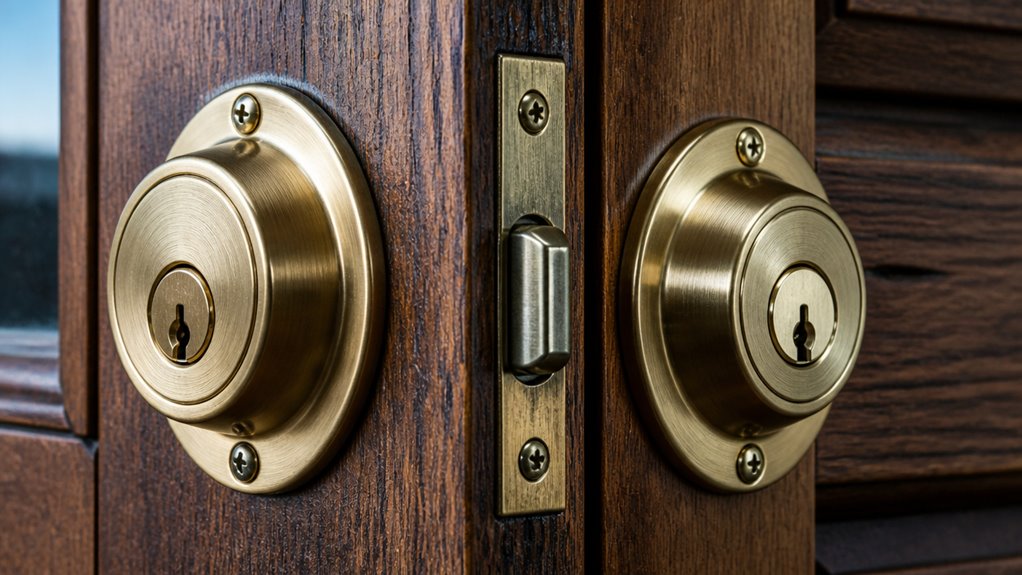

A double cylinder deadbolt lock replaces the interior thumb-turn with a keyed cylinder on both sides, so you need a key to lock or release it from anywhere.
This design provides greater security, especially for doors with glass panels, preventing someone from reaching through broken glass to release the door.
It features a solid bolt throw of about one inch and often meets high-security standards. Understanding its safety implications and installation details will help you make the best choice for your door.
Key Takeaways
- A double cylinder deadbolt lock requires a key to lock or unlock from both interior and exterior sides.
- It replaces the interior thumb-turn with a keyed cylinder to prevent unauthorized unlocking through broken glass.
- The bolt typically extends about 1 inch for secure door engagement and enhanced forced entry resistance.
- Commonly used on doors with glass panels or sidelights to increase security and prevent lock bypass.
- It may slow emergency exit and could be restricted by fire codes, so professional consultation is advised.
What Is a Double Cylinder Deadbolt?
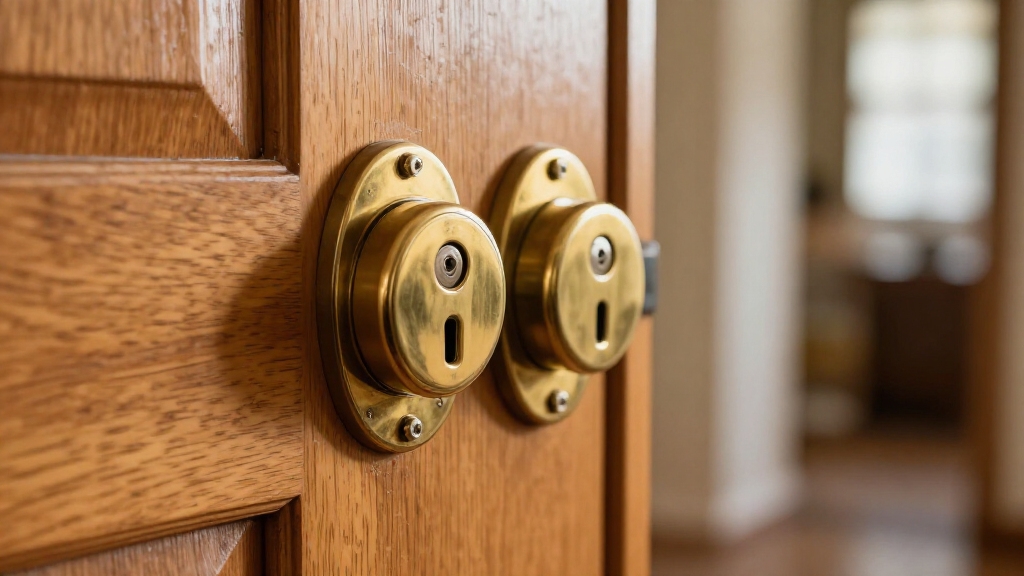
Although many deadbolts feature an interior thumb-turn for quick locking and releasing, a double cylinder deadbolt replaces this with a keyed cylinder on both sides of the door. This means you need a key to lock or unfasten the deadbolt from either side, enhancing security by eliminating the interior thumb-turn mechanism.
The lock, often called a “double-sided” deadbolt, uses a keyed cylinder on both the exterior and interior faces, requiring precise key control. Typically, the bolt throw measures about 1 inch for secure engagement.
You’ll find fixed or adjustable backsets, commonly 2-3/4 inches or 60-70 mm, to fit various door preparations.
Materials and finishes vary, including options like satin chrome and oil-rubbed bronze, ensuring both durability and aesthetic compatibility with your door.
Professional locksmiths can efficiently handle double cylinder deadbolts and provide services such as rekeying and replacement to maintain optimal security.
Why Use Double Cylinder Deadbolts on Doors With Glass?
Double cylinder deadbolts eliminate the interior thumb-turn, requiring a key to operate the lock from both sides of the door. This design is essential when your door has glass panels or sidelights because it prevents intruders from reaching through broken glass to disengage the door.
By using a double cylinder deadbolt, you enhance security without compromising door integrity.
You should consider double cylinder deadbolts on glass doors for these reasons:
They block unauthorized interior unlocking via shattered glass.
They provide consistent locking strength on both door sides.
They increase resistance against forced entry attempts near glass areas.
Installing this lock on doors with glass adds an indispensable security layer, especially when paired with solid-core doors and reinforced strike plates. Incorporating these locks into doors with reinforced core materials significantly improves overall resistance to forced entry.
Key Security Features of Double Cylinder Deadbolts
When you choose a double cylinder deadbolt, you gain enhanced key security features designed to resist unauthorized access. This lock requires a key on both sides, eliminating the interior thumb-turn and preventing bypass through broken glass.
Most models provide a solid 1-inch throw bolt, offering robust door engagement. You’ll find six-pin cylinder options that improve key control and reduce picking risk. Many commercial-grade versions meet ANSI Grade 1 or 2 standards, ensuring durability against forced entry.
Adjustable backsets accommodate various door preparations, while compatibility with restricted keyways limits unauthorized key duplication. Finishes and materials vary, but the core mechanical security remains consistent. Double cylinder deadbolts provide greater tamper resistance compared to standard cylindrical locks, making them ideal for high-security applications.
Safety and Fire Code Considerations Before Installation
Since a double cylinder deadbolt requires a key to unfasten from both sides, it can slow emergency egress during urgent situations.
Before installing one, you must verify compliance with local fire and building codes. Many jurisdictions restrict or prohibit these locks due to safety concerns.
Fire safety regulations prioritize quick exit, so a keyed interior lock may violate those standards. When considering installation, review these points:
- Confirm local code requirements and restrictions for double cylinder locks.
- Assess emergency exit routes to ensure occupants can evacuate swiftly.
- Evaluate the risk of leaving a key in the interior cylinder to balance security and safety.
Taking these steps helps you avoid legal issues and ensures occupant safety without compromising security. It is also advisable to consult with a licensed locksmith to ensure proper installation and adherence to safety standards.
Choosing and Installing the Right Double Cylinder Deadbolt
Balancing security with emergency accessibility requires careful selection and installation of a double cylinder deadbolt.
Careful selection and installation of double cylinder deadbolts balance security needs with emergency accessibility.
First, make certain your door thickness and backset match the lock’s specifications to guarantee proper fit and function.
Check the bore-hole configuration and handedness, especially if replacing a single-cylinder deadbolt.
Choose a lock with a solid 1-inch throw bolt and reinforced strike plate for enhanced security.
Review keyway compatibility and plan for secure key duplication to maintain control.
During installation, avoid leaving a key in the interior cylinder to prevent compromising safety, but weigh this against emergency egress needs.
Finally, verify local building and fire codes to ensure compliance.
Combining double cylinder deadbolts with a multipoint locking system can improve both security and fire safety when properly balanced.
Frequently Asked Questions
Can Double Cylinder Deadbolts Be Rekeyed to Match Existing Keys?
Yes, you can rekey double cylinder deadbolts to match your existing keys, provided the cylinders support that functionality.
Many models use standard pin-tumbler mechanisms compatible with common keyways, allowing locksmiths to adjust the pins accordingly.
However, commercial or high-security cylinders with proprietary keyways might require specialized service or complete cylinder replacement.
Always verify your lock’s compatibility and consult a professional to ensure proper key control and secure operation after rekeying.
How Do Double Cylinder Deadbolts Perform in Extreme Weather Conditions?
When it comes to double cylinder deadbolts in extreme weather, you’ll find they generally hold up well if made from weather-resistant materials like stainless steel or brass.
However, moisture and temperature swings can cause key cylinders to freeze or corrode if unprotected.
You’ll want to apply lubricant regularly and make certain proper sealing.
Are There Smart Lock Versions of Double Cylinder Deadbolts Available?
Yes, you can find smart lock versions of double cylinder deadbolts designed for enhanced security.
These models integrate electronic keypads or smartphone control but still require a physical key on both sides for manual operation.
When choosing one, make certain it complies with your door’s thickness and backset.
Also, verify compatibility with your existing keyway.
Keep in mind, emergency egress and battery life should factor into your decision when installing these smart double-cylinder locks.
What Maintenance Is Required to Keep Double Cylinder Deadbolts Functioning Smoothly?
You’ll want to clean, lubricate, and inspect your double cylinder deadbolt regularly.
Clean the keyway with compressed air, lubricate the cylinder with graphite or a dry lubricant, and avoid oil-based products that attract dirt.
Check for loose screws and tighten them to maintain alignment.
Test both sides to make certain smooth key operation.
Regular maintenance prevents jamming, extends lock life, and keeps your security reliable and effective.
Can Double Cylinder Deadbolts Be Installed on Sliding or French Doors?
You generally can’t install double cylinder deadbolts on sliding doors due to their design and locking mechanisms.
French doors, however, can accommodate them if properly reinforced and if the door thickness and bore-hole meet specifications.
You’ll need to make certain the door prep matches the lock’s requirements and consider emergency egress concerns.
For sliding doors, specialized locks designed for that style are a better security choice.
Is a Double Cylinder Deadbolt Right for Your Door?
When securing your home, consider that 60% of burglaries occur through unlatched or easily accessible doors.
A double cylinder deadbolt offers enhanced security by requiring a key on both sides, especially useful for doors with glass.
However, always balance safety and fire code requirements before installation.
By choosing the right lock and installing it properly, you greatly reduce the risk of break-ins while maintaining compliance and safety for your household.