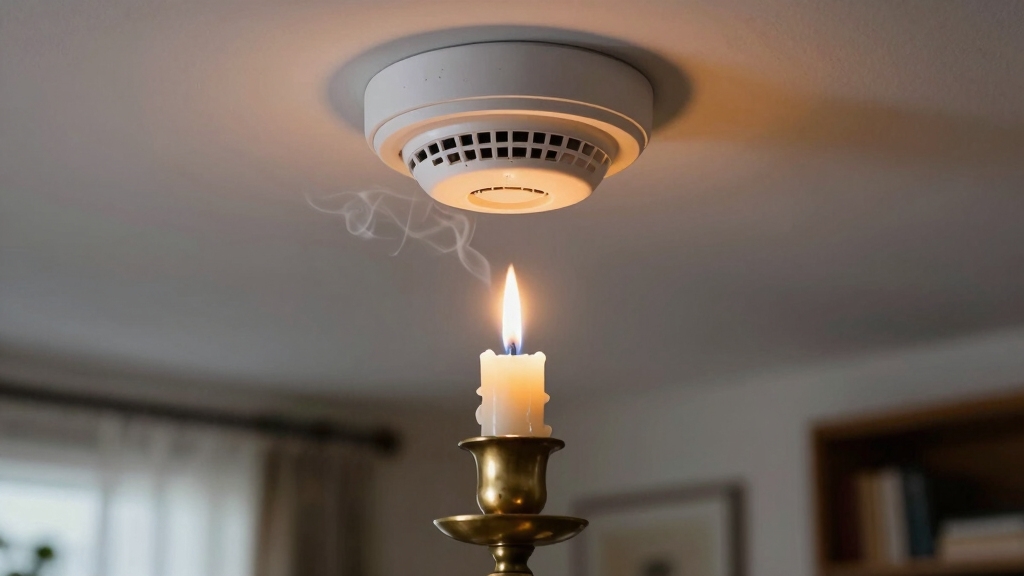

Yes, candles can set off fire alarms because their smoke contains soot and tiny particles that detectors are designed to spot. Ionization alarms react to small particles, while photoelectric alarms detect larger smoke particles.
Certain candles, like paraffin or scented ones, produce more soot, increasing the risk. Poor ventilation traps this smoke, making alarms more sensitive.
By understanding candle types, ventilation, and safe practices, you can prevent unwanted alerts and keep your space safe.
Key Takeaways
- Candle smoke contains soot and particulates that can trigger both ionization and photoelectric fire alarms.
- Paraffin and scented candles produce more smoke and soot, increasing the risk of setting off alarms.
- Poor ventilation allows candle smoke to accumulate, raising the likelihood of fire alarm activation.
- Positioning candles too close to detectors or prolonged burning can cause heat or smoke buildup, triggering alarms.
- Using cleaner-burning candles and proper ventilation reduces smoke and the chance of false fire alarms.
Why Do Fire Alarms Go Off From Candles?
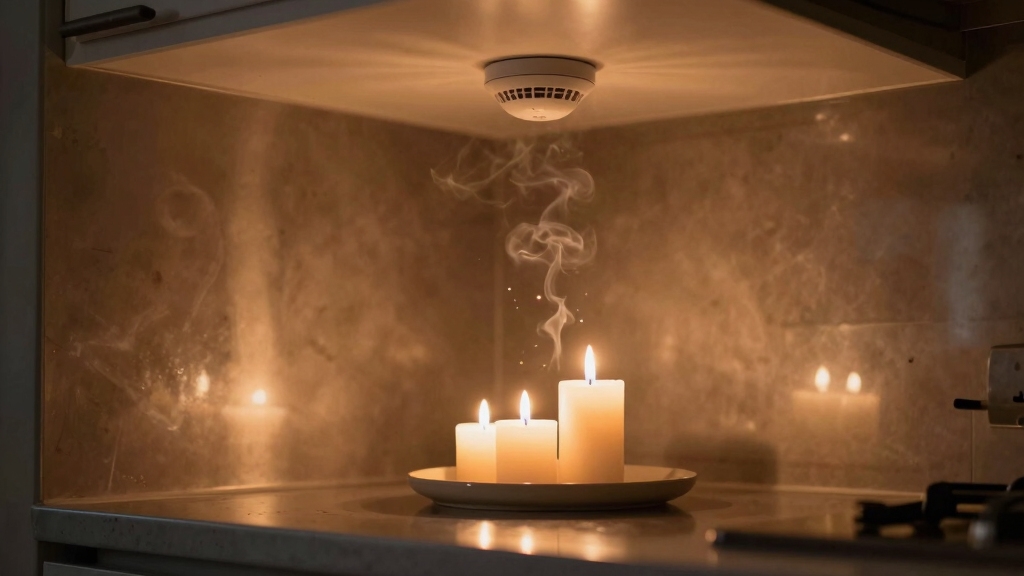
Although candles create a cozy atmosphere, they can set off fire alarms because their smoke contains soot and particulates similar to those produced by actual fires.
Candles produce soot and particulates that can trigger fire alarms just like real fires do.
Fire alarms detect tiny particles or heat from combustion; candle smoke mimics this, triggering sensors.
Ionization alarms react to small particles, while photoelectric alarms respond to larger ones.
Both are sensitive enough to detect candle emissions.
Additionally, thermal sensors activate when heat builds up from prolonged burning.
In confined or poorly ventilated spaces, smoke accumulates near detectors, increasing the chance of false alarms.
Understanding that candle smoke shares characteristics with harmful fire smoke explains why your fire alarm might go off even during a simple candle burn.
You can manage this by controlling smoke production and ventilation to prevent unnecessary alerts.
Photoelectric alarms are especially sensitive to larger smoke particles from smoldering sources, which is why they can be triggered by candle smoke in particular due to light scattering detection.
Candle Types That Trigger Fire Alarms
When choosing a candle, consider the type of wax and additives. Some produce more smoke and soot that can trigger fire alarms.
Paraffin wax candles, for example, emit significant soot and black smoke. This increases the chances of setting off alarms. Scented candles also release more particulate matter, raising this risk.
Additionally, candles embedded with botanicals tend to produce heavier soot, which can easily activate smoke detectors.
Here are candle types to watch out for:
Paraffin wax candles: High soot and smoke output
Scented candles: Increased particulate emissions
Botanical-embedded candles: Elevated soot risk
Selecting cleaner-burning options like soy or rapeseed wax can help you avoid false fire alarm triggers. Understanding how fire suppression systems work can also aid in minimizing unnecessary alarm activations.
How Ventilation Affects Candle Smoke and Fire Alarm Sensitivity?
Since ventilation directly influences smoke concentration, it plays a crucial role in whether candle smoke triggers fire alarms.
When you burn a candle in a poorly ventilated room, smoke accumulates quickly. This raises the particulate density near sensors and increases the chance of activation.
Conversely, good airflow through open windows, fans, or vents disperses smoke particles. This lowers their concentration and reduces alarm sensitivity.
Since ionization detectors react to tiny particles and photoelectric ones to larger ones, ventilation impacts both types by controlling how much smoke reaches them.
If you want to avoid false alarms, understand that confined spaces trap soot and particulates from candles, especially those made with paraffin or scented wax.
Proper ventilation dilutes this buildup, preventing smoke from reaching the threshold that triggers fire alarms.
However, it is important to remember that smoke detectors provide early alerts by sensing airborne particles before heat levels rise enough to activate sprinklers.
Safe Candle Burning Practices to Avoid Fire Alarms
To prevent your candle from setting off fire alarms, you need to follow specific burning practices that minimize smoke and heat near detectors. Position your candle at least three feet away from any smoke detectors to reduce the chance of triggering alarms.
Always trim the wick to about ¼ inch before lighting to keep smoke production low and ensure a cleaner burn. Limit your candle’s burn time as recommended by the label to prevent excessive heat buildup and soot accumulation.
Keep these key practices in mind:
Use stable holders on heat-resistant surfaces to avoid accidents. Never leave burning candles unattended. Ensure proper ventilation to disperse smoke quickly. Regular cleaning of smoke detectors helps prevent false alarms caused by dust buildup and moisture.
Health Risks From Candle Smoke and Fire Alarms
Breathing in candle smoke can expose you to harmful chemicals and particles that affect your health and indoor air quality. When you burn candles, especially those made of paraffin or scented varieties, you release volatile organic compounds like toluene and benzene. These can trigger allergies or asthma.
Candle smoke also increases particulate matter and airborne bacteria, including species like Staphylococcus hominis, worsening respiratory conditions. Fire alarms, designed to detect smoke from combustion, can be triggered by these particles, alerting you to potential dangers.
To protect your health, ensure proper ventilation and limit candle use in confined spaces. By understanding these risks, you can enjoy candles safely while minimizing exposure to harmful smoke and reducing false fire alarm activations. Additionally, it is important to note that moisture can increase the likelihood of sparks and electrical faults in nearby outlets, which can pose added fire hazards in indoor environments.
Frequently Asked Questions
Can Scented Candles Worsen Asthma Symptoms More Than Unscented Ones?
Yes, scented candles can worsen your asthma symptoms more than unscented ones.
They release higher concentrations of particulate matter and volatile organic compounds (VOCs), like toluene and benzene, which irritate your airways.
The additional fragrance chemicals increase airborne allergens and pollutants, triggering asthma attacks or allergies.
To protect your respiratory health, choose unscented, soy-based candles, burn them in well-ventilated spaces, and limit your exposure.
Are Battery-Operated Candles a Safe Alternative to Real Candles?
Imagine a flickering flame without the worry of smoke or fire hazards. That’s what battery-operated candles offer you.
They’re a safe alternative to real candles, eliminating soot, toxic emissions, and fire risks. You can enjoy their gentle glow anywhere, even near smoke detectors or in poorly ventilated rooms.
This means you won’t trigger alarms or harm air quality. Battery candles bring peace of mind, perfect for cozy, worry-free ambiance every time.
How Often Should Smoke Detectors Be Cleaned to Prevent False Alarms?
You should clean your smoke detectors at least twice a year to prevent false alarms.
Dust, soot, and other particles can build up inside, especially if you burn candles nearby.
Use a vacuum cleaner with a soft brush attachment or gently wipe the exterior.
Regular maintenance guarantees sensitivity stays accurate and helps avoid unnecessary alerts.
Don’t forget to test detectors monthly to confirm they’re working properly and replace batteries as needed.
Do Certain Candle Holders Reduce Soot and Smoke Production?
You won’t find a candle holder that magically makes soot disappear like a wizard’s spell, but certain designs can help reduce smoke production.
Glass or metal holders with good airflow prevent heat buildup, minimizing incomplete combustion and soot.
Also, holders that keep candles upright and stable let them burn evenly, cutting smoke.
What Should I Do if My Fire Alarm Repeatedly Triggers From Candles?
If your fire alarm repeatedly triggers from candles, move them at least three feet away from detectors.
Make sure the room is well-ventilated by opening windows or running fans to disperse smoke.
Trim wicks to a quarter inch to reduce soot and smoke.
Limit burn time and never leave candles unattended.
Consider switching to cleaner-burning waxes like soy or rapeseed to minimize particulate buildup and prevent false alarms.
Fresh Air & Flickering Flair: Candle Safety Simplified
You can confidently control candle combustion by choosing clean-burning candles and ensuring excellent ventilation. Avoid dense, smoky scents that might trigger sensitive smoke sensors.
Practicing proper placement and mindful monitoring minimizes mishaps and keeps alarms silent. Staying safe means savoring your soothing scents without setting off alarms or risking respiratory reactions.
By balancing brightness and breathability, you’ll brilliantly banish bothersome blares and breathe easier with every flicker.