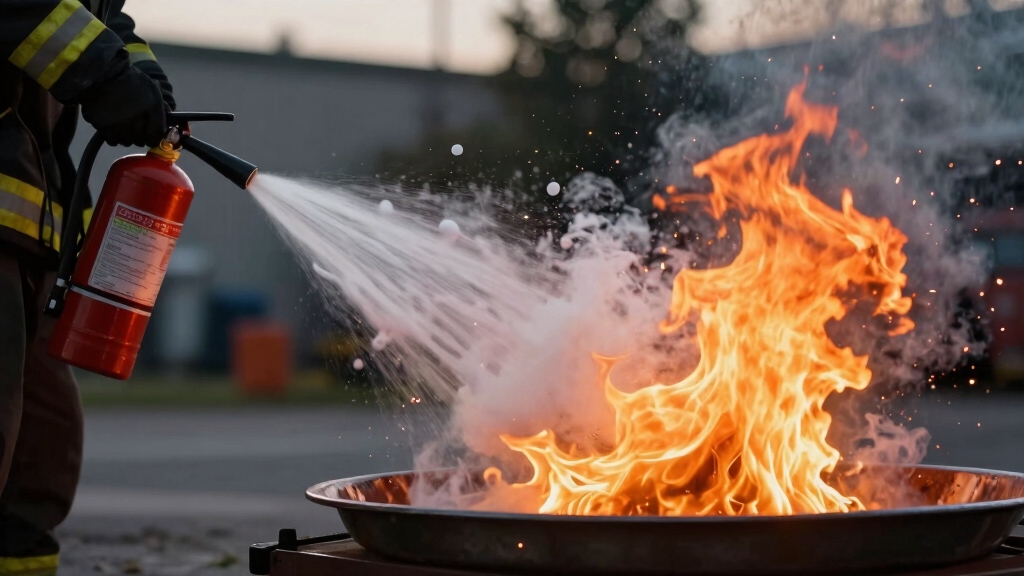

If you face a gasoline fire, never use water; it spreads flames and causes dangerous steam burns.
Instead, use a Class B fire extinguisher labeled for flammable liquids, aiming low at the fire’s base while squeezing steadily and sweeping side to side. If safe, shut off the fuel supply by turning the valve clockwise.
However, prioritize immediate evacuation and call emergency services without delay. Keeping safe and controlling fuel rapidly can stop the fire before it grows.
More detailed steps will guide you through each critical action.
Key Takeaways
- Evacuate the area immediately and call emergency services before attempting any firefighting actions.
- Never use water on a gasoline fire as it spreads flames and causes dangerous steam burns.
- Use a Class B fire extinguisher with foam, CO2, or dry powder agents designed for flammable liquids.
- Follow the PASS technique: Pull the pin, Aim low at the fire base, Squeeze the handle, Sweep side to side.
- Keep the fuel pump nozzle in place and shut off the fuel supply only if it can be done safely.
How To Respond Immediately To A Gasoline Fire?
When a gasoline fire breaks out, your first move should be to evacuate everyone from the area immediately to guarantee safety.
Don’t try to fight the fire yourself if it’s spreading or too large. Call the fire department right away.
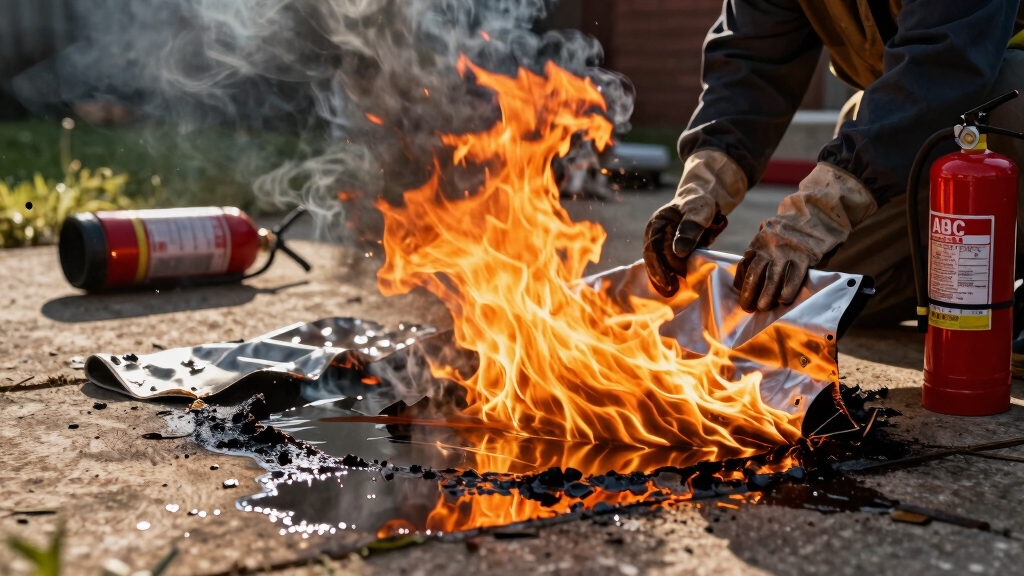
If the fire is small and manageable, use a Class B fire extinguisher designed for flammable liquids. Remember to pull the pin, aim at the base, squeeze the handle, and sweep side to side.
Avoid panicking; act swiftly but calmly. Keep clear of inhaling smoke and maintain a safe distance.
If possible, shut off the gasoline supply to stop fueling the fire, but only if you can do so safely. Your priority is always human safety before any firefighting attempt.
Why You Should Never Use Water On Gasoline Fires?
Handling a gasoline fire requires careful action. One mistake you must avoid is using water to put it out.
Water spreads burning gasoline, making flames larger and more dangerous. It also boils instantly, causing steam burns that can injure you severely. Water and gasoline don’t mix, so throwing water only intensifies the fire instead of extinguishing it.
| What You Risk | Why It Happens |
|---|---|
| Fire spreading rapidly | Water spreads burning fuel |
| Severe burns | Steam boils from water heat |
| Worsening flames | Flammable liquid repels water |
Additionally, water’s steam production can displace oxygen but on gasoline fires, this effect is insufficient to suppress the flames safely.
Always remember: never use water on gasoline fires. Your safety depends on using the right extinguishing method instead.
Using Class B Fire Extinguishers On Gasoline Fires
When dealing with gasoline fires, it’s crucial to grab a Class B extinguisher. These are specifically made for flammable liquids like gasoline, so you know you’re using the right tool.
Now, let’s talk about how to use it effectively. First, remember the PASS technique. Just pull the pin, aim low at the fire’s base, squeeze the handle, and then sweep the nozzle from side to side.
This method is key because targeting the base of the fire helps cut off its oxygen supply, which is essential for stopping it.
Always position yourself with a clear exit behind you to ensure a quick escape if the fire spreads or reignites, emphasizing the importance of safe positioning during use.
Choosing The Right Extinguisher
Selecting the correct extinguisher is crucial for safely putting out gasoline fires. You need a Class B fire extinguisher, specifically designed for flammable liquids like gasoline.
These extinguishers use agents such as foam, carbon dioxide (CO2), or ABC dry powder, which effectively smother the flames and cut off oxygen. Avoid water-based extinguishers at all costs; they’ll spread the fire and make it worse.
Make sure the extinguisher is readily accessible in environments where gasoline fires may occur, like garages or gas stations. Using the right extinguisher not only controls the fire quickly but also protects you from unnecessary harm.
Always check the extinguisher’s label to confirm it’s rated for Class B fires before attempting to use it.
Proper PASS Technique
Master the PASS technique to effectively extinguish gasoline fires with a Class B fire extinguisher.
First, pull the pin to release the extinguisher’s handle, allowing you to operate it. Next, squeeze the handle firmly to release the extinguishing agent.
Then, sweep the nozzle side to side across the fire’s base to cut off the oxygen supply and smother the flames. Keep your stance steady and maintain a safe distance while discharging the extinguisher.
Remember, never stop squeezing until the extinguisher is empty or the fire is fully out. This method ensures you control the fire quickly and safely.
Practicing PASS regularly helps you react confidently during emergencies involving flammable liquid fires.
Always position yourself with a clear exit behind to ensure a safe escape route if the fire becomes uncontrollable.
Aiming At Fire Base
Aim the extinguisher nozzle low at the base of the gasoline fire to cut off its oxygen supply effectively.
Directing the agent at the flames won’t work; you must target where the fuel meets oxygen.
Hold the extinguisher firmly, squeeze the handle, and sweep the nozzle side to side across the fire’s base.
This method smothers the fire by disrupting its oxygen supply, preventing it from spreading.
Keep a steady, controlled sweep until the flames are fully out or the extinguisher is empty.
Never point the nozzle at the flames alone, as this wastes the extinguishing agent and delays putting out the fire.
Use a Class B fire extinguisher designed for flammable liquids to ensure effective and safe suppression of gasoline fires Class B fire extinguisher.
How To Safely Shut Off Gas Supply During Gasoline Fires?
If you find yourself in a situation with gasoline fires, the first step is to locate the gas valve. This is usually situated near the appliance or the gas meter. To shut off the supply, simply turn it to the right. Cutting off the fuel source can be a crucial step in preventing the fire from spreading.
However, if the flames are already large, your priority should be to evacuate immediately. It’s better to ensure your safety first rather than trying to close the valve in a dangerous situation. Your life is the most important thing!
Always remember to eliminate ignition sources and notify emergency services as soon as you are safe.
Locating The Gas Valve
When dealing with a gasoline fire, knowing where to find the gas valve is essential for stopping the fuel supply quickly.
Typically, the valve is located on the appliance using gas or near the gas meter outside your property.
Familiarize yourself with its exact position before an emergency occurs.
Look for a round or lever-type handle, often colored red or yellow for easy identification.
In some cases, the valve may be inside a protective box or behind a panel.
Make sure the path to access it stays clear at all times.
Regularly check that the valve turns smoothly to avoid delays during a crisis.
For safety, always call 811 before any excavation or work near underground utilities to prevent accidental damage to gas lines and other services, as part of safe utility practices.
Turning Off Gas Supply
Although shutting off the gas supply may seem straightforward, you must act quickly and carefully to prevent the fire from spreading.
Locate the gas valve, typically found on the appliance or near the gas meter.
Turn the valve clockwise to close it, cutting off the fuel feeding the flames.
This step is essential to stop the fire’s growth and is one of the primary ways to extinguish it.
However, if the fire has spread markedly, prioritize evacuation over attempting valve closure.
Never hesitate to call emergency services immediately.
Shutting off the gas supply removes the fuel source, which prevents further intensification, but timing and safety are vital.
Always make sure your own safety before trying to shut off the gas.
Using appropriate extinguishing methods, such as a Class B extinguisher designed for flammable liquids, can help control gasoline fires safely.
Prioritizing Evacuation Over Closure
Because your safety is paramount, you should prioritize evacuating everyone from the area before attempting to shut off the gas supply during a gasoline fire.
If the fire is already spreading or intense, don’t risk your life trying to close the valve. Instead, focus on getting people to safety and calling emergency services.
Remember these key points:
- Evacuate all occupants immediately to avoid inhalation of toxic fumes or burns.
- Shut off the gas supply only if the fire is small and you can do so safely.
- Never stay in the danger zone if flames are uncontrollable or spreading rapidly.
- Leave firefighting and gas shut-off to trained professionals once evacuation is complete.
Your quick decision to evacuate can save lives and prevent further injury. Always follow the RACE procedure to ensure a safe and effective response during a fire emergency.
Handling Fuel Pump Nozzles During Gasoline Fires
Never pull off the fuel pump nozzle during a gasoline fire, as doing so can worsen the situation by spreading flammable liquid and intensifying the flames.
Keep the nozzle in place to prevent additional fuel from spraying, which could escalate the fire rapidly.
Instead, immediately activate the emergency shut-off switch to stop fuel flow safely.
Your priority is to cut off the fuel source without causing further ignition risks.
Avoid any attempts to manually remove the nozzle; this increases danger for you and others nearby.
After securing the shut-off, evacuate the area promptly and alert the fire department.
Use a Class B extinguisher only if trained and it’s safe to do so, but never compromise your safety by trying to handle the nozzle yourself during the fire.
Always prioritize emergency use protocols and ensure your own safety first when dealing with flammable liquid fires.
Evacuating And Calling For Help During Gasoline Fires
After securing the fuel pump nozzle and activating the emergency shut-off, your immediate focus should shift to evacuating everyone from the area.
Quickly move people to a safe distance, well away from the fire and potential explosions.
Don’t attempt to extinguish the fire yourself if it’s spreading or out of control.
Call emergency services immediately to get professional help on the way.
Alert everyone loudly and clearly to evacuate calmly but quickly.
Avoid inhaling smoke or fumes; cover your nose and mouth if needed.
Do not re-enter the danger zone until firefighters declare it safe.
Designate someone to call 911 or the local emergency number without delay.
Your prompt evacuation and calling for help are critical to preventing injury and saving lives.
Remember that local alarms only alert occupants and do not automatically notify emergency responders, so calling 911 is essential.
Why Cutting Off Fuel Stops Gasoline Fires?
Cutting off the fuel supply quickly stops gasoline fires by removing the fire’s essential source of energy.
Cutting off fuel supply immediately halts gasoline fires by eliminating their vital energy source.
Without gasoline feeding the flames, the fire can’t sustain itself and will begin to die out.
When you shut off the gas valve, usually located on the appliance or gas meter, you effectively starve the fire, preventing it from spreading further.
This action is critical because fuel is one of the three elements fires need to keep burning.
Remember, if the fire has already spread extensively, prioritize evacuation over attempting to close the valve.
By cutting off the fuel, you control the fire’s growth and increase the effectiveness of other firefighting measures.
Using a Class B extinguisher targets the remaining flames safely and efficiently.
Safe Gasoline Storage And Handling Tips
Controlling fuel flow is just one part of managing gasoline fire risks. How you store and handle gasoline can make a big difference in preventing fires from starting.
You must use only approved portable containers, filled to about 95% capacity, to allow for expansion. Store these containers tightly closed, away from heat sources and in well-ventilated areas.
Never reuse household containers like milk jugs or glass bottles for gasoline storage to avoid leaks and contamination.
Use containers approved by independent testing labs. Fill containers no more than 95% full. Store gasoline in cool, ventilated, isolated places. Never reuse non-approved containers for gasoline.
Following these practical steps helps you minimize fire hazards and ensure safe handling of gasoline.
Common Mistakes When Fighting Gasoline Fires
When fighting gasoline fires, you must avoid common mistakes that can worsen the situation.
Never throw water on the fire; it spreads burning gasoline and causes steam burns.
Don’t remove the nozzle during a fuel pump fire; that only fuels the flames.
Instead, keep it in place and activate the emergency shut-off.
Use a Class B fire extinguisher, aiming low at the base of the fire, following the PASS technique.
Always shut off the gas supply if safely possible to cut the fuel source.
Remember, if the fire is too large, prioritize evacuation and call emergency services immediately.
Avoid improvising with incorrect tools or methods.
Gasoline fires require specific, controlled actions to extinguish safely and effectively.
Frequently Asked Questions
What Types of Clothing Are Safest to Wear Near Gasoline Fires?
You should wear fire-resistant clothing made from materials like Nomex or Kevlar when near gasoline fires.
Avoid synthetic fabrics like polyester or nylon, which melt and worsen burns.
Opt for long sleeves, pants, and closed-toe boots to protect your skin.
Don’t wear loose clothing that can catch fire easily.
Always use gloves and eye protection too.
Staying covered and using proper gear minimizes injury risk in hazardous fire environments.
Can Gasoline Vapors Ignite Without an Open Flame?
Yes, gasoline vapors can ignite without an open flame.
These vapors are highly flammable and can catch fire from sparks, static electricity, or even hot surfaces.
So, when you’re near gasoline, avoid actions that could generate sparks or heat.
Always ensure proper ventilation and handle gasoline carefully to reduce vapor buildup and prevent accidental ignition.
Stay alert and prioritize safety.
How Long Does It Take for Gasoline Fumes to Dissipate Safely?
Gasoline fumes typically take several hours to dissipate safely, depending on ventilation and temperature.
You should avoid ignition sources until the smell completely disappears.
In open, well-ventilated areas, fumes may clear within 1 to 3 hours.
However, enclosed spaces can take much longer.
Always ensure fresh air circulation and never rush back into an area with lingering gasoline vapors.
They’re highly flammable and pose serious risks until fully gone.
Are There Any Natural Extinguishing Agents Effective on Gasoline Fires?
You won’t find natural extinguishing agents effective on gasoline fires because gasoline burns intensely and spreads quickly.
Instead, you should rely on Class B fire extinguishers containing foam, CO2, or dry powder. These agents cut off oxygen and suppress flames.
Trying to use water or natural materials like dirt risks spreading the fire.
Always prioritize safety; evacuate immediately if the fire grows and call professional firefighters to handle it properly.
What First Aid Measures Should Be Taken for Gasoline Fire Burns?
If you get gasoline fire burns, cool the area immediately with cool (not cold) water for at least 10–20 minutes to reduce pain and swelling.
Avoid using ice or greasy ointments. Cover burns loosely with a sterile, non-stick dressing or clean cloth.
Don’t break blisters. Seek emergency medical help right away, especially for large or deep burns.
Stay calm and keep the person comfortable until help arrives.
From Chaos to Control: Winning the Fight Against Gasoline Fires
When facing a gasoline fire, think of it as taming a wild flame. Rushing in with water only fans the blaze.
Use a Class B extinguisher to starve the fire of oxygen, like closing a book on a dangerous story. Cut off the fuel source promptly, and call for help while staying safe.
With these steps, you turn chaos into control, extinguishing danger before it spreads. Remember, respect the fuel, and you’ll master the fire.