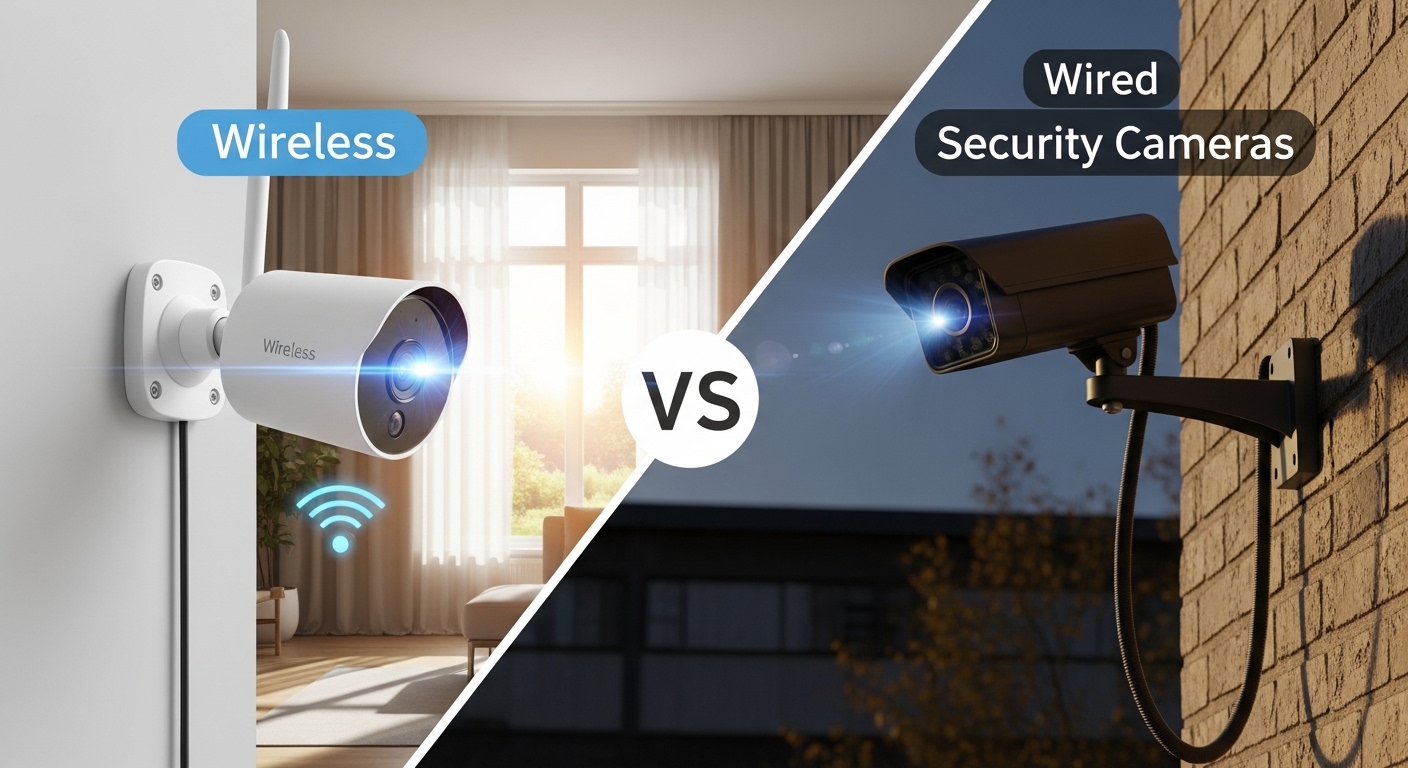

When choosing between wireless and wired security cameras, consider your priorities.
Wired cameras offer more reliable connections, consistent high-definition video, and lower long-term costs. However, they require complex installation and a higher upfront investment.
Wireless cameras provide easier setup, flexible placement, and lower initial expenses. They may suffer from signal interference, latency, and recurring cloud or data fees.
Security and scalability also vary by system type. Explore these factors carefully to determine the best fit for your property’s needs.
Key Takeaways
- Wired cameras offer stable, high-quality video with minimal latency, ideal for permanent installations despite higher upfront costs and complex installation.
- Wireless cameras provide easier, flexible installation with lower initial costs but depend heavily on Wi-Fi quality and may suffer signal interference.
- Wired systems resist electromagnetic interference and physical obstructions, ensuring consistent connectivity, whereas wireless is more susceptible to environmental disruptions.
- Wireless cameras require ongoing maintenance like battery charging and may incur subscription fees, while wired systems have higher labor costs but less recurring maintenance.
- Wired systems offer superior security against signal jamming but remain vulnerable to physical tampering and network-based cyberattacks.
Wired vs Wireless Security Cameras: Installation Differences
Although both wired and wireless security cameras serve the same purpose, their installation processes differ markedly.
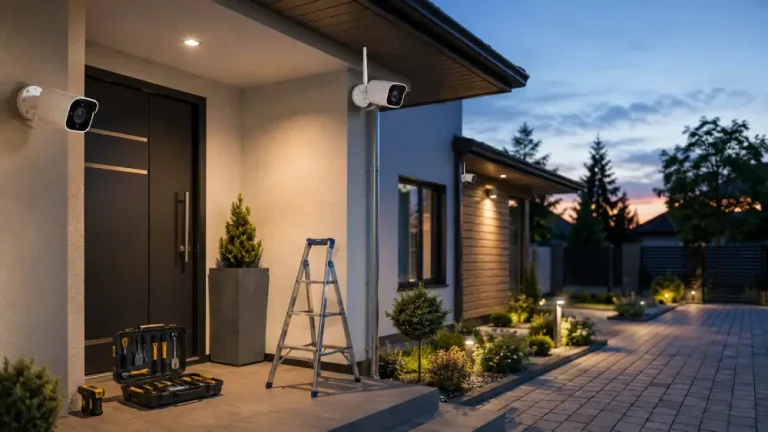
When you install wired cameras, you’ll need to run cables from each camera to a central recorder. This involves drilling, wall openings, and complex routing.
Installing wired cameras requires running cables, drilling, and navigating complex wall routing.
This makes installation labor-intensive and time-consuming.
In contrast, wireless cameras eliminate cabling requirements, allowing you to place them anywhere within a strong Wi-Fi signal range.
You’ll only need to charge batteries or maintain solar panels after initial setup, appreciably reducing labor and setup time.
Wired setups suit permanent, long-term security because of their fixed infrastructure.
Wireless systems offer flexible deployment with minimal physical modifications.
Your choice depends on balancing installation complexity against placement flexibility and maintenance demands.
Additionally, wired cameras often rely on PoE support to simplify power and data delivery through a single cable, enhancing installation efficiency.
Reliability and Video Quality of Wired and Wireless Cameras
When it comes to security cameras, you’ll see that wired options really shine in terms of reliability. They maintain stable connections with minimal interference, which means you get consistent video quality and low latency. That’s pretty reassuring, right?
On the flip side, wireless cameras have a different story. Their performance is heavily dependent on Wi-Fi signal strength, and they can easily be disrupted by things like walls or other electronic devices.
This can lead to a drop in video quality, which is less than ideal for keeping your property secure. NVR systems support connectivity over Ethernet or Wi-Fi, allowing for more flexible camera placement and installation options.
Connection Stability Differences
When evaluating connection stability, wired security cameras deliver consistent, high-speed data transmission that guarantees uninterrupted video quality. Their reliance on Ethernet or coaxial cables eliminates packet loss and latency fluctuations, ensuring steady frame rates and resolution.
You won’t face bandwidth competition or signal drops typically associated with wireless networks. In contrast, wireless cameras depend on Wi-Fi signal strength and router capacity, making their connection more variable and prone to interruptions.
Although wireless systems offer installation flexibility, you risk video buffering or temporary disconnections during network congestion or weak signal periods. For mission-critical surveillance, wired setups provide superior reliability.
They maintain stable, low-latency streams essential for real-time monitoring and recording, while wireless cameras’ performance depends heavily on environmental conditions and network traffic. This can degrade connection stability and video consistency.
Additionally, Power over Ethernet (PoE) technology simplifies outdoor wiring and power delivery for wired cameras, further enhancing their reliability and ease of installation.
Impact of Environmental Interference
Since environmental interference directly affects signal integrity, wireless security cameras often experience fluctuations in reliability and video quality.
You’ll notice that physical obstacles like walls, metal structures, and electronic devices can attenuate or disrupt Wi-Fi signals. This can result in packet loss and intermittent video feed degradation.
Additionally, competing wireless devices operating on similar frequencies add noise, further reducing signal strength.
In contrast, wired cameras transmit data through shielded Ethernet or coaxial cables, maintaining consistent signal quality regardless of environmental factors.
This wired transmission is immune to electromagnetic interference and physical obstructions, ensuring stable connectivity and uninterrupted video streams.
When you prioritize consistent performance in challenging environments, wired systems offer superior resilience against environmental interference. They maintain reliable video quality where wireless systems might falter.
Furthermore, wired devices often support continuous monitoring capabilities, delivering constant surveillance without the interruptions that wireless signal fluctuations might cause.
Video Latency and Quality
Although wireless security cameras offer convenience, they often struggle with higher video latency and inconsistent quality due to reliance on Wi-Fi networks and environmental variables.
When you depend on wireless systems, signal interference, bandwidth limitations, and network congestion can degrade video feed smoothness and clarity.
In contrast, wired cameras transmit data directly via Ethernet or coaxial cables, ensuring minimal latency and stable, high-definition footage.
Consider these technical factors affecting video performance:
- Wireless cameras face variable latency caused by signal strength fluctuations and competing devices.
- Wired cameras maintain continuous, real-time streaming with consistent frame rates and resolution.
- Environmental obstacles impact wireless video quality, whereas wired connections remain unaffected.
Thus, if you prioritize reliable, low-latency video with consistent quality, wired cameras outperform wireless options.
To enhance wireless camera reliability, it is recommended to implement network security measures such as strong passwords and firmware updates to mitigate interference and unauthorized access.
Security Risks for Wired and Wireless Camera Systems
It’s important to realize that while wired camera systems might seem more secure at first glance, they aren’t immune to vulnerabilities. For instance, network configurations and unauthorized access points can still pose significant risks. So, even if you have a wired setup, it’s essential to keep an eye on those aspects.
Now, when we talk about wireless cameras, the challenges shift a bit. They face unique cybersecurity issues, like hacking and signal interception. If you don’t have proper encryption and strong authentication in place, those risks can really escalate.
In the end, it’s all about evaluating these potential attack vectors. Doing so will help you make an informed decision about which camera system best suits your security needs. Additionally, regular scheduled servicing and maintenance can help prevent vulnerabilities in connected security hardware.
Wired Network Vulnerabilities
While wired camera systems generally offer robust security due to their physical cable connections, they aren’t entirely immune to network vulnerabilities.
You must recognize that attackers can still exploit weaknesses in your wired infrastructure, particularly at network endpoints or through compromised devices.
Key vulnerabilities include:
Physical tampering: Intruders can cut or disconnect cables, disrupting video feeds or gaining access to the network.
Unsecured network devices: Switches or recorders with default credentials or outdated firmware can be exploited for unauthorized access.
Man-in-the-middle attacks: If network traffic isn’t encrypted, attackers on the local network can intercept or alter video streams.
To mitigate these risks, you should implement strict physical security, regularly update device firmware, and utilize encrypted communication protocols within your wired system.
Additionally, environmental and electromagnetic interference can degrade the accuracy and reliability of wired systems, posing challenges that require complementary screening methods to address effectively.
Wireless Cybersecurity Challenges
Because wireless security cameras rely on Wi-Fi networks, they face distinct cybersecurity challenges that wired systems typically avoid.
You must secure your wireless network with strong encryption protocols like WPA3 to prevent unauthorized access and eavesdropping.
Weak passwords or outdated firmware can expose your cameras to hacking, allowing attackers to intercept video feeds or disrupt functionality.
Unlike wired systems, wireless transmissions are more susceptible to interference, jamming, and man-in-the-middle attacks, which can compromise data integrity.
You also need to regularly update camera software to patch vulnerabilities and minimize risks.
While wired cameras benefit from physical cable connections that reduce remote hacking chances, wireless systems demand continuous vigilance in network security management to guarantee your surveillance remains confidential and reliable.
Additionally, maintaining an appropriate distance from Wi-Fi routers can help reduce exposure to electromagnetic radiation without compromising network security, as advised in safety guidelines.
Recording Capabilities: Continuous vs Motion-Activated Footage
Balancing continuous recording with motion-activated footage markedly impacts how security cameras capture and store video. Wired cameras typically offer continuous 24/7 recording, ensuring no event goes undocumented and enabling customizable storage solutions.
Wireless cameras, constrained by battery life, usually rely on motion-activated recording to conserve power. This may introduce coverage gaps during inactivity.
When deciding your ideal system, consider:
- Continuous recording in wired systems provides all-encompassing surveillance and supports extended local storage without cloud dependency.
- Motion-activated recording in wireless cameras optimizes battery usage but risks missing critical footage during non-motion periods.
- Wired setups allow scalable external storage integration, enhancing footage retention for long-term security analysis.
Understanding these distinctions helps you align recording capabilities with your surveillance priorities and operational constraints.
Additionally, physical obstacles like walls and large objects can affect wireless signal strength, impacting camera performance and coverage in motion-activated systems, so proper placement and obstacle removal are essential for reliable operation and signal range.
Cost Comparison: Wireless vs Wired Security Cameras
Understanding how recording methods affect your surveillance setup also sheds light on the financial implications of choosing between wireless and wired security cameras.
Wired systems demand a higher upfront investment, averaging around $4,000, due to material costs and labor for cable installation. However, they offer minimal ongoing maintenance expenses and no recurring fees.
Conversely, wireless cameras feature a markedly lower initial cost, roughly $1,158, since they avoid cabling and complex installation. Yet, you’ll likely incur monthly cloud storage fees and potential data plan costs for cellular models.
Over time, wired solutions tend to provide a lower total cost of ownership, especially for long-term, large-scale deployments. Wireless systems suit flexible, temporary setups but require careful budgeting for ongoing subscription and connectivity expenses.
Similar to fire alarm systems, weighing the trade-offs between upfront costs and ongoing fees is crucial when deciding between wireless and wired cameras, as monitoring fees can significantly impact long-term expenses.
Best Security Cameras for Different Property Sizes and Types
Choosing the right security camera system depends heavily on the size and type of your property, as well as your specific surveillance needs.
For large properties like multi-floor buildings or warehouses, wired cameras deliver consistent, high-quality video and reliable 24/7 recording without latency.
Smaller residential or temporary setups benefit from wireless cameras due to their flexible installation and lower upfront costs.
Consider these factors when choosing:
- Large properties: Wired systems for stable, extensive coverage with minimal maintenance.
- Rental or temporary spaces: Wireless cameras for easy installation without cabling.
- Select-area monitoring: Wire-free cameras offering mobility and battery-powered operation.
Scalability of Wired and Wireless Security Camera Systems
When expanding your security system, the scalability of wired and wireless cameras hinges on infrastructure and network capacity.
Wired systems excel in multi-camera setups across large sites due to dedicated cabling supporting stable connections without bandwidth constraints.
Wireless systems offer flexible, incremental camera additions but depend heavily on Wi-Fi coverage and router capacity, which can limit scalability.
| Feature | Wired Cameras | Wireless Cameras |
|---|---|---|
| Infrastructure | Requires extensive cabling | Relies on existing Wi-Fi networks |
| Scalability Limit | Physical cable length and ports | Network bandwidth and signal range |
| Expansion Ease | Labor-intensive installation | Quick addition with minimal setup |
Choose wired for large, fixed installations. Wireless suits dynamic environments with moderate expansion needs.
Maintenance Needs for Wired and Wireless Cameras
Although both wired and wireless security cameras require routine upkeep, their maintenance demands differ notably due to their distinct designs and power sources.
Routine maintenance is essential for both wired and wireless security cameras, tailored to their unique designs and power needs.
Wired cameras rely on stable power and data cables, so you’ll need to inspect connections regularly to prevent degradation or damage.
Wireless cameras, however, require battery management or solar panel checks, guaranteeing uninterrupted operation.
Key maintenance considerations include:
- Wired Cameras: Periodic cable inspection and replacement to avoid signal loss or shorts.
- Wireless Cameras: Frequent battery charging or replacement to maintain uptime.
- Environmental Factors: Both types need lens cleaning and firmware updates to assure optimal image quality and security.
Understanding these maintenance nuances helps you optimize system reliability and longevity effectively.
Choosing Wired or Wireless Security Cameras: Key Priorities
Since your security needs vary based on environment, budget, and technical requirements, prioritizing factors like installation complexity, reliability, and ongoing costs is pivotal when selecting between wired and wireless cameras.
If you want stable, interference-free video with continuous recording and minimal cybersecurity risk, wired systems excel, especially for permanent setups. However, wired installations demand more labor and higher upfront costs.
Wireless cameras offer easier installation, flexible placement, and portability but depend heavily on Wi-Fi stability and encryption to mitigate vulnerabilities.
You’ll also face ongoing cloud subscription or cellular data fees with wireless options. Assess your site’s size, permanence, and network infrastructure carefully.
For large-scale, long-term security, wired cameras are ideal. For temporary or flexible coverage, wireless systems provide cost-effective, adaptable solutions tailored to dynamic security priorities.
Frequently Asked Questions
Can Wireless Cameras Work Without a Wi-Fi Network?
You can use some wireless cameras without a Wi-Fi network if they’ve cellular connectivity or local storage options.
Cellular models transmit data via mobile networks, requiring a data plan. Others record directly to SD cards or connect to a local recorder without internet access.
However, most wireless cameras rely on Wi-Fi for live streaming and cloud storage. Without Wi-Fi, their remote monitoring and alerts may be limited or unavailable.
How Long Do Wire-Free Camera Batteries Typically Last?
Wondering how long you can rely on your wire-free camera before it needs a recharge?
Typically, their batteries last between 3 to 12 months, depending on usage, motion detection frequency, and camera model.
If you use motion-only recording, expect longer battery life.
Keep in mind, environmental factors and settings like video resolution also impact duration.
Regular maintenance like recharging or swapping batteries guarantees continuous operation without unexpected downtime.
Are Wired Cameras Compatible With Smart Home Systems?
Yes, wired cameras are compatible with many smart home systems, but you’ll want to make certain your specific camera model supports integration protocols like ONVIF, RTSP, or proprietary APIs.
You can connect them to smart hubs or NVRs that interface with platforms such as Alexa, Google Assistant, or Apple HomeKit.
However, compatibility depends on manufacturer support, so verify firmware updates and integration capabilities before purchase for seamless smart home control and automation.
Can Wireless Cameras Be Used Outdoors in Extreme Weather?
Yes, you can use wireless cameras outdoors in extreme weather, but you need to choose models rated for harsh conditions, like IP65 or higher for water and dust resistance.
Make certain they’ve durable housings to withstand temperature fluctuations.
Keep in mind, wireless signals may weaken due to interference from heavy rain or snow, so place cameras where Wi-Fi strength remains strong.
Regular maintenance, like battery checks, is essential for reliable performance.
Do Wired Cameras Require Professional Installation Only?
You don’t always need professional installation for wired cameras, but it’s highly recommended.
Running cables through walls, ceilings, or floors requires technical skills and tools to guarantee proper placement, secure connections, and compliance with building codes.
Mistakes can cause signal loss or damage. If you have experience with electrical wiring and networking, you might handle it yourself.
But for reliable, long-term performance, hiring a professional is the safer, more efficient choice.
Making the Right Choice Between Wireless and Wired Security Cameras
So, if you enjoy wrestling with tangled wires or playing hide-and-seek with signal drops, wired and wireless cameras both have their charms.
Wired offers rock-solid reliability but demands patience and a toolkit. Wireless gives you freedom but invites occasional buffering drama.
Ultimately, your choice hinges on whether you prefer tech stability or convenience. Just don’t expect your security system to double as your new hobby.
Pick wisely; your peace of mind depends on it.