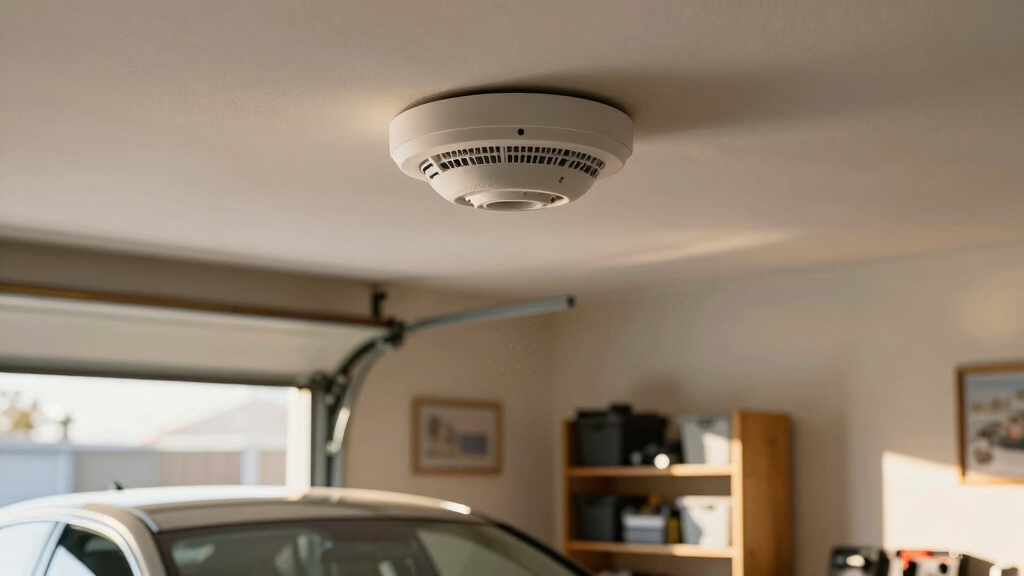

You shouldn’t install a smoke detector directly inside your garage because temperature extremes, dust, exhaust fumes, and humidity cause false alarms and reduce detector reliability.
Codes typically exclude garages from smoke alarm requirements, focusing on living spaces and sleeping areas instead.
If your garage is attached, prioritize installing carbon monoxide alarms nearby, as CO poses a hidden risk.
Proper placement and maintenance of these alarms are essential for safety.
Explore how environmental factors and local codes influence alarm choices for your garage.
Key Takeaways
- Smoke detectors are generally not required inside garages due to temperature extremes and contaminants causing false alarms or detector failure.
- Carbon monoxide alarms, not smoke detectors, are essential near attached garages to detect invisible CO gas leaks.
- Local codes often exclude garages from smoke alarm mandates but require CO alarms in attached garages for safety.
- Finished, heated, or occupied garages with higher fire risk may benefit from specially selected smoke detectors like photoelectric types.
- Always follow manufacturer guidelines and consult local regulations before installing any alarms in or near garages.
Why You Usually Don’t Need Smoke Detectors in Garages?
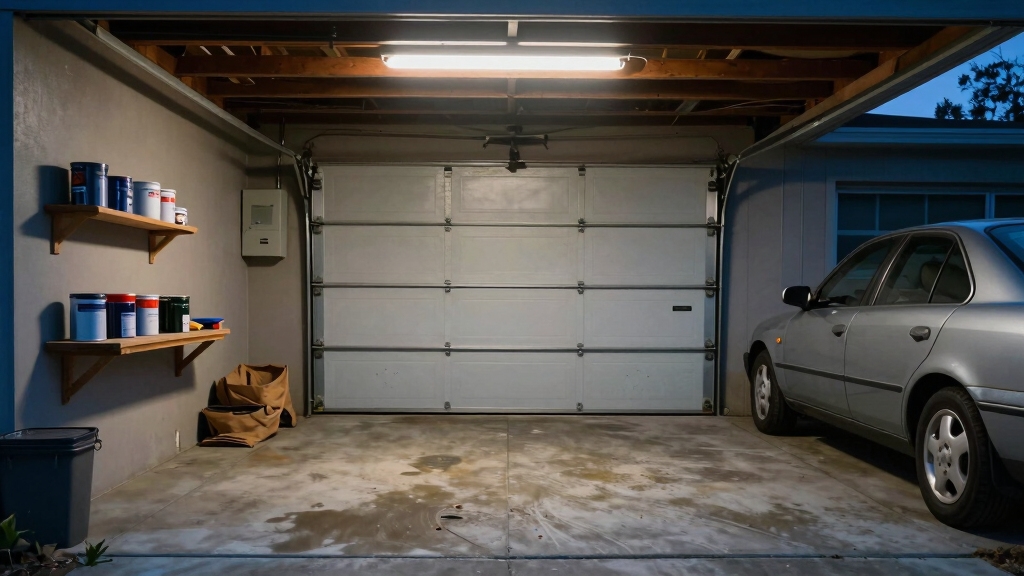
Although garages are integral parts of many homes, you usually don’t need to install smoke detectors in them because fire safety standards and codes don’t mandate it.
The National Fire Protection Association (NFPA) excludes garages from required smoke alarm placement due to environmental factors, primarily temperature extremes and dust that can cause nuisance alarms or detector failure.
Smoke alarms must operate reliably within 40°F to 100°F; garages often exceed this range.
Additionally, garages typically have different ventilation and contamination profiles, reducing detector effectiveness.
Codes focus on installing alarms inside living spaces, sleeping areas, and habitable attics or basements. You should prioritize installing carbon monoxide alarms when garages are attached, but smoke detector requirements remain absent.
This approach balances safety with practical functionality and equipment longevity.
It is important to remember that hardwired smoke detectors elsewhere in the home should always have a battery backup to ensure continuous protection during power outages.
Local Code Requirements for Garage Smoke Detectors
You know, it’s really important to check with your local fire department about smoke detector guidelines. They can vary a lot depending on where you live.
For example, in California, the Building Code requires smoke alarms in all sleeping areas and nearby spaces. But interestingly, it doesn’t specifically mandate them inside garages.
However, when considering carbon monoxide safety, it is recommended to place detectors at least 5 feet above garage floor to effectively monitor potential CO buildup.
Regional Variations
When determining whether to install smoke detectors in garages, local codes can vary considerably. You should consult your regional fire department or building authority for specific requirements.
While the NFPA doesn’t mandate smoke detectors in garages, some jurisdictions may have unique stipulations, especially for attached garages.
Typically, smoke alarms are required on every level and in sleeping areas, but garages often fall outside this mandate due to temperature fluctuations and false alarm potential.
However, many regions require carbon monoxide alarms in dwellings with attached garages, as these pose a CO risk. You should verify if your locality enforces additional protections or exceptions for garages, such as limitations on detector types or mandatory CO alarms.
Compliance guarantees peak safety and adherence to legal standards in your area. Proper carbon monoxide detection is essential because CO is colorless and odorless and can accumulate silently from attached garages or nearby fuel-burning appliances.
California Regulations
Because California enforces stringent building codes, understanding local requirements for smoke detectors in garages is essential for compliance and safety.
The California Building Code Section 310 mandates smoke detectors in all sleeping areas, outside sleeping rooms, and on every story of a dwelling.
However, it doesn’t require smoke alarms inside garages. Instead, attached garages trigger carbon monoxide (CO) alarm requirements.
If your garage shares airspace with living areas, you must install UL2034-compliant CO alarms outside sleeping areas and on every occupiable level.
Smoke detectors in garages are discouraged due to temperature extremes and potential nuisance alarms.
You should mount all alarms per manufacturer instructions—ceiling or wall—avoiding locations with drafts or temperature fluctuations.
Following these regulations guarantees your installation meets California’s safety and code standards.
For optimal safety, it is important to install detectors on every level of your home, including the basement, to ensure early detection throughout.
Fire Department Guidelines
Local fire departments often set specific guidelines that supplement state and national codes regarding smoke detector installation in garages.
You should check with your local authority to understand these requirements, as they can vary markedly.
Generally, smoke detectors aren’t required inside garages due to temperature fluctuations and dust interference, which can cause false alarms or device failure.
However, if your garage connects directly to the home, the fire department may mandate carbon monoxide alarms in adjacent living spaces.
You must make certain that all alarms are installed per manufacturer instructions—mounted on ceilings or walls at specified distances from corners and vents.
Following these local guidelines guarantees compliance and maximizes safety while preventing unnecessary detector malfunctions caused by unsuitable garage conditions.
Always prioritize interconnected and AC-powered alarms where mandated.
Be aware that environmental factors like humidity and dust can significantly reduce the lifespan and effectiveness of detectors if installed inappropriately.
Situations When Garage Smoke Detectors Are Necessary
Although standard codes typically don’t require smoke detectors inside garages, certain conditions make their installation necessary for safety. If your garage is finished, heated, or used as a living or working space, installing a smoke detector becomes essential to detect fires early.
Garages attached directly to the home and accessed frequently should have alarms to protect occupants from fire spreading. Additionally, if you store flammable materials or operate equipment that increases fire risk, placing a smoke alarm inside the garage is prudent.
However, remember that temperature extremes above 100°F or below 40°F can impair detector function; in such cases, alternative fire safety measures are recommended. Always verify local regulations and consult with fire safety professionals before installation to guarantee compliance and peak protection.
Photoelectric smoke alarms are particularly effective in such environments because their design reduces false alarms from dust and steam while providing early warnings of smoldering fires through light scattering detection.
Temperature and Environmental Effects on Garage Smoke Detectors
When installing smoke detectors in garages, you must consider temperature and environmental factors that directly impact their performance and reliability. Garages often experience temperature extremes outside the recommended 40°F to 100°F range, which can cause false alarms or detector failure.
Additionally, dust, exhaust fumes, and humidity in garages can degrade sensor function over time.
Key environmental considerations include:
Temperature fluctuations exceeding 0°C to 38°C impair smoke alarm sensitivity. Dust and dirt accumulation block sensor chambers. Vehicle exhaust introduces contaminants affecting detection accuracy. High humidity can corrode internal components. Frequent vibration or impact may disrupt sensor calibration.
Given these factors, standard smoke detectors are generally unsuitable for garages without specialized designs that withstand harsh conditions. It is also important to avoid placing detectors near garages to reduce false alarms caused by environmental triggers.
Carbon Monoxide Alarm Requirements for Homes With Attached Garages
Homes with attached garages almost always require carbon monoxide (CO) alarms to guarantee occupant safety.
Because attached garages allow vehicle exhaust and other combustion gases to infiltrate living spaces, building codes mandate CO alarms outside sleeping areas and on every occupiable level, including basements.
During permitted work exceeding $1,000, installation of CO alarms complying with UL2034 is required in these homes.
These alarms must be powered by building wiring with battery backup and interconnected if multiple units exist.
You should place CO alarms near bedrooms and fuel-burning appliances, but not inside garages, where temperature extremes and contaminants could impair function.
Adhering to these requirements reduces CO poisoning risk, complying with regulations such as California’s Building Code, which explicitly mandates CO alarms in residences with attached garages communicating directly with living areas.
Regular maintenance and monthly testing of CO detectors are essential to ensure proper operation and early warning in case of dangerous exposure.
Best Practices for Installing Smoke and CO Alarms
When it comes to installing smoke and CO alarms, it’s essential to follow specific placement guidelines. Make sure to mount them on ceilings or walls as recommended, and be mindful to keep them clear of any obstructions. This way, they can do their job effectively.
Also, consider the temperature conditions. Ideally, you want to maintain a range between 40°F and 100°F for optimal sensor function. It’s best to avoid installing them in garages or unheated spaces where temperatures can swing to extremes. Additionally, improper placement near vents or high ceilings can reduce alarm effectiveness and delay activation, so careful positioning is crucial to maintain alarm reliability.
Proper Alarm Placement
- Place alarms on every occupied level, including basements and finished attics.
- Ensure CO alarms are outside sleeping areas, especially if attached garages or fuel appliances exist.
- Don’t install smoke or CO alarms directly inside garages due to temperature extremes.
- Interconnect alarms to enable simultaneous alerts.
- Follow manufacturer instructions precisely for mounting height and locations.
- To prevent false alarms, avoid placing smoke detectors within 10 feet of steam sources like humidifiers or cooking areas to reduce steam-triggered alarms.
Temperature Considerations
Proper placement of smoke and carbon monoxide alarms sets the foundation for effective detection, but understanding temperature conditions where these devices operate guarantees their reliability and longevity.
Smoke alarms function optimally within a temperature range of 40°F to 100°F (4°C to 38°C). You should avoid installing them in garages, as temperatures often exceed these limits, risking malfunction or failure.
Carbon monoxide alarms are required near attached garages communicating with living spaces and must comply with UL2034 standards. Make certain CO alarms are installed on every occupiable level, outside sleeping areas, and in bedrooms containing fuel-burning appliances.
Always follow manufacturer instructions for mounting height and location, avoiding drafts and obstructions. Maintaining proper temperature conditions preserves alarm sensitivity and guarantees early detection, critical for occupant safety.
Frequently Asked Questions
Can Smoke Detectors in Garages Cause False Alarms From Car Exhaust?
Yes, smoke detectors in garages often cause false alarms due to car exhaust emissions.
Exhaust contains particulates and gases that can trigger smoke sensors, especially ionization types.
You should avoid installing smoke alarms in garages because temperature fluctuations and pollutants interfere with reliable detection.
Instead, focus on carbon monoxide alarms, which specifically monitor harmful gases from vehicles.
This ensures accurate alerts without nuisance alarms caused by normal garage activities.
How Often Should Garage Smoke Detectors Be Tested and Maintained?
Think of testing your garage smoke detector like tuning a fine instrument. You should check it monthly to make certain it performs flawlessly.
Press the test button to verify its alarm sounds loud and clear. Replace batteries at least once a year or when low-battery signals activate.
Clean dust and debris quarterly to maintain sensor sensitivity. Follow manufacturer guidelines precisely to keep the detector reliable and ready for any emergency.
Are There Specific Smoke Detector Models Recommended for Garages?
You won’t find specific smoke detector models officially recommended for garages because codes generally advise against installing smoke alarms there due to temperature extremes and dust.
Instead, use carbon monoxide alarms certified to UL2034 if your garage is attached and communicates with living spaces.
If you insist on smoke detection, choose models with high dust tolerance and wide temperature ranges, but verify local codes first.
Always follow manufacturer installation guidelines precisely.
What Alternatives Exist if Smoke Detectors Are Unsuitable for Garages?
Think of your garage as a delicate ecosystem. Smoke detectors struggle here due to temperature swings and dust.
Instead, install carbon monoxide (CO) alarms in adjoining living spaces, especially if the garage is attached.
Make sure CO alarms meet UL2034 standards, are interconnected, and powered with battery backup.
Also, maintain proper ventilation and use heat detectors designed for harsh environments.
These measures offer reliable safety where smoke detectors fall short.
Can Pets Trigger Smoke Alarms Installed in Garages?
Yes, pets can trigger smoke alarms in garages, especially if the alarm is sensitive to airborne particles like pet dander or dust stirred by animal movement.
However, garages often have fluctuating temperatures and dust, increasing nuisance alarms.
To minimize false triggers, you should avoid installing smoke detectors in garages or opt for alarms with pet-immunity features designed to reduce false alarms caused by pets, dust, or humidity fluctuations.
Ready to Improve Safety? Choose the Right Alarm Setup
Imagine the quiet hum of your garage, tools neatly arranged, with no false alarms disrupting your peace.
You usually don’t need a smoke detector here unless local codes demand it or specific risks exist.
Instead, focus on installing carbon monoxide alarms near living spaces, especially with attached garages.
By understanding the environmental limits and adhering to best practices, you safeguard your home and keep it safe without unnecessary devices triggering in the garage’s unique conditions.