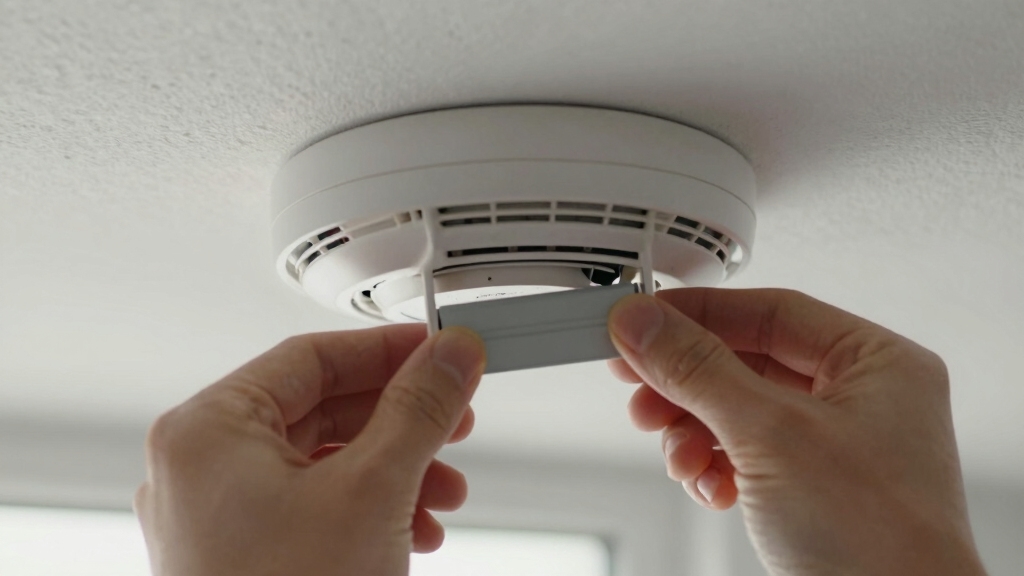

To take the battery out of your smoke alarm, first turn off the power if it’s hardwired. Carefully twist the alarm counterclockwise to remove it from its base.
Locate the battery compartment, usually a latch or cover on the unit’s side or back, and open it gently. Remove the battery by unplugging connectors or sliding it out, noting its orientation.
Inspect for corrosion and dispose of the battery properly. Secure the compartment before reassembling. Keep going to learn how to properly replace and test your alarm.
Key Takeaways
- Remove the smoke alarm from its mounting bracket by twisting it counterclockwise to access the battery compartment.
- Locate the battery compartment latch, tab, or cover on the side, front, or back of the unit.
- Open the battery compartment carefully by sliding or lifting the cover without using excessive force.
- Gently pull out the battery, noting its orientation for correct replacement later.
- Handle and dispose of old batteries properly, checking for corrosion or leakage before removal.
Safely Removing Your Smoke Alarm
Before you begin removing your smoke alarm, always turn off the main power at the circuit breaker if you have a hardwired unit to prevent electrical shock.
Use a sturdy ladder to reach ceiling-mounted alarms safely.
Inspect the unit for any signs of battery acid leakage.
Wear protective gloves and eyewear if you suspect corrosion.
Check the manufacture date printed on the alarm.
Replace it if it’s nearing the 10-year expiration to guarantee reliability.
Follow the manufacturer’s instructions carefully.
Don’t force or pry components, as this can damage the unit or wiring.
When you’re ready to detach the alarm, hold the baseplate firmly.
Twist the detector counterclockwise to disengage it gently from the mounting bracket.
Avoid yanking or using excessive force to prevent damage.
Regular maintenance, including monthly testing and biannual cleaning, helps keep the smoke alarm ready and reliable.
Finding the Battery Compartment
Once you’ve safely removed the smoke alarm from its mounting bracket, your next step is locating the battery compartment.
Check the sides, front, or back of the unit, as compartment placement varies by model. Look for a latch, tab, or button designed to release the battery cover or tray.
Most models allow you to slide out the battery tray or flip open a hinged cover without tools. Some require pressing a side button or pulling a plastic tab to access the compartment.
If the cover won’t budge, consult the user manual for model-specific instructions like twisting or popping mechanisms.
Avoid forcing components to prevent damage. Identifying the exact location and opening method of the battery compartment guarantees a smooth shift to battery removal.
Remember that many hardwired smoke detectors use sealed 10-year lithium batteries to provide maintenance-free backup power.
Removing the Old Battery
Remove the old battery by carefully pulling it out of the compartment or tray, noting its orientation to guarantee correct placement of the new one.
If the battery is slid into slots, gently wiggle it free without forcing. For 9V batteries with snap connectors, unplug the connectors from both terminals before removal.
Inspect the battery for any signs of leakage or corrosion. If present, handle with gloves and clean the compartment accordingly.
Make sure the battery compartment is completely empty before proceeding. Dispose of the old battery following local regulations to prevent environmental harm.
Avoid using excessive force that could damage the battery contacts or compartment. Proper removal assures your smoke alarm remains functional and ready for new power, maintaining safety standards without compromising the device’s integrity.
Replacing batteries with the correct battery type recommended by the manufacturer ensures optimal smoke detector performance and longevity.
Choosing the Right Battery
Select a battery that matches your smoke alarm’s specifications to guarantee reliable performance. Most alarms require either a 9V or AA battery, but check the device label or manual to confirm.
Use fresh batteries with correct voltage and chemistry; alkaline or lithium types are common. Lithium batteries provide longer life, lasting up to 10 years, reducing replacement frequency.
Avoid mixing old and new batteries or different brands, as this can cause unreliable operation or damage. Don’t substitute rechargeable batteries unless specified by the manufacturer, as their voltage differs.
Always inspect the battery for defects or leakage before installation. Choosing the right battery assures your smoke alarm functions effectively, maintaining safety and compliance with manufacturer guidelines.
Installing batteries during moderate temperatures can help prevent premature low-battery alerts and ensure stable power output.
Inserting a New Battery
When you’re ready to insert the new battery, start by aligning the positive terminal as shown. It’s super important to match the negative symbol in the slot to ensure everything connects properly.
Now, as you slide the battery in, make sure you’re pushing it in firmly. Just a heads up—some models actually require you to insert the smaller end first, so keep an eye on that!
Finally, don’t forget to secure the compartment. You’ll want to make sure it clicks or seats fully. This helps maintain a reliable connection and prevents any pesky power issues down the line. Happy battery swapping!
Also, regular inspection for flickering or unusual signs can help ensure your smoke alarm and other safety devices work reliably.
Battery Orientation Tips
Aligning the battery correctly is crucial to guarantee your smoke alarm functions properly. Always match the positive (+) and negative (-) terminals to the compartment labels.
Insert the battery with the smaller end first if specified. Incorrect orientation causes power failure and false alarms. Use fresh 9V or lithium batteries as per manufacturer recommendations.
| Terminal Symbol | Battery End to Insert | Result if Incorrect |
|---|---|---|
| + (Positive) | Align with + label | Alarm won’t power |
| – (Negative) | Align with – label | Alarm won’t power |
| Smaller End | Insert first if noted | Battery won’t fit |
Double-check orientation before closing the compartment to ensure continuous operation and safety compliance. Using alkaline batteries is recommended for consistent voltage and long life in most smoke detectors.
Securing Battery Compartment
Insert the new battery carefully into the compartment, ensuring the terminals match the designated positive and negative symbols.
Align the battery so the positive terminal faces the correct direction, avoiding reversed polarity that can prevent the unit from powering on.
For models with trays, slide the battery in with the smaller end first if specified.
Use fresh 9V or lithium batteries, as lithium types offer longer service life.
Once inserted, close the battery compartment securely until it clicks or seats firmly, preventing accidental dislodging.
Confirm the cover is fully latched without gaps, which could expose the battery or compromise contact.
Properly secured compartments maintain consistent power supply and prevent false alarms or malfunctions. This ensures the smoke alarm remains reliable and ready to protect your home.
Regular maintenance, including monthly testing and annual battery replacement, supports the flawless function of smoke detectors.
Reassembling and Testing Your Smoke Alarm
To get your smoke alarm back in place, start by sliding it onto the baseplate. Once it’s there, give it a twist clockwise until you hear it lock in securely.
Now, it’s time to reconnect any wires. Just be careful while doing this—make sure nothing gets pinched in the process.
Once everything is back together, it’s a good idea to test the alarm. Just press and hold the test button for a moment. If you hear the alarm sound off, you’re all set! This confirms that everything is working properly before you wrap up. Regularly testing fire alarms helps catch battery failures or sensor problems early.
Securing Smoke Alarm
Begin by sliding the smoke alarm back onto its baseplate and rotating it clockwise until it locks firmly in place.
Make certain the unit is securely seated to prevent accidental detachment. For hardwired alarms, reconnect the power cable carefully, avoiding wire pinching.
Press the test button briefly to confirm the alarm’s readiness.
Regular testing and maintenance are crucial for ensuring reliable operation during emergencies.
| Step | Action |
|---|---|
| Align & Lock | Slide unit onto base; rotate CW |
| Reconnect Power | Attach wires without pinching |
| Test Function | Press test button (do not hold) |
Secure the compartment cover tightly. Mark the battery replacement date inside the unit for future reference.
Proper securing maintains the alarm’s functionality and ensures reliable operation.
Testing Alarm Function
Always test your smoke alarm immediately after reassembly to make sure it functions correctly. Once you slide the unit back into its base and secure it by rotating clockwise, verify the alarm’s readiness. Follow these steps:
Press and hold the test button for several seconds; listen for a loud, continuous sound. If the alarm fails to sound, remove and recheck battery orientation and charge. Inspect connections to assure wires are firmly seated without pinching.
Replace the battery or the entire unit if the alarm remains silent. Record the battery replacement date inside the unit for future reference.
Testing confirms the alarm’s operational status, guaranteeing your safety. Regular annual tests maintain reliability and alert you to battery or device failure. It is important to replace batteries annually or immediately on low-battery warnings to ensure continuous protection.
Frequently Asked Questions
How Often Should I Replace the Entire Smoke Alarm Unit?
You should replace your entire smoke alarm unit every 10 years from the manufacture date.
Over time, sensors degrade, reducing reliability. Check the date printed on the unit’s back or inside the battery compartment.
If your alarm is nearing or past this age, replace it promptly to guarantee peak safety.
Don’t rely solely on battery changes; a fresh unit guarantees accurate detection and compliance with safety standards.
Can I Use Rechargeable Batteries in My Smoke Alarm?
You generally shouldn’t use rechargeable batteries in your smoke alarm. Most models require alkaline or lithium batteries to guarantee consistent voltage and reliable operation.
Rechargeables can drop voltage quickly, causing false alarms or failure to alert. Always check your unit’s manual for battery recommendations.
If you want long-lasting power, lithium batteries are best, lasting up to 10 years. Using the wrong battery risks your safety and may void warranties.
What Should I Do if My Smoke Alarm Keeps Beeping After Battery Change?
Oh, the stubborn beep that just won’t quit after a fresh battery. How reliable!
First, double-check the battery orientation and make sure it’s fully seated.
If it’s a hardwired unit, verify power is restored properly.
Clean battery contacts if corroded.
Reset the alarm by holding the test button for 15-20 seconds.
Still beeping? The unit might be faulty or near its 10-year lifespan.
Consider replacing it for safety’s sake.
How Do I Safely Dispose of Old Smoke Alarm Batteries?
You should dispose of old smoke alarm batteries by taking them to a designated battery recycling or hazardous waste facility.
Avoid throwing them in regular trash to prevent environmental harm and fire risks. If your area offers battery drop-off points at retail stores, use those.
Always check local regulations for battery disposal. Before recycling, tape the terminals to prevent short circuits.
Handle any leaking batteries with gloves to avoid skin contact.
Are There Specific Battery Brands Recommended for Smoke Alarms?
You should use reputable battery brands like Duracell, Energizer, or Panasonic for your smoke alarm.
These brands offer reliable 9V or lithium batteries that guarantee consistent power and longer life.
Avoid cheap or generic batteries, as they may fail prematurely, risking your safety.
Lithium batteries last up to 10 years, reducing replacements.
Always match battery type and voltage to your smoke alarm manufacturer’s recommendations for peak performance and safety.
Keep Your Alarm Working When It Matters Most
Replacing your smoke alarm battery is vital for safety. Did you know 60% of home fire deaths occur in houses without working alarms?
By safely removing the old battery and installing a fresh one, you guarantee your alarm functions properly when it matters most. Always choose the correct battery type and test the device after reassembly.
Regular maintenance like this can save lives, so don’t skip these simple but essential steps.