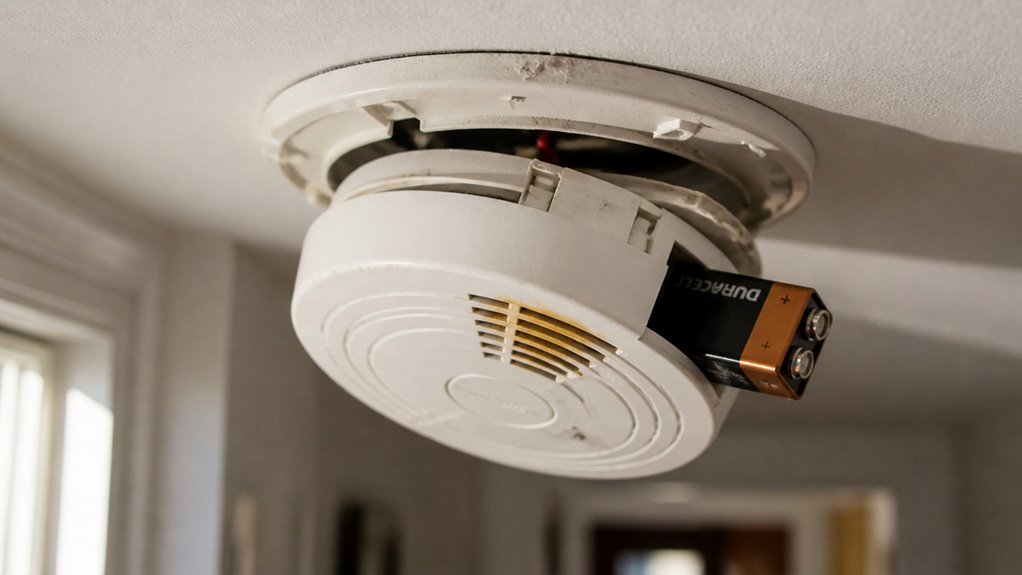

A major concern with battery-powered smoke alarms is that many sealed lithium batteries fail prematurely, often well before their advertised 10-year lifespan.
This shortfall leaves you at risk because up to two-thirds of these alarms may become nonfunctional after 8–10 years, compromising fire detection.
Sealed designs prevent battery replacement, often leading users to remove alarms entirely. Nuisance alarms also prompt disabling, further reducing protection.
Understanding these issues helps you better safeguard your home and maintain reliable fire detection.
Key Takeaways
- Premature lithium battery failure often causes smoke alarms to stop working before their advertised lifespan.
- Sealed battery designs prevent user replacement, leading to alarm removal when batteries expire.
- Nuisance alarms from cooking smoke or steam frequently prompt users to disable or remove alarms.
- Increased standby current in sealed units shortens battery life, reducing overall reliability.
- Missing or removed alarms due to battery issues significantly reduce household fire protection.
Why Lithium Battery Failures Cause Smoke Alarm Problems?
Although lithium batteries are marketed to last 10 years in smoke alarms, they often fail prematurely, causing significant functionality issues.
Studies reveal only about one-third of these alarms remain functional after 8 to 10 years. A notable portion is either missing or nonfunctional due primarily to battery failure.
The sealed lithium battery design, intended to reduce tampering, doesn’t prevent early expiration, undermining the expected lifespan.
Sealed lithium batteries limit tampering but fail to guarantee the promised long-lasting lifespan.
When these batteries die prematurely, the smoke alarm’s power source fails, rendering the device inoperative and compromising fire detection.
This failure undermines the reliability of your smoke alarm system and increases risk by reducing the likelihood of timely fire alerts.
Understanding the technical limits of lithium batteries in this application is critical for managing smoke alarm maintenance and replacement schedules effectively.
Low power consumption achieved through efficient circuitry is essential to extend battery life, but any increase in standby current can significantly shorten it.
How Premature Lithium Battery Expiration Leads to Missing Alarms?
When lithium batteries expire prematurely, many users respond by removing the smoke alarm entirely instead of replacing it. This leads to high rates of missing devices and compromises fire safety, as missing alarms leave residences unprotected.
You should understand these key factors contributing to the issue:
- Battery failure occurs well before the marketed 10-year lifespan, causing alarms to cease functioning unexpectedly.
- Users often lack awareness or resources to replace alarms, opting to disable or remove them instead.
- The absence of replaceable batteries in sealed units forces device removal upon battery expiration.
This premature expiration undermines the intended decade-long protection. It increases the prevalence of missing alarms and reduces overall household fire safety. Addressing these causes is critical to improving alarm retention and effectiveness. Kidde alarms feature integrated 10-year non-removable batteries designed to eliminate this problem by providing maintenance-free, long-lasting power with end-of-life chirp reminders.
What Limits the Reliability of Sealed Lithium Battery Alarms?
Because sealed lithium battery alarms eliminate user access to battery replacement, their reliability hinges entirely on the battery’s actual lifespan and manufacturing quality.
You depend on these sealed units to function continuously, but studies reveal substantial failure rates before the advertised 10-year lifespan.
Premature battery expiration and manufacturing variability reduce operational reliability. Additionally, sealed designs prevent tampering but don’t address battery degradation or missing units.
Hardwired smoke detectors with backup batteries offer a continuous power source that can mitigate some risks associated with sealed battery alarms.
| Factor | Impact on Reliability | Notes |
|---|---|---|
| Battery Lifespan | Directly limits alarm function | Often fails before 10 years |
| Manufacturing Variation | Affects consistency | Quality control varies |
| Sealed Design | Prevents battery access | Does not prevent premature failure |
Understanding these limits helps you anticipate maintenance needs and replacement timing.
Why Nuisance Alarms Make People Disable Smoke Alarms?
Frequently, nuisance alarms prompt people to disable their smoke alarms, undermining fire safety. These false or spurious activations create frustration and reduce trust in the device’s reliability.
When you experience frequent nuisance alarms, you may choose to disconnect or remove the alarm entirely, increasing risk exposure.
Key reasons why nuisance alarms lead to disabling include:
- False activations from cooking smoke or steam trigger alarms unexpectedly, causing annoyance.
- Premature battery expiration can cause erratic alarm behavior, increasing nuisance signals.
- Limited hush feature effectiveness in some models fails to prevent repeated false alarms, prompting users to disable them.
Understanding these factors helps explain why nuisance alarms remain a critical concern in maintaining functional, reliable smoke alarm systems. Additionally, regular maintenance and timely battery replacement can prevent many nuisance alarms by ensuring proper device functioning.
How to Prevent and Address Lithium Smoke Alarm Failures?
Proactively maintaining lithium smoke alarms markedly reduces the risk of failure due to battery issues.
You should regularly test alarms monthly and promptly replace units after 8–10 years, as batteries often expire prematurely.
Avoid disabling alarms, as 19% are purposely removed due to nuisance triggers. Sealed lithium units reduce tampering but still require full replacement at end-of-life.
Address nuisance alarms by selecting models with hush features to minimize false activations.
Battery backups provide a crucial backup power source to ensure functionality during power outages.
| Action | Purpose |
|---|---|
| Monthly testing | Confirm operational status |
| Replace after 8–10 years | Prevent premature battery failure |
| Use hush-enabled models | Reduce nuisance alarm disablement |
Systematic maintenance guarantees functional alarms, mitigating risks from battery failure and missing units.
Frequently Asked Questions
How Do Lithium Batteries in Smoke Alarms Compare to Alkaline Batteries?
You’ll find lithium batteries in smoke alarms generally outlast alkaline ones, often marketed for 10 years versus alkaline’s 1-year life.
However, lithium batteries often fail prematurely, with many alarms nonfunctional before the expected lifespan.
Alkaline batteries require more frequent replacement but can be swapped easily. Lithium’s sealed design reduces tampering but doesn’t prevent failure.
You should test alarms regularly and consider replacement schedules despite lithium’s longer nominal life.
Are There Specific Brands of Smoke Alarms With Better Battery Performance?
Ever wondered if some smoke alarms outlast others? You’ll find that brands like First Alert and Kidde often lead in battery reliability due to their use of advanced lithium technology and sealed units.
However, no brand fully escapes premature battery failure or missing alarms. You should still test regularly and replace units every 8-10 years.
Can External Battery Packs Extend the Life of Smoke Alarms?
Yes, external battery packs can extend the life of smoke alarms by providing additional power beyond the internal battery.
However, you must verify compatibility and proper installation to avoid voiding warranties or triggering false alarms.
External packs can compensate for premature internal battery failure but require regular maintenance and monitoring.
Keep in mind, sealed lithium battery alarms are designed for 10 years without replacement.
External packs may alter their intended lifespan and reliability.
How Does Temperature Affect Lithium Battery Life in Smoke Alarms?
Think of temperature as a throttle controlling lithium battery life in smoke alarms. High temperatures accelerate chemical reactions inside the battery, causing faster degradation and premature failure.
Conversely, very low temperatures reduce battery efficiency, diminishing output and alarm responsiveness. You should expect lithium batteries to lose capacity quicker in hot environments, cutting their lifespan well before the advertised 10 years.
Proper temperature management is essential for reliable smoke alarm performance.
What Are the Environmental Impacts of Disposing Sealed Lithium Smoke Alarms?
You’ll face environmental harm when disposing of sealed lithium smoke alarms improperly.
Lithium batteries contain toxic metals that can leach into soil and groundwater, causing pollution and health risks.
These sealed units complicate recycling because you can’t remove the battery easily.
You must follow hazardous waste protocols or specialized recycling programs to mitigate environmental damage and recover valuable materials.
This ensures you don’t contribute to landfill contamination or resource depletion.
What You Must Remember About Lithium Battery Smoke Alarm Safety?
You should know that nearly 30% of lithium battery-powered smoke alarms fail prematurely, risking your safety by missing critical alerts. These failures often stem from battery degradation and unavoidable internal chemistry limits.
While sealed lithium batteries offer convenience, their reliability isn’t foolproof, especially when nuisance alarms lead to disabling devices.
To maintain peak protection, you must regularly test alarms and replace units that show signs of battery expiration or malfunction before the end of their expected lifespan.