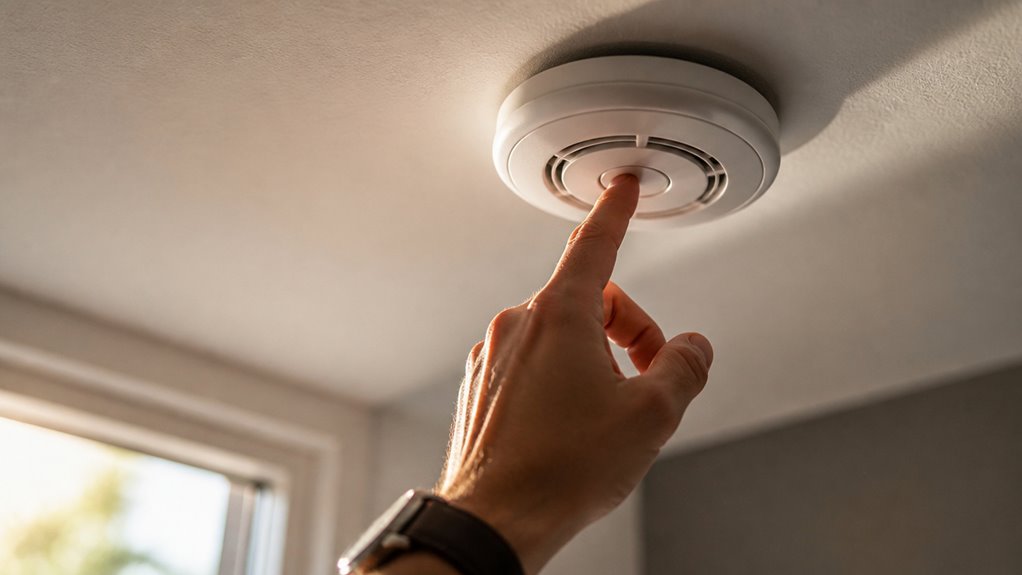

To test your fire alarm, press and hold the clearly labeled test button directly beneath the unit for 3 to 5 seconds until it sounds.
For sensor verification, use a specialized simulated smoke spray approved for your smoke detector type, applying a short burst from 12 to 18 inches below the sensing chamber.
Check batteries and inspect for dust or damage if there’s no response.
Regular testing and documentation guarantee reliable operation and compliance; important details you can explore further.
Key Takeaways
- Press and hold the labeled “Test” button on the detector for 3–5 seconds to elicit an audible alarm signal.
- Notify all occupants before testing to prevent panic and disable linked monitoring systems to avoid false alarms.
- Use approved simulated smoke spray held 12–18 inches below the detector to verify sensor functionality accurately.
- Inspect and clean the detector for dust, debris, and battery corrosion before testing to ensure reliable operation.
- Confirm that all interconnected alarms activate simultaneously and document test results and any maintenance actions.
How to Test Your Fire Alarm Button Safely?
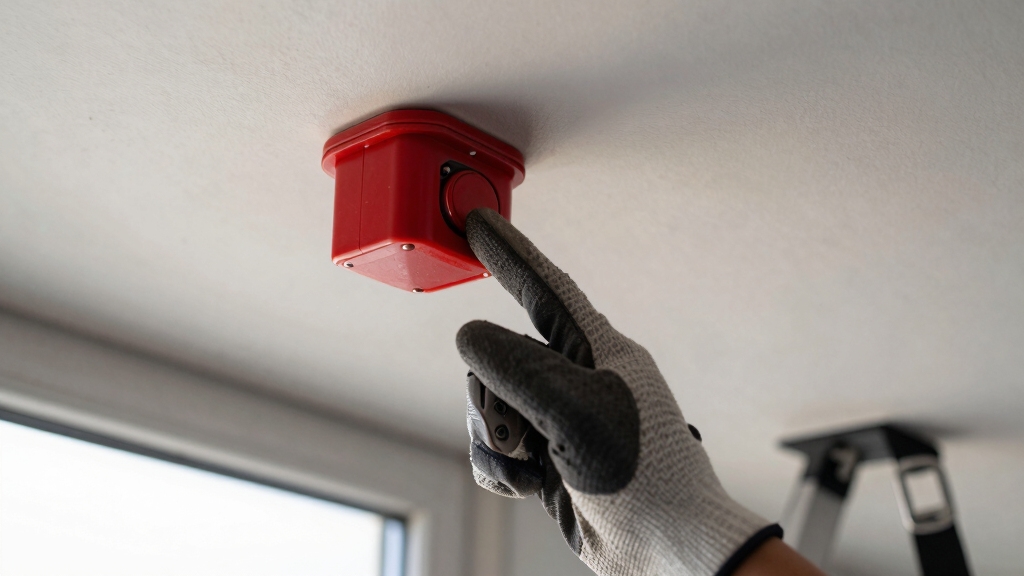
Before you test your fire alarm button, make sure to notify all building occupants to prevent unnecessary panic.
Notify all building occupants before testing your fire alarm to avoid causing unnecessary panic.
Locate the clearly labeled “Test” button on the detector or alarm unit. Position yourself directly beneath the unit to guarantee proper activation.
Press and hold the test button firmly for 3 to 5 seconds. A functional unit will emit an immediate loud beep or siren-like sound.
If you notice a weak, delayed, or silent response, inspect the battery status, check for dust buildup, or consider potential internal failure.
Avoid using open flames or uncontrolled smoke sources during testing.
This methodical approach guarantees your alarm button test is both safe and effective, providing reliable confirmation of your fire alarm’s operational status.
For best results, press and hold the test button for 15–30 seconds to drain residual power and ensure accurate testing.
When and How Often to Test Fire Alarms?
It’s a good idea to test your smoke detectors at least once a month. This helps ensure they’re working properly.
For full fire alarm systems, routine checks are typically done weekly. It’s best to stick to a consistent schedule for these tests; this way, you can avoid any surprises like false alarms.
Oh, and don’t forget about the batteries! It’s smart to replace them every six to twelve months. This simple step can prevent power failures and keep your alarms performing at their best.
Monthly testing is recommended to detect weak or dead batteries before alarm failure.
Recommended Testing Frequency
Regularly testing your fire alarms is essential to ensure their reliable operation in emergencies. You should test smoke detectors at least once per month by pressing and holding the test button for 3–5 seconds, confirming an immediate audible signal.
For comprehensive fire alarm systems, conduct weekly tests as part of routine inspections to verify interconnected units and manual pull stations function properly. Replace batteries at least once or twice per year, and perform semiannual tests on both battery-powered and hardwired alarms to guarantee sensor responsiveness. Fire departments often provide battery replacement and safety evaluations for residents who are unable to perform these tasks themselves.
Ideal Testing Times
Frequently testing your fire alarms at optimal intervals guarantees their readiness and extends their operational lifespan. You should test smoke detectors monthly to confirm functionality and perform full system checks semiannually or weekly in commercial settings.
Consistency in timing prevents unnoticed failures and maintains compliance.
| Alarm Type | Test Frequency | Recommended Time |
|---|---|---|
| Residential Smoke | Monthly | Same day each month |
| Commercial Systems | Weekly to Monthly | Start of workweek |
| Full-System Checks | Semiannual | Every 6 months |
Schedule tests during low-activity periods and notify occupants to avoid false alarms. Use simulated smoke for sensor verification quarterly, supplementing manual button tests.
Regular testing helps maintain sensitivity and ensures compliance with NFPA 72 standards.
Keeping this routine ensures reliable fire detection and rapid response readiness.
Battery Replacement Schedule
Battery replacement plays a critical role in maintaining the reliability of fire alarms. You should test the units immediately after installing new batteries to guarantee proper operation.
Replace batteries at least once or twice a year, depending on manufacturer recommendations and alarm type. Monthly testing ensures the battery’s charge remains sufficient.
Check for corrosion or loose terminals during replacement. If alarms emit weak or delayed sounds during testing, replace batteries immediately.
For hardwired systems with backup batteries, inspect and replace backup batteries semiannually. Document each battery change and test result to track maintenance history.
Regular testing (monthly) remains essential to ensure full operational status throughout the unit’s lifespan and maintain continuous monitoring capability.
How to Check All Fire Alarms and Interconnected Systems?
When you check all fire alarms and interconnected systems, you need to verify that every unit activates as intended, not just a single device.
Begin by pressing each alarm’s test button, assuring a loud, immediate sound.
Confirm that all linked alarms respond simultaneously, indicating proper interconnection.
Include manual pull stations and call points in your test to assure full system readiness.
Document any units that fail to activate or respond weakly for maintenance or replacement.
To assure complete verification, focus on:
- Testing every alarm and manual pull station in the system
- Confirming simultaneous activation of interconnected devices
- Logging test results and noting any deficiencies
This methodical approach guarantees system integrity and compliance with safety standards. Regularly document testing and maintenance procedures are essential to meet regulatory compliance and ensure system reliability.
How to Test Fire Alarm Smoke Sensors With Simulated Smoke?
If you’re looking to test your fire alarm smoke sensors, using a specialized smoke detector test spray is definitely the way to go. Make sure it’s an approved product that’s specifically designed for this purpose, as using the wrong type can actually damage your sensor.
When you’re ready to test, just follow the manufacturer’s instructions carefully. You’ll want to apply the spray evenly, but be cautious not to oversaturate the unit. This method gives you a much more accurate idea of how the sensor will respond in a real situation, compared to just pressing the test button. Trust me, it’s worth the extra effort! Keep in mind that smoke detectors cannot reliably distinguish between steam and actual smoke particles, so testing with simulated smoke is the best way to ensure proper function.
Selecting Approved Smoke Spray
Several types of approved smoke sprays are available to accurately test fire alarm smoke sensors without introducing real smoke hazards.
When selecting a smoke spray, make certain it’s specifically designed for fire alarm testing, non-toxic, and compliant with local safety regulations.
Using an approved product prevents damage to the sensor and avoids false alarms triggered by contaminants or residues.
Consider these factors when choosing smoke spray:
Compatibility: Confirm the spray works with your detector’s sensing technology (photoelectric or ionization).
Safety: Opt for products free from harmful chemicals and safe for indoor use.
Certification: Use sprays certified by recognized testing bodies to guarantee effectiveness and compliance.
Selecting the right smoke spray ensures reliable sensor verification while maintaining safety and system integrity. For optimal results, choose sprays that simulate the particle size and scattering behavior of real smoke to trigger the photoelectric sensor accurately.
Applying Simulated Smoke
Regularly applying simulated smoke is essential for accurately testing fire alarm smoke sensors beyond the basic button test.
First, select an approved smoke spray designed specifically for detector testing to guarantee compatibility and safety.
Before application, notify occupants and disable any linked monitoring systems temporarily to prevent false alarms.
Hold the spray can approximately 12 to 18 inches below the smoke detector’s sensing chamber and apply a short burst of simulated smoke, avoiding oversaturation.
Observe the detector’s response time, which should be within seconds, confirming sensor functionality.
If the alarm fails to activate, inspect for dust, obstructions, or battery issues, then retest.
Document all findings and corrective actions.
Avoid open flames or unapproved smoke sources to maintain safety and detector integrity during testing.
Proper cleaning and maintenance, including removing dust and debris, can prevent false alarms and ensure reliable sensor operation during tests, as detailed in cleaning and maintenance guidelines.
Inspecting and Maintaining Your Fire Alarm System
Consistently inspecting and maintaining your fire alarm system guarantees reliable operation and early hazard detection.
Begin by visually checking each unit for damage, dust, and debris that could impair sensor performance. Inspect battery terminals for corrosion and assure secure contacts. For hardwired systems, verify uninterrupted power supply and backup battery functionality.
Focus your maintenance on these critical areas:
- Clean detector grates and vents to prevent dust buildup.
- Confirm all interconnected alarms activate simultaneously during tests.
- Document inspection results, noting deficiencies and corrective actions.
Regular, methodical upkeep prevents false alarms and system failures. By systematically inspecting each component and maintaining documentation, you assure compliance and enhance your fire alarm system’s readiness to respond effectively in emergencies. Additionally, engaging licensed professionals for periodic inspections ensures adherence to safety standards and optimal system performance.
What to Do If Your Fire Alarm Fails?
If your fire alarm fails during testing or normal operation, you need to act promptly to identify and resolve the issue.
First, check the battery; replace it if depleted or corroded.
Next, inspect the unit for dust, debris, or physical damage that could impair function.
Clean vents and sensor areas carefully.
If the alarm remains unresponsive after maintenance, verify power supply continuity for hardwired systems, including backup batteries.
Should these steps fail, consider unit replacement, especially if the alarm exceeds its 10-year lifespan.
Avoid relying on a faulty alarm. Temporarily use alternative detection methods and notify occupants of the compromised safety device.
Document your findings and actions to assure systematic follow-up and compliance with safety standards.
Keeping Fire Alarm Testing Records and Compliance Simple
Maintaining accurate fire alarm testing records streamlines compliance and simplifies audits. Document every inspection, test result, and maintenance action with clear dates and responsible personnel. This creates a reliable history to verify system integrity and identify recurring issues early.
Accurate fire alarm records ensure compliance, simplify audits, and help detect system issues early.
To keep your records and compliance simple, focus on:
Using standardized forms or digital logs for consistency and quick data retrieval.
Recording deficiencies alongside corrective actions taken to track resolution status.
Reviewing records regularly to spot trends and guarantee ongoing compliance.
Frequently Asked Questions
Can I Test My Fire Alarm Without Disturbing Others at Home?
You can test your fire alarm without disturbing others by notifying them beforehand about the test.
Press and hold the test button for 3–5 seconds while standing beneath the unit to make certain it responds.
To minimize noise, consider testing during times when fewer people are around or use a lower volume mode if available.
Always avoid activating the alarm with smoke or flames during quiet testing to prevent unnecessary alarm activation.
What Types of Batteries Work Best for Different Fire Alarms?
You’ll want to use alkaline batteries for most standard smoke alarms, as they offer reliable, long-lasting power at a reasonable cost.
For alarms with 9-volt battery compartments, choose high-quality alkaline 9V batteries.
Lithium batteries work best in hard-to-reach alarms because they last longer and handle temperature extremes better.
Avoid rechargeable batteries as they often don’t maintain voltage consistently.
Always check your alarm’s manual for specific battery recommendations to ensure peak performance.
How Do I Safely Dispose of an Old Fire Alarm Unit?
You should safely dispose of an old fire alarm by first removing its batteries to prevent corrosion or leakage.
Check local regulations for electronic waste disposal or hazardous materials. Many communities have designated e-waste collection sites or recycling centers that accept fire alarms.
Do not throw it in regular trash, as it contains electronic components and possibly radioactive elements.
Follow manufacturer instructions for proper disposal to guarantee environmental safety and regulatory compliance.
Are There Smartphone Apps to Help Monitor Fire Alarm Status?
Yes, you can use smartphone apps to monitor fire alarm status, especially with smart or interconnected systems.
These apps provide real-time alerts, battery status, and system health updates. You’ll need compatible alarms connected via Wi-Fi or Bluetooth.
Make certain your chosen app supports your fire alarm model and integrates with your building’s system for all-inclusive monitoring.
Regularly update the app and test your alarms to maintain reliability.
Can Pets Trigger False Alarms During Testing?
Think of your fire alarm as a vigilant guardian, sensitive to the smallest disturbance. Yes, pets can trigger false alarms during testing, especially if they shed dander or move near the detector’s sensors.
To avoid this, keep your pets away from the testing area. This ensures clean sensors and minimal interference. This methodical approach helps you maintain accurate test results and prevents unnecessary panic caused by false triggers.
Keep Your Fire Alarm Ready Before an Emergency
You might think testing your fire alarm is a hassle you can skip. After all, it’s only supposed to save your life.
But ironically, neglecting this simple step turns your high-tech safety device into just a noisy decoration.
By regularly pressing the test button, simulating smoke, and inspecting sensors, you ensure the system works when it counts.
Don’t wait for an emergency to find out your alarm has failed. Stay methodical and proactive.