
You get strong AES-128 encryption protecting your account data and local storage, with end-to-end encryption ensuring video streams only decrypt on your smartphone.
HomeBase securely stores footage locally, limiting cloud exposure and processing AI on-device to keep data private.
Secure login protocols, unique device URLs, and two-factor authentication reinforce access control.
While past vulnerabilities have been swiftly patched, ongoing firmware updates are essential to maintaining security.
Exploring how these elements work together reveals a thorough approach to your Eufy camera’s safety.
Key Takeaways
- Eufy cameras use end-to-end AES-128 encryption, ensuring video streams decrypt only on the user’s smartphone for strong privacy protection.
- HomeBase stores footage locally with AES-128 encryption and processes AI on-device, minimizing cloud exposure and enhancing data security.
- Two-factor authentication and HTTPS protect user credentials and prevent unauthorized access to camera feeds and recordings.
- Past vulnerabilities in HomeBase 2 were patched promptly, addressing firmware bugs and authentication flaws to restore device security.
- Proprietary wireless protocols with AES-128 encryption secure communication between cameras and HomeBase against eavesdropping and tampering.
How Eufy Cameras Use Encryption to Protect Your Data?
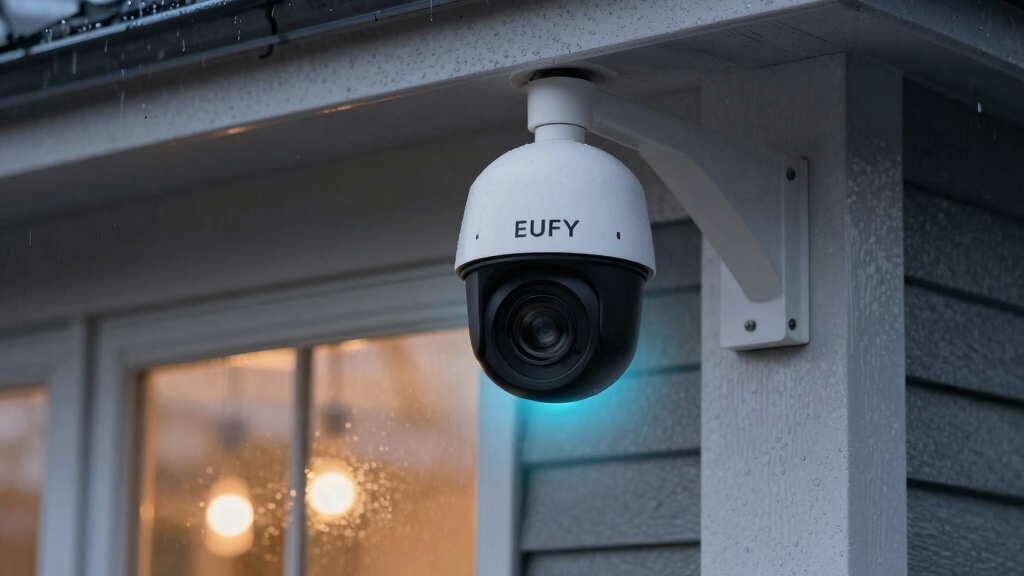
Although securing your video data is a complex task, Eufy cameras employ robust encryption methods to protect your information at every stage.
Eufy cameras utilize advanced encryption to ensure your video data remains protected throughout every step.
They use bank-grade AES-128 encryption to safeguard account details and local storage, ensuring unauthorized parties can’t access sensitive data.
Video files saved on the HomeBase device are encrypted with the same standard, maintaining data confidentiality offline.
During transmission, end-to-end encryption guarantees that video streams decrypt solely on your smartphone, preventing interception on the network.
Additionally, HTTPS protocols secure account authentication by blocking eavesdropping attempts.
The proprietary wireless communication between cameras and HomeBase further enhances security by resisting detection from common devices like laptops.
These layered encryption strategies collectively create a secure environment around your video data, minimizing exposure risks across storage and transmission vectors.
Enabling two-factor authentication on your account is strongly recommended to further protect access and prevent unauthorized use.
Eufy Camera Security Vulnerabilities and Breaches
Hey there! Just a heads-up about some security issues with Eufy cameras. Back in 2022, HomeBase 2 had some pretty serious vulnerabilities that could’ve let hackers take control or even steal data. That’s definitely concerning, right?
And if we look back even further to 2021, there were incidents where camera feeds were exposed. This meant that private footage from hundreds of users was unintentionally shared due to software bugs. Yikes!
On a positive note, Eufy did act quickly to address these issues with patches. Still, it’s really important to keep these incidents in mind when we’re thinking about the overall security of their products. What do you think?
To enhance security, Eufy employs HomeBase encryption to protect recordings and communications between cameras and storage.
HomeBase 2 Vulnerabilities
When vulnerabilities emerged in Eufy’s HomeBase 2 storage devices in June 2022, they exposed critical weaknesses that allowed hackers to potentially seize remote control of the hub or access stored video footage.
These flaws stemmed from insufficient authentication mechanisms and exploitable software bugs within the device’s firmware. This enabled unauthorized command execution and data extraction.
Although HomeBase 2 employs AES-128 encryption for local storage, the vulnerabilities bypassed these protections by targeting the device’s network interfaces and communication protocols.
Eufy promptly addressed these issues through firmware updates, closing the attack vectors and restoring the integrity of device control and data confidentiality.
However, this incident underscores the importance of rigorous security testing in IoT hubs. Weaknesses in centralized storage devices can compromise the entire surveillance ecosystem despite strong encryption safeguards.
Eufy’s emphasis on HomeBase local storage and offline AI processing generally enhances data privacy by keeping footage inside the home, mitigating risks associated with cloud exposure.
Camera Feed Exposure
Since May 2021, Eufy cameras have suffered notable security breaches that exposed live feeds of hundreds of users to unauthorized viewers.
A critical software bug caused some users to access video streams from other accounts, compromising privacy and security.
These breaches revealed weaknesses in session management and authentication processes, allowing unauthorized feed exposure.
Although Eufy employs AES-128 encryption and end-to-end encryption for video streams, implementation flaws in earlier firmware versions left gaps attackers exploited.
Additionally, unique device URLs, if intercepted, risk unauthorized access without robust additional authentication.
This exposure highlights the importance of secure session isolation and rigorous access controls to prevent cross-account feed leakage.
Understanding these vulnerabilities helps you evaluate the risks tied to live feed confidentiality in Eufy’s security architecture.
Proper setup and ongoing firmware updates are essential to mitigate security risks and ensure optimal camera protection.
Patch and Fix Updates
Although Eufy cameras faced several critical security vulnerabilities, the company has actively addressed these issues through timely software patches and firmware updates.
For instance, after the June 2022 HomeBase 2 breaches, Eufy promptly released fixes that eliminated remote control exploits and secured video footage against unauthorized access.
Similarly, the May 2021 bug exposing 712 users’ camera feeds was swiftly patched to prevent cross-account data leakage.
You’ll find these updates improve encryption protocols, authentication robustness, and data isolation measures.
Eufy’s proactive patch management minimizes exposure windows, ensuring your devices maintain integrity against evolving threats.
Staying current with firmware updates is essential for leveraging these security enhancements and safeguarding your local storage and video streams from potential breaches.
Additionally, adopting solutions with reliable local storage options can further enhance the security and privacy of your video recordings.
How Eufy Protects Your Privacy and Manages Cloud Data?
Privacy protection and cloud data management remain critical concerns for smart home security systems like Eufy. Eufy employs bank-grade AES-128 encryption to safeguard your account information and video files stored on the HomeBase, ensuring secure local data retention.
Eufy uses bank-grade AES-128 encryption to securely protect account data and locally stored videos.
End-to-end encryption means video streams decrypt solely on your smartphone, preventing unauthorized access during transmission. HTTPS connections protect your login credentials from interception.
However, past incidents revealed weaknesses, such as unencrypted local thumbnails sent to the cloud and identical encryption keys. Eufy has since addressed these through timely patches.
Eufy’s proprietary wireless protocol further secures communication between cameras and HomeBase by preventing external detection. While Eufy manages cloud interactions cautiously, understanding these encryption and access control measures helps you evaluate how your privacy is protected against potential vulnerabilities.
Additionally, the emphasis on local storage options in similar security camera systems highlights the importance of minimizing cloud dependency for enhanced data privacy.
Eufy Local Storage Features for Offline Video Security
Eufy’s local storage architecture provides robust offline video security by enabling you to store recordings directly on the HomeBase device or within the cameras themselves.
The HomeBase 3 supports up to 16 TB of expandable hard drive storage, allowing extensive video retention without cloud reliance. Cameras with built-in local storage guarantee data remains confined to your premises, markedly reducing exposure to online threats.
On-device AI processes footage locally, so sensitive data never leaves your network. Additionally, the proprietary NS/as protocol supports RTSP feed integration, giving you flexible, offline video access options.
This setup minimizes external attack surfaces and safeguards you maintain control over your video data. It delivers a secure, private surveillance environment without mandatory cloud transmission or storage. Eufy devices achieve enhanced security and coordination by communicating through the HomeBase hub, which centralizes control and enables real-time notifications.
How Eufy’s Authentication and Access Controls Secure Your Account?
When you access your Eufy cameras, you log in with secure user credentials. This helps keep your recordings and device controls safe from prying eyes.
Each camera also creates its own unique URLs, which makes it harder for anyone to gain unauthorized access to your devices online.
Plus, there’s end-to-end encryption in place. This means that your video streams are only decrypted on your smartphone, ensuring that your data stays confidential and secure.
Additionally, Eufy cameras feature local AI detection that processes data on-device to enhance privacy and reduce reliance on cloud servers.
Secure User Login
Protecting your account starts with robust authentication and access controls that prevent unauthorized entry. Eufy requires both a username and password to verify your identity before granting access to recordings and camera feeds.
The login process uses HTTPS encryption, safeguarding your credentials from interception during transmission. Once authenticated, your smartphone acts as the sole decryption point for end-to-end encrypted video streams, ensuring only you can view live or stored footage.
Desktop apps similarly enforce strict login protocols to access local video storage. Additionally, facial recognition features provide localized access differentiation, distinguishing authorized users like landlords and tenants from strangers.
This layered authentication approach minimizes attack surfaces, reinforcing your control over camera access and maintaining the integrity of your surveillance data. Furthermore, Eufy’s emphasis on local storage and offline AI processing enhances data privacy by keeping your footage within your home network rather than relying on cloud services.
Unique Device URLs
Alongside secure login credentials, access to specific camera devices online requires unique URL addresses. These URLs act as precise gateways, ensuring only authorized users reach the intended camera feed. Eufy’s system ties each URL to your authenticated account, preventing unauthorized exposure.
Here’s how this secures your account:
- Individualized Access: Each device URL is unique, blocking cross-account feed visibility.
- Session Validation: URLs work only within authenticated sessions, invalidating expired or reused links.
- Encrypted Transmission: URL access occurs over HTTPS, protecting against interception or tampering.
Additionally, these unique URLs function similarly to a device’s unique identifier, helping to ensure secure and precise device authentication during remote access.
End-to-End Decryption
Because Eufy employs end-to-end encryption, your video streams remain secure by decrypting only on your smartphone. This ensures no intermediary can access the footage.
This system uses AES-128 encryption for account info and local storage, while HTTPS safeguards authentication. Your access requires valid credentials, and the app is the sole decryption point. This prevents unauthorized interception.
| Security Aspect | Method | Benefit |
|---|---|---|
| Data Encryption | AES-128 & End-to-End | Protects video and account data |
| Authentication Protocol | Username & Password + HTTPS | Prevents unauthorized access |
| Decryption Location | User’s Smartphone | Eliminates intermediary exposure |
This approach tightly controls access, ensuring only you can view your recordings.
How Eufy’s Video Quality Enhances Security Monitoring?
Eufy’s high-resolution video capabilities markedly elevate your security monitoring by delivering crystal-clear images that capture critical details with precision.
Eufy’s high-resolution video sharpens security with crystal-clear images capturing every crucial detail.
This clarity enables accurate identification of faces, license plates, and other essential elements, enhancing your ability to respond swiftly to incidents.
The wide-angle lenses expand the field of view, reducing blind spots and ensuring thorough coverage.
Key advantages include:
- 2K and 4K resolution options that provide detailed footage for precise situational awareness.
- 120° to 180° wide-angle lenses that maximize monitoring zones with fewer cameras.
- Advanced person and pet detection algorithms that minimize false alerts by up to 95%, allowing you to focus on genuine threats.
Together, these features optimize your video surveillance’s effectiveness and reliability.
How Eufy’s Proprietary Wireless Protocols Protect Privacy?
While many security cameras rely on standard wireless protocols, Eufy employs proprietary wireless communication between its HomeBase units and cameras to enhance privacy protection.
This design prevents typical wireless scanning tools, like laptops, from detecting the signals, reducing the risk of unauthorized interception. Eufy’s protocol integrates AES-128 encryption directly into the communication channel, securing data transmissions against eavesdropping and tampering.
By isolating video streams within a closed network, Eufy limits exposure to external network vulnerabilities common in Wi-Fi or Bluetooth systems. The HomeBase acts as a secure gateway, managing encrypted data flow and preventing direct device-to-cloud transmission unless explicitly authorized.
This proprietary approach guarantees your video data stays local and shielded, maintaining confidentiality and controlling access strictly through your authenticated devices.
How Eufy Updates Fix Security Issues and Improve Safety?
When vulnerabilities arise, Eufy acts promptly by releasing targeted software updates that patch security flaws and restore system integrity.
These updates address critical weaknesses, ensuring your devices remain secure against evolving threats.
For instance, after the June 2022 HomeBase 2 breach, Eufy swiftly deployed fixes to prevent unauthorized hub control and footage theft.
Here’s how these updates improve your system’s safety:
- Patch Exploited Vulnerabilities: Close loopholes that hackers previously exploited to gain access.
- Enhance Encryption Protocols: Strengthen AES-128 and end-to-end encryption for data protection.
- Refine Authentication: Fix bugs causing unintended cross-account access to prevent unauthorized viewing.
Frequently Asked Questions
Can Eufy Cameras Work Without Wi-Fi or Internet Connection?
Yes, you can use Eufy cameras without Wi-Fi or an internet connection. They store footage locally on the HomeBase or built-in storage, ensuring data stays off the cloud.
The system uses proprietary wireless protocols between cameras and HomeBase, allowing local video access and AI processing without internet.
You can also disable remote surveillance fully, relying solely on offline video capture and retrieval through local networks or physical storage access.
How Do Eufy Cameras Handle Power Outages or Interruptions?
Eufy cameras typically continue recording locally during power outages if connected to a HomeBase with battery backup or if the camera itself has built-in battery support.
Without power, cameras without backup will stop functioning, but local storage keeps footage safe until power resumes. You can configure alerts to notify you of interruptions.
However, remote viewing and cloud access pause until the system restores power and network connectivity.
Are Eufy Cameras Compatible With Smart Home Systems Like Alexa?
Imagine your Eufy camera seamlessly responding to your Alexa commands, creating a smart home symphony. Yes, Eufy cameras are compatible with Alexa, allowing you to view live feeds or control devices via voice commands.
This integration uses secure API protocols, ensuring encrypted communication between your camera and Alexa-enabled devices. You can effortlessly incorporate surveillance with your existing smart ecosystem, enhancing convenience without compromising technical reliability or performance efficiency.
What Customer Support Options Are Available for Security Concerns?
You can reach Eufy’s customer support via phone, email, and live chat for security concerns.
They offer detailed troubleshooting guides and firmware updates addressing vulnerabilities.
Their support team provides assistance with encryption issues, account protection, and device setup.
Additionally, community forums and FAQs help you resolve common problems.
For urgent security breaches or firmware patches, Eufy typically communicates updates promptly through app notifications and official channels.
How Do Eufy Cameras Perform in Extreme Weather Conditions?
Battered by blizzards or baked by blazing sun, Eufy cameras boast robust resilience.
Designed with weatherproof materials and classified typically at IP65 or higher, they withstand wind, rain, snow, and dust effectively.
Their durable housing guarantees consistent clarity and dependable detection even in extreme temperatures.
You’ll find their infrared night vision and wide-angle lenses maintain performance without faltering, keeping your surveillance sharp and secure regardless of harsh environmental conditions.
Final Thoughts on Eufy Camera Security
You’d think with all the encryption, local storage, and proprietary protocols, Eufy cameras would be Fort Knox for your footage, and they mostly are.
Yet, no system is perfect, and occasional vulnerabilities remind you that even high-tech security can have its off days.
Still, with regular updates and strong access controls, Eufy proves that while absolute security is a myth, your privacy doesn’t have to be.
Ironically, staying secure means staying vigilant.